The best roofing material for a California home depends on four things: your budget, your climate zone (which decides whether Title 24 requires a cool roof), your fire-hazard zone, and whether your framing can carry the weight. For most Bay Area homes, a cool-rated architectural asphalt shingle is the best value. Standing-seam metal is the longest-lasting lightweight option. Tile suits homes already built for it. White TPO is the standard for flat sections.
This guide compares every common option on installed cost, lifespan, fire rating, weight and Title 24 compliance. The prices come from our own completed jobs in 2026, not national averages, and the code figures come from the California Energy Commission.
Quick comparison: roofing materials for California homes (2026)
Costs are installed prices in the Bay Area per square foot of roof surface, including tear-off, underlayment and permit. The middle column shows what that works out to for about 2,000 square feet of roof. Pitch, layers to remove, access and any structural work move the final number.
| Material | Installed cost (per sq ft) | ~2,000 sq ft of roof | Realistic lifespan | Fire rating | Weight | Meets Title 24 steep-slope rule? |
|---|---|---|---|---|---|---|
| Architectural asphalt shingles (cool-rated) | $8–$15 | $16,000–$30,000 | 20–30 years | Class A | Light | Yes, with a CRRC-rated cool color |
| Standing-seam metal | $18–$35 | $36,000–$70,000 | 40–70 years | Class A as an assembly | Light | Yes, with a rated finish |
| Concrete or clay tile | $15–$30 | $30,000–$60,000 | Tile 50+ years; underlayment 20–30 | Class A | Heavy | Yes, with a CRRC-rated color |
| Synthetic slate | Quoted per project | Quoted per project | 30–50 years (varies by manufacturer) | Class A on most products | Light to moderate | Depends on product and color |
| TPO membrane (flat / low-slope) | Quoted per project | Usually a smaller section of the roof | 20–30 years | Class A as an assembly | Light | White TPO meets the low-slope rule |
What roofs actually cost in 2026: our job data
We checked the published ranges against the full roof replacements we completed between January and early August 2026. The median job came to about $24,200. Half of all replacements fell between roughly $17,700 and $30,800. Large homes, steep or complex roofs and tile systems ran higher, and our biggest single replacement this year was over $80,000.
Repairs are a different scale. Our median repair in the same period was about $2,200, and most fell between about $770 and $2,650. If you’re weighing a repair against a new roof, see repair or replace? and our Bay Area roof replacement cost guide for county-by-county pricing.
Title 24: when California requires a cool roof
California’s Energy Code (Title 24, Part 6) sets cool-roof rules for re-roofs, and they are narrower than many roofing pages suggest. The requirement applies when more than 50% of the roof is replaced. It depends on your climate zone and on your roof’s slope.
Steep-slope roofs (2:12 pitch or steeper), which covers most houses: in Climate Zones 4 and 8 through 15, the new roofing must have a three-year aged solar reflectance of at least 0.20 and a thermal emittance of at least 0.75, or an aged Solar Reflectance Index (SRI) of at least 16.
Low-slope roofs (under 2:12): in Climate Zones 4 and 6 through 15, the bar is much higher. The roofing needs an aged solar reflectance of at least 0.63 and emittance of at least 0.75, or an aged SRI of at least 75. That is why flat sections are almost always white or light-colored membranes. Added roof-deck insulation can trade off against part of the reflectance requirement.
Where the Bay Area falls: San Jose and most of Santa Clara County are in Climate Zone 4, so the rules apply there. San Francisco is in Climate Zone 3, which has no prescriptive cool-roof requirement for residential re-roofs. Zones don’t follow city lines neatly, so check your address with the California Energy Commission’s climate zone tool or ask us before you choose a color.
Common exceptions for steep-slope re-roofs include R-38 ceiling insulation, a qualifying attic radiant barrier, R-2 or more of insulation above the roof deck, or no ducts in the attic in certain zones (Zone 4 is one of them). Your contractor should document whichever path your permit uses.
What changed for 2026: the 2025 Energy Code took effect on January 1, 2026. For single-family homes, the cool-roof values above did not change.
A cool roof doesn’t have to be white. The steep-slope threshold is low enough that many mid-tone and even some dark shingles qualify. Owens Corning’s TruDefinition Duration COOL Plus line includes “Midnight,” a black shingle rated above SRI 20. What matters is the product’s Cool Roof Rating Council (CRRC) listing, which your contractor should show to the inspector. For more detail, see our cool roofing and Title 24 guide.
Asphalt shingles: the best value for most homes
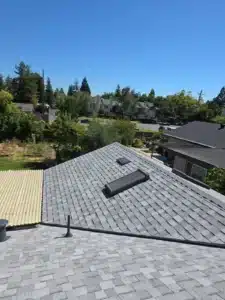
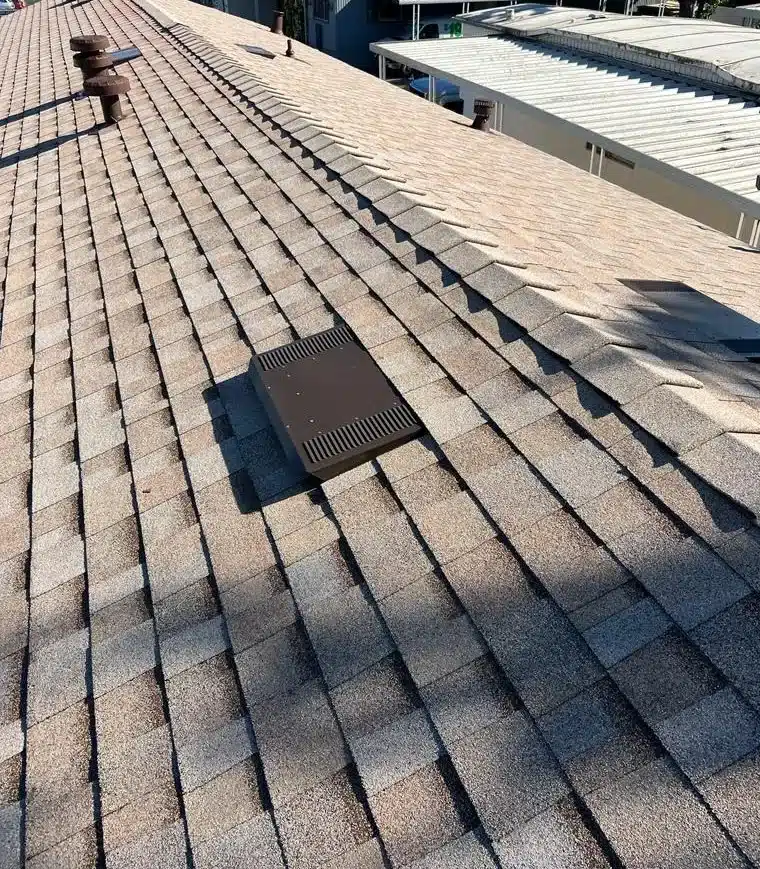
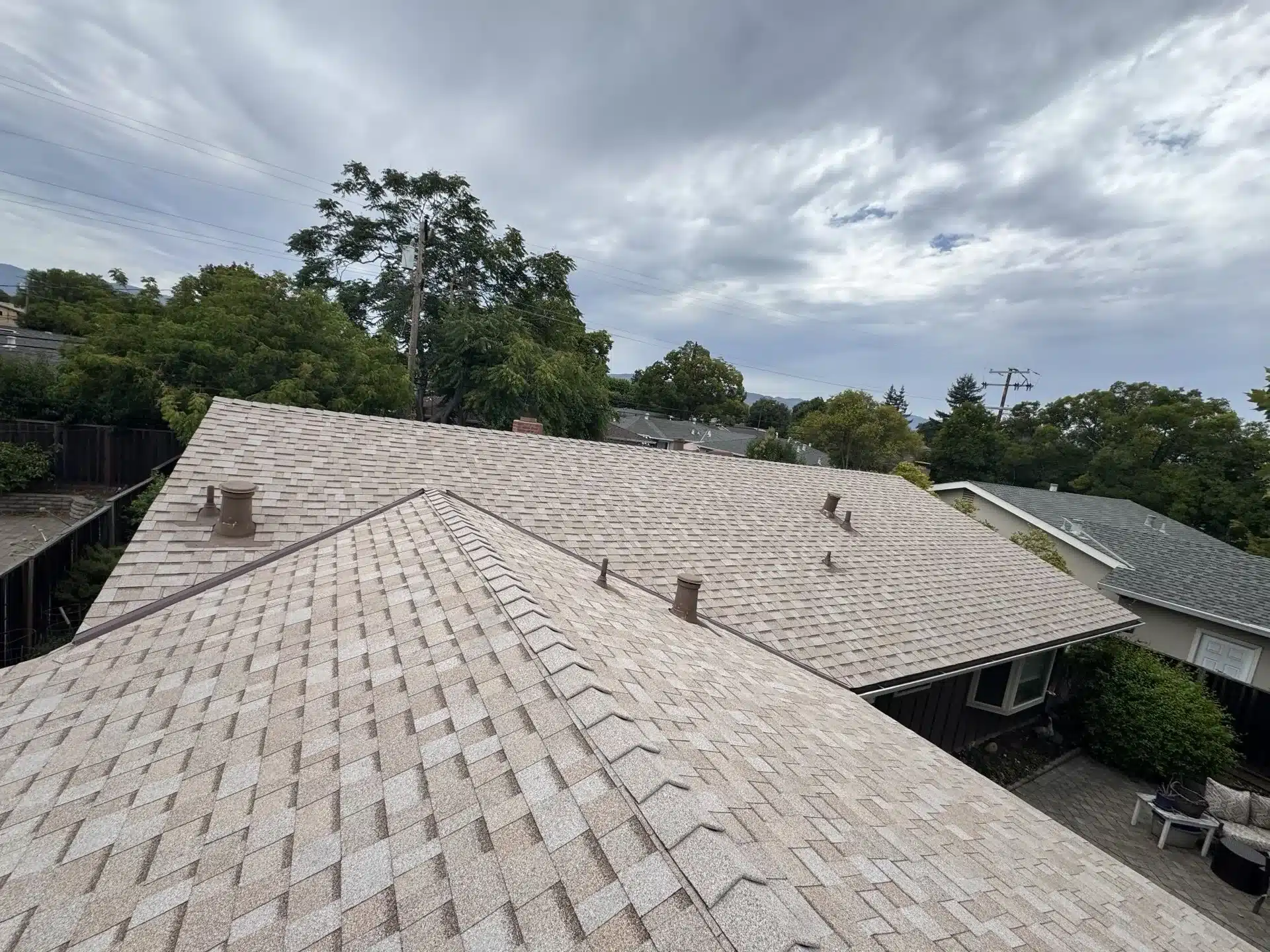
Asphalt shingles are the most common roof in California. Modern architectural (dimensional) shingles are a big step up from the old flat three-tab product. They are heavier, carry better wind ratings, and in California are widely available in CRRC-rated cool colors that satisfy the steep-slope rule.
Pros: lowest installed cost of the durable options, light weight (no structural work), Class A fire rating as a system, wide color choice including Title 24-compliant cool colors, and easy, inexpensive repairs.
Cons: the shortest life on this list. California sun ages shingles faster than manufacturer warranties imply, so plan on 20–30 years rather than “lifetime.” Granule loss over time also lowers reflectance.
Cost: about $8–$15 per sq ft installed, or $16,000–$30,000 for roughly 2,000 sq ft of roof. That range lines up with our 2026 job data above.
Cool-rated shingles are standard shingles made with solar-reflective granules. In a Climate Zone 4 re-roof like San Jose, they are usually the simplest way to meet Title 24 without adding insulation. The price difference over a non-cool color in the same line is usually small, and in covered zones it’s often the only option the permit allows anyway.
For a closer look, see our shingle roof pros and cons and our comparison of Owens Corning, GAF and CertainTeed shingles. For a real example, see our Fremont shingle re-roof.
Standing-seam metal: the longest-lasting lightweight roof
Standing-seam systems use long vertical panels joined by raised, concealed-fastener seams. They shed water well, handle wind well, and last decades longer than shingles.
Pros: 40–70 year service life, light weight, non-combustible panels, reflective factory finishes that meet Title 24, very little maintenance, and good compatibility with solar mounting.
Cons: the highest upfront cost on this list, it needs installers who specialize in metal, and matching or repairing panels later is harder than swapping a shingle.
Cost: about $18–$35 per sq ft installed, or roughly $36,000–$70,000 for 2,000 sq ft of roof.
Fire rating: metal panels don’t burn, but the Class A rating belongs to the tested assembly (panel plus underlayment). Ask for the assembly listing, not just the panel.
Noise: over solid decking with underlayment and an insulated attic, a metal roof in rain sounds much like any other roof. The “tin roof” noise people remember comes from panels over open framing.
Exposed-fastener (corrugated or ribbed) metal costs less, but its screws and washers need periodic attention. It’s more common on outbuildings and modern designs than on typical Bay Area homes. See our metal roofing page for more.

Tile (concrete and clay): long-lived, but plan for the underlayment
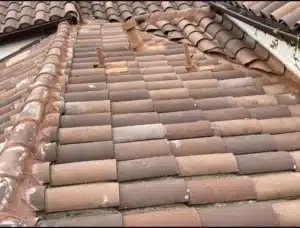
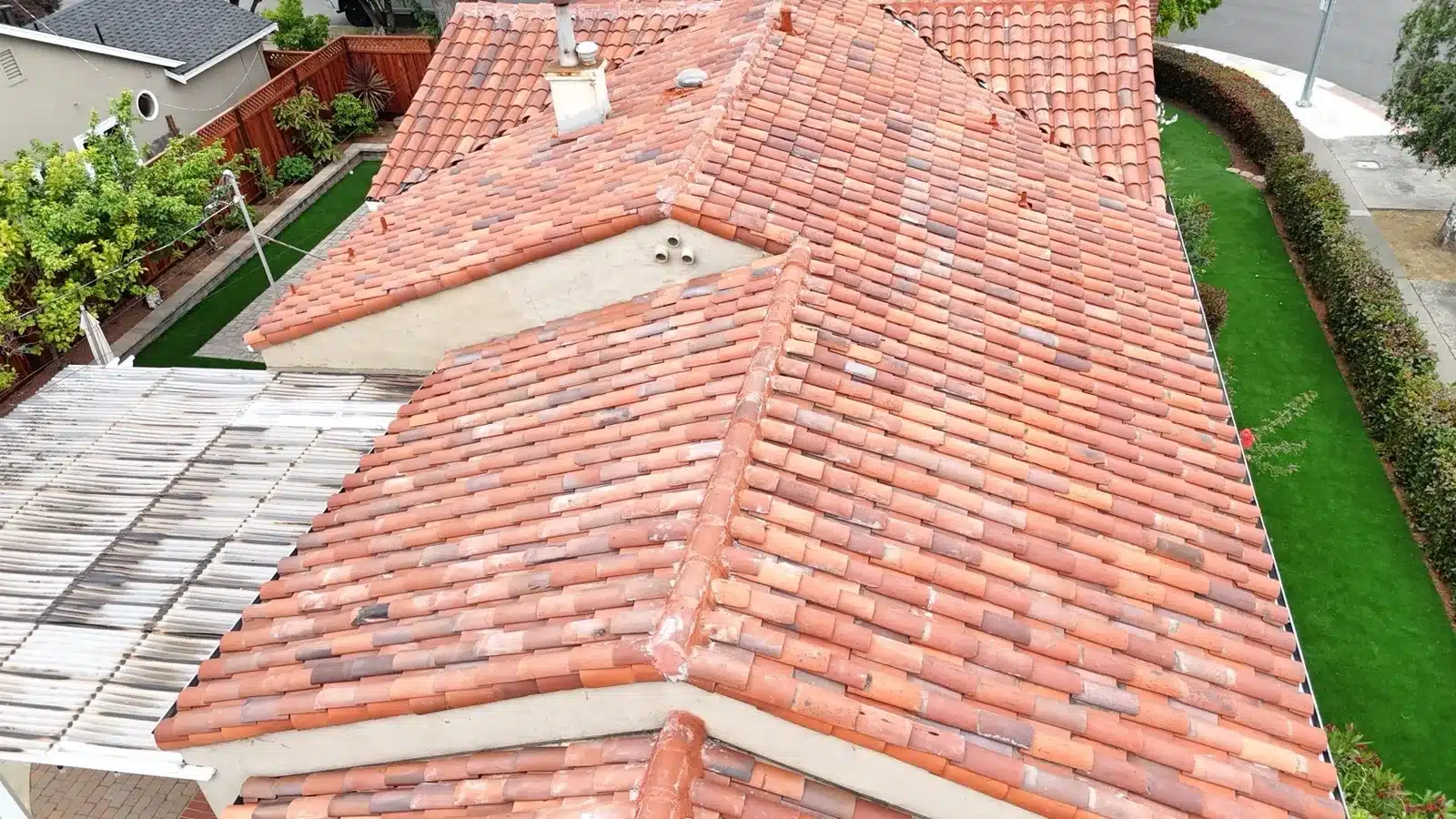
Tile suits Mediterranean, Spanish and many mid-century California homes, and the tiles themselves often outlast the house. Concrete tile is the more affordable version and can imitate clay, slate or shake. Clay costs more and holds its color essentially forever.
Pros: tiles that last 50 years or more (clay often much longer), non-combustible and Class A, strong curb appeal on the right architecture, and many CRRC-rated colors for Title 24.
Cons: heavy, so a switch from shingles usually needs an engineer to confirm the framing. Tiles crack if walked on carelessly. The biggest misconception is that a tile roof is a 100-year roof. The underlayment beneath the tile is what keeps water out, and it typically lasts 20–30 years.
Cost: about $15–$30 per sq ft installed, or $30,000–$60,000 for 2,000 sq ft of roof, with clay at the top of that range.
The option most homeowners don’t know about: when the tile is sound but the roof leaks, you often don’t need new tile. We can lift the existing tile, replace the underlayment and any damaged decking, and relay the original tile. See how that worked on a San Jose clay tile relay and a Morgan Hill concrete tile roof hiding failed underlayment. Learn more about concrete tile and clay tile installation.
Synthetic slate: the slate look without the weight
Synthetic (composite) slate is molded to look like natural slate at a fraction of the weight, so most homes don’t need structural upgrades.
Pros: convincing slate appearance, much lighter than stone, Class A on most major products, and impact resistant.
Cons: performance, fading and Title 24 compliance vary a lot by manufacturer and color, so the specific product matters more than the category. It costs more than shingles, and fewer crews install it regularly.
Cost: quoted per project, because product lines differ widely. Expect it to price well above architectural shingles. See our synthetic slate roofing page.
Flat and low-slope roofs: TPO and other membranes
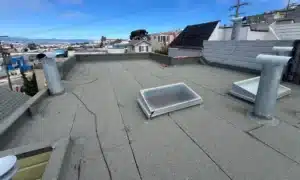
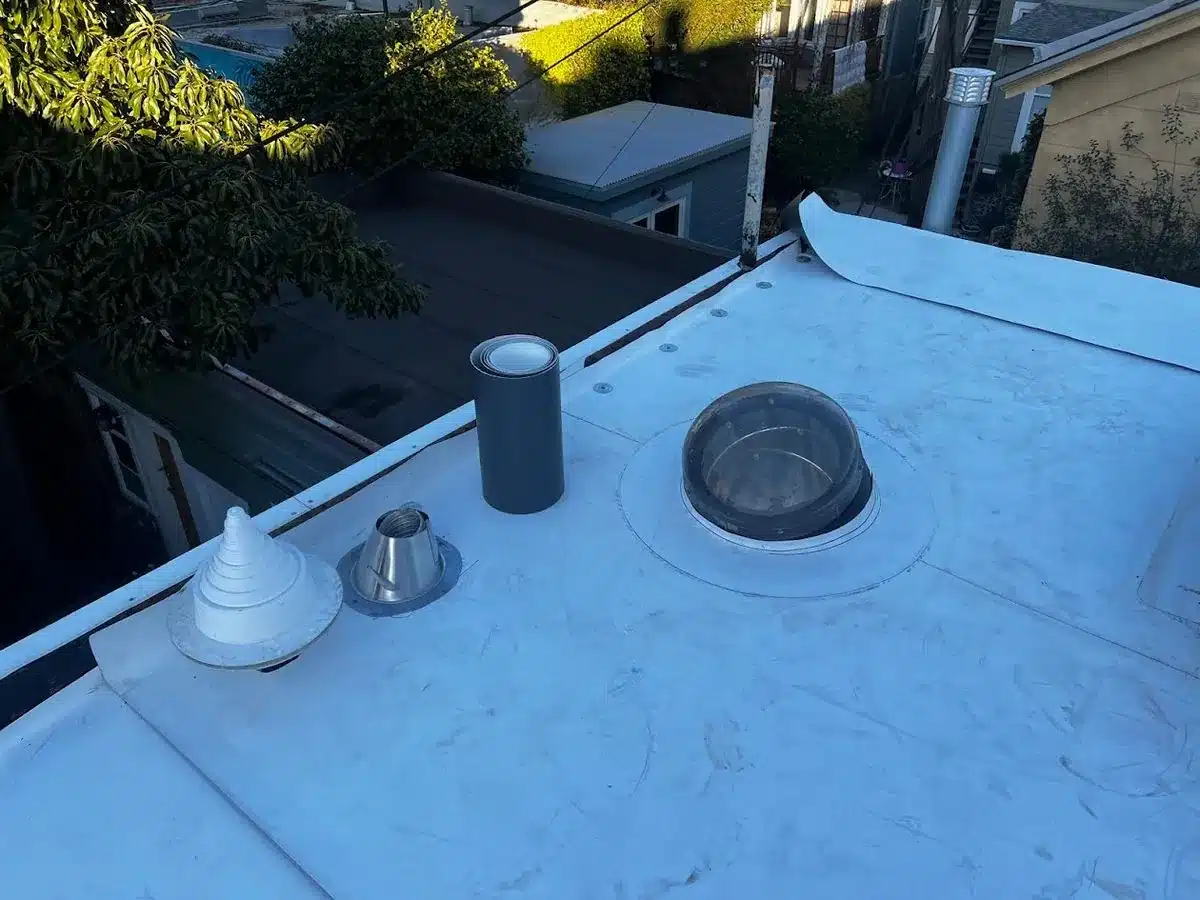
Flat sections, such as over additions, garages, porches and many Eichler-style homes, need a membrane rather than shingles or tile. White TPO is the most common choice in California because it meets the low-slope Title 24 reflectance requirement and is heat-welded at the seams.
TPO pros: reflective, heat-welded seams, fairly quick installation, and Class A as a system.
TPO cons: quality varies by manufacturer and membrane thickness, and seam workmanship decides how long it lasts.
What about EPDM? Standard black EPDM rubber doesn’t meet the low-slope cool-roof requirement in Climate Zones 4 and 6–15, so on re-roofs in covered zones the usual route is a white membrane, or added insulation that qualifies under the trade-off. See flat roofs: pros and cons.
Wildfire zones: what the code requires
If your home is in a designated Fire Hazard Severity Zone or Wildland-Urban Interface area, California’s wildfire building standards (Chapter 7A of the Building Code) require a fire-rated roof assembly (Class A in the higher-hazard zones), and they cover more than the roofing itself.
- Best choices: metal, concrete tile and clay tile, which are non-combustible, plus Class A asphalt shingle systems.
- Tile detail that matters: the open ends of tile at the eaves must be closed off with bird stops or eave closures so embers can’t blow under the tile.
- Beyond the roofing: ember-resistant vents, gutter guards that keep dry debris out and well-sealed ridges matter as much as the material.
- Avoid: untreated wood shake, and any product that isn’t part of a listed Class A assembly.
Earthquakes: lighter is simpler
In an earthquake, a heavier roof adds more force to the walls and framing below it. Lighter roofs such as shingles, metal and synthetic slate add the least load. That doesn’t rule out tile, since millions of California homes carry it safely, but it means two things:
- Switching to tile from a lighter roof usually needs an engineer to confirm the framing can carry the extra weight.
- Tile must be mechanically fastened to current code. Older tile that relies on mortar or gravity alone is more likely to loosen or slide in strong shaking, which is one more reason to inspect older tile roofs.
Owens Corning cool-roof shingles we install
Lifetime Roofing & Renovation is an Owens Corning Platinum Preferred Contractor, which gives our customers access to Owens Corning’s strongest system warranties. The Owens Corning lines we most often use to meet Title 24 in the Bay Area are:
- TruDefinition Duration COOL Plus: dimensional shingles in deeper colors, including “Midnight,” a CRRC-rated black shingle above SRI 20 sold only in California.
- TruDefinition Duration COOL: lighter cool colors in the Duration line.
- Oakridge Cool Roof Collection: the value line, with several colors that meet the steep-slope requirement.
Exact SRI values vary by color and change as manufacturers retest, so we confirm each color against the current CRRC directory before it goes on the permit.
How to choose
- Best value for most Bay Area homes: a cool-rated architectural asphalt shingle.
- Longest life without structural work: standing-seam metal.
- Your house already has tile: inspect the underlayment first. A lift-and-relay often costs less than new tile.
- Fire hazard zone: metal or tile, or a Class A shingle system, with ember-resistant vents and eave closures.
- Flat sections: white TPO.
- Planning solar: choose a roof that will outlast the panels. Removing and reinstalling panels to re-roof later adds real cost.
Frequently asked questions
Does Title 24 require a cool roof when I replace my roof?
It depends on your climate zone, your roof’s slope, and how much of the roof you replace. When more than half of a steep-slope roof is replaced in Climate Zones 4 or 8–15, which includes San Jose and most of Santa Clara County, the new roofing must meet an aged solar reflectance of 0.20 with emittance of 0.75, or an aged SRI of 16, unless an exception applies. San Francisco (Climate Zone 3) has no prescriptive cool-roof requirement for residential re-roofs. Cool-rated products come in many colors, not just white.
How much does a new roof cost in the Bay Area in 2026?
For our completed full replacements from January to early August 2026, the median was about $24,200, and half fell between roughly $17,700 and $30,800. Architectural asphalt typically runs $8–$15 per sq ft installed. Tile runs about $15–$30 and standing-seam metal about $18–$35.
Do cool roof shingles cost much more than regular shingles?
Usually not. Within the same shingle line, the premium for a cool-rated color is small compared with the total cost of a re-roof. In covered climate zones it’s often the simplest way to pass the permit.
Is a metal roof loud in the rain?
Not when it’s installed over solid decking with underlayment and an insulated attic, which is how residential standing seam goes on. Loud metal roofs are almost always panels installed over open framing.
How long does a tile roof really last?
The tiles often last 50 years or more, but the underlayment beneath them typically lasts 20–30 years. Most “old tile roof” leaks are underlayment failures, and they can often be fixed by lifting and relaying the original tile rather than buying new.
What’s the best roofing material for a wildfire zone?
Metal and tile (concrete or clay) are non-combustible and the strongest choices. Class A asphalt shingle systems also meet code. Whatever you choose, the details matter as much as the material: ember-resistant vents, eave closures on tile, and clean gutters.
Get a recommendation for your home
The right material depends on your house’s framing, pitch, climate zone and fire zone. We check all four on a free inspection. Call (408) 685-2177 or request a free estimate, or read more about roof replacement in San Jose.
What homeowners are asking on Reddit
These are real questions posted publicly on Reddit. We have linked each thread and answered it from our own job experience in the Bay Area.
Roof Color- Does it Matter?
Reddit question · asked on r/HomeImprovement — view the thread
Our answer: In California it matters more than in most states, because Title 24 sets minimum solar reflectance for many re-roofs. Colour choice is partly a code question here, not only an aesthetic one.
Gina K. writes about Bay Area roofing for Lifetime Roofing & Renovation, drawing on the team's 16+ years of experience roofing homes across Silicon Valley.