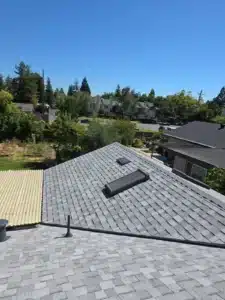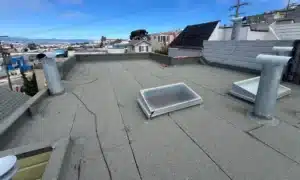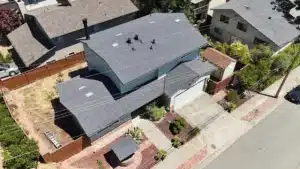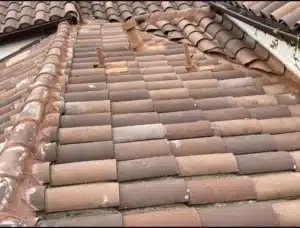

A working comparison of the three shingle brands we install most in San Jose and the wider Bay Area — Owens Corning, GAF and CertainTeed — written around the thing that actually decides it here: California Title 24 cool-roof compliance, and what each manufacturer’s wind warranty quietly requires of your installer.
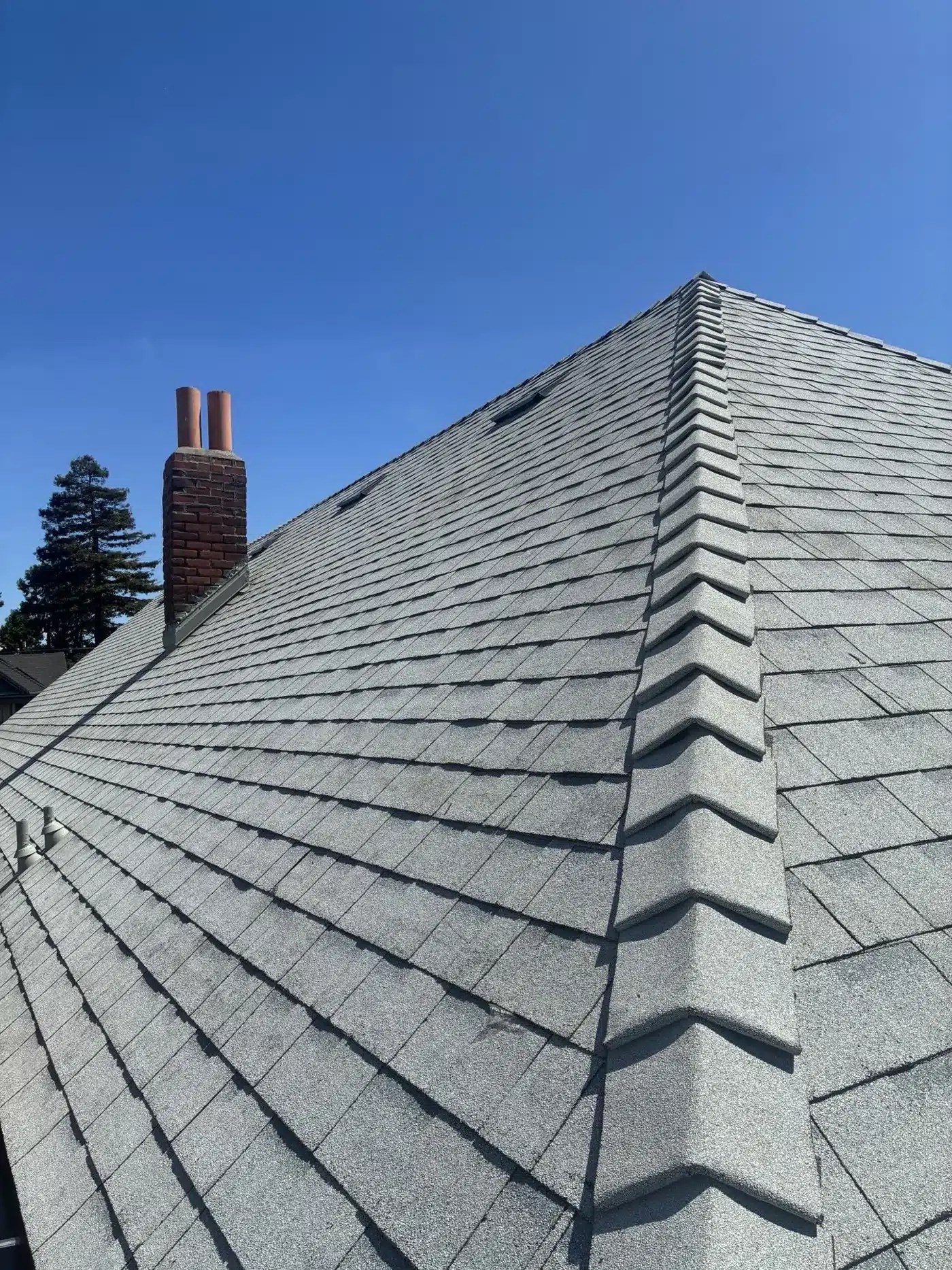
For most Bay Area homes the three brands are closer on durability than the marketing suggests — all three flagship architectural shingles carry a limited lifetime warranty, a Class A fire rating, Class 3 impact resistance and a 25-year algae warranty. What actually separates them here is Title 24. If your re-roof has to meet California’s cool-roof requirement, the binding constraint is not price or warranty — it is how many colours the brand sells that comply. CertainTeed’s Landmark Solaris line complies in every colour, Owens Corning builds a dedicated COOL line for it, and GAF’s Timberline HDZ qualifies in four colours. That is usually the whole decision.
Start with Title 24, because it eliminates options fastest
California’s Title 24, Part 6 sets a cool-roof requirement for steep-slope residential roofs in most of the state’s climate zones — Santa Clara County included. In practice that means the shingle you choose has to be rated by the Cool Roof Rating Council and has to hit a minimum solar reflectance. Plenty of handsome shingles do not.
This is where the three brands genuinely diverge, and it is worth knowing before you fall in love with a colour:
- CertainTeed Landmark Solaris — every colour in the line is CRRC-rated and can be used to comply with the 2022 Title 24 Part 6 cool-roof requirements. Sixteen colours, no compromise between compliance and appearance.
- Owens Corning TruDefinition Duration COOL — a dedicated cool-roof line using solar-reflecting granules, built specifically to meet the requirement while keeping the same SureNail construction as the standard Duration shingle.
- GAF Timberline HDZ — CRRC-rated in four colours only: Copper Canyon, Birchwood, Golden Amber and Fox Hollow Gray. Excellent shingle; a short list if you need compliance and had something darker in mind.
None of that makes GAF a worse product. It means that on a Title 24 job the colour conversation and the brand conversation are the same conversation, and it is better to have it at the quoting stage than after the material is ordered. More on how the requirement works in practice is on our Title 24 compliance guide.
The wind warranty is really a warranty on your installer
Every manufacturer advertises a headline wind number. All three of them are conditional, and the conditions are about how the roof is built rather than what the shingle is made of.
- Owens Corning rates Duration shingles up to 160 mph — but only when the Owens Corning component requirements are met and starter shingles are installed on both the eaves and the rakes. Skip the rake starter and the number is not yours.
- GAF goes furthest on paper with the WindProven limited wind warranty, which carries no maximum wind speed limitation for 15 years — conditional on four qualifying GAF accessories: starter strips, roof deck protection, ridge cap shingles, and a leak barrier or attic ventilation.
- CertainTeed covers Landmark at 110 mph for 15 years as standard, upgradeable to 160 mph when CertainTeed starter and CertainTeed hip and ridge are used.
The pattern is the same every time: the good number requires the manufacturer’s own accessories, correctly installed, and documented. A bid that quotes the headline figure while substituting a cheaper starter strip or ridge cap is quoting a warranty you will not actually have. Ask any roofer which accessories their price includes — the answer tells you more than the brand does.
Wind is admittedly not the Bay Area’s defining threat. It matters here mostly because it is the clearest example of a warranty that depends on workmanship, and because exposed ridgelines in the hills do see real gusts.
Where each brand is genuinely strong
Owens Corning
The Duration series is built around SureNail Technology — a woven fabric strip laid through the nailing area giving what Owens Corning calls Triple Layer Protection. From an installer’s point of view it is the most forgiving nailing zone of the three: the strip is visible, wide, and it grips. Duration carries a limited lifetime warranty, Class 3 impact resistance, and a 25-year StreakGuard algae warranty (which requires an approved Owens Corning hip and ridge product to be in force).
Owens Corning also ties warranty coverage to installer accreditation, which is the honest reason we lean on it: we are an Owens Corning Platinum Preferred Contractor, the top tier of their network, and that changes what we can offer on their system warranties. We are also a CertainTeed ShingleMaster. We hold no equivalent credential with GAF, and we would rather say so than imply otherwise.
GAF
Timberline HDZ is the best-selling architectural shingle in North America, and the engineering behind that is real: LayerLock Technology drives the StrikeZone nailing area, which GAF reports as the widest in the industry, paired with a DuraGrip adhesive. HDZ carries a 25-year StainGuard Plus algae warranty and Class 3 impact resistance; the step-up Timberline UHDZ reaches Class 4, the highest impact class, which is worth knowing if your insurer offers a discount for it. GAF’s warranty ladder — System Plus, Silver Pledge, Golden Pledge — is the most granular of the three.
One correction worth making because it appears all over the internet: GAF and CertainTeed are not related. GAF is owned by Standard Industries; CertainTeed is owned by Saint-Gobain. They are competitors.
CertainTeed
Landmark is a dual-layer shingle with NailTrak, an extra-wide nailing band, a 25-year StreakFighter algae warranty, and something the other two do not offer in the same form: 10-year SureStart protection, a non-prorated early-years period where a covered defect is made good at full value rather than depreciated. It is also the brand with the strongest Title 24 answer, via Landmark Solaris.
CertainTeed’s premium tier — Presidential Shake and Presidential Shake TL — is the closest an asphalt shingle gets to a wood-shake look, and it is what we specified on a Presidential shake re-roof where the street expected shake but the fire rating had to be Class A.
The three flagship shingles, compared
| Owens Corning | GAF | CertainTeed | |
|---|---|---|---|
| Flagship architectural shingle | TruDefinition Duration | Timberline HDZ | Landmark |
| Nailing technology | SureNail — fabric strip, Triple Layer Protection | LayerLock — StrikeZone nailing area | NailTrak extra-wide nailing band |
| Wind warranty | Up to 160 mph, with OC components and starter at eaves and rakes | WindProven — no wind speed limit, 15 yrs, with 4 GAF accessories | 110 mph / 15 yrs, upgradeable to 160 mph with CT starter and hip & ridge |
| Algae warranty | StreakGuard, 25 yrs | StainGuard Plus, 25 yrs | StreakFighter, 25 yrs |
| Impact resistance | UL 2218 Class 3 | Class 3 (UHDZ: Class 4) | UL 2218 Class 3 |
| Title 24 cool-roof options | Dedicated Duration COOL line | Timberline HDZ in 4 colours | Landmark Solaris — all colours comply |
| Early-years coverage | Per system warranty tier | Per warranty tier (System Plus to Golden Pledge) | 10-year SureStart, non-prorated |
| Our credential | Platinum Preferred Contractor | None — we install it, we are not certified | ShingleMaster |
Specifications read from each manufacturer’s own product pages on 10 September 2026. Warranty terms and colour availability change — confirm current details before you sign.
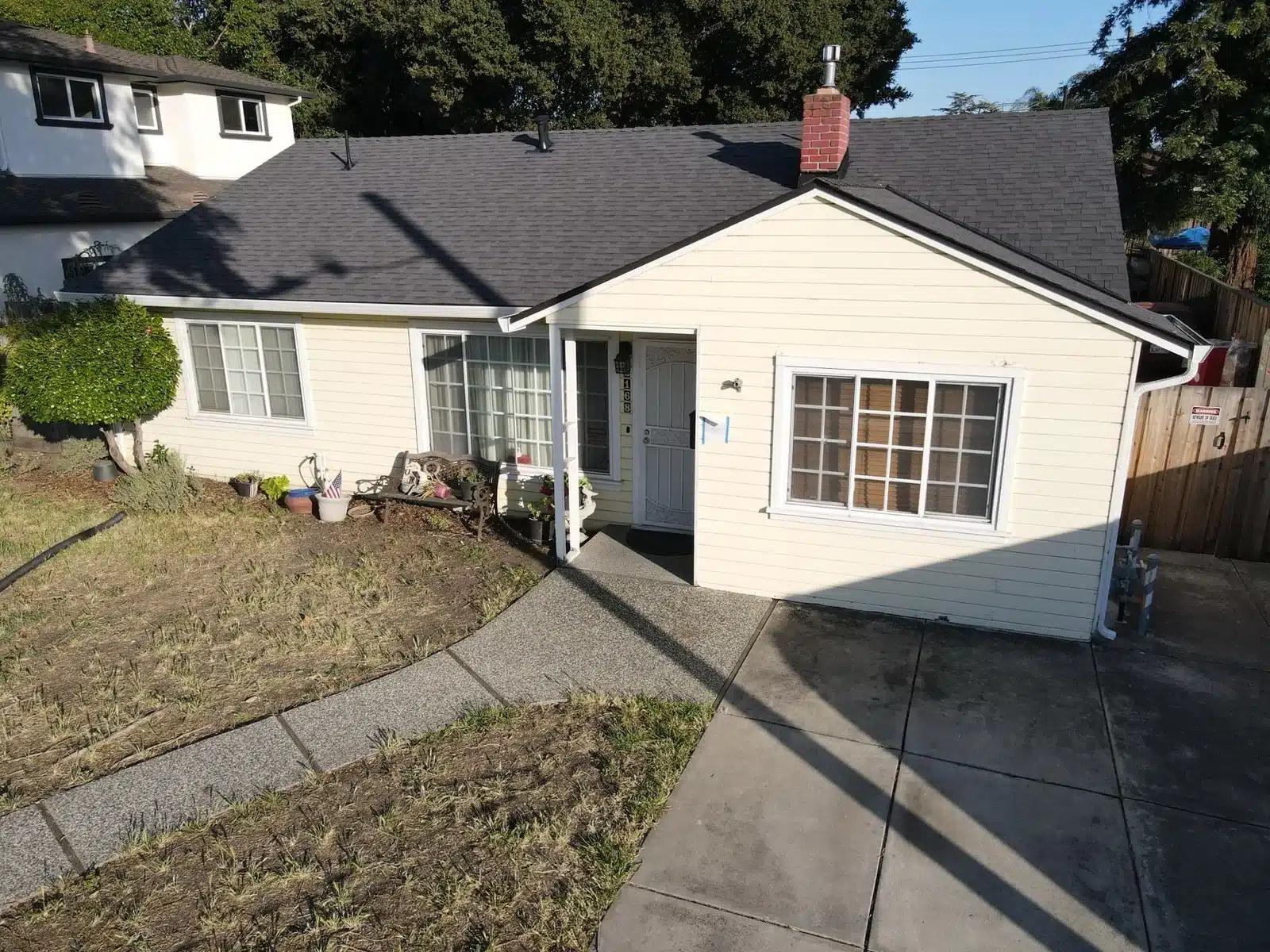
How we actually pick, on a real house
In roughly this order:
- Does Title 24 apply? If yes, the compliant colour list is the shortlist. That alone often settles it.
- What is the roof’s exposure? A dark, west-facing plane in San Jose runs hot regardless of code; a reflective shingle is worth choosing there even where it is not required.
- What is next to it? A tile neighbourhood, a shake-era street, an HOA with a palette — aesthetics are a constraint, not a luxury, and the brands differ most in colour range.
- What does the warranty require of us? Whichever brand you pick, we quote the manufacturer’s own starter, hip and ridge, and underlayment, because that is what keeps the wind and algae coverage real.
- Only then, price. The spread between these three on a typical Bay Area re-roof is smaller than the spread between two contractors quoting the same brand.
If none of the above pushes a decision, we recommend Owens Corning Duration — not because the shingle is categorically better, but because our Platinum Preferred status gives you warranty options on it that we cannot give you on the other two. That is a real advantage and it is the only one we will claim.
The full scope of a tear-off and re-roof, whichever brand you land on, is set out on our shingle roofing page, and finished jobs are in the project gallery.
Common questions about shingle brands
Which shingle brand is best for a San Jose roof?
There is no single best brand for San Jose, but there is usually a best brand for your roof. If your re-roof has to meet California Title 24, start from the compliant colour list: CertainTeed Landmark Solaris complies in every colour, Owens Corning offers a dedicated Duration COOL line, and GAF Timberline HDZ is rated in four colours. If Title 24 does not bind, all three flagship shingles carry a limited lifetime warranty, Class A fire resistance and Class 3 impact resistance, and the decision comes down to colour, warranty tier and who is installing it.
Is Owens Corning better than GAF?
Not categorically. Both make excellent architectural shingles with comparable lifetime warranties, 25-year algae coverage and Class 3 impact resistance. GAF’s WindProven warranty carries no maximum wind speed when four qualifying GAF accessories are used, which is the strongest wind language of the three. Owens Corning’s advantage for our customers is specific rather than general: we are an Owens Corning Platinum Preferred Contractor, which affects the system warranties we can offer, and we hold no equivalent GAF credential.
Do cool-roof shingles cost more, and are they worth it in the Bay Area?
Cool-roof shingles typically carry a modest premium over the same manufacturer’s standard line, and on much of the Bay Area’s steep-slope residential work they are not optional — Title 24 requires them. Where they are optional, the case is strongest on dark, sun-exposed planes and on homes with limited attic ventilation, since a reflective surface lowers attic temperature. The saving is real but gradual; the compliance is immediate.
Not sure which shingle your roof actually needs?
We will tell you whether Title 24 applies to your address, which compliant colours you would actually have to choose from, and what each brand’s warranty would require us to install. Free, in writing, and no pressure.
Gina K. writes about Bay Area roofing for Lifetime Roofing & Renovation, drawing on the team's 16+ years of experience roofing homes across Silicon Valley.