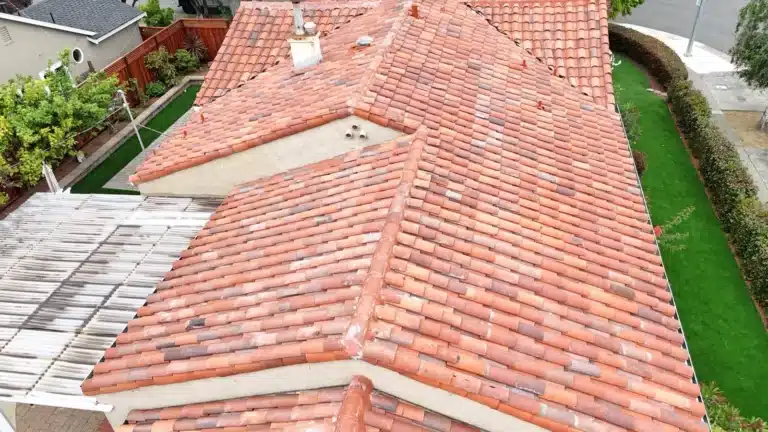
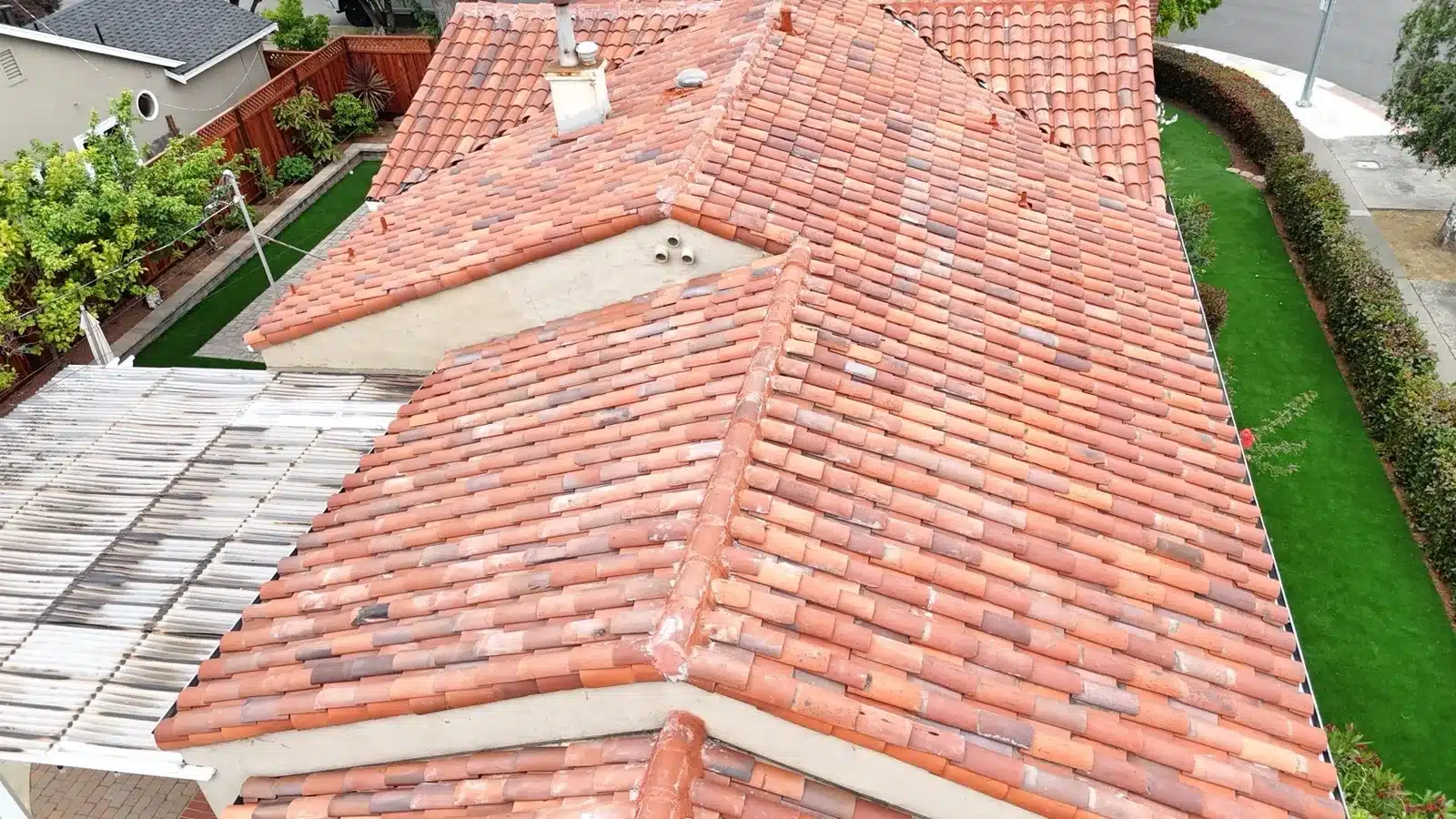
A full lift and relay of a two-piece clay barrel tile roof on a Spanish-style home in San Jose: 36 squares of original tile lifted and salvaged, aged underlayment stripped off the original board sheathing, new underlayment installed, and the same tile relaid. Work began 23 April 2026 and ran through May.
Should I Lift and Relay My Spanish Tile Roof?
If the tile is sound and the underlayment is at the end of its life, yes — and that is the usual situation on a Bay Area tile roof somewhere past twenty-five years old. Clay tile does not really wear out. The felt underneath it does, and that felt is the actual waterproofing. A lift and relay takes the tile off, replaces everything under it, and puts the same tile back. That is what happened on this 1402 Clarita Avenue house in San Jose: 36 squares of two-piece clay barrel tile came off by hand, the aged underlayment came off the original board sheathing, new underlayment went down, and the original tile went back on. The roof looks the same afterwards, which is rather the point.
A homeowner asked this on r/Roofing after four inspections gave him two different answers — three roofers said minor repairs, one said lift and relay. That split is normal, and it usually comes down to whether anyone actually looked under the tile.
The tile was fine. What was under it was not.
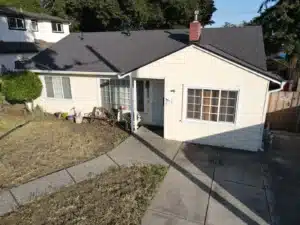
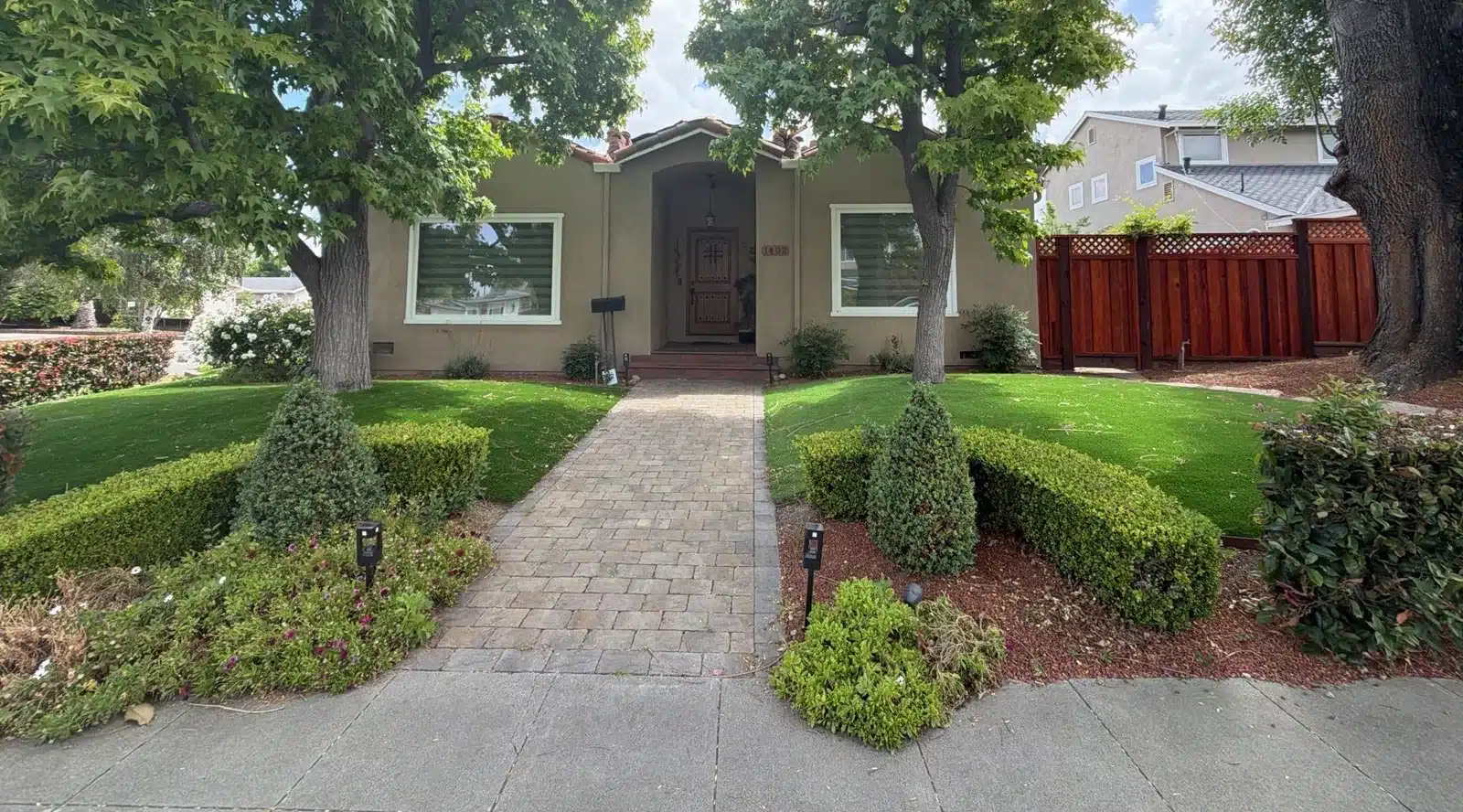
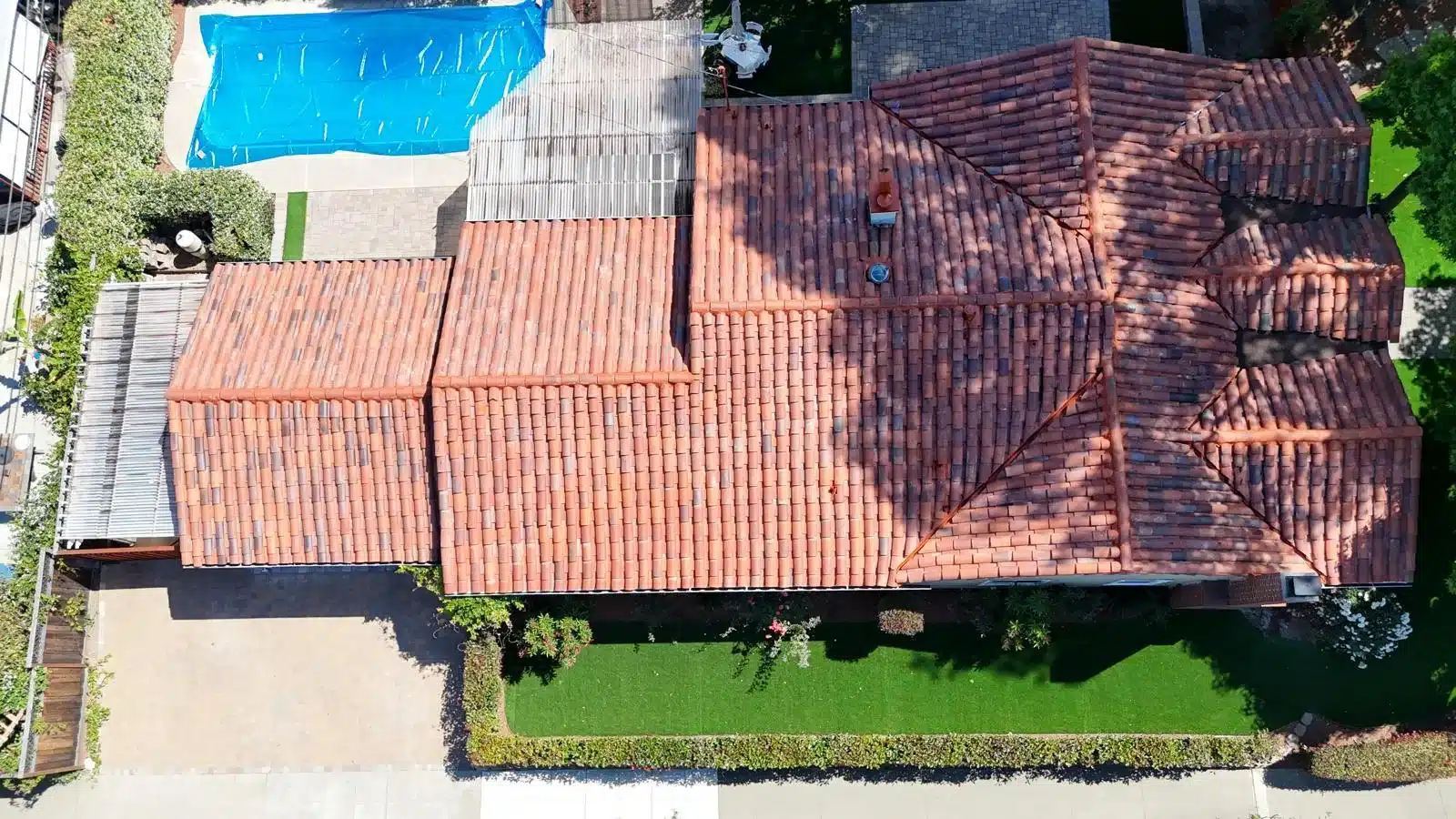
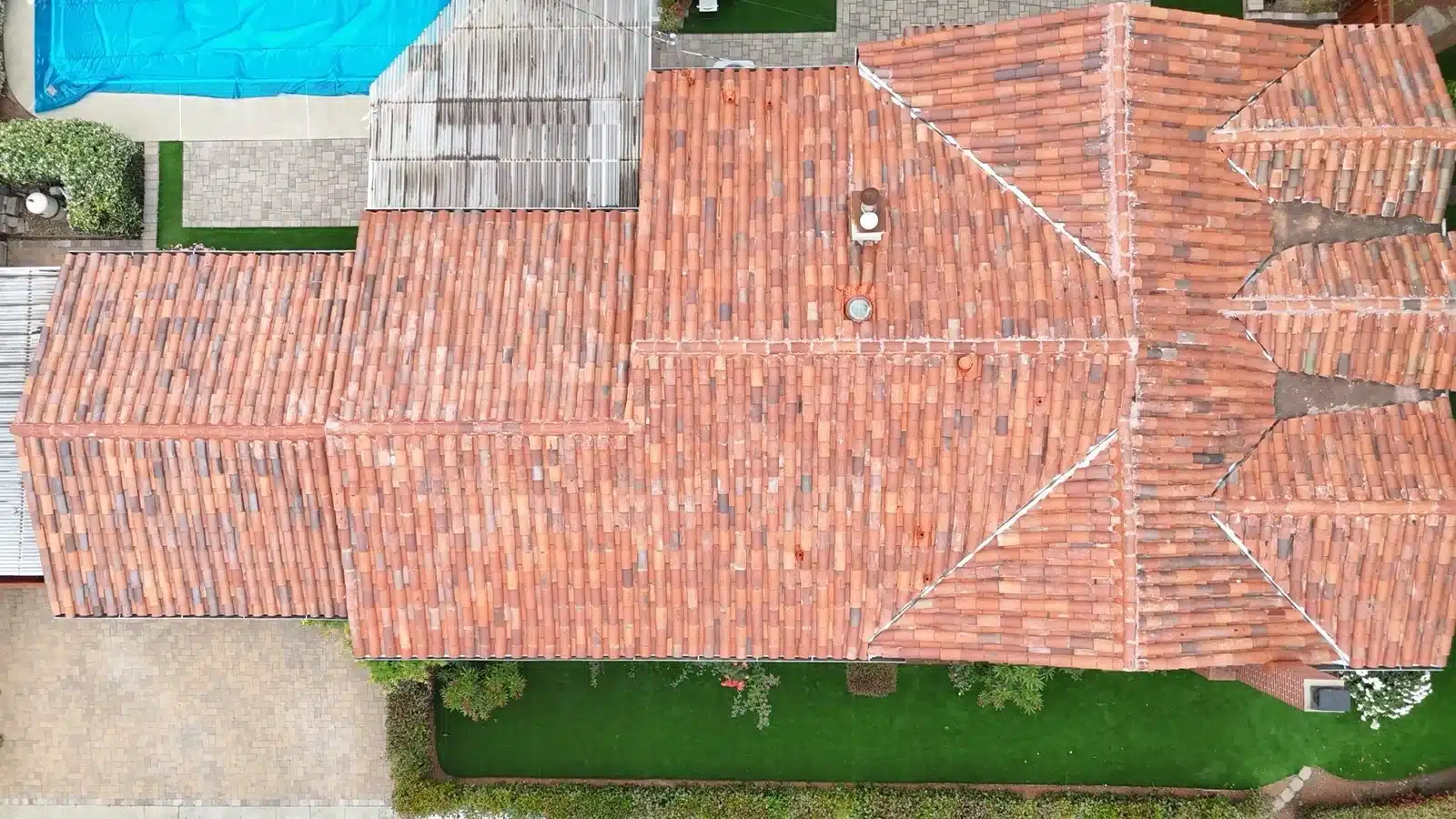
From the street this was a well-kept Spanish-style home with a handsome two-piece clay barrel roof — the round-topped pan-and-cover tile you see across older San Jose neighbourhoods. No missing tile, no obvious sag, nothing a homeowner would look at and call an emergency.
That is exactly what makes tile roofs deceptive. The tile is a rain screen and a wearing surface; it sheds the bulk of the water and protects what is underneath. The thing that actually keeps water out of the house is the underlayment beneath it — and on a roof of this age, that was aged felt sitting directly on the original board sheathing. Felt has a service life measured in decades, and it had reached the end of it.
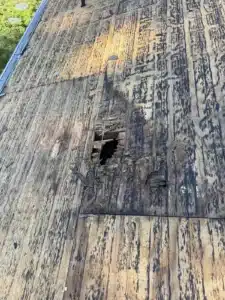
When the tile came off, the deck told the rest of the story: original 1x boards, laid tight but weathered, with the old underlayment breaking down across the field. Nothing had failed dramatically. It was simply due, and doing it before a leak is the cheap version of this project.
Lift, replace what fails, relay the same tile
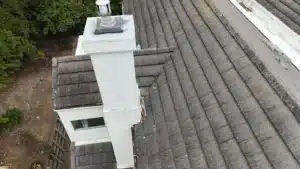
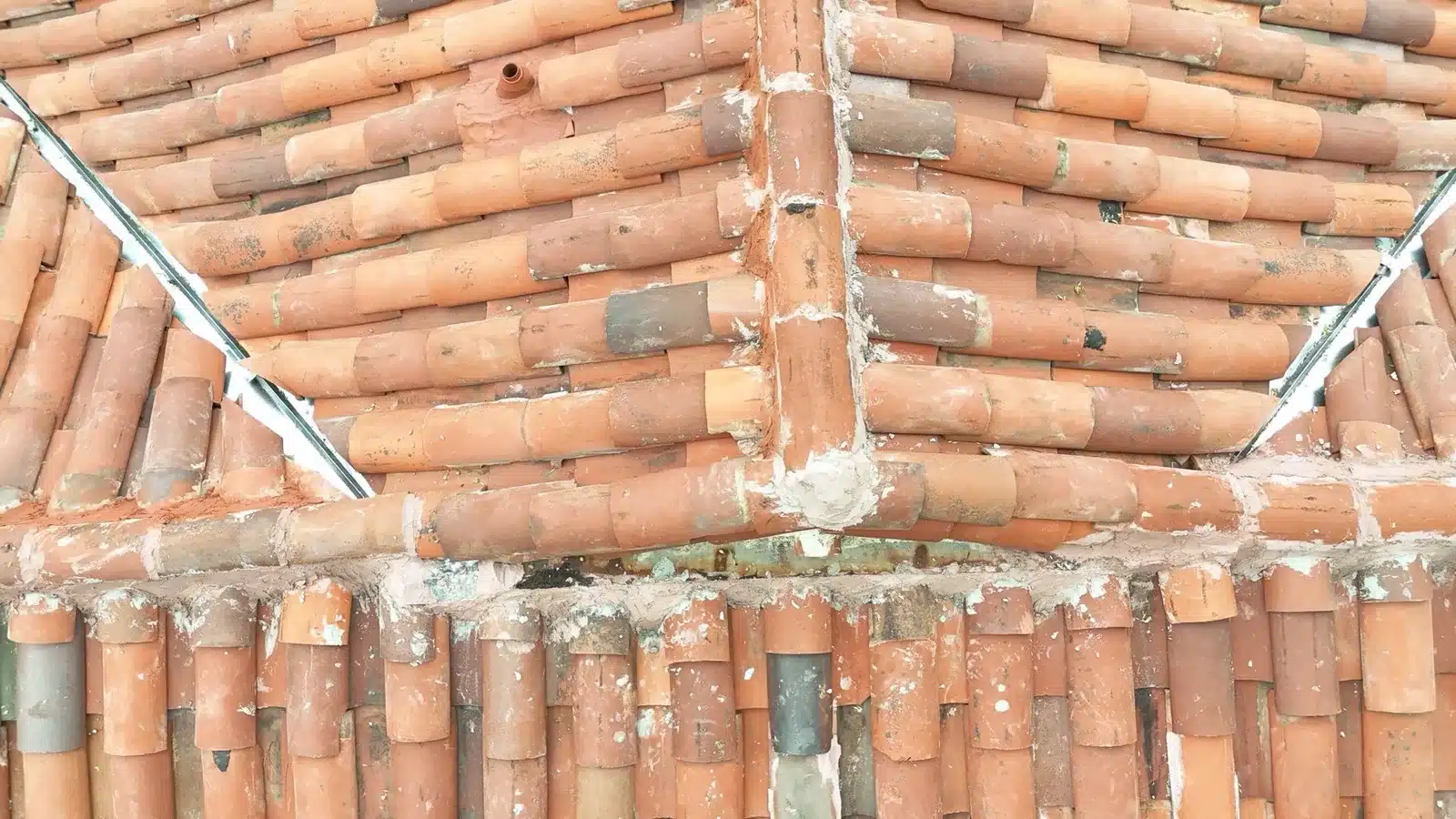
A lift and relay is a patient job rather than a difficult one. The tile is taken off by hand and stacked on the roof in the order it will go back — you can see the stacks in the photographs, sitting on the planes that were still to be stripped. Two-piece clay is brittle and irreplaceable in matching quantities, so the handling is the whole game: broken tile is the one cost nobody wants on this kind of job.
With the tile off, the old underlayment was stripped, the board sheathing was inspected and any failed boards dealt with, and new underlayment was installed across the full 36 squares. Then the original tile went back — field tile, hips and ridges — on a roof with a lot of planes and a lot of hips to work around.
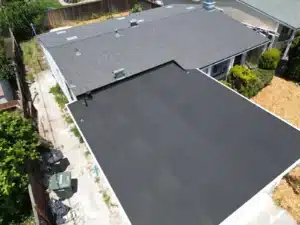
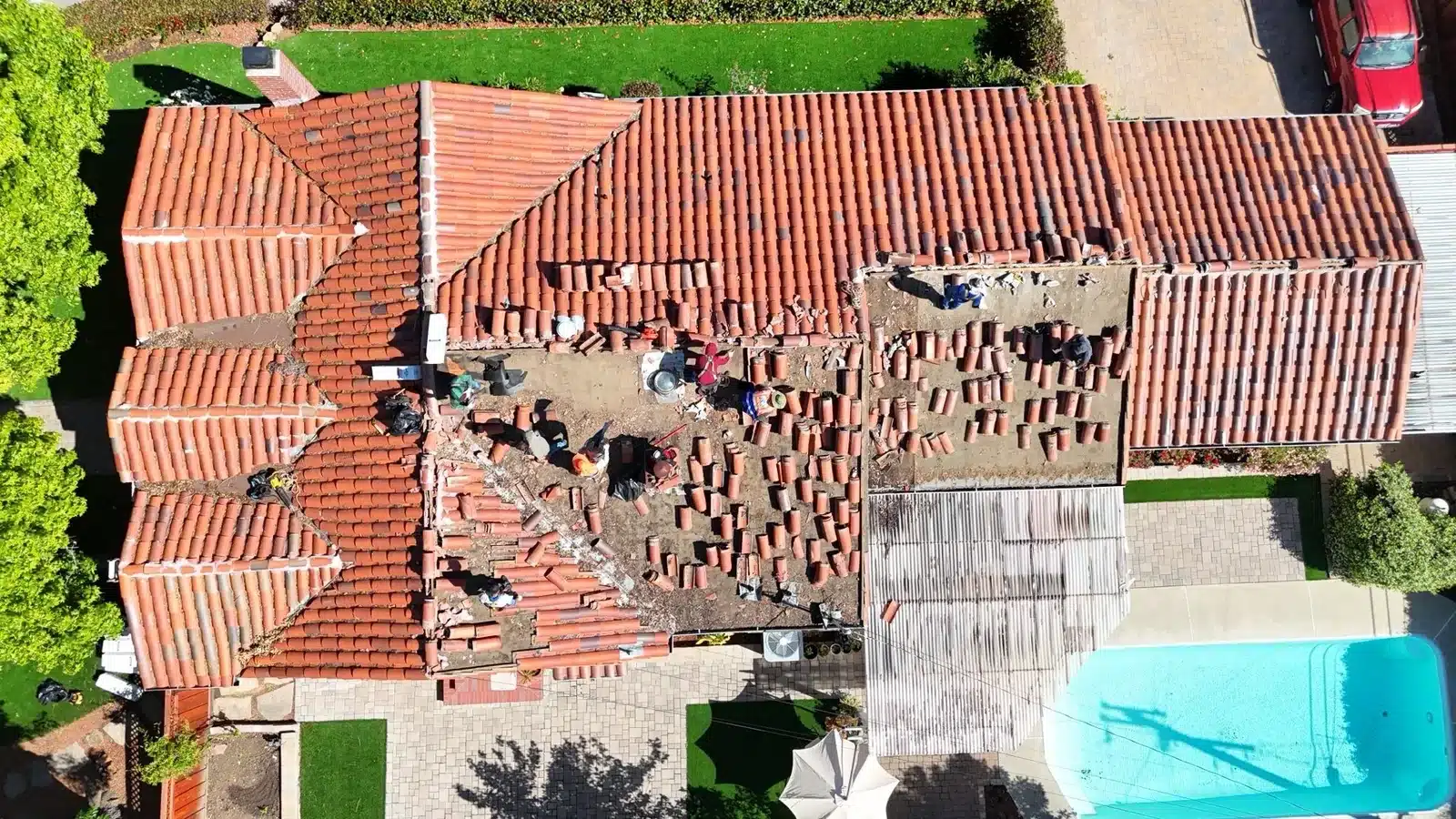
The work was staged so that no more of the roof was open than the crew could dry in the same day. The aerial photographs show it clearly: half the roof stripped to bare boards, half still tiled and weather-tight.
How a relay actually runs
Work began on 23 April 2026. The first days were tile removal and stacking — slow, careful, and the part that decides how much of the original roof survives to go back on. A house this size has tile on the main roof, the wing and the covered walkways, and each plane was handled on its own.
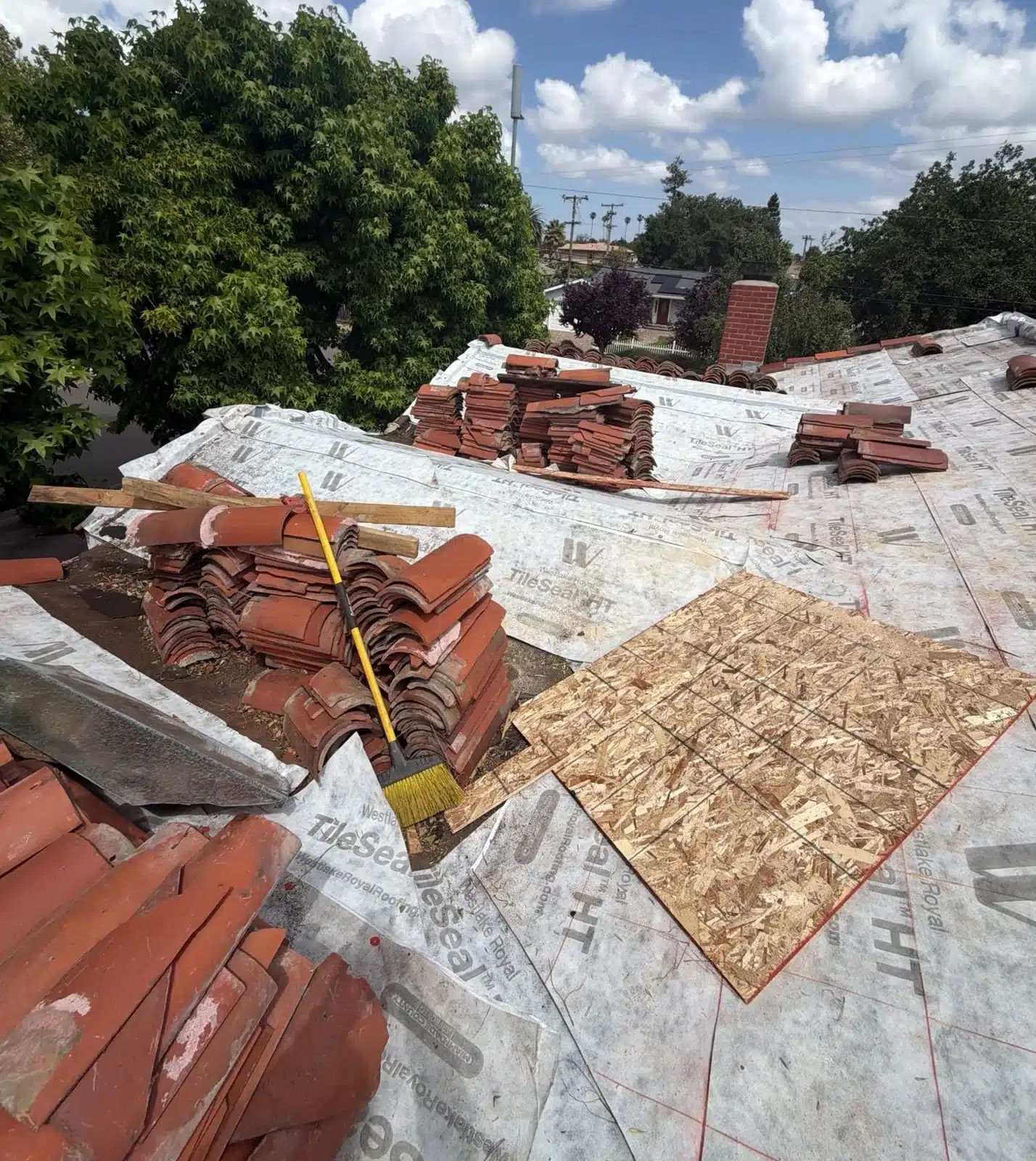
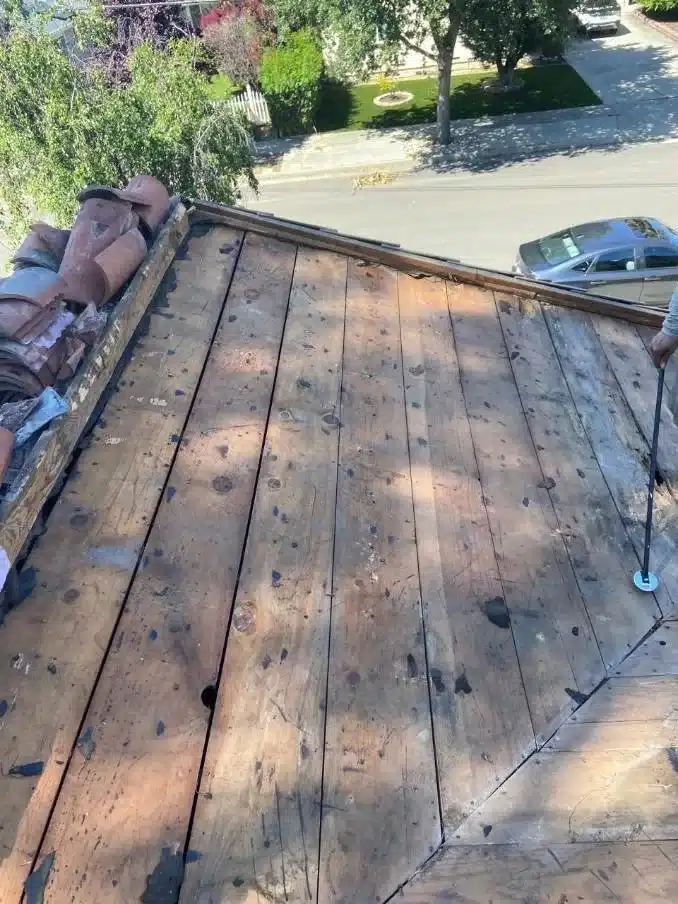
Stripping the old underlayment and laying new ran through early May, section by section, with the tile going back behind it. The finished roof was photographed in mid-May. Because the same tile went back, the house looks unchanged from the street — the difference is entirely in the layer nobody sees.
Before vs. After
| Feature | Before | After |
|---|---|---|
| Roof tile | Original two-piece clay barrel tile, sound but sitting on failing felt | The same tile lifted, salvaged and relaid |
| Underlayment | Original aged felt, at the end of its service life | New underlayment across all 36 squares |
| Deck | Original board sheathing, weathered, unseen for decades | Fully exposed, inspected, and covered fresh |
| Appearance | Spanish-style clay roof | Unchanged — the same clay roof, on a new waterproof layer |
| Waste | — | Tile reused rather than landfilled |
| Timeline | — | Started 23 April 2026, finished May 2026 |
How to tell whether you need a relay or just repairs
The honest answer is that you cannot tell from the tile. A roofer who quotes minor repairs after looking only at the surface is answering a different question from the one you asked. The information is under the tile, and getting it means lifting some — in a valley, at a hip, near a penetration — and looking at the condition of the felt.
Age is the other guide. Original underlayment on a tile roof past about twenty-five to thirty years is living on borrowed time whether or not it has leaked. If three people tell you it is fine and one tells you it is finished, ask each of them what they saw underneath — the answers usually sort themselves out quickly.
And if you are considering solar, do the relay first. Mounting panels onto an underlayment with a few years left in it means paying twice to take them off again. More on scope and sequencing is on our clay tile roofing page, we do a lot of this across San Jose, and more finished jobs are in the project gallery.
Questions about lifting and relaying tile roofs
What is a lift and relay on a tile roof?
It is the replacement of everything under the tile while keeping the tile itself. The tile is removed by hand and stacked, the old underlayment is stripped off the deck, the deck is inspected and repaired where needed, new underlayment is installed, and the original tile is put back. It is the standard way to renew a clay or concrete tile roof, because the tile long outlives the waterproofing beneath it.
How long does the underlayment under a tile roof last?
Traditional felt underlayment under tile generally lasts somewhere in the twenty-to-thirty-year range in a Bay Area climate, while the clay or concrete tile above it can last far longer. That mismatch is why tile roofs are relaid rather than replaced. Modern synthetic and self-adhered underlayments are rated longer, which is part of what you gain from the work.
Can the original tiles be reused, or do I have to buy new ones?
On a well-handled job most of the original tile is reused. Some breakage is unavoidable — clay barrel tile is brittle and some of it is already cracked before anyone touches it — so a percentage is replaced from salvage or matched stock. Reusing the tile is both cheaper and the only reliable way to keep an older roof looking like itself, since exact matches for discontinued profiles are hard to find.
Not sure whether your tile roof needs a relay?
We will lift tile where it matters, show you what the underlayment underneath actually looks like, and tell you how much life is left in it. Free, in writing, and no pressure.
Gina K. writes about Bay Area roofing for Lifetime Roofing & Renovation, drawing on the team's 16+ years of experience and 1,000+ completed roofs across Silicon Valley.