
Drone photography, infrared thermal imaging, and an inspector who has walked hundreds of Bay Area low-slope roofs. We inspect TPO, PVC, EPDM, modified bitumen, and metal systems — and close every visit with a written report your facility team can budget against. The standard inspection is free.
A commercial roof inspection is a documented, point-by-point evaluation of a building’s roof system — membrane, seams, flashings, parapets, drainage, and rooftop equipment — that establishes its current condition and remaining service life. The National Roofing Contractors Association recommends one every spring and every fall, plus a follow-up check after any major storm.
Drone + infrared imaging — aerial mapping covers the whole field fast, and thermal scans find wet insulation that looks dry from above
A report, not a sales pitch — annotated photos, a severity rating for each finding, and cost estimates — evidence you can take to ownership
Every commercial system — TPO, PVC, EPDM, modified bitumen, built-up, and metal — single-tenant buildings to multi-building campuses
Zero business disruption — we schedule around your operating hours and our inspectors work independently
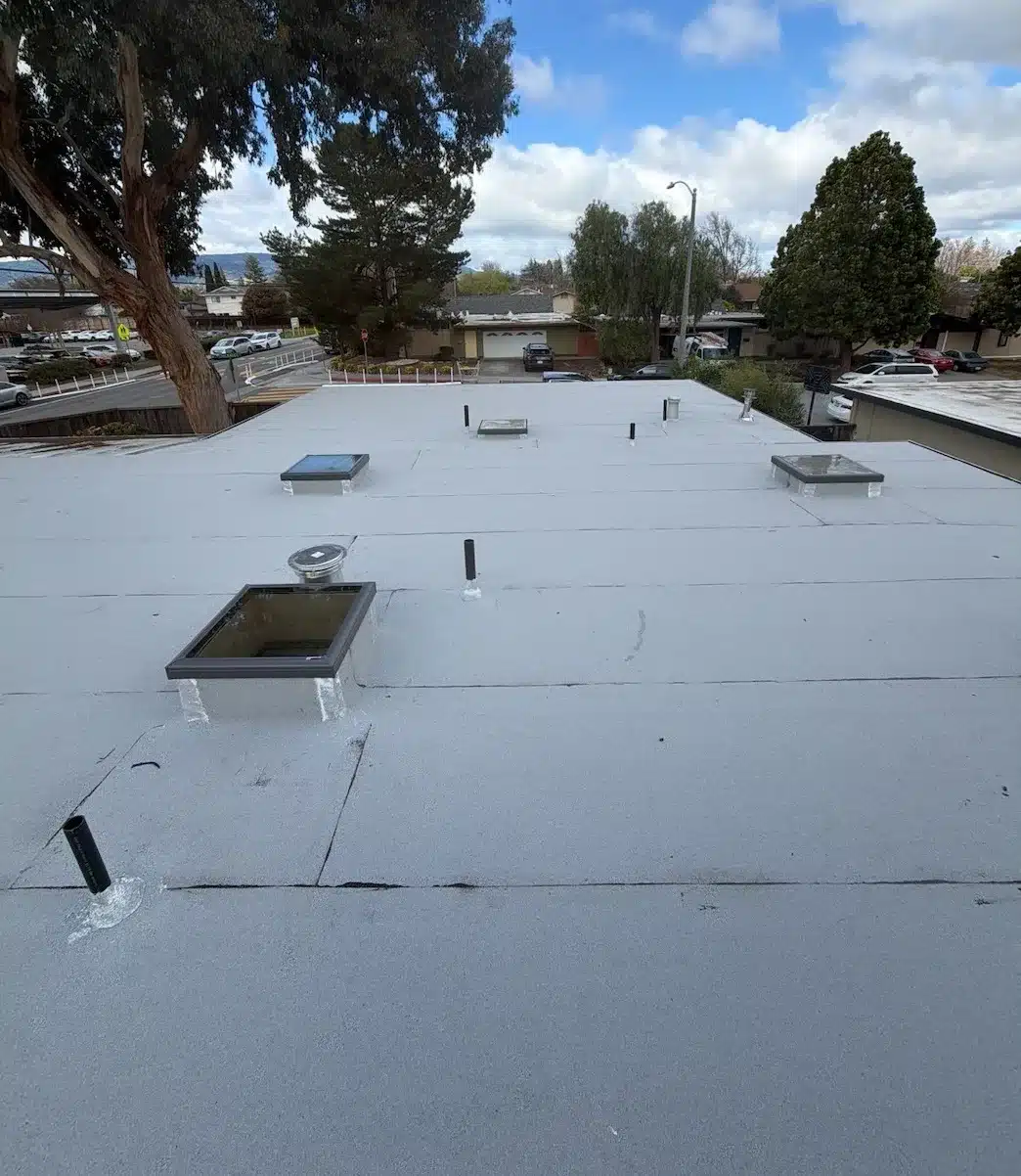
In the San Jose market, a professional commercial roof inspection typically runs $350 to $1,200 depending on roof size, access, and scope — but Lifetime Roofing & Renovation performs standard commercial inspections free, written report included. Very large roofs (50,000+ sq ft) are usually priced per square foot on the open market, and infrared moisture surveys are quoted separately when a leak can’t be traced visually. If the inspection finds real problems, you get honest numbers for repair or replacement — never pressure.
Roof area and the number of penetrations, access (ladder vs. interior hatch vs. lift), system type, and whether infrared or core sampling is in scope. A 10,000 sq ft single-story office is a very different job from a 100,000 sq ft warehouse.
A walked inspection of the full field and every detail, drone photography where it adds coverage, and the complete written report with severity ratings and cost estimates. No invoice, no obligation, no fine print.
Low-slope commercial roofs fail at the details — seams, penetrations, and drainage — and every system fails differently. We inspect all of them.
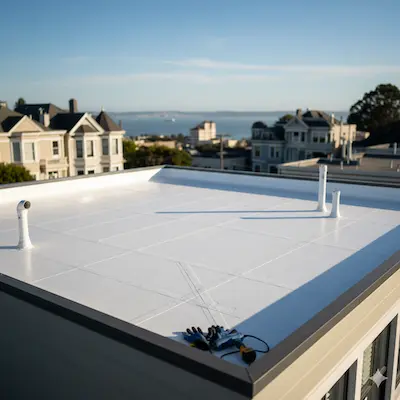
Heat-welded seams checked for fishmouths and voids, membrane scanned for punctures and UV chalking, and terminations verified at every wall and curb. White membranes also support Title 24 cool-roof compliance.

Older asphaltic systems hide failure under patch layers. We map blisters, alligatoring, and saturated plies, and tell you honestly whether the roof needs a repair, an overlay, or a tear-off.

Panel movement, backed-out fasteners, seam sealant failure, and rust at cut edges. Metal roofs last decades — when someone is watching the fasteners and flashings.
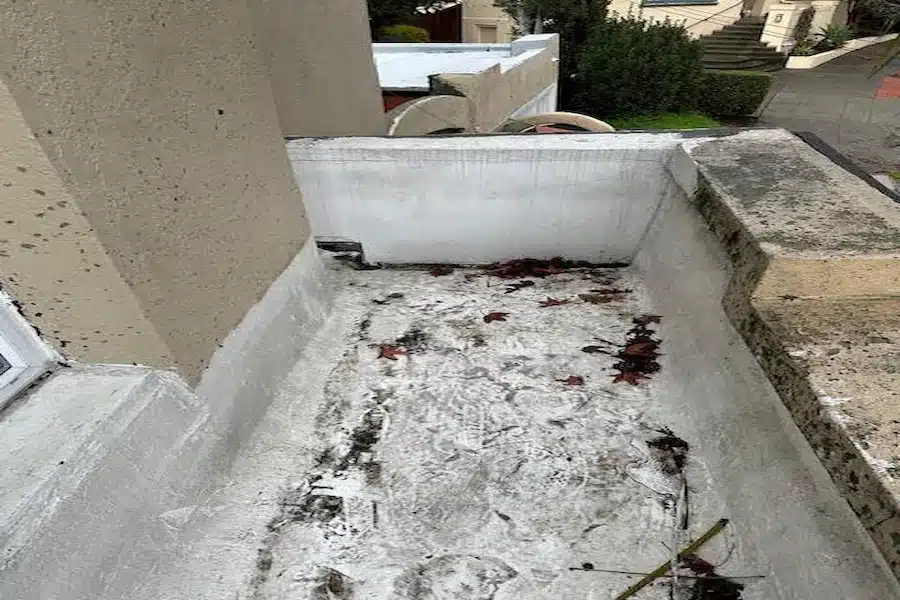
Ponding water, clogged drains and scuppers, parapet cap failures, and the curbs under rooftop HVAC — the places most leaks actually start. Active leaks get same-day emergency response.
Commercial roof problems compound quietly. Inspection is the cheapest line item in your roof’s life cycle — and the one that protects all the others.
A flashing or seam repair in the South Bay typically runs $800 to $2,600. The interior damage from one missed leak — soaked insulation, stained ceilings, downtime — routinely costs ten times that.
Manufacturer membrane warranties require documented periodic maintenance. Our written reports are the paper trail that keeps a 20-year warranty worth 20 years. Between inspections, our flat roof maintenance checklist covers what to check yourself.
Severity ratings and cost estimates on every finding turn roof spending into a capital plan — repair now, restore in year three, replace in year eight — instead of an emergency purchase order.
The same documented sequence on every building — offices, retail centers, warehouses, and industrial facilities across the South Bay.
We book the visit around your business hours and check in with your facility contact on arrival. No shutdowns, no disruption to tenants or staff.
Full evaluation of the membrane, seams, flashings, parapets, drains, and every rooftop penetration and equipment curb — plus an interior check for staining and moisture where accessible.
Aerial mapping for large or complex fields, and thermal imaging when we suspect wet insulation the eye can’t see. Technology backs up the walk, not the other way around.
You receive a digital report with annotated photos, a severity rating per finding, and cost estimates — then a recommended action plan, from simple maintenance intervals to repair scopes.
Builders, architects, and property managers use us because the report is honest, the crew is fast, and the same company can execute every repair it recommends.
A Bayview flat roof that had been leaking through two rooms of patches: our inspection traced every failure to the surface plies — sound structure underneath — so instead of a second tear-off in four years, the owner got a heat-welded TPO overlay, watertight within a week.

Twice a year — the National Roofing Contractors Association recommends an inspection every spring and every fall, plus a follow-up check after any major storm. Buildings with heavy rooftop HVAC traffic or overhanging trees benefit from quarterly walkthroughs.
Market rates in the South Bay run $350 to $1,200 for most buildings, with very large roofs priced at roughly 5 to 10 cents per square foot. Lifetime Roofing & Renovation performs standard commercial inspections free of charge, including the written report.
We evaluate the membrane surface, seams, flashings, parapets, drains and scuppers, and every rooftop penetration and equipment curb, then check the interior for staining and moisture where accessible. Drone photography and infrared imaging are added when the roof is large or a leak can’t be traced visually.
Most single-building inspections take one to two hours on site. Large warehouses and multi-building campuses take longer, and we confirm the time window when you schedule so your operations aren’t disrupted.
No. We schedule around your business hours, our inspectors work independently, and you receive the full written report afterward — most clients never pause operations at all.
Yes — every inspection closes with a digital report containing annotated photos, severity ratings for each finding, repair or replacement cost estimates, and a prioritized maintenance plan you can budget against.
One visit, one written report, zero pressure. Know exactly what your roof needs — and what it will cost — before the next storm season. Homeowner instead? Our residential 21-point inspection is free too.