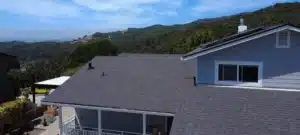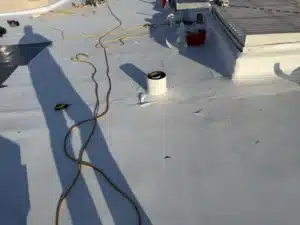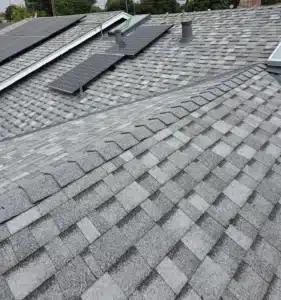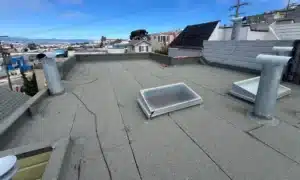
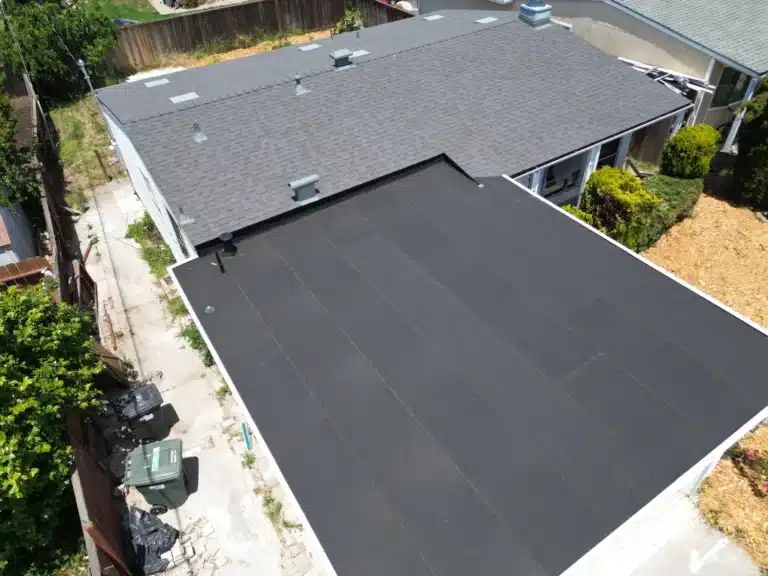
At Maxine Ave in San Mateo we stripped a tired roof back to its original board sheathing and rebuilt it as two systems on one house: a torch-applied membrane over the low-slope field, and Class A fire-rated shingles on the pitched slopes. The City of San Mateo passed the final inspection on 31 May 2025, ten days after the permit was pulled.
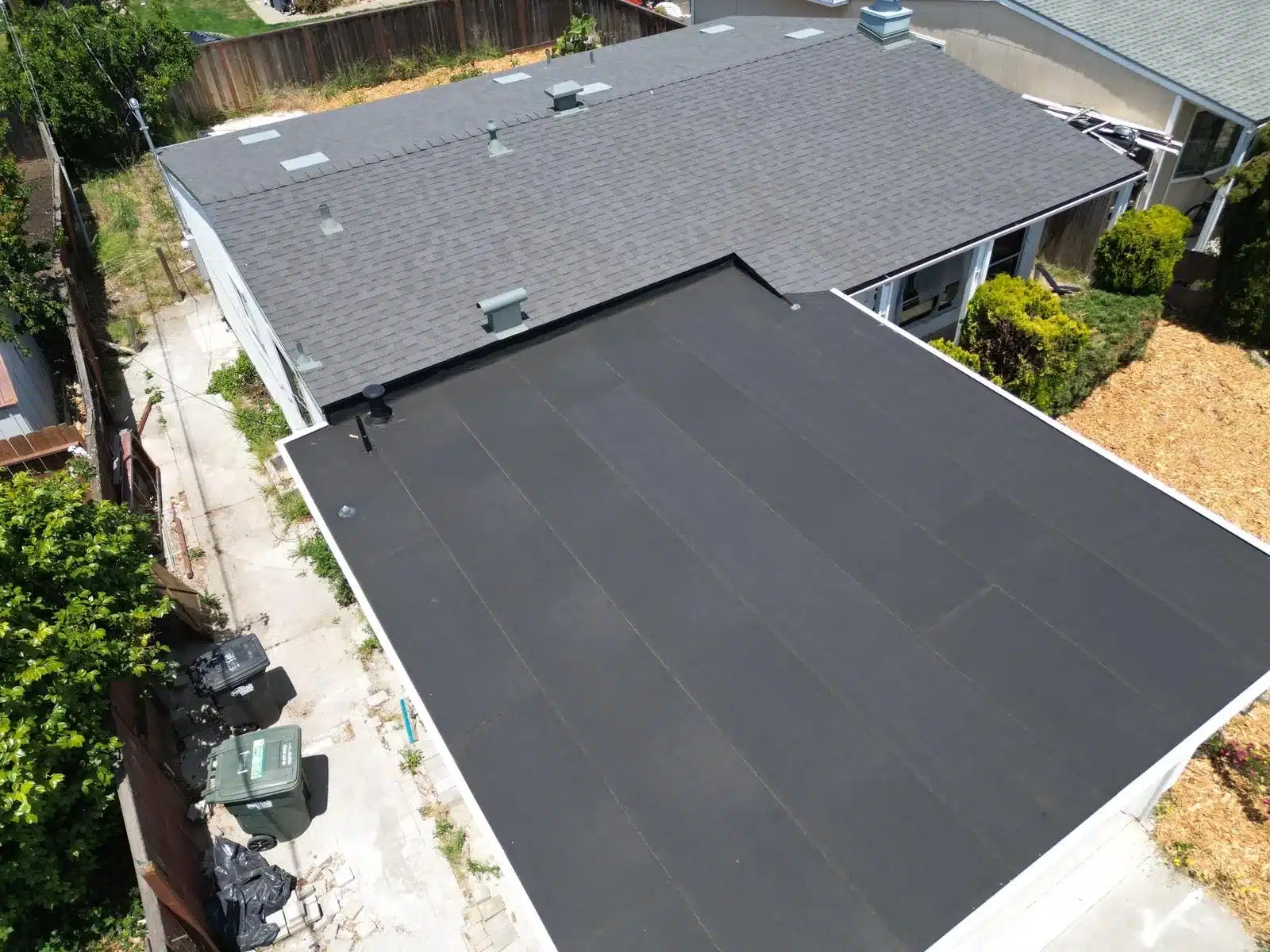
Probably not screwed, but you are on a clock: asphalt shingles are not rated or warranted below roughly a 2:12 pitch, so a low-slope area covered in shingles tends to leak at the laps long before the shingles themselves wear out. The fix is not a better shingle — it is a different system on that one section. A torch-applied or self-adhered membrane is continuous, with no laps for water to crawl back through under wind or standing water. That is exactly how this San Mateo roof was rebuilt: a torch-applied membrane over the low-slope field, Class A shingles on every slope steep enough to shed. A homeowner on r/Roofing asked this after learning about the 2:12 restriction months after the work was done — the thread ran to 162 comments, and almost all of them are about the same thing: pitch decides the material.
One House, Two Very Different Pitches
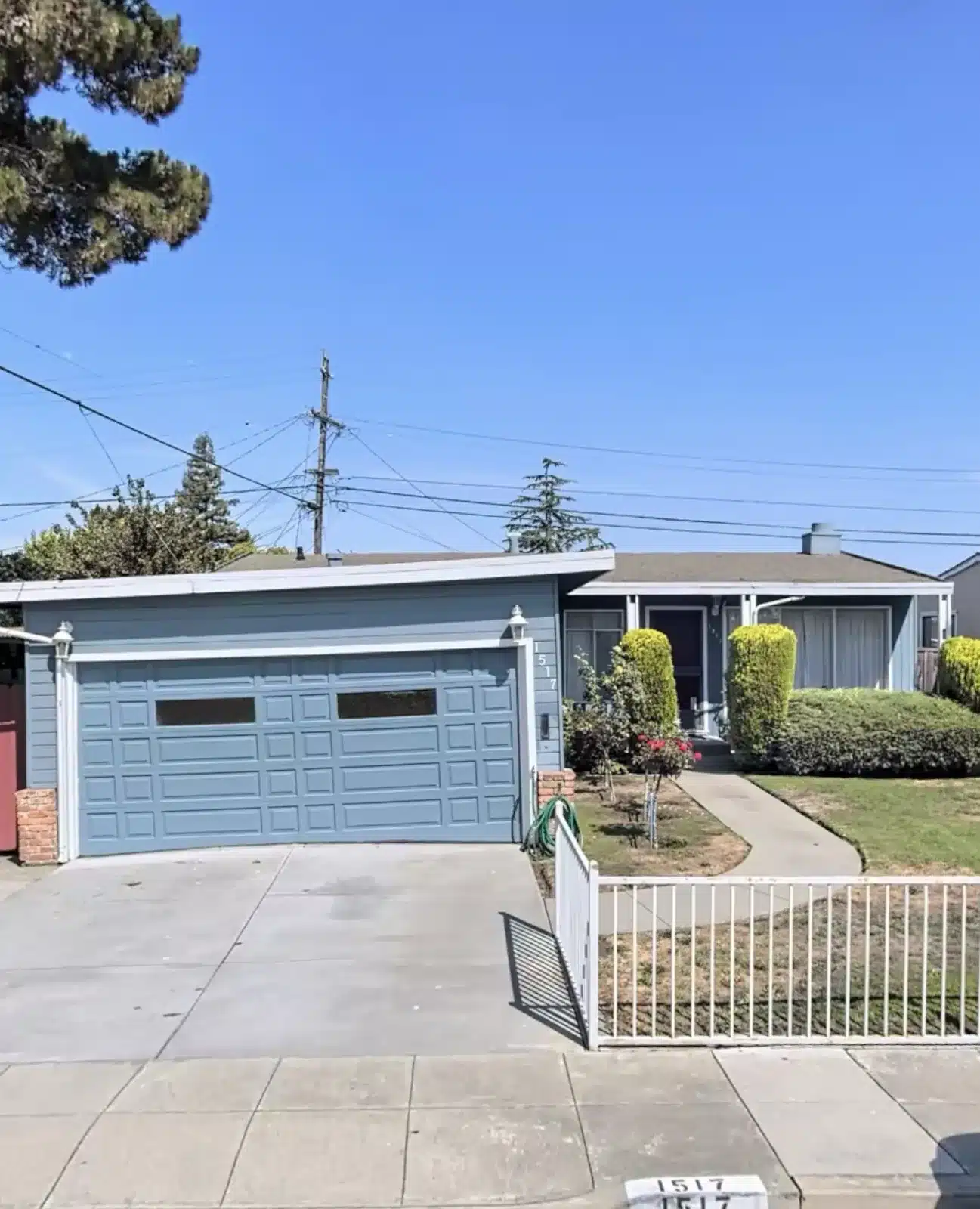
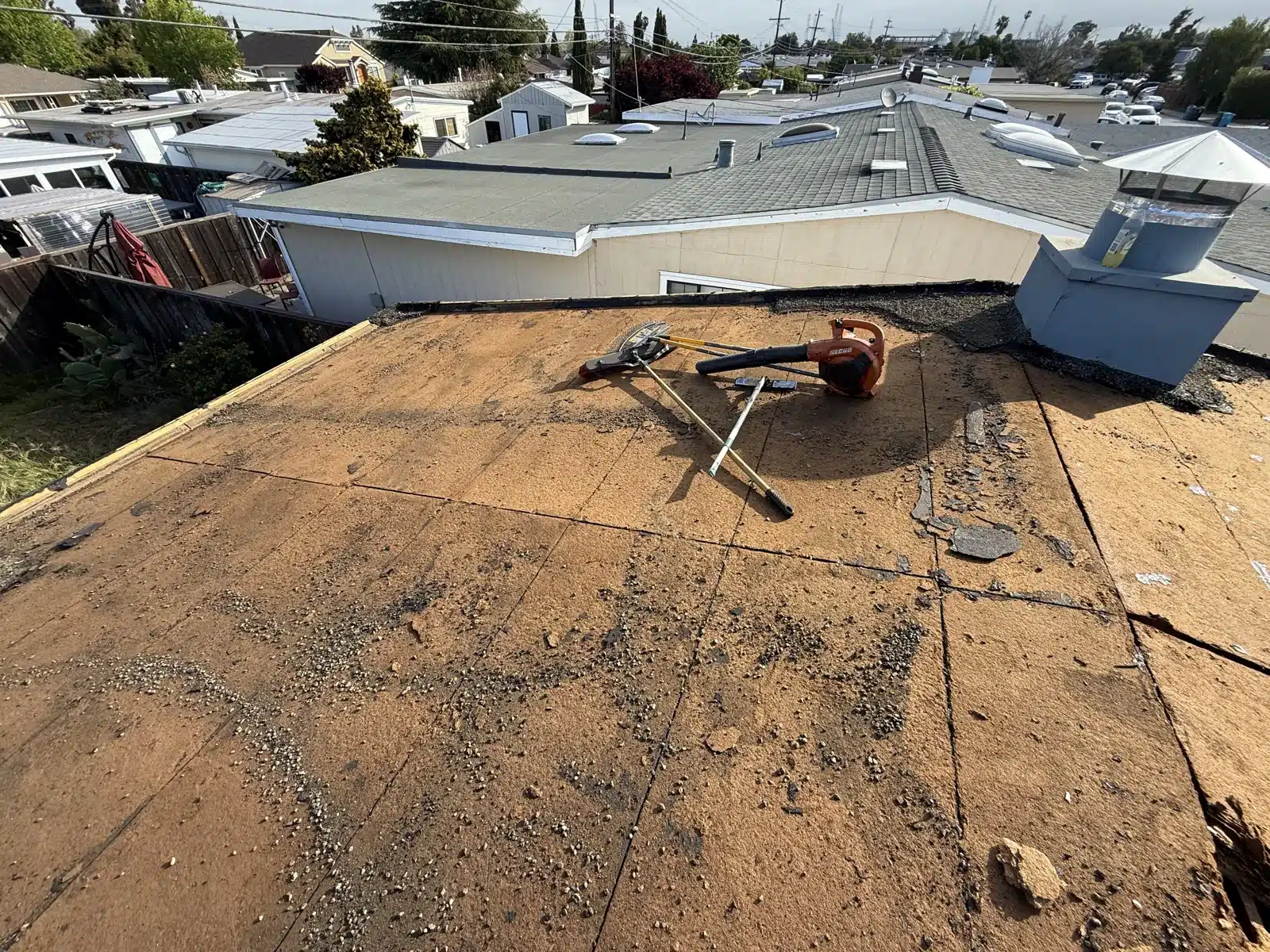
This is an ordinary single-storey San Mateo home, and like a lot of Peninsula houses of its era it is not one roof — it is a pitched main roof with a broad, nearly flat section running off the side. Those two areas look like one roof from the street, which is exactly why they so often get quoted, and covered, as one roof. They cannot be. When the old covering came off, the deck underneath turned out to be the original spaced board sheathing rather than plywood — normal for the age, and something you want to see and assess before anything new goes down. We have no close-up photograph of the old roof surface from before the crew arrived, so we are not going to describe its condition as though we photographed it.
Specify the Covering by Pitch, Not by Square Footage
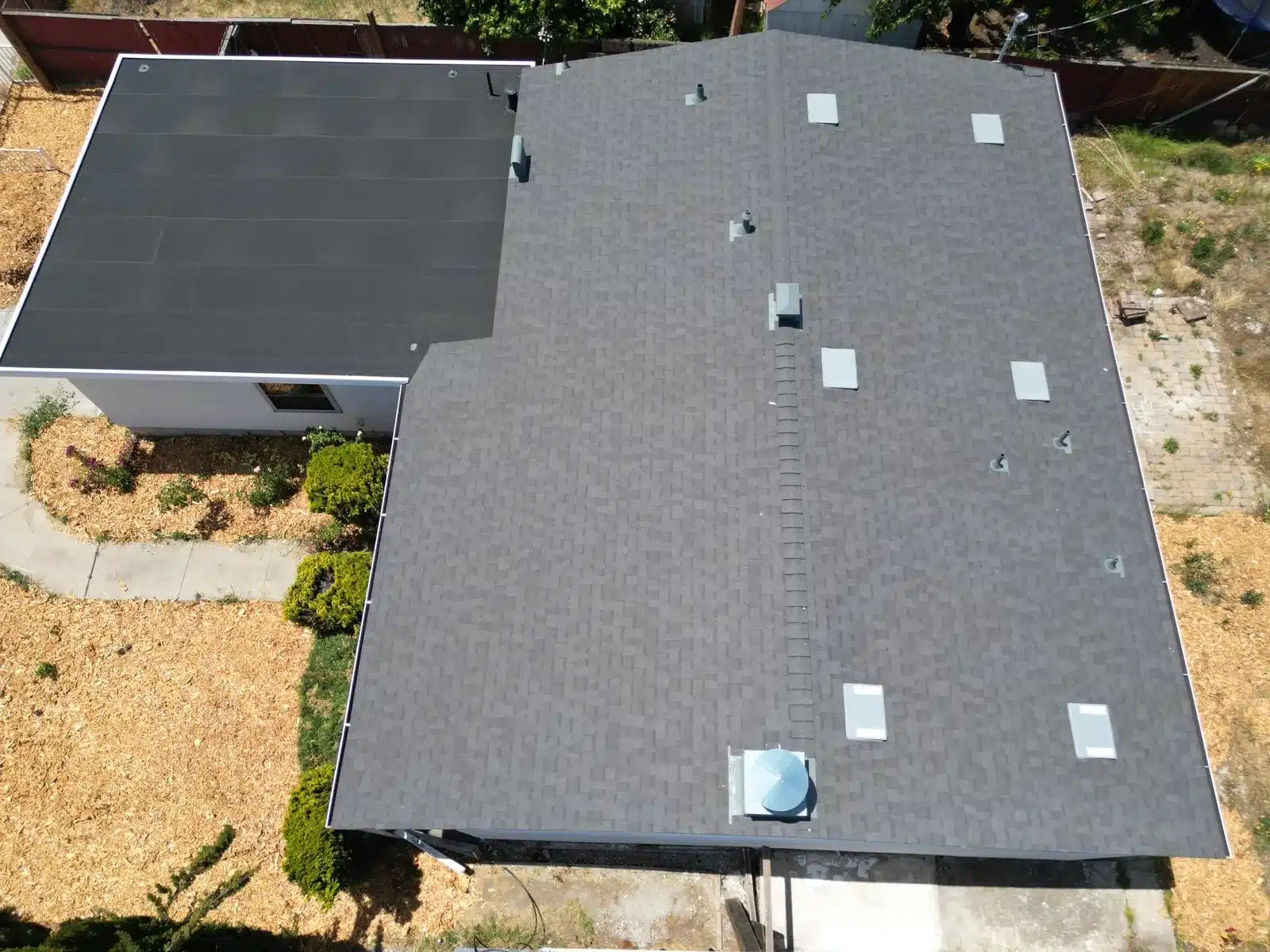
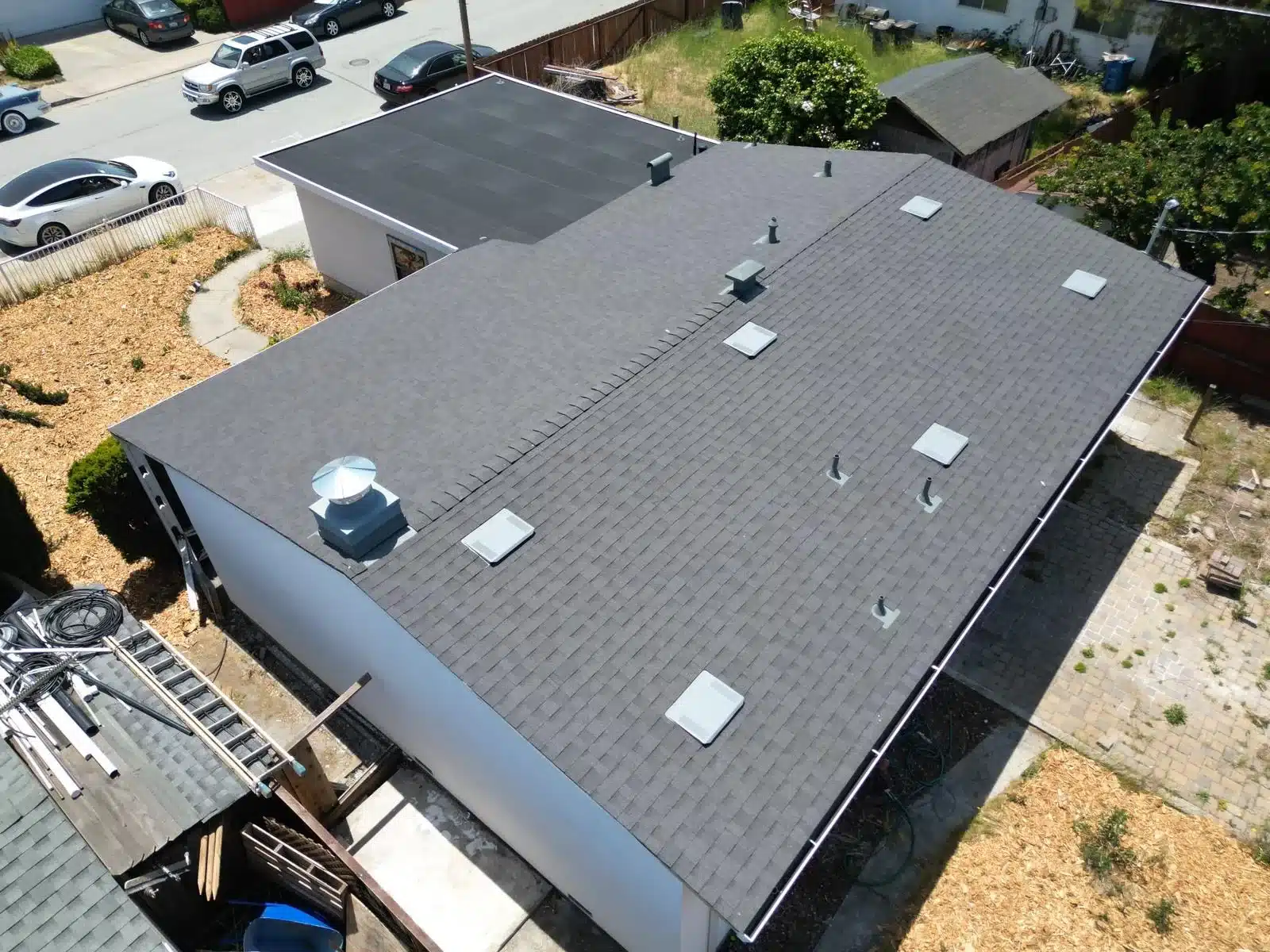
The roof was split into two assemblies and priced as two assemblies. The low-slope field got a torch-applied modified bitumen system: rolled, heat-welded and continuous, so there is no lap for water to sit on and work backwards through. Everything with enough pitch to shed got Class A fire-rated architectural shingles. Nineteen squares in total. Torch work is open flame on a residential roof, so it carries a hot-works permit from San Mateo County Fire on top of the city building permit — worth knowing if you are comparing quotes, because a bid that has not accounted for it has not planned the job. If your low-slope area is larger or you are weighing a membrane against other options, our flat roof repair and flat roof pros and cons pages go through the trade-offs; shingle roofing covers the steep-slope side.
Tear-Off, Inspect the Deck, Paper In, Then Two Finishes
Everything came off first. No layering, no covering one system with another — on a roof that already has a pitch problem, adding weight and a second set of laps makes the problem harder to find later. With the deck bare, the original board sheathing was walked and checked before anything went back down.
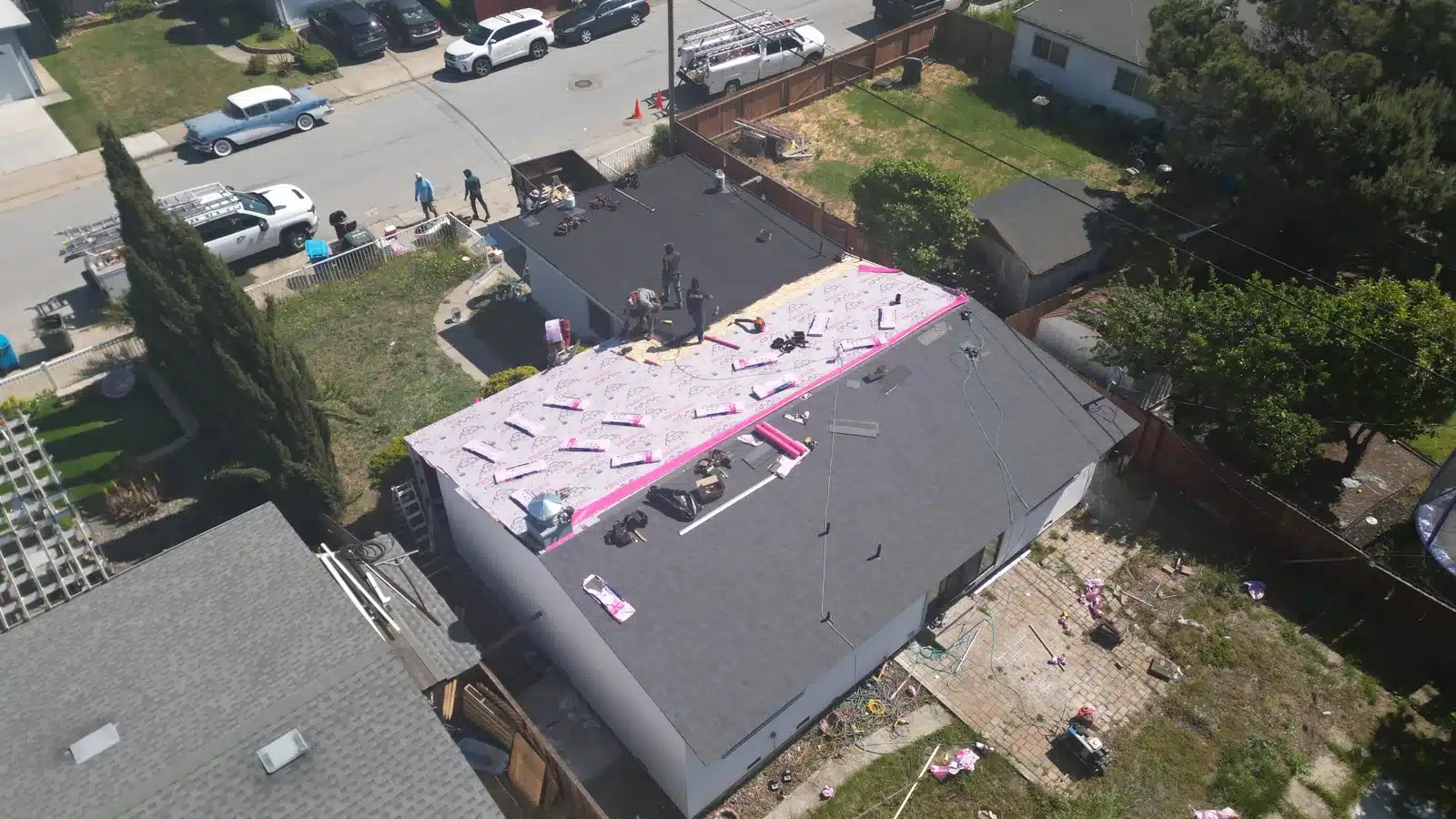
Then the two coverings went on in sequence, each detailed into the other where they meet. That junction — where a membrane runs up under the bottom course of shingles — is the single most important detail on a roof like this one, and it is the first place to look if a two-pitch roof starts leaking. Vents and skylights were reset into the new field as the work went. See the rest of our documented jobs on the roofing projects page.
Before vs. After
| Feature | Before | After |
|---|---|---|
| Low-slope section | Shingled like the rest of the roof | Torch-applied membrane, continuous, no laps |
| Pitched slopes | Worn asphalt shingles | Class A fire-rated architectural shingles |
| Deck | Original spaced board sheathing, exposed at tear-off | Inspected board by board, then fully papered in before the finish went on |
| Permitting | — | City of San Mateo permit plus the hot-works permit San Mateo County Fire requires for torch application |
| Final inspection | — | Passed 31 May 2025, ten days after the permit was pulled |
| Roof area | — | 19 squares across both systems |
Why This Comes Up So Often on the Peninsula
Post-war Peninsula housing is full of side wings, carports and additions that were built nearly flat and then re-covered, decades later, by whoever was cheapest — usually in shingles, because the rest of the roof was shingles. It is the most common avoidable roofing mistake we see between San Mateo and Belmont, and it is avoidable for one reason: it is visible from a ladder in about ninety seconds. Anyone quoting your roof should be measuring the pitch of each section and telling you, unprompted, that they are not the same roof. If nobody has said that to you, that is the question to ask. We cover the whole county from Daly City to Redwood City — see our San Mateo County roofing page for the service area and what a written scope should include, or roof replacement for the full-tear-off process.
“They did a great job, timely, clean and the project manager was very personable and attentive to all my concerns. He sent me pictures of the attic and gas vent that I was concerned about and assured me it was intact and the roofers didn’t disrupt it.”
Questions Homeowners Ask About Low-Slope Sections
What is the minimum roof pitch for asphalt shingles?
Asphalt shingles are limited to roof slopes of 2:12 and steeper, and between 2:12 and 4:12 they require a doubled underlayment. Below 2:12 the manufacturer’s warranty and the code stop backing them, because at that angle water moves slowly enough to work sideways under the laps. A low-slope area needs a membrane system instead — torch-applied modified bitumen, self-adhered, TPO or similar.
Can shingles work on a low-slope roof if there is ice-and-water shield underneath?
A full ice-and-water underlayment genuinely helps and is why some of these roofs go years without a visible leak, but it does not make shingles a rated low-slope covering. The shingles above it still have open laps, so the membrane underneath becomes the actual roof — doing the waterproofing job without being detailed, flashed or warranted as the roof. That is a slow failure, not a safe one.
Do San Mateo roofing contractors need a separate permit to torch-apply a low-slope roof?
Yes. A roof replacement in the City of San Mateo is permitted by the building department, and torch application adds a hot-works permit through San Mateo County Fire because it is open-flame work on a residential roof. Both were pulled for this job. Lifetime Roofing & Renovation, Inc. works out of 333 Cobalt Way #103, Sunnyvale, CA 94085, holds California contractor licence #1090028 in the C-39 roofing classification, and answers at (408) 685-2177 Monday to Saturday, 8am to 8pm.
Not sure what your flat section actually has on it?
We will get on the roof, measure the pitch of each section, and put in writing what each one needs. No charge for the look.
Gina K. writes about Bay Area roofing for Lifetime Roofing & Renovation, drawing on the team's 16+ years of experience and 1,000+ completed roofs across Silicon Valley.