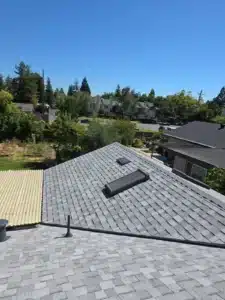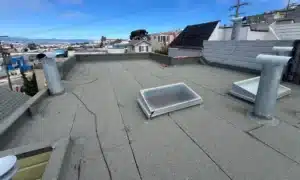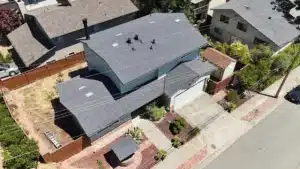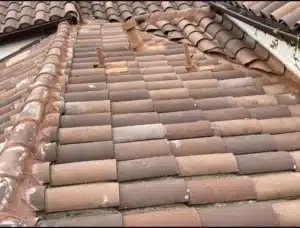
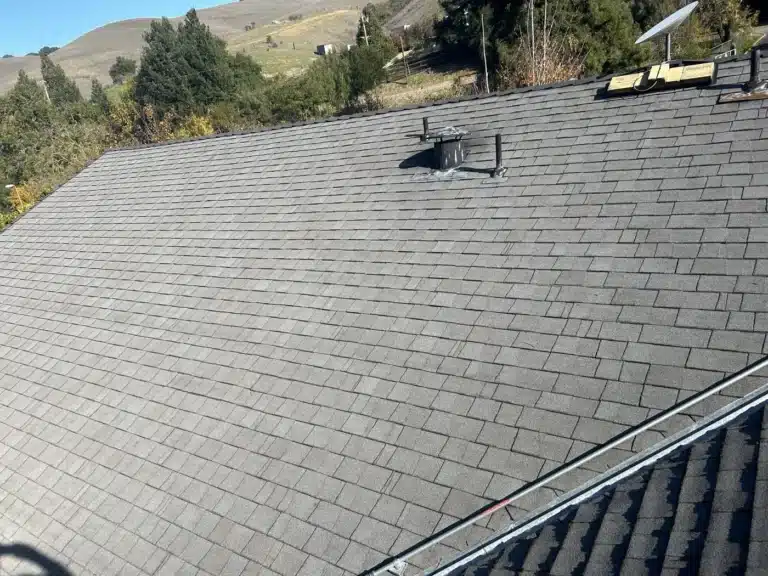
A long single-story ranch in the canyon east of Castro Valley, carrying 22 solar panels on a shingle roof that was rotting out underneath them. The job: take the array down, tear off the old roof, build a new half-inch OSB deck over the failing one, install Owens Corning shingles in Oyster Shell, reflash the skylights, hang new white gutters, and put every panel back — about $69,000 all in.
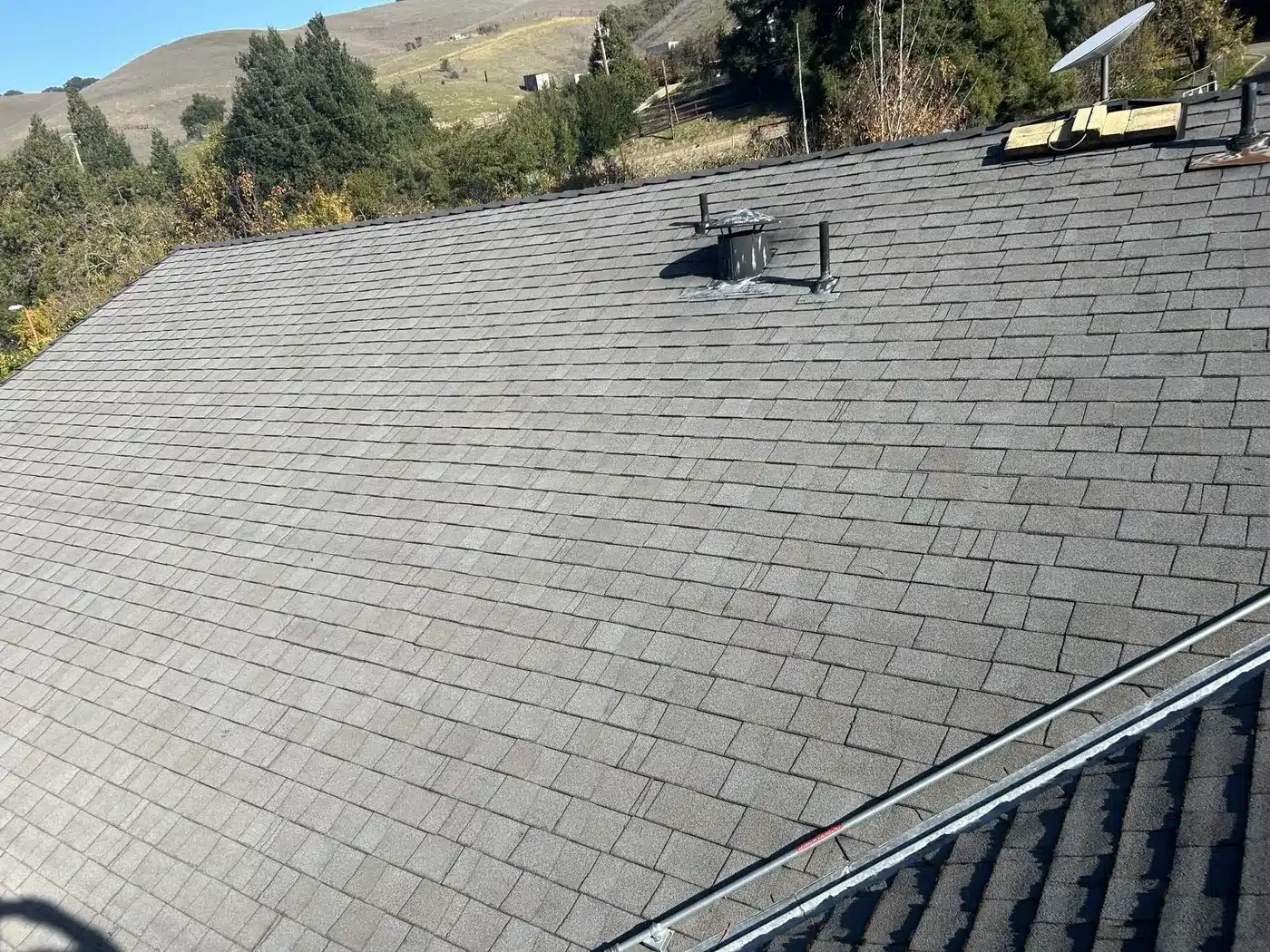
This Castro Valley roof replacement cost about $69,000 all in: detaching and resetting 22 solar panels, a complete tear-off of roughly 50 squares of old shingle, a change order for a full half-inch OSB overlay laid in a brick pattern over the deteriorated deck, Owens Corning ProArmor synthetic underlayment, Owens Corning shingles in Oyster Shell, new flashing at every skylight and penetration, new white gutters and downspouts, and the county permit. Solar panels add cost to a reroof in two places — the labor to detach, store and reset the array, and the extra care every rail mount needs to be flashed watertight — but on this house the biggest single line item wasn’t the solar at all. It was the deck. A roof that had been leaking under an array for years needed a new structural surface before anything could be nailed to it, and that overlay is what turned a standard reroof into a rebuild.
Solar Panels on Top of a Roof That Was Already Failing
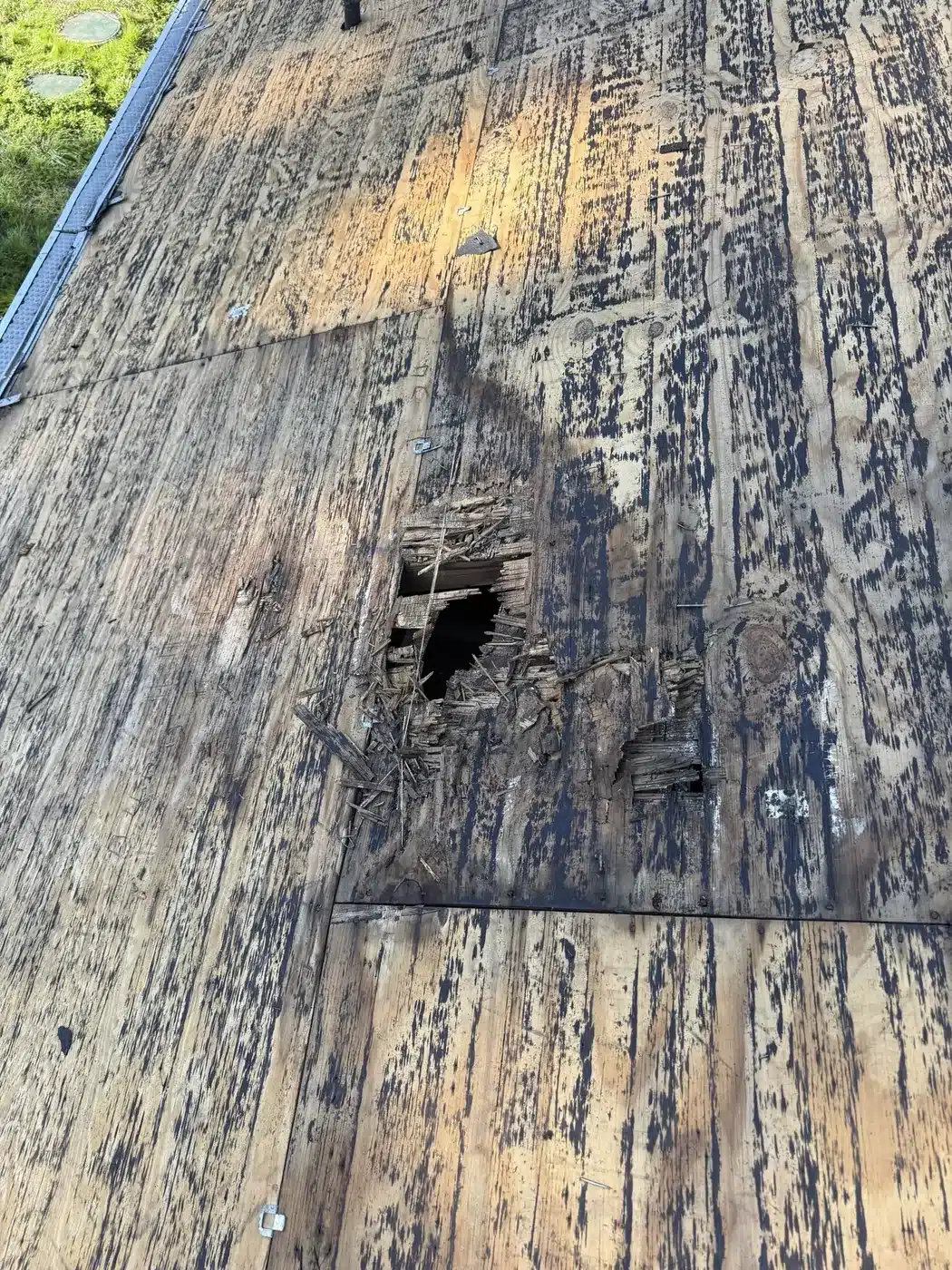
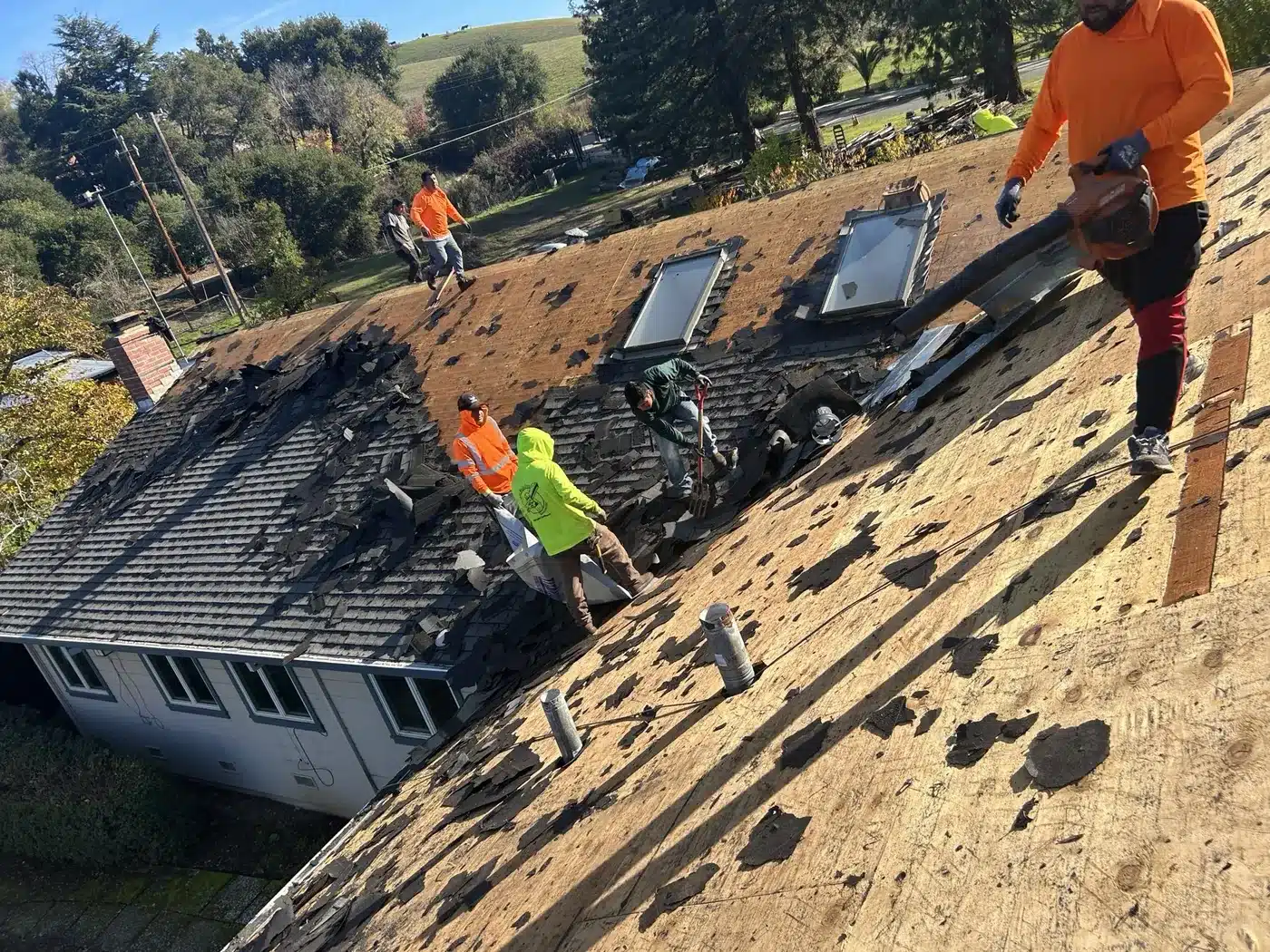
Daniel’s home sits on a wide lot in the oak-studded canyon between Castro Valley and the Sunol grade. It is a classic East Bay ranch: long and low, three skylights, a brick chimney, a satellite dish, and a 22-panel solar array bolted across the south-facing slopes. The array had been installed years earlier on a roof that was already past its midpoint, and the panels had quietly made things worse — shading the shingles so they never fully dried, trapping oak leaf litter against the rails, and hiding the damage from anyone standing in the yard. At our December inspection we lifted the edge of one panel and found what the photos below show: decking so rotted there was a hole straight through to the attic. The roof wasn’t just worn. It had stopped being a structure in places.
Twenty-Two Panels Off, Then Back On — Without Losing the System
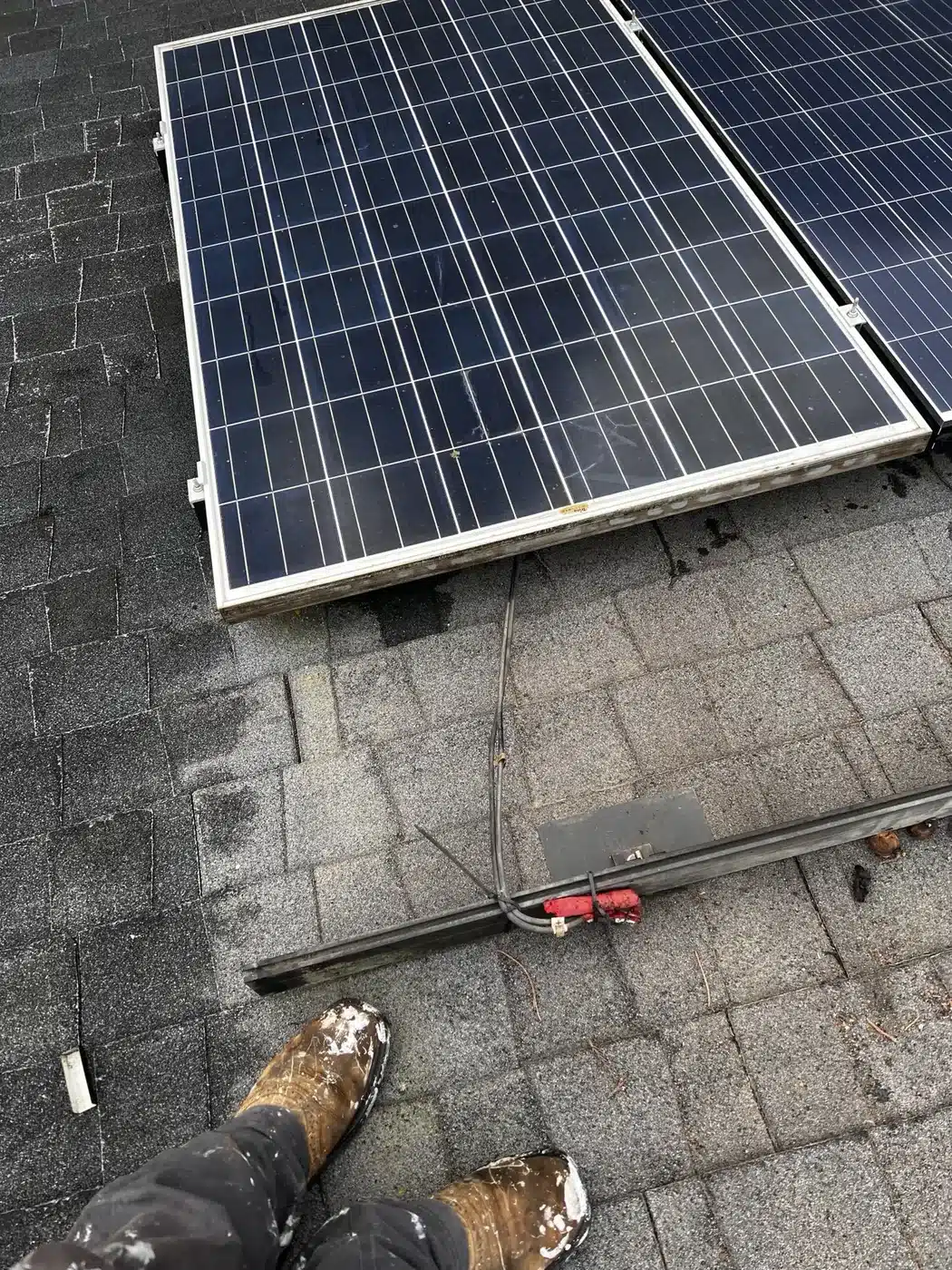
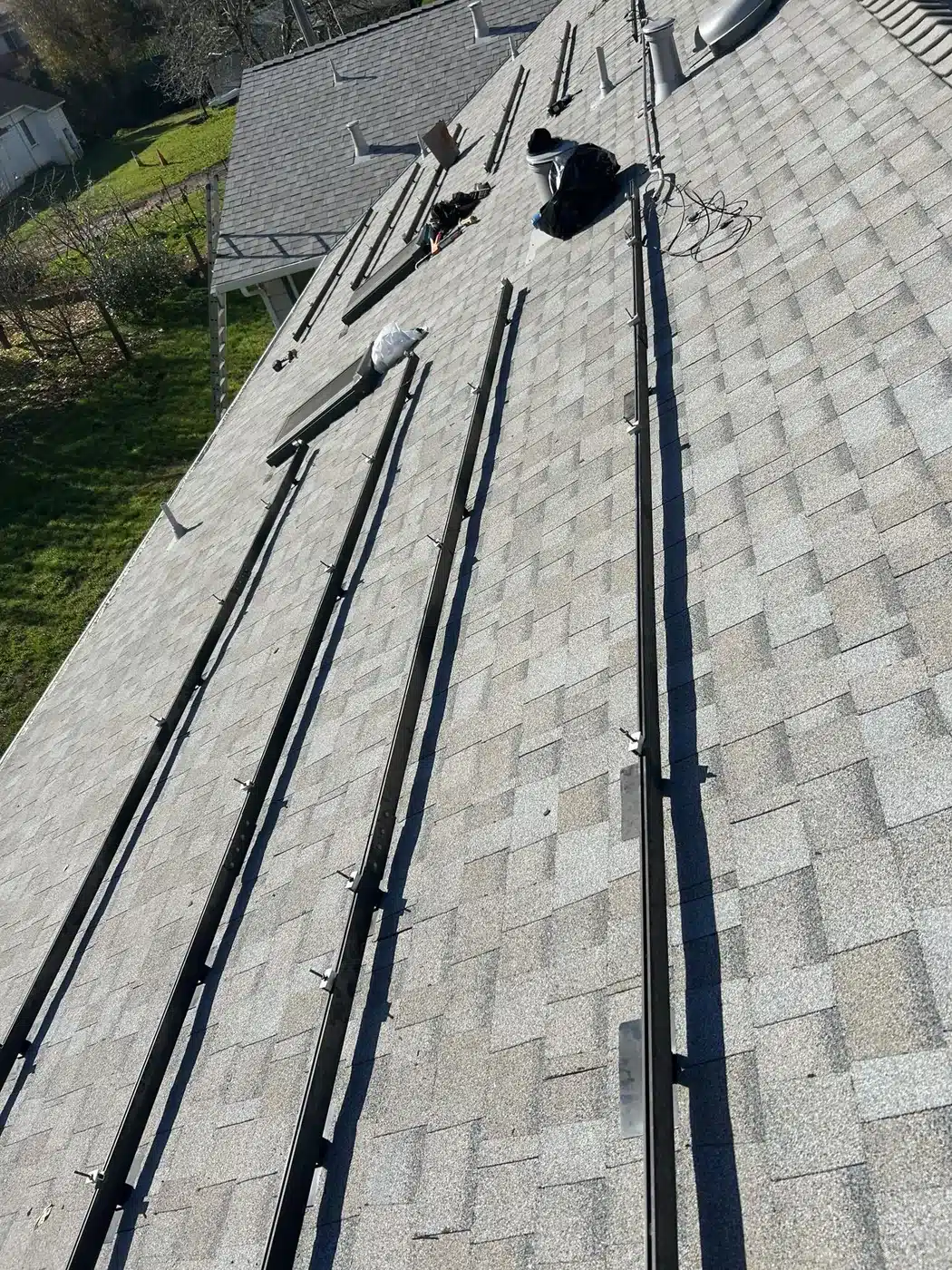
You cannot reroof around a solar array; the shingles the panels sit on are the shingles most likely to be leaking. So the project started with the panels coming off. The array was de-energized and each panel was unbolted, labeled and stacked on site, then the mounting rails and the old L-feet came off so the roof deck underneath was completely clear. Only then did the tear-off crew start. Once the new roof was on, the mounts went back in at the rafters with new flashed stand-offs — every one sealed as a proper roof penetration, not just a lag bolt with a dab of caulk — the rails were re-set, and all 22 panels were reinstalled and re-commissioned. If you have panels on an aging roof, this detach-and-reset process is the honest path; the alternative of patching shingles you can’t reach is how a roof ends up looking like the photo above.
A New Half-Inch OSB Deck Over the Whole Roof, Laid in a Brick Pattern
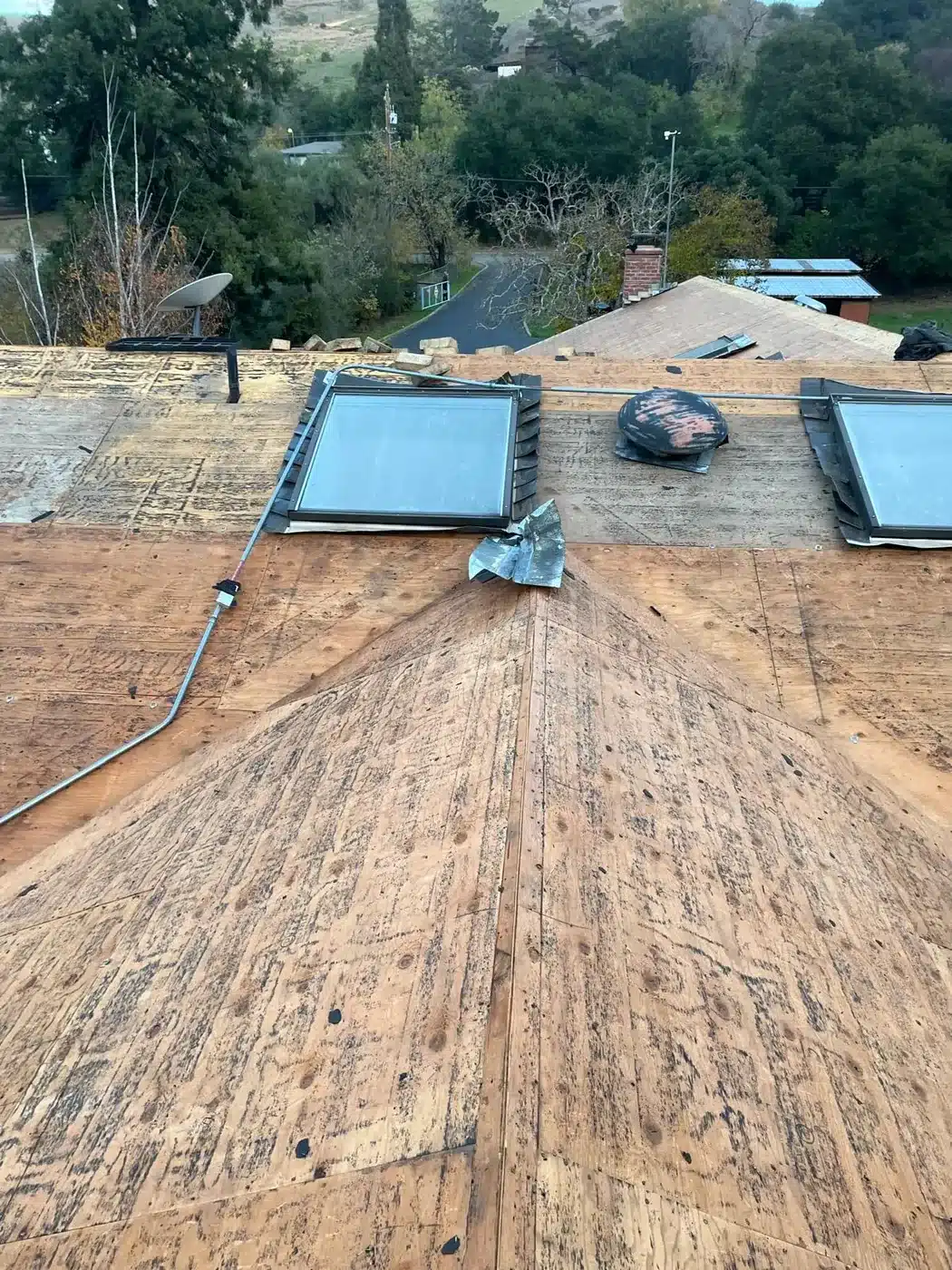
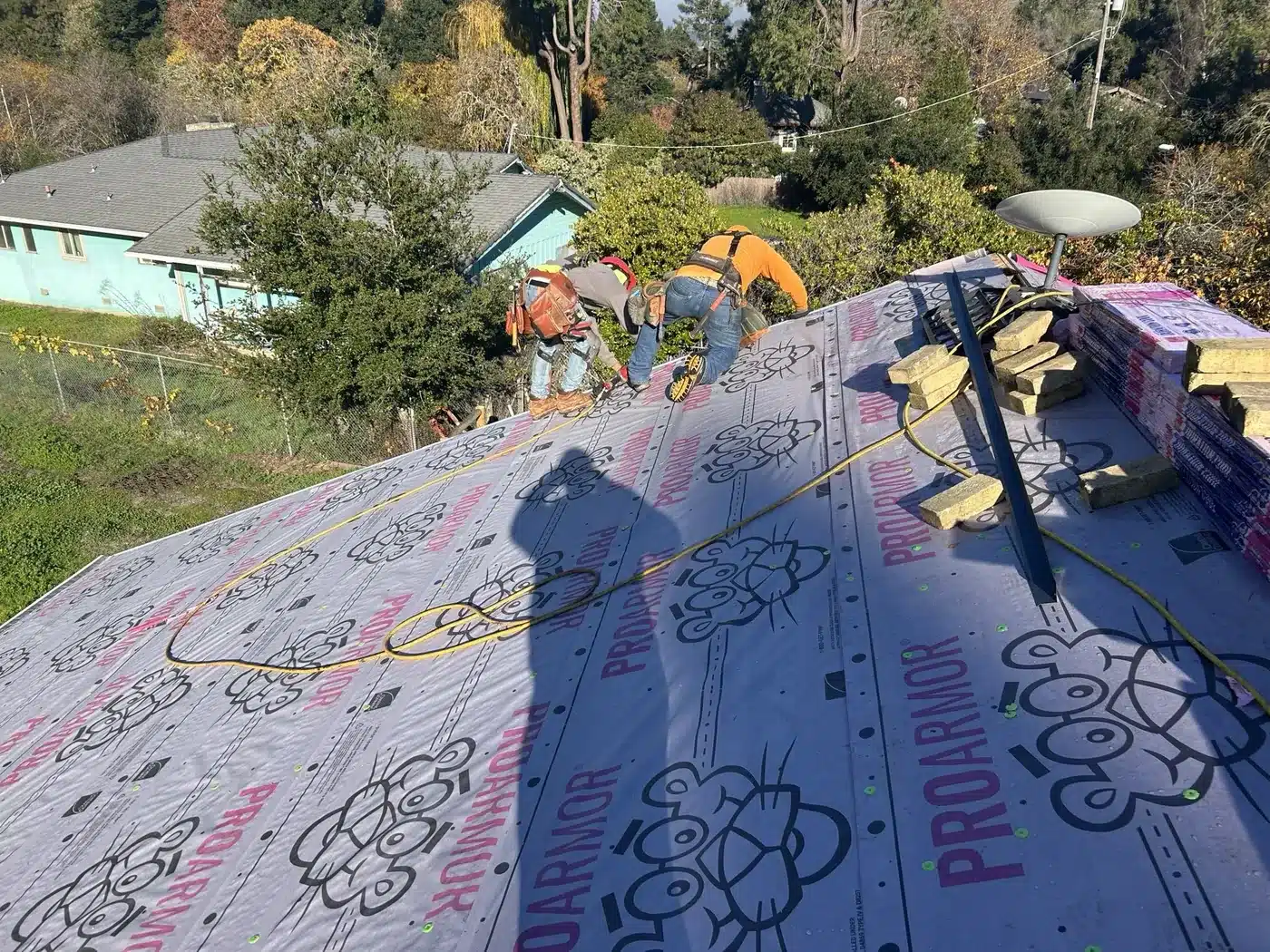
Tear-off confirmed what the inspection hinted at. The rot wasn’t confined to the one hole under the array — the old deck was soft and delaminated in patch after patch across the slopes, far too many to cut out and sister one board at a time. Daniel approved a change order for the right fix: a full half-inch OSB overlay across the entire roof, laid in a brick pattern so no two rows of panel joints line up, which stiffens the deck and gives every shingle nail solid wood to bite into. Over the new deck went Owens Corning ProArmor synthetic underlayment, fastened with cap nails, then new drip edge, new metal valleys, and new flashing at the chimney, the plumbing vents and all three skylights. The result is a roof that is structurally new from the rafters up, not just new on the surface.
Before vs. After
| Feature | Before | After |
|---|---|---|
| Roof covering | Dark, granule-bare asphalt shingle, leaking under the array | Owens Corning shingles in Oyster Shell, Class A |
| Roof deck | Original decking, rotted through in spots | Full half-inch OSB overlay, brick pattern, entire roof |
| Solar array | 22 panels on aged mounts over failing shingles | Same 22 panels, reset on new flashed mounts and re-commissioned |
| Underlayment | Original felt | Owens Corning ProArmor synthetic |
| Skylights & flashings | Original flashing at three skylights, chimney and vents | New flashing at every penetration, new drip edge and valleys |
| Gutters | Aged, mismatched | New white gutters and downspouts |
| Heat | Dark roof under a hot canyon sun | Light Oyster Shell surface that reflects more and runs cooler |
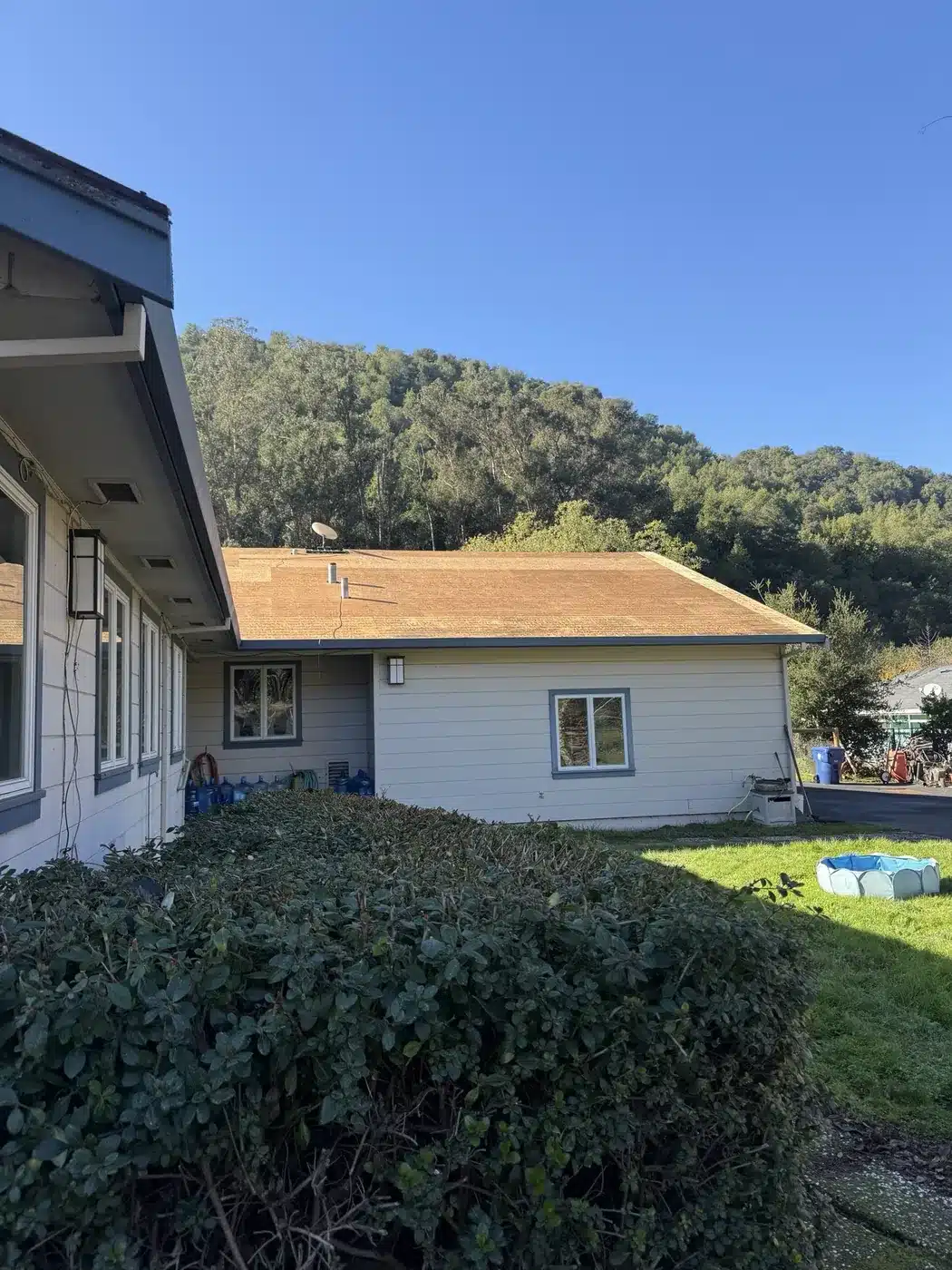
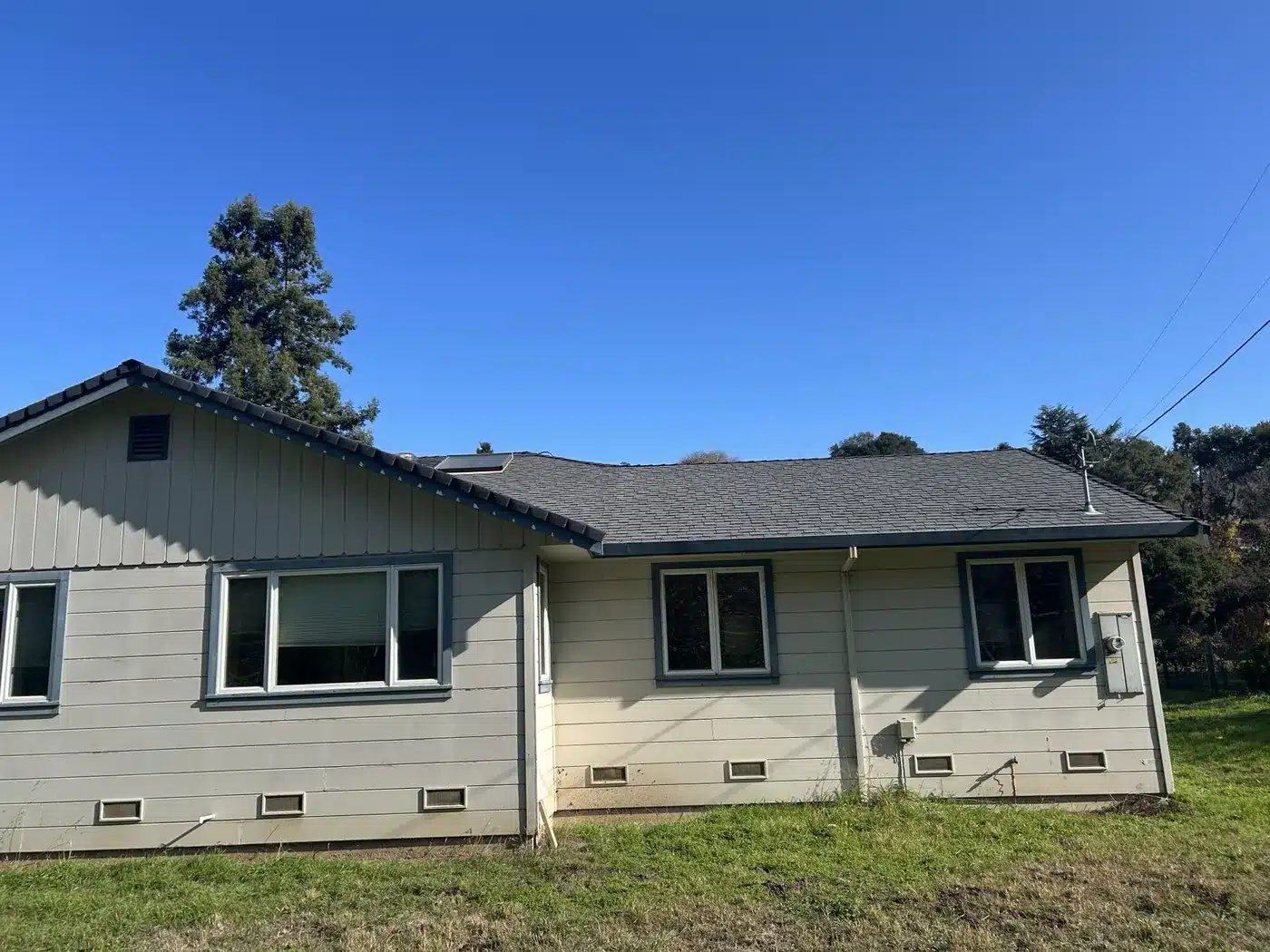
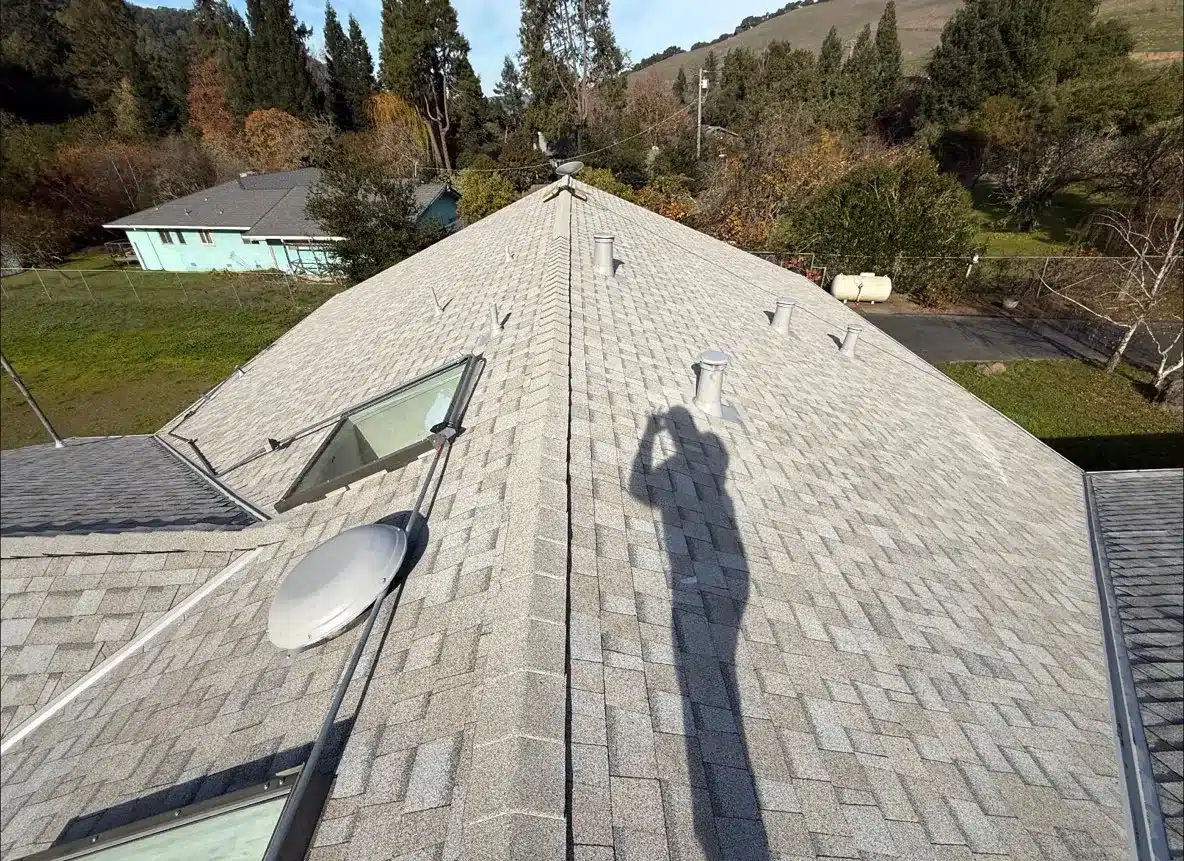
We inspected the roof on December 8, the panels came off and tear-off started the week of December 15, and by December 19 the new deck, underlayment, shingles, skylight flashings and solar rails were in place across the house — dried in ahead of the winter storms, with the panel reset and re-commissioning closing out the job. A roof that had a hole in it going into December came out of the month structurally new, from the OSB up to the last panel clamp.
What This Means for Castro Valley Homeowners With Solar
Castro Valley — and the canyon and hill neighborhoods around Crow Canyon and Cull Canyon — went solar in a big way a decade or more ago, and a lot of those arrays were bolted onto roofs that already had fifteen or twenty years on them. The math on that has come due. If your panels went on a roof you didn’t replace first, budget for a detach-and-reset when the roof goes; it is a real cost, but it is a fraction of what an unaddressed leak under an array does to decking and drywall over a few wet winters. Two more things this canyon teaches: oak leaf litter and shade under panels shorten shingle life, so get the roof under your array inspected instead of assuming it matches the exposed slopes, and insist on a solid deck before new shingles go on — a bid that skips the deck when the deck is rotten is a bid for the roof to fail again. We work these hills from Hayward to Alameda and across the East Bay; see our guide to roof repair under solar panels for the warning signs to watch for.
Castro Valley Roof Replacement With Solar — FAQs
Do solar panels have to come off to replace a roof?
Yes. The shingles under a solar array cannot be torn off or replaced with the panels in place, and they are usually the most deteriorated shingles on the roof. On this Castro Valley project all 22 panels and their rails were removed before tear-off, stored on site, and reinstalled on new flashed mounts after the new roof was complete.
Who removes and reinstalls the solar panels during a reroof?
The detach and reset is coordinated as part of the roofing project so the array comes off just before tear-off and goes back on as soon as the roof is finished, with the system de-energized, each panel labeled, and the system re-commissioned at the end. Handling it as one scheduled job is what keeps the roof from sitting open and the panels from sitting off for weeks.
What is a brick-pattern OSB overlay and why did this roof need one?
It is a new layer of half-inch OSB sheathing installed over the existing deck with the panel joints staggered from row to row, like bricks in a wall, so no seams line up. It was needed here because tear-off revealed rot spread across the old deck, not just in one spot; the overlay gave the whole roof a solid, uniform surface for the new shingles instead of a patchwork of repairs.
How long does a roof replacement with solar panels take?
This roof went from panels-off and tear-off the week of December 15 to a finished, dried-in roof with the solar rails re-set by December 19, with the panel reset and re-commissioning wrapping up the project. Adding solar to a reroof generally adds a day or so on each end for the detach and the reset compared with the same roof without panels.
How much does a roof replacement cost in Castro Valley?
This Castro Valley project came to about $69,000 including the solar detach and reset, the full OSB deck overlay, new gutters and the permit — a large ranch roof with every upgrade at once. A comparable Castro Valley reroof without solar or deck replacement would cost considerably less; see our Bay Area roof replacement cost guide for current ranges by roof size and system.
Solar Panels on an Aging Roof in Castro Valley?
We handle the whole job — solar detach and reset, tear-off, new deck, shingles, skylights, gutters and permits — as one coordinated project. See more of our work in the project gallery, or book a free inspection today.
Gina K. writes about Bay Area roofing for Lifetime Roofing & Renovation, drawing on the team's 16+ years of experience roofing homes across Silicon Valley.