
Most tile roofs that leak do not need replacing. The tile is rarely the problem — the underlayment beneath it is. We find the actual failure, fix that, and put your original tile back.
Tile roof repair means replacing the waterproofing layer under the tile — not the tile itself. Concrete and clay tile are a rain screen and a wearing surface: they shed the bulk of the water and shield what sits beneath. The layer that actually keeps water out of the house is the underlayment under them, and on most Bay Area tile roofs that felt reaches the end of its life decades before the tile does. A repair lifts the tile in the affected area, replaces the underlayment and any failed decking or battens, and relays the same tile. Done properly you cannot tell afterwards that anything was touched.
Concrete and clay tile routinely outlast the underlayment beneath them by decades. Replacing a whole roof because the felt failed is the most common overspend we see. — The tile is usually fine
A failure over one plane, one valley or one penetration is fixed in that area. You are not committed to the whole roof because one slope leaks. — Repairs are sectional
We lift and stack the original tile and relay it. That matters on older profiles, where an exact colour and shape match is difficult to buy. — Your tile goes back on
If the underlayment has failed across the whole roof, patching one plane just moves the leak. We will say so and price the full re-lay instead. — We tell you when it is not worth it
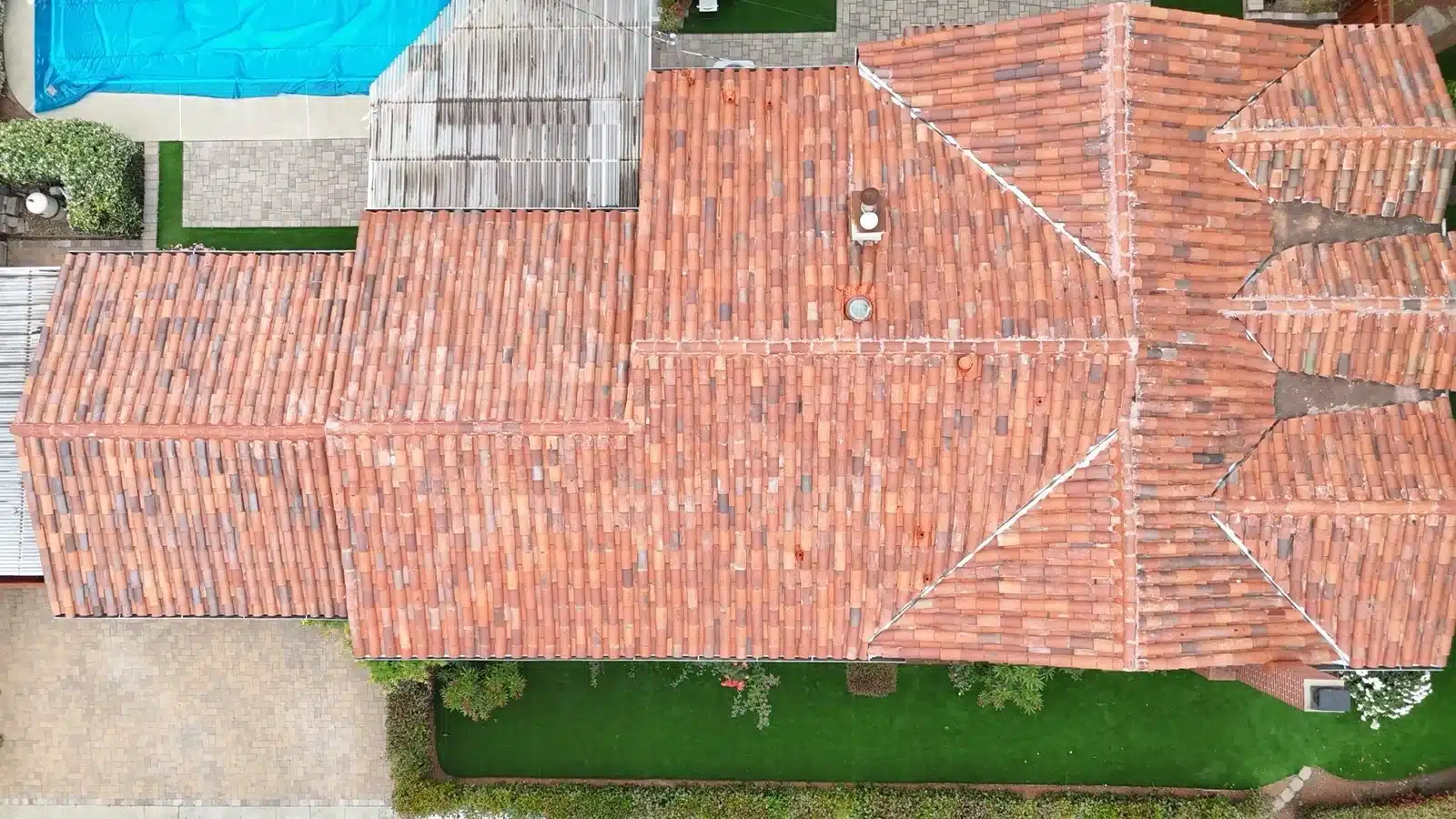
Yes — in most cases, and it is usually the right call. The deciding factor is not the tile, it is how much of the underlayment has failed. A leak traced to one valley, one flashing or one slipped tile is a sectional repair. Underlayment that has gone brittle across every plane is a full lift and re-lay. Nobody can tell you which you have from the ground — it takes lifting tile in the right places and looking. We have repaired a tile roof without replacing it in South San Francisco and fixed a single leak over a Fremont garage rather than selling either owner a re-roof.
One stain, in one place, after heavy rain. A visibly cracked or slipped tile. A leak that appears at a chimney, skylight or valley — the places flashing lives. Debris damage from a branch. In each of these the failure is local and the rest of the roof is doing its job.
Stains in several rooms or on several planes. Underlayment that tears in your hand where it is exposed. A roof past about twenty-five to thirty years on its original felt. Repeated repairs that each hold for a season. At that point every patch is buying months, not years.
Tile roofs fail in a small number of predictable ways. Which one you have decides the scope, the cost and how long it takes.
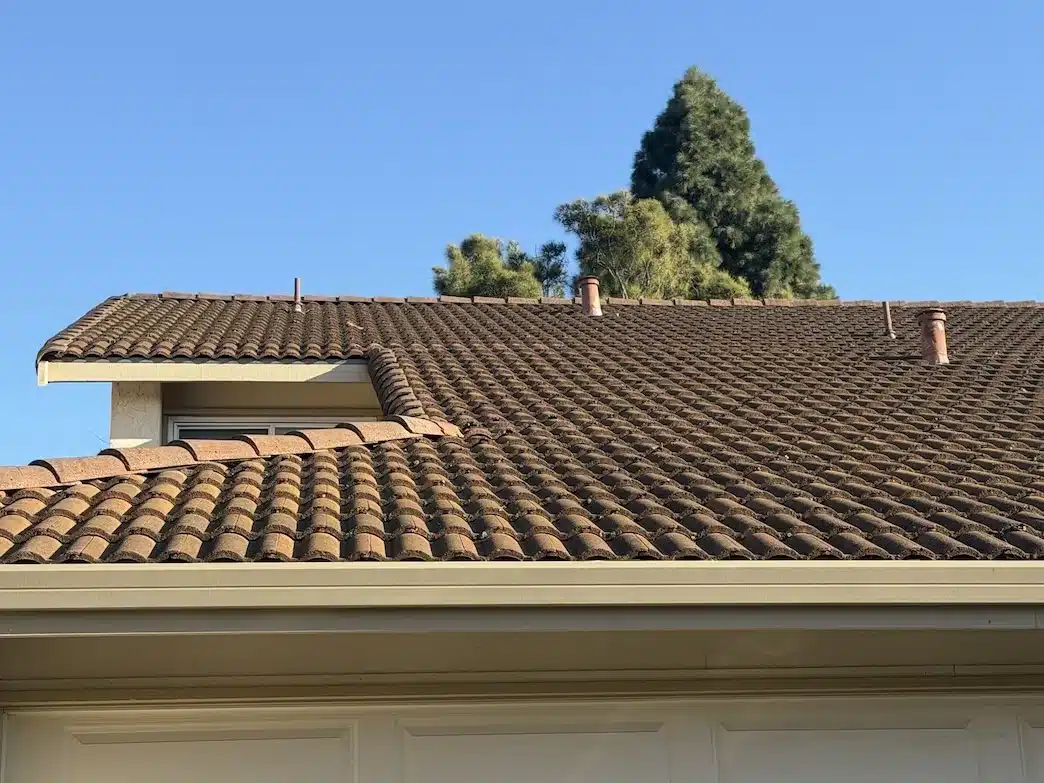
Individual tiles crack from foot traffic, falling branches or age, and mortar-set ridge tiles work loose. Replaced or reset with matching salvage so the field stays uniform. Fast, and the least invasive repair there is.
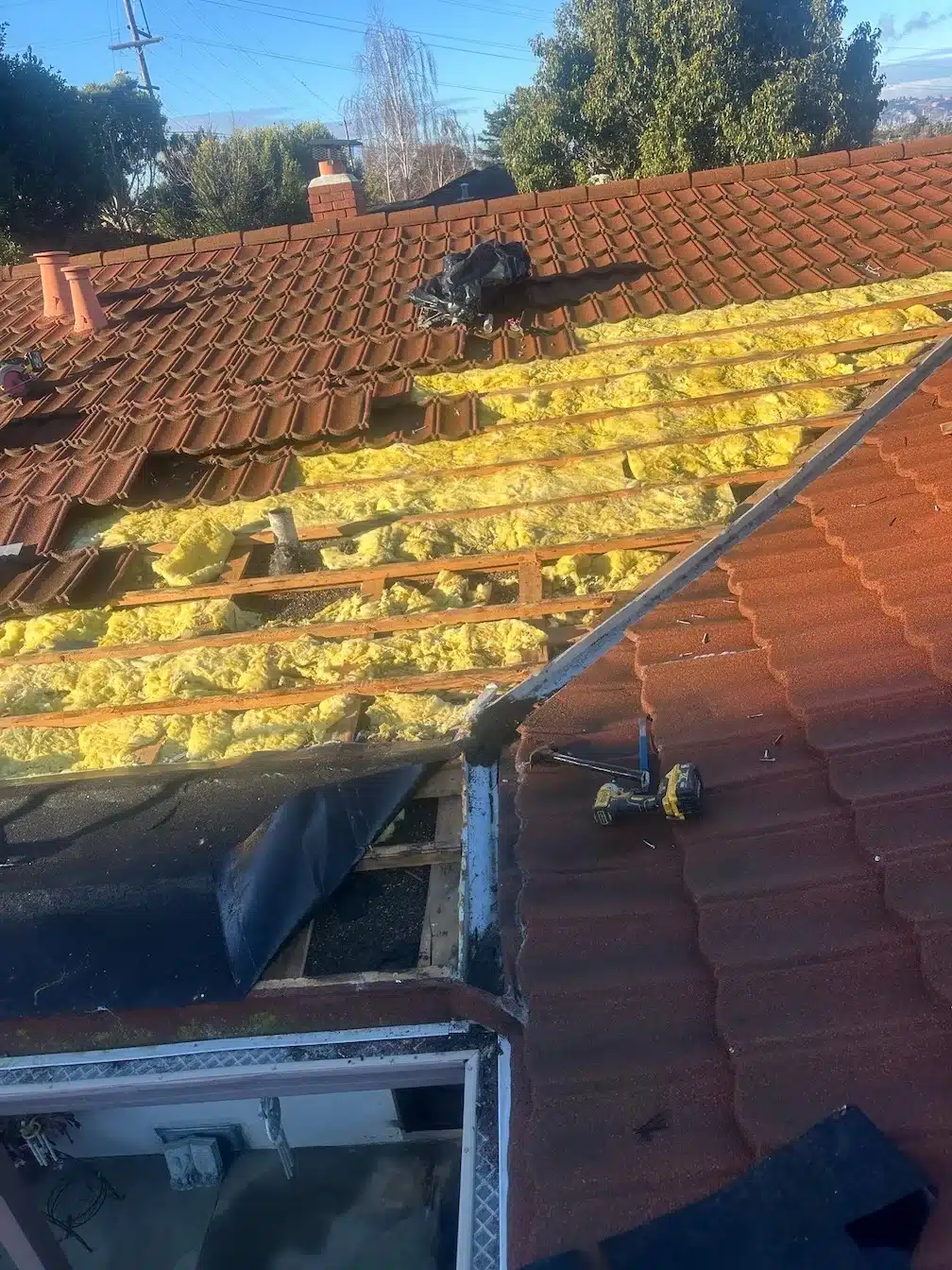
Most tile leaks are not where the stain is. Water travels along battens and rafters before it drops. We open the roof above the entry point, follow it back to the actual failure — usually a flashing, valley or penetration — and rebuild that detail. See it done on a Richmond tile roof leak.
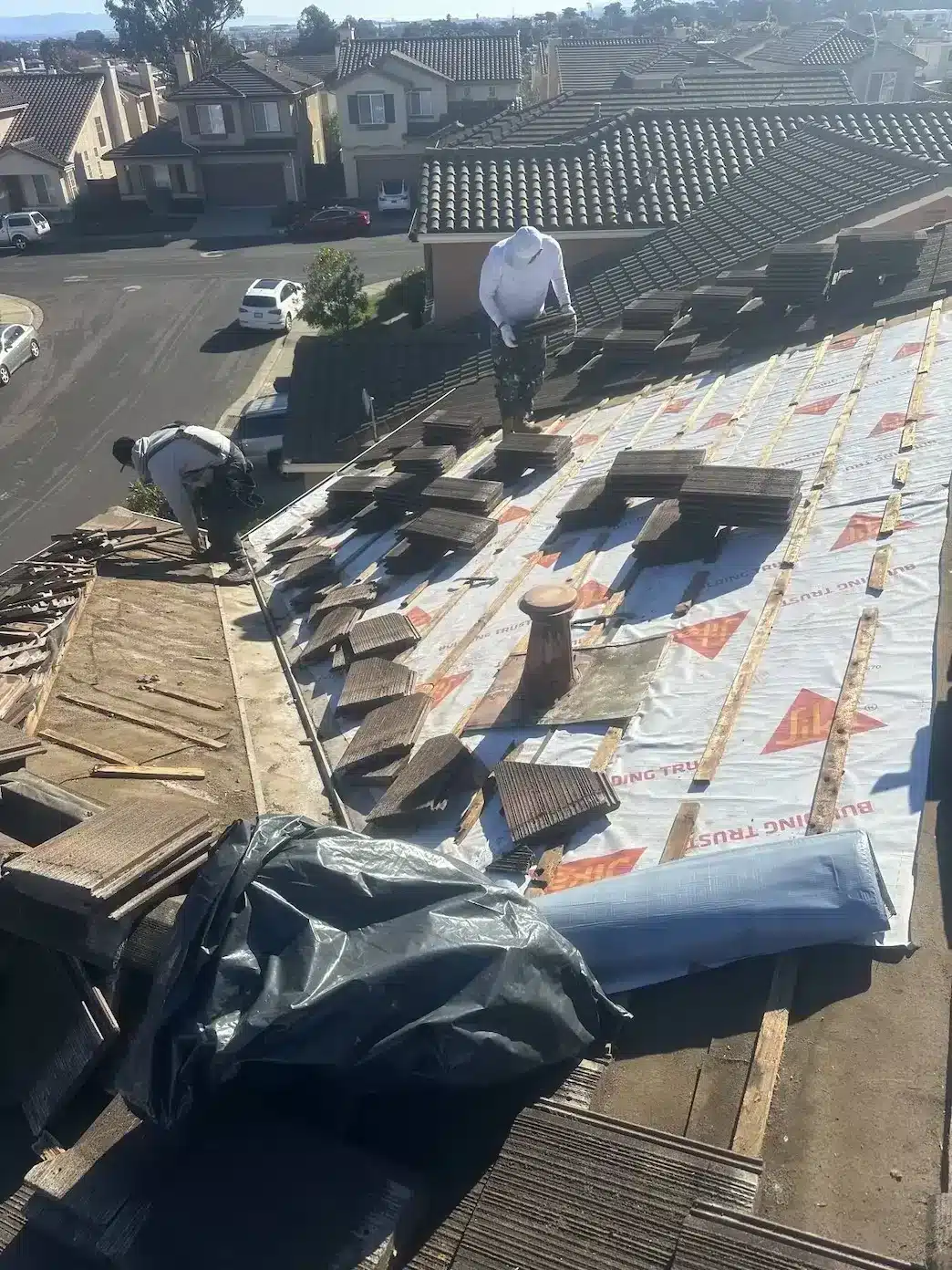
Where the underlayment has failed over one plane, the tile in that area is lifted and stacked, the old felt stripped, decking and battens repaired, new underlayment installed, and the original tile relaid. The rest of the roof is left alone. For a real example, see how we fixed a tile roof leak in Benicia by lifting about three squares of clay tile, replacing only the failed underlayment and battens, and relaying the original tile.
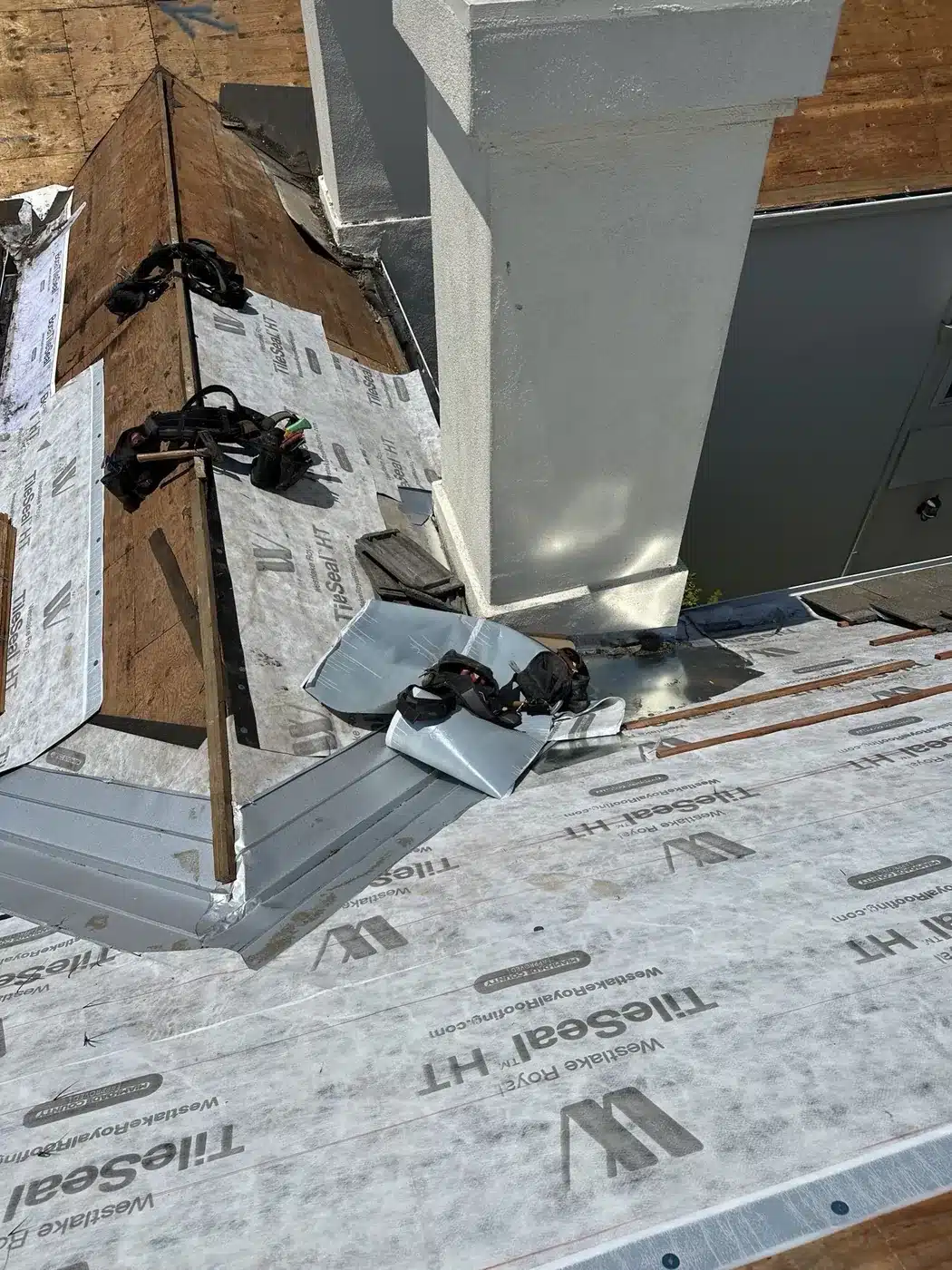
When the felt has gone everywhere, the whole roof is lifted and re-underlaid — typically in a self-adhered high-temperature membrane such as Westlake Royal TileSeal HT — and the original tile goes back. The house looks unchanged; the waterproofing is new.
A tile roof is one of the few roofs where repairing is genuinely the better engineering answer, not just the cheaper one.
Concrete and clay tile do not really wear out. Throwing away sound tile because the felt underneath aged is waste, and on discontinued profiles it is irreversible — matching an older tile exactly is often impossible.
We find where the water actually enters before quoting. A roofer who prices a re-roof without lifting tile is pricing their uncertainty, and you are paying for it.
Salvaging and relaying tile keeps a heavy, energy-intensive material out of landfill and off a truck. On the 26-unit Vallejo community we relaid the existing tile across every building.
Three stages, and you get a written answer before any tile comes off.
We get on the roof, lift tile where the evidence points, and photograph what is underneath. You get a written report with photos showing the actual failure — not a verbal opinion and a number. It is the same roof inspection process we run on any roof.
The quote names the area, what is being replaced under the tile, and what happens if we find rotted decking or battens once it is open, at an agreed rate. Sectional repair and full re-lay are priced separately so you can see the difference.
Tile is lifted and stacked in order, the underlayment and any failed timber replaced, and your original tile relaid. Broken tile is swapped from salvage. The site is magnet-swept and the debris hauled the same day.
Tile roofs are the Bay Area default on a huge share of the housing stock, and they are the work we are called for most. We are an Owens Corning Platinum Preferred Contractor, C-39 licensed, and we have relaid everything from a single Fremont garage plane to a 26-unit townhome community in Vallejo.
Lifetime Roofing & Renovation, Inc. works out of 333 Cobalt Way #103, Sunnyvale, CA 94085, holds California contractor licence #1090028 in the C-39 roofing classification, and answers at (408) 685-2177 Monday to Saturday, 8am to 8pm. The licence number is checkable against the CSLB’s public lookup.
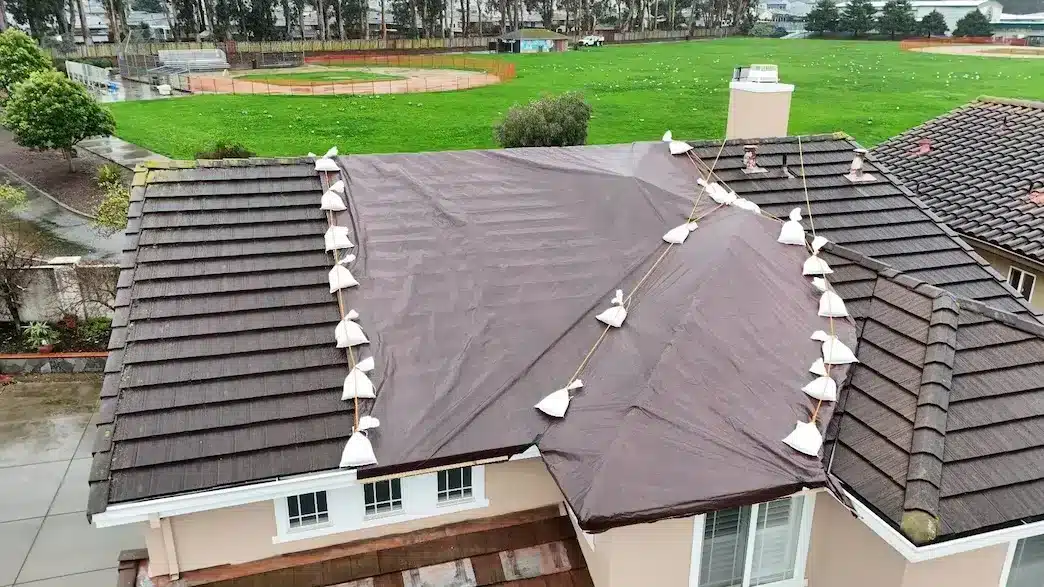
This roof arrived tarped and sandbagged in two places. The tile was sound. The underlayment beneath it was not — so that is what we replaced, and the original tile went straight back on.
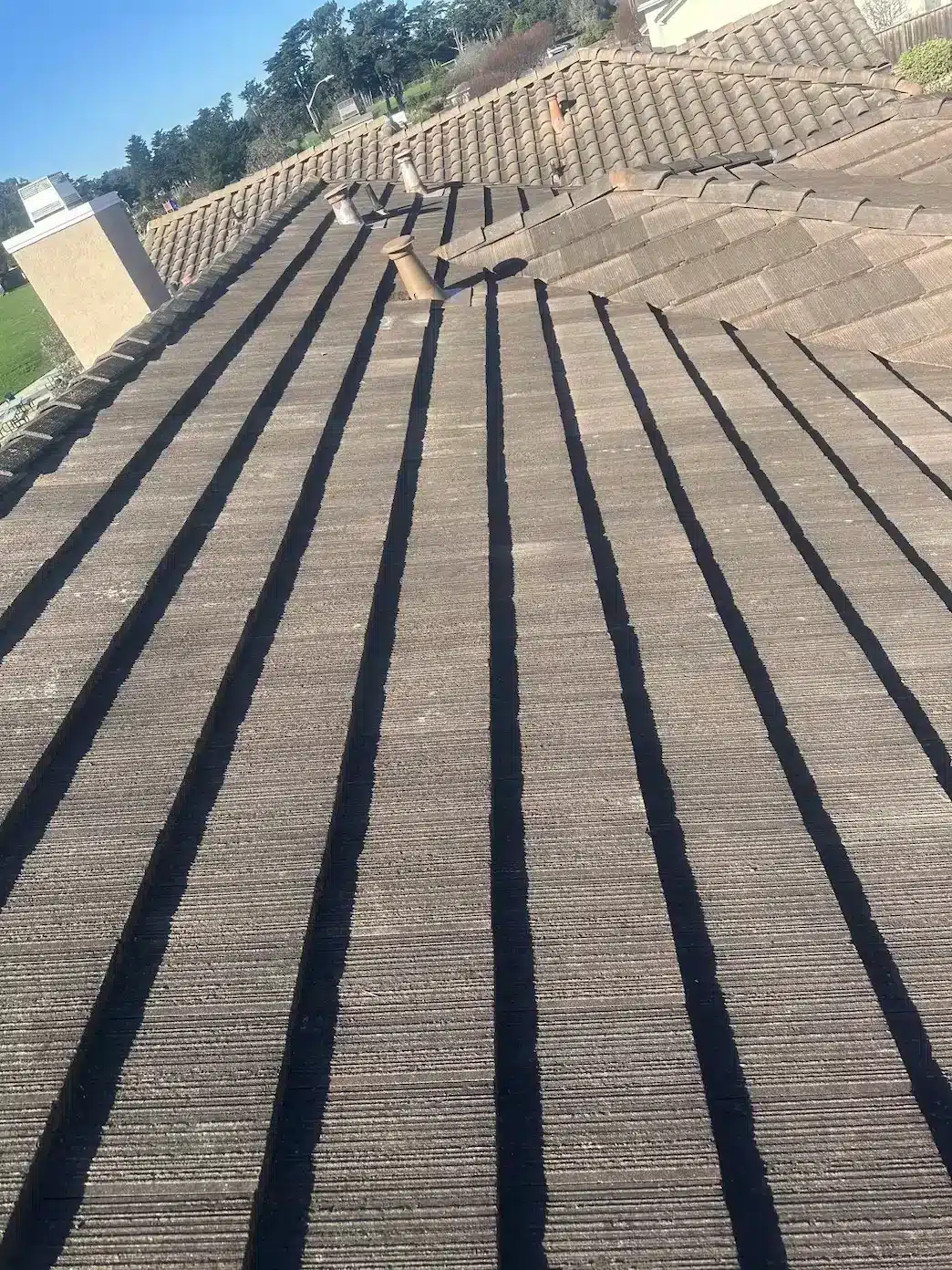
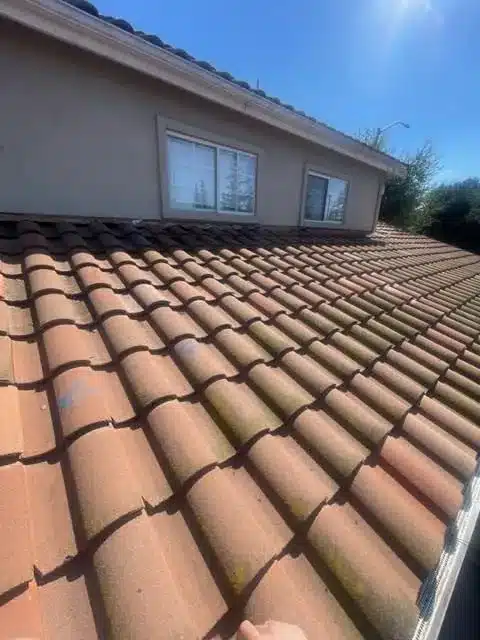
Cracked and slipped clay S-tiles were letting water reach the underlayment. We repaired and reset the affected area with matched tile instead of replacing the roof, so the house kept its original character. Most repairs like this run $2,000 to $5,000 and carry our 10-year repair warranty.
On a second Morgan Hill home the concrete tile was sound but the underlayment had failed, so we did a full lift-and-relay: read that Morgan Hill write-up.
Yes, in most cases. Tile roofs leak because the underlayment beneath the tile has failed, not because the tile has. If that failure is confined to one plane, valley or penetration, the tile in that area is lifted, the underlayment replaced, and the same tile relaid. A full replacement is only necessary when the underlayment has failed across the whole roof, which is a judgement that requires lifting tile and looking rather than an estimate from the ground.
Enough to reach the failure and a working margin around it. Water travels along battens and rafters before it drops, so the wet ceiling is rarely under the hole. We open above the entry point and follow it back. On a straightforward valley or flashing failure that can be a few square metres; where the felt has gone brittle across a whole plane, that plane is lifted.
Traditional felt underlayment under tile generally lasts somewhere in the twenty-to-thirty-year range in the Bay Area climate, while the concrete or clay tile above it lasts far longer. That mismatch is the single most useful thing to understand about tile roofs: they are renewed by lifting and re-underlaying, not by being torn off and replaced. Modern self-adhered high-temperature membranes are rated considerably longer. The same principle drives a concrete tile roof and a clay tile roof alike, and it is why the Tile Roofing Industry Alliance treats underlayment as the service-life component.
Usually. We keep salvage stock and lift sound tile from inconspicuous areas when a profile is discontinued, which is common on older Bay Area roofs. Some breakage is unavoidable during any lift because tile is brittle and a proportion is already cracked before anyone touches it, so a repair always includes swapping in replacements. Reusing your own tile is the only reliable way to keep an older roof looking like itself.
It contributes. Tile is walked on for every inspection, antenna, solar install and chimney sweep, and each visit risks hairline cracks that show up later as leaks. It is a good reason to limit who goes up there and to have anyone working on the roof know how to walk tile. It is not usually the root cause of a leak, though: the underlayment reaching the end of its life is.
A localised repair generally does not require a permit, while a full re-underlayment of the roof does. The line falls at how much of the roof is being worked on, and it differs between jurisdictions. We tell you which side of it your job falls on before we start, and we pull the permit when one is needed. More detail is on our San Jose roofing permits page.
Yes. A lift-and-relay, also called a tile reset or lift-and-reset, is the most common tile repair we do: we lift the tiles, replace the worn underlayment, battens and flashing underneath, and relay your original concrete or clay tile. We have done them in San Jose, San Mateo, Fremont, South San Francisco, Milpitas and Vallejo. A section of a few squares typically runs $6,000 to $10,000, and a whole-roof reset usually falls in the $16,000 to $33,000 range of our tile jobs. Every repair carries our 10-year repair warranty.
Most tile repairs we have done in the last two years, such as replacing broken tiles, resetting a ridge, or fixing flashing, cost $2,000 to $5,000. Rebuilding a valley or lifting and resetting a few squares of tile over new underlayment runs $6,000 to $10,000. Every repair is backed by our 10-year repair warranty.
It probably does not. We will get on the roof, lift tile where the evidence points, and show you photographs of the actual failure before quoting anything. Free, in writing, and no pressure.
A 26-unit HOA concrete tile roof re-lay in Vallejo: tile lifted and reused, old underlayment stripped, rotted fascia and decking rebuilt, TileSeal HT installed, flat sections rebuilt and new gutters community-wide.
Book a Free Inspection