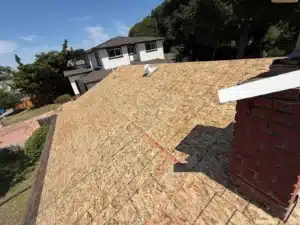
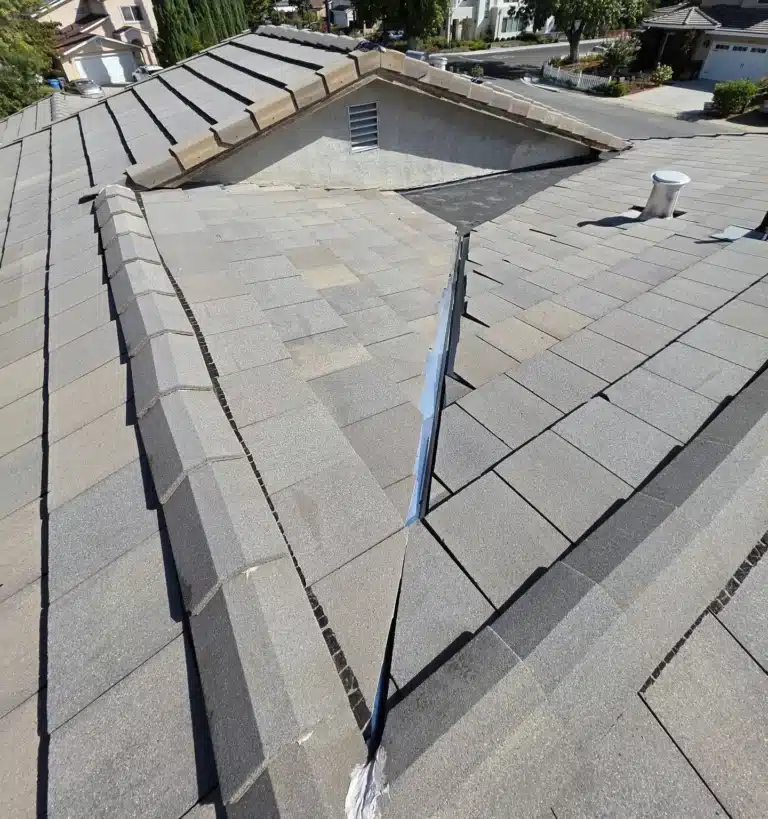
This Cupertino home had cracked tiles, two failed valleys and a section someone had patched with foil tape. None of it needed a new roof. Lifetime Roofing reset the tile, rebuilt the valleys, replaced the low-slope section and repaired the drainage — and the original concrete tiles stayed exactly where they were.
Some of my roof tiles are cracked — does the whole roof need replacing?
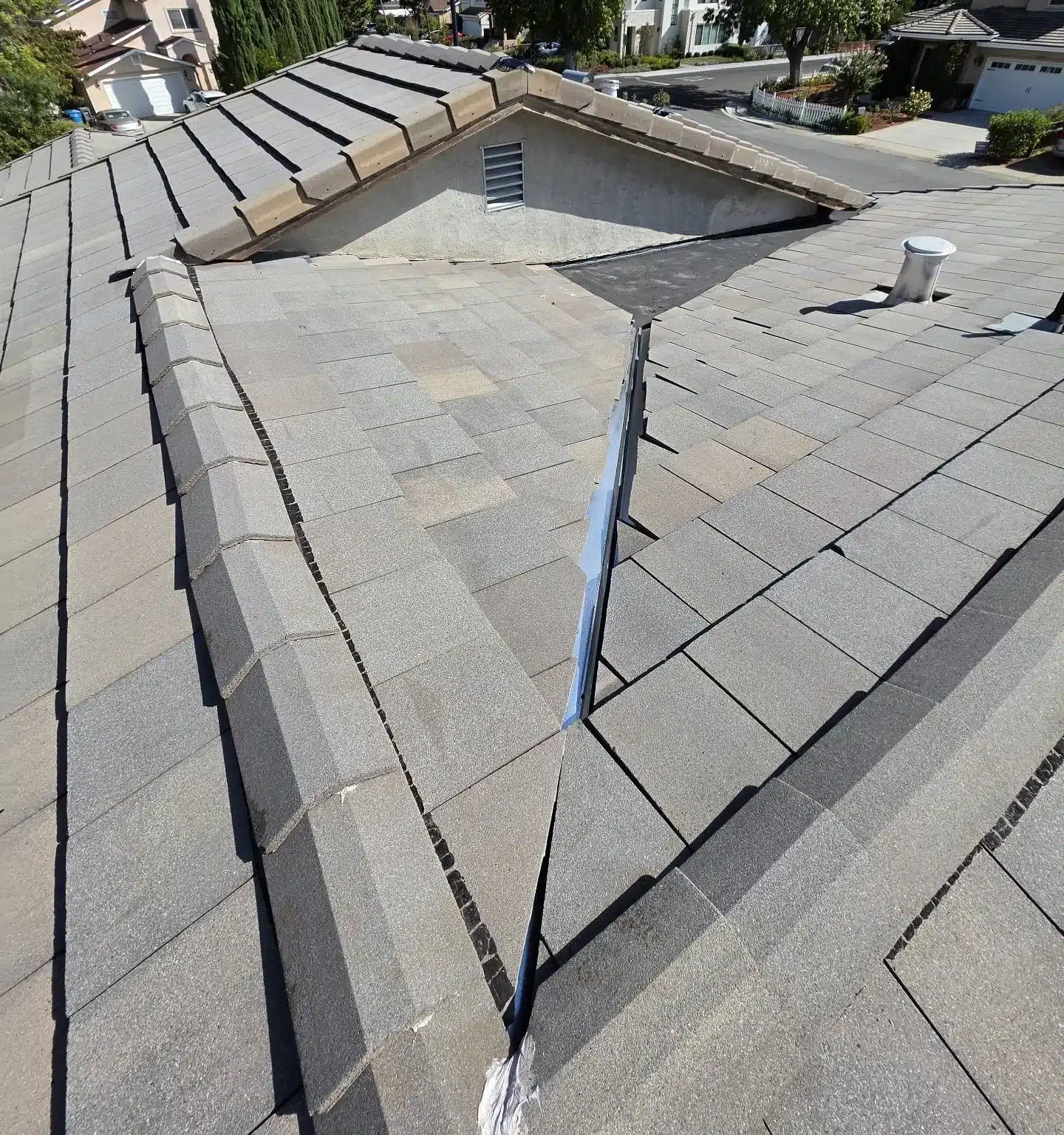
Usually not. Concrete tile itself lasts decades, and cracked or slipped tiles are almost always a repair, not a reason to tear the roof off — what actually wears out first is everything around the tile: the valley metal, the flashings, the underlayment at the edges and the drainage. On this Cupertino home we reset three squares of tile, rebuilt two failed valleys, replaced a section with torch-down, repaired the scupper and pressure-washed the whole roof. The tiles stayed. A homeowner on Houzz asked exactly this after an inspector called for a full replacement over a handful of cracked tiles.
Cracked tiles, dead valleys, and a roof patched with foil
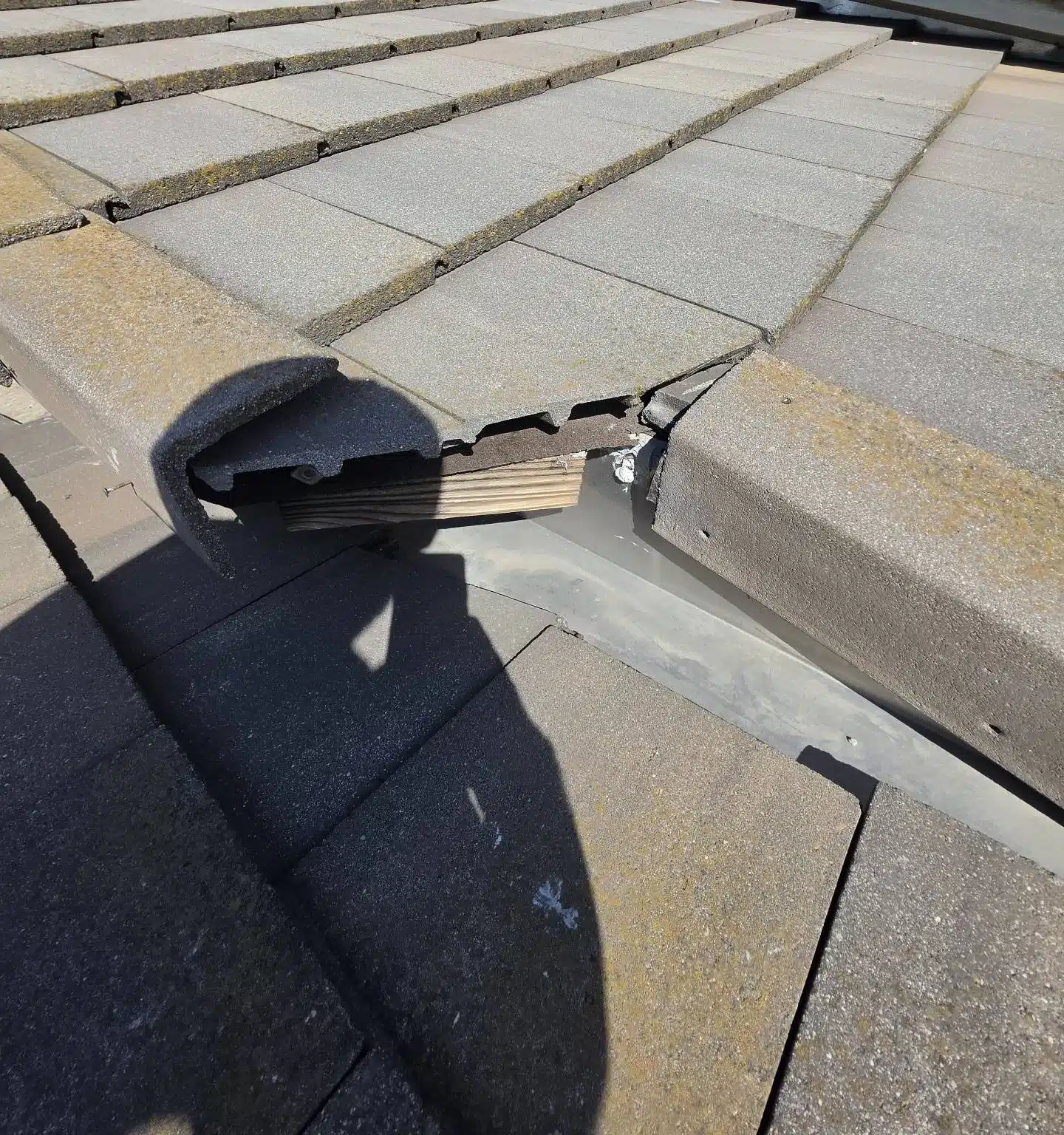
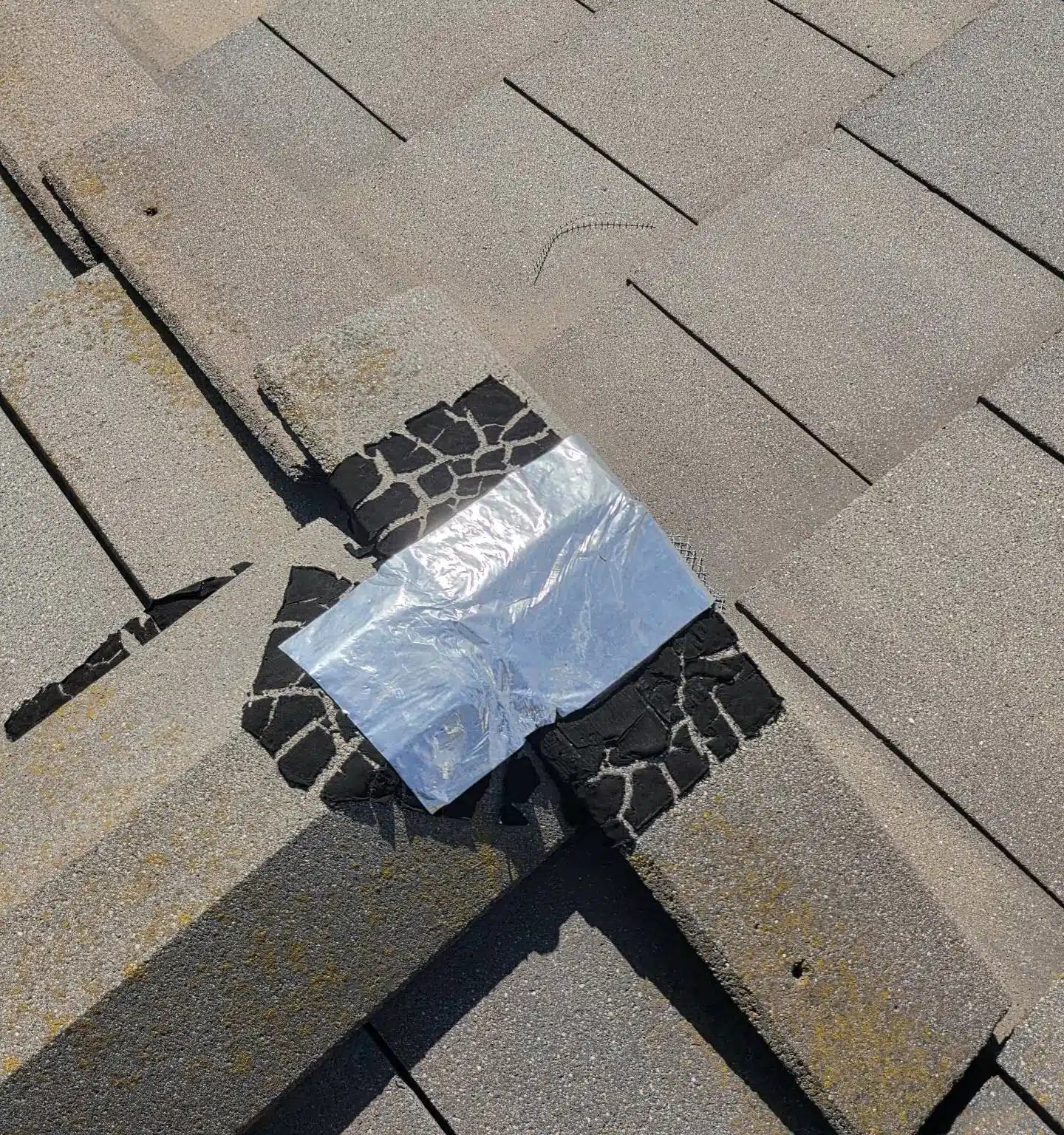
We first looked at this roof in late August. It is a low-profile concrete tile roof of the kind that covers half of Cupertino, and from the street it looked fine. Up close it was not: tiles cracked and slipped out of line, moss growing in the joints and holding water against the tile, and both valleys worn through so the underlayment underneath was open to the weather. Someone had been up there before us and taped a sheet of foil over one of the worst areas. That tells you two things — the roof had been leaking for a while, and nobody had yet dealt with why.
Repair the roof, keep the tile
Concrete tile is commonly rated for 50 years and frequently lasts longer. The parts that fail first are the valley metal, the flashings and the underlayment at the edges — all of which can be replaced without touching the field of the roof. So the plan was a repair, not a replacement: reset three squares of tile and swap the broken ones, rebuild both valleys, put a new torch-down surface on the low-slope section that was no longer shedding water, repair the scupper that drains the roof through the wall, and wash the whole thing down. If you have a tile roof behaving the same way, our tile roof repair and concrete tile roofing pages cover how we assess them.
Five separate problems, one visit
Work started on 2 September 2026. The valleys came first, because they were the actual leak path: the old metal came out, the underlayment underneath was made good, new valley metal went in, and the tile was cut back in around it. Tile roofs are unforgiving to walk on, which is why cracked tiles so often multiply after someone has been up there — the tile is reset along defined paths rather than trodden across.
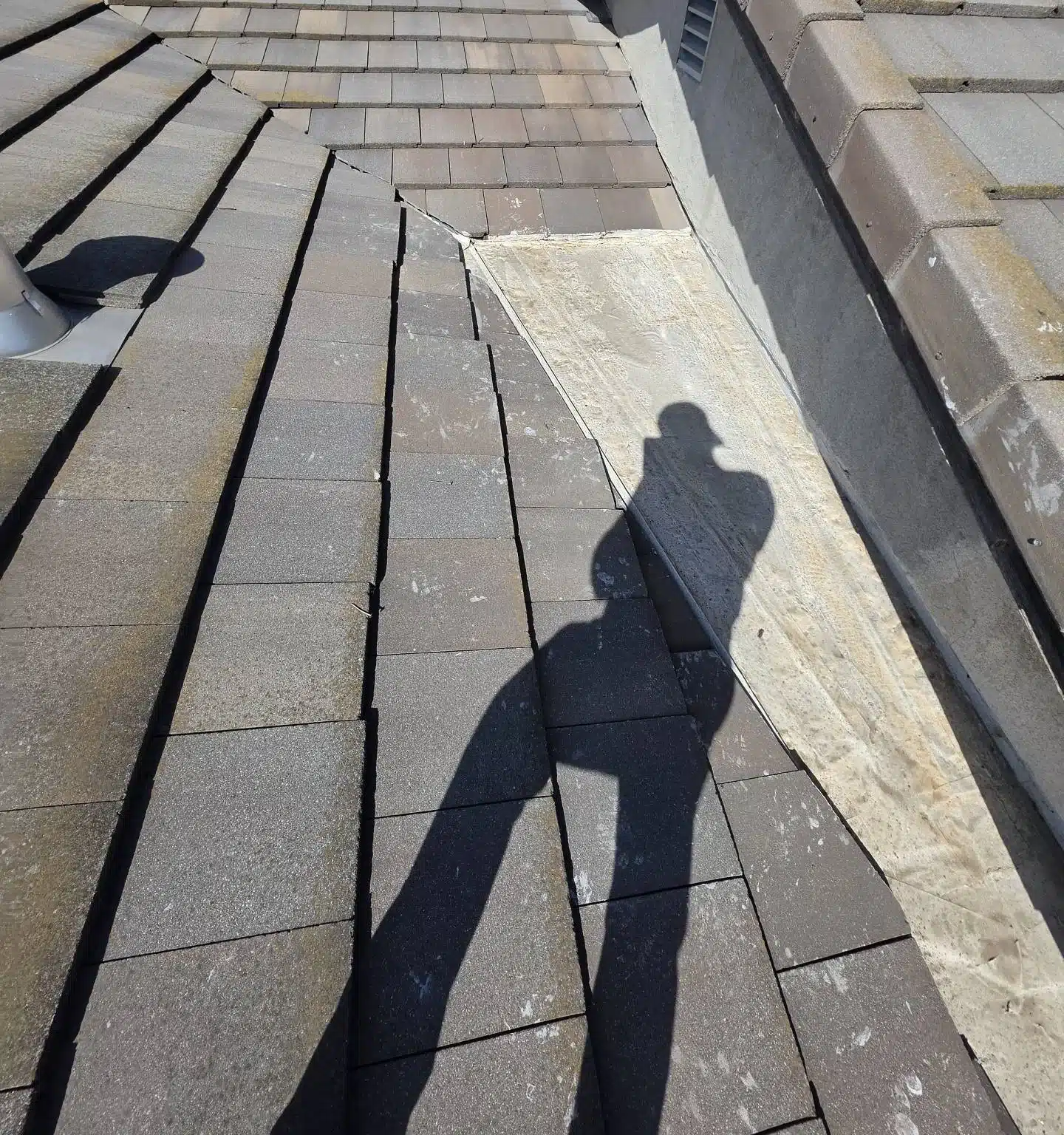
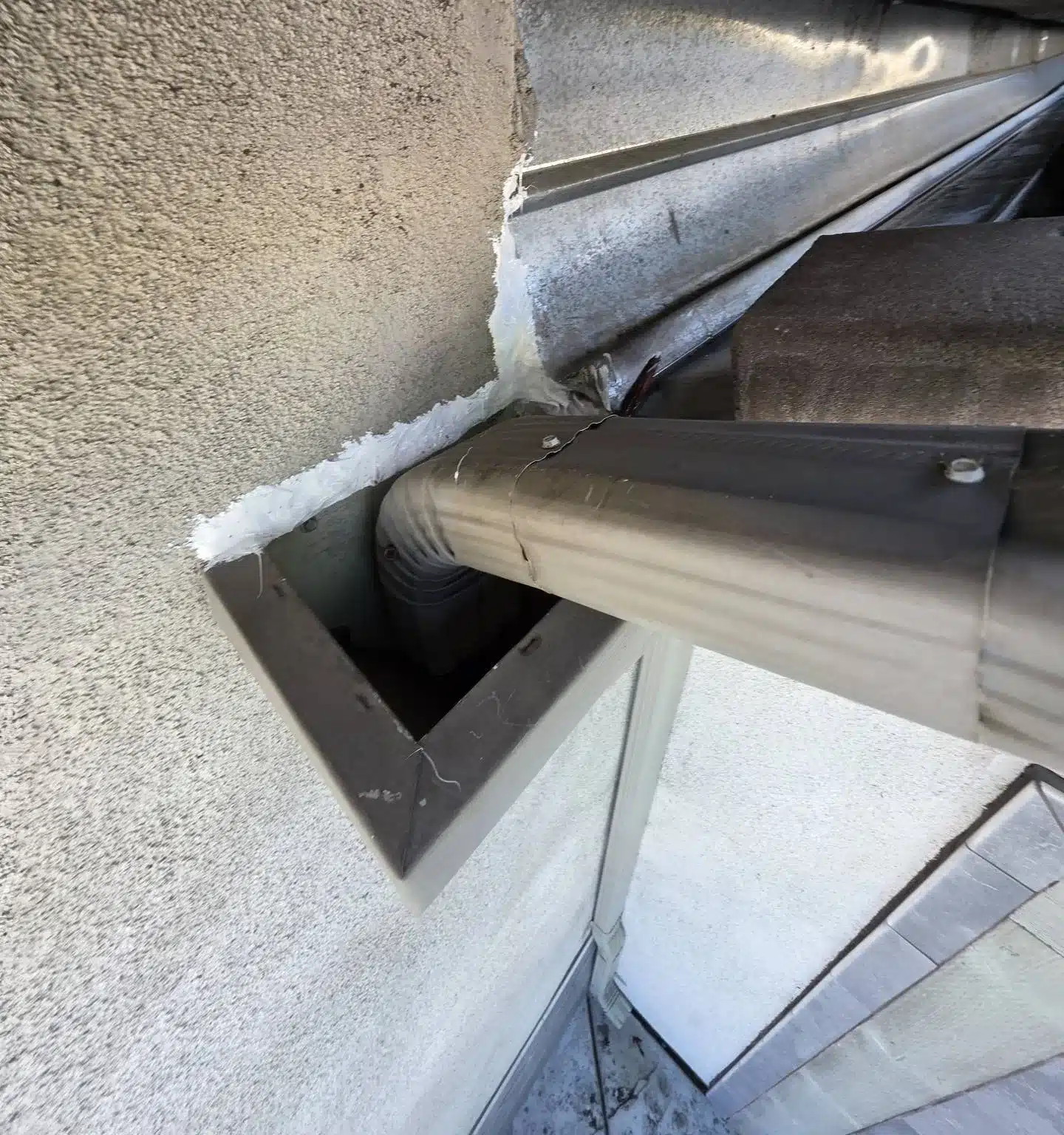
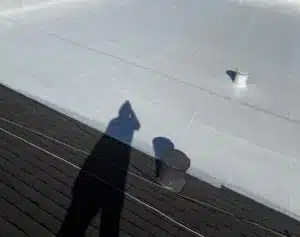
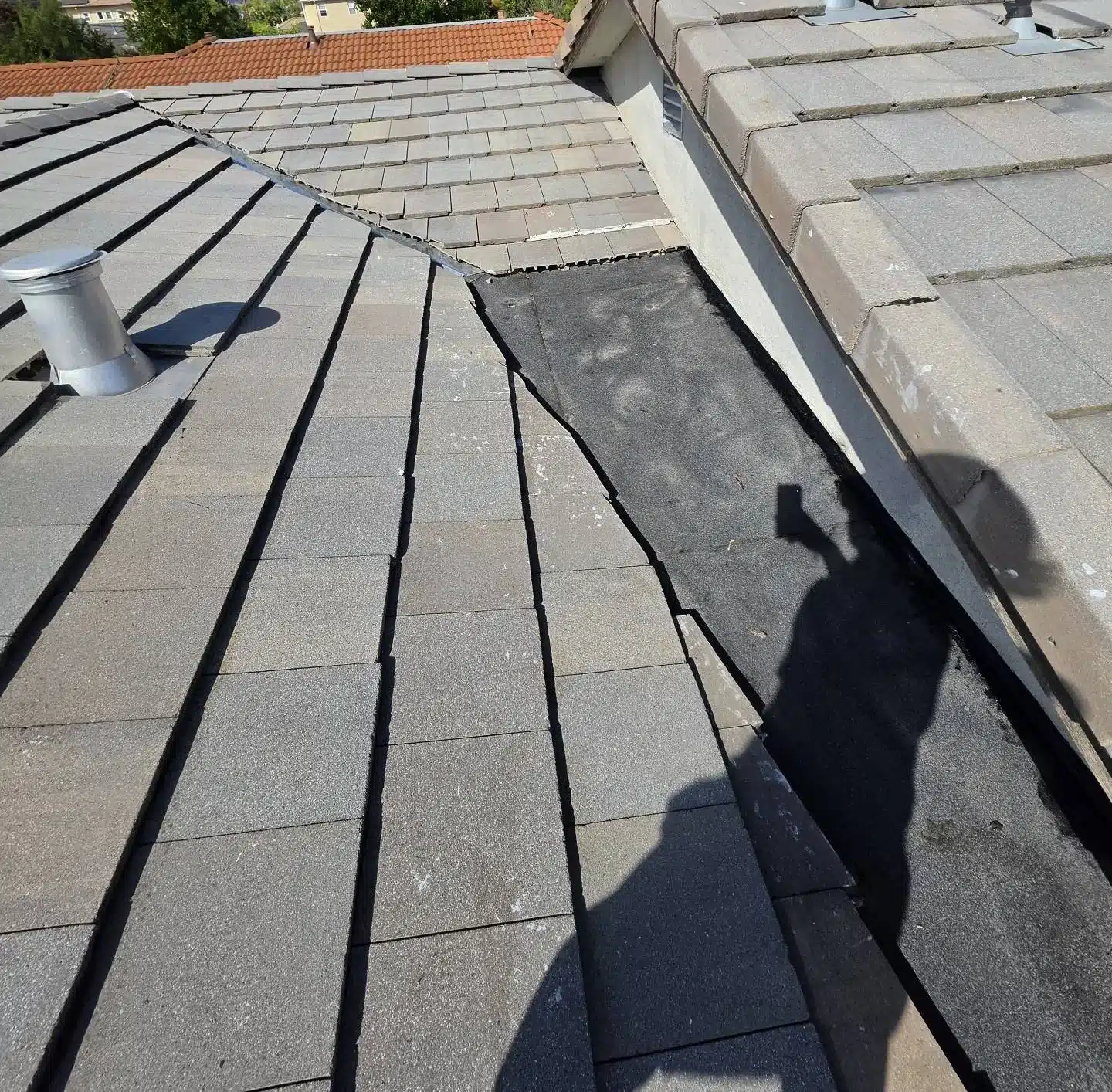
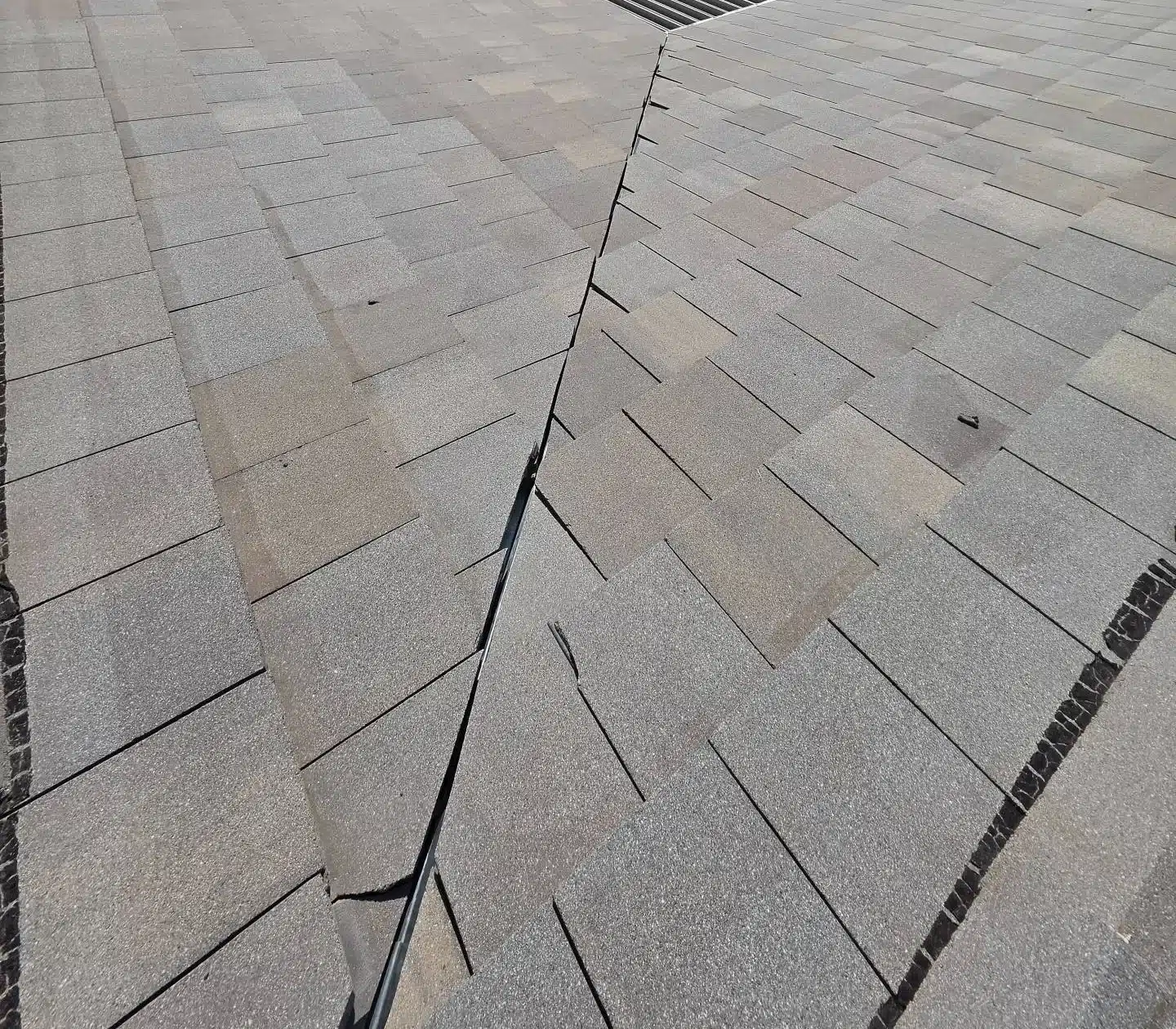
With the valleys done, the broken and slipped tiles were reset and replaced, the low-slope section was re-covered in torch-down, and the scupper — the outlet that takes water off the roof through the parapet — was repaired so the drainage actually worked. The foil patch came off. Finally the whole roof was pressure-washed, which clears the moss holding moisture in the joints and makes the next inspection honest.
Before vs. After
| Feature | Before | After |
|---|---|---|
| Cracked and slipped tiles | Several, with moss holding moisture against them | Reset and replaced where needed |
| Valleys | Metal failed, underlayment exposed to the weather | Two valleys rebuilt |
| Previous repairs | Patched over with foil tape | Removed and repaired properly |
| Low-slope section | No longer shedding water | New torch-down |
| Drainage | Scupper not carrying water off the roof | Scupper repaired |
| Whole roof | Moss and debris across the tiles | Pressure-washed clean |

Why this comes up so often in Cupertino
Cupertino, Saratoga and the neighbouring Santa Clara County suburbs were built out in a period when concrete tile was the default, so a large share of the housing stock is now carrying tile roofs around forty to fifty years old. That is exactly the age where the tile is still fine and everything around it is not — and exactly the age where owners start being told they need a whole new roof. Shaded, tree-lined streets make it worse, because the debris that collects in the valleys is what kills the metal. A roof at this stage usually needs a careful repair, not a tear-off. See our Cupertino roofing page for the area we cover, and more finished work on our roofing projects page.
“Lifetime Roofing & Renovation did an excellent job power washing our roof and repairing termite damage. The team was efficient, professional, and attentive to detail, ensuring the roof looked great and the repairs were solid.”— Janice V., via Google
Concrete tile roof questions we get asked
How long does a concrete tile roof actually last?
The tiles themselves are commonly rated for 50 years and often outlive that. What does not last that long is the underlayment beneath them and the metal in the valleys and around penetrations, which is why a tile roof can need real work two or three times in its life without ever needing new tiles. When someone quotes a full tear-off on a tile roof, the honest question is whether they are replacing the tile or the layers under it.
Why do roof valleys fail before the rest of the roof?
A valley carries the water from two slopes at once, so it handles far more volume than any other part of the roof, and it collects the debris that washes down with it. Trapped leaves and grit hold moisture against the metal and it corrodes from the top down. Both valleys on this roof had reached that point, with the underlayment showing through where the metal had gone.
Is moss on a tile roof actually a problem?
Yes, though not for the reason most people assume. Moss does not eat the tile; it holds water against it and in the joints between tiles, and that standing moisture is what gets under the roof and shortens the life of everything below. It also hides cracks. Clearing it is part of the repair, not a cosmetic extra, which is why this roof was washed down once the work was finished.
Been told your tile roof needs replacing?
Get a second opinion before you commit to a tear-off — on tile, a repair is often the right answer. See more finished work on our roofing projects page.
Gina K. writes about Bay Area roofing for Lifetime Roofing & Renovation, drawing on the team's 16+ years of experience roofing homes across Silicon Valley.