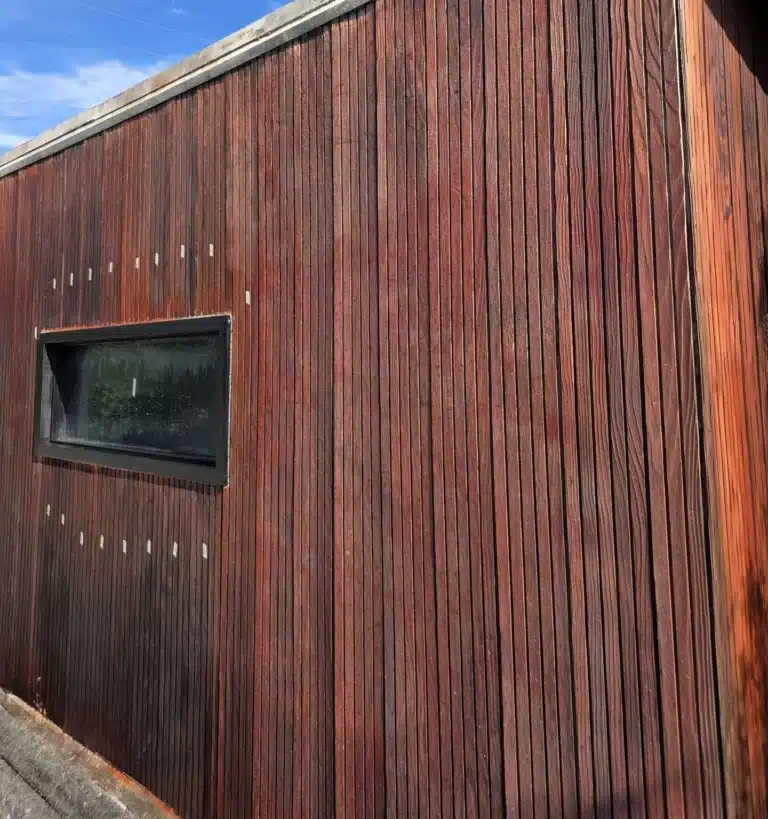
The owner of this mid-century Palo Alto home had custom-made wood siding that had weathered to silver-grey, and he wanted it restored rather than swapped for something modern. Lifetime Roofing cleaned it back, replaced only the boards that had failed, and refinished the wall — keeping the siding the house was designed with.

Should you restore original wood siding, or replace it with fibre cement?
Restore it when the boards are still sound and only the surface has gone, and replace when rot has gone through the wood itself. Most weathered siding looks far worse than it is: grey, split-looking grain is usually sun damage a few millimetres deep, not structural failure. On this Palo Alto home the vertical siding had been bleached silver-grey by decades of sun, but underneath it was sound, so Lifetime Roofing cleaned it back, replaced only the handful of boards that had gone past saving, and refinished the rest. A homeowner on Houzz asked exactly this after uncovering original redwood siding and being torn between sanding it back and tearing it off for fibre cement.
Custom siding, decades of sun, and an owner who did not want it changed
This is a mid-century house in Palo Alto clad in narrow vertical wood boards — not a profile you can order off a shelf, because it was custom made for the house. Decades of direct sun had bleached the exposed walls to a flat silver-grey, with the grain raised and splitting along the edges of the boards. Around the window openings the damage had gone further than the surface. The brief from the owner was unusually clear, and it set the whole job: restore it, do not change it.
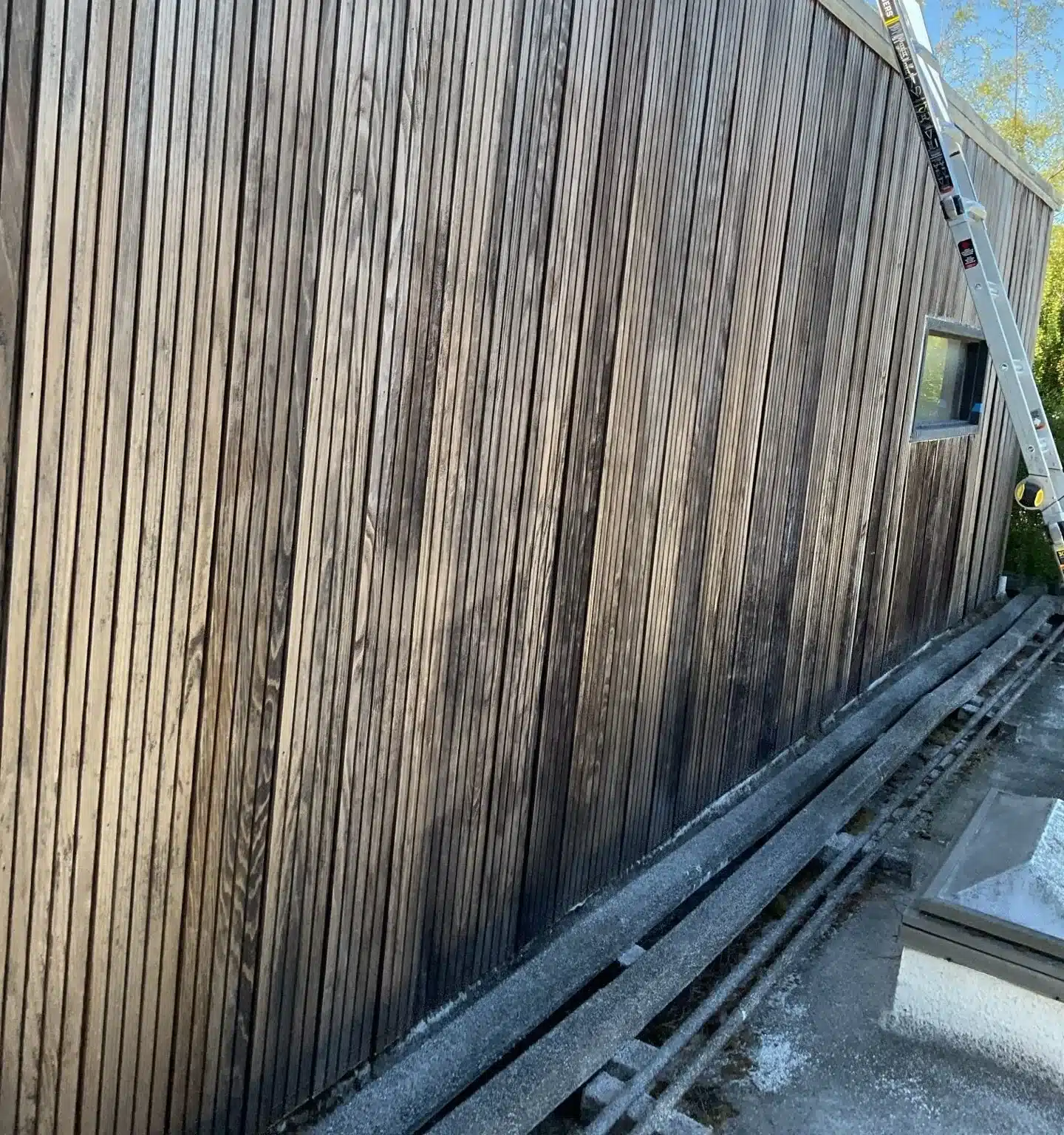
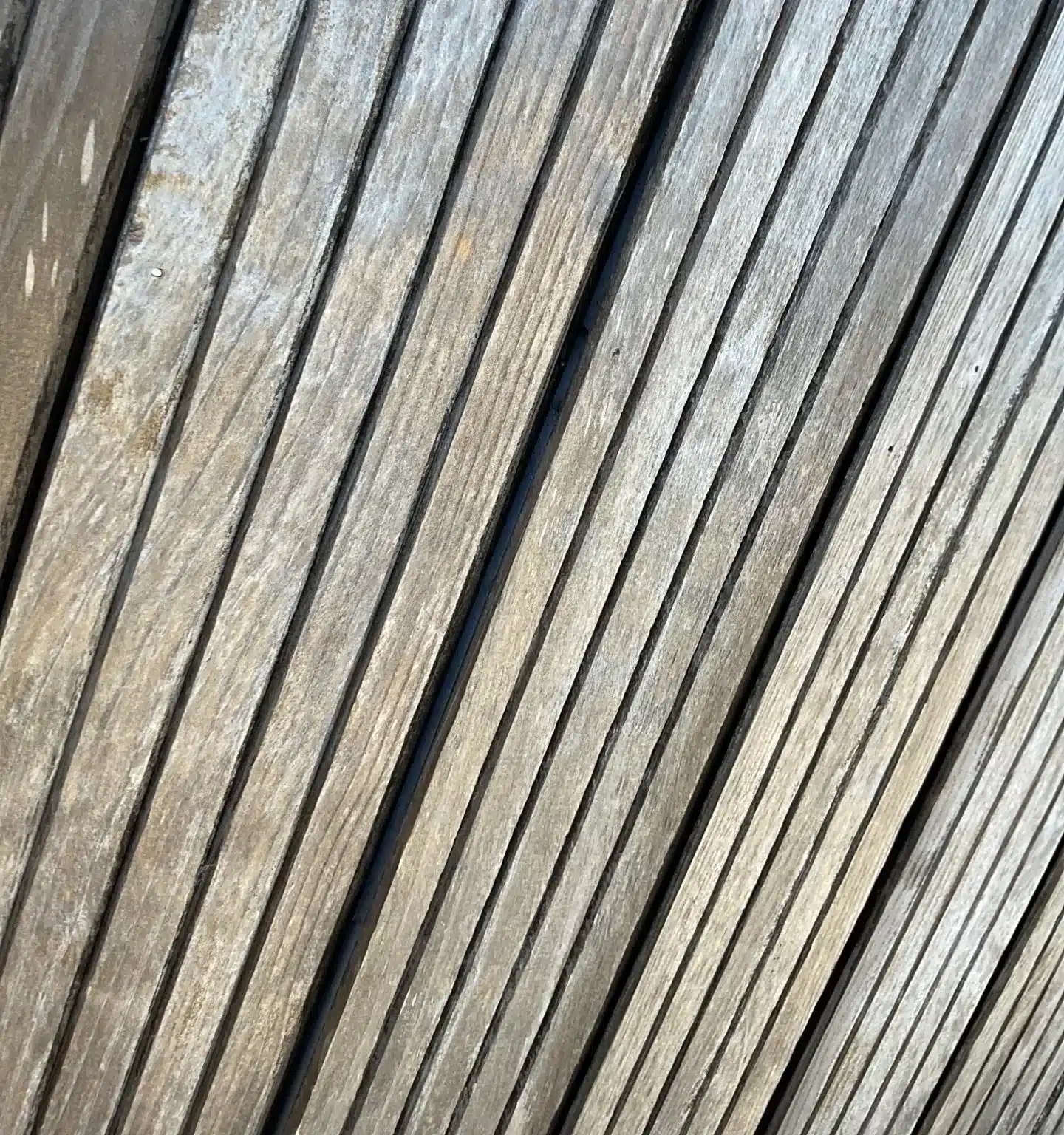
Keep the wood, replace only what has actually failed
The default advice on siding this weathered is to tear it off and put up fibre cement. It is a reasonable product and it is close to maintenance-free, but on a house whose siding was made for it, replacement is a one-way door: the custom profile goes in a skip and nothing you buy afterwards brings it back. We assessed the wall board by board, and most of it was sound wood behind a ruined surface. So the plan was to clean back to good wood, cut out only the boards that had genuinely failed and match them to the existing profile, re-detail the window openings while they were accessible, and refinish the lot. If you are weighing the same decision, our exterior renovation page covers what we look at first.
Board by board, starting at the openings
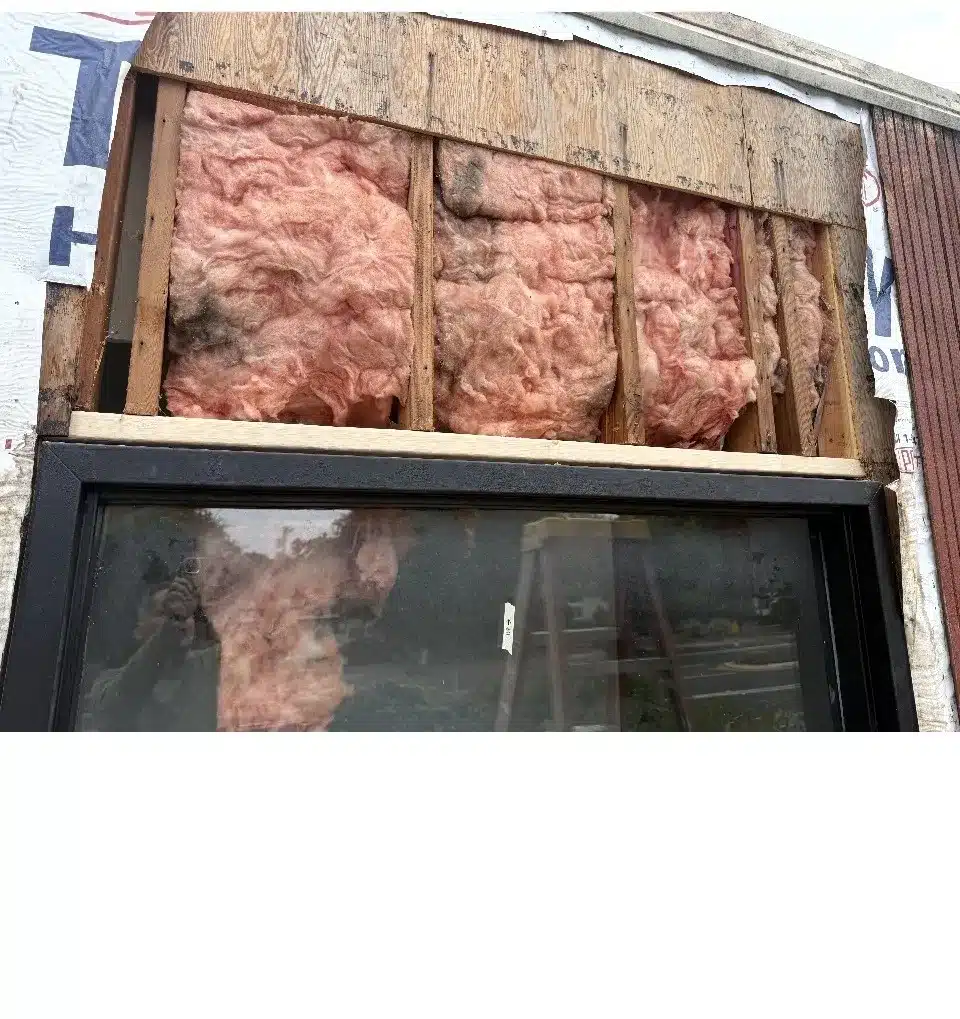
Work started in August 2026. The openings came first, because that is where the real damage was: with boards off around a window, the wall cavity and insulation were exposed and the opening could be wrapped and detailed properly before anything went back over it. Doing this at restoration time is the whole argument for opening a wall up rather than painting over it.
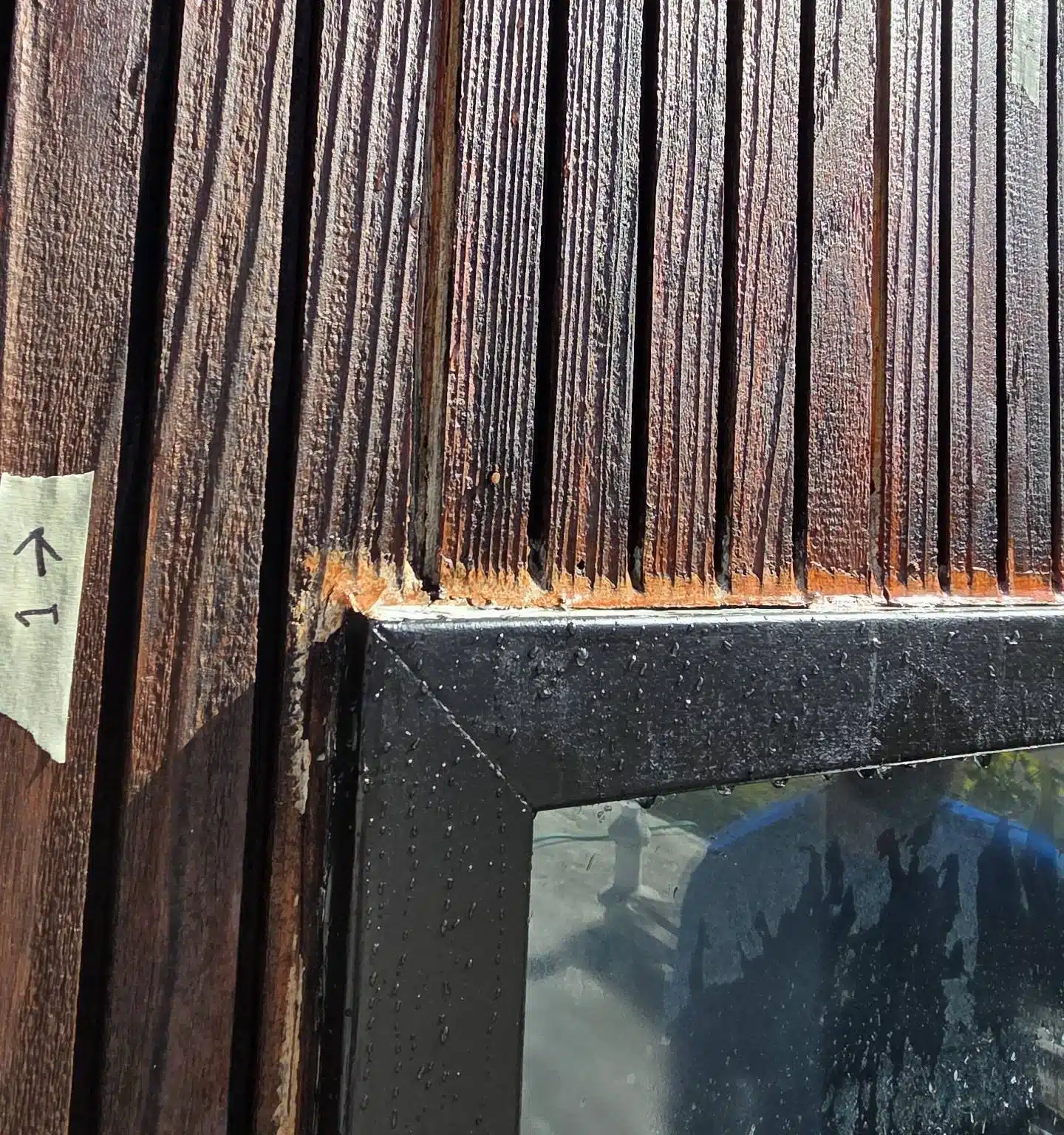
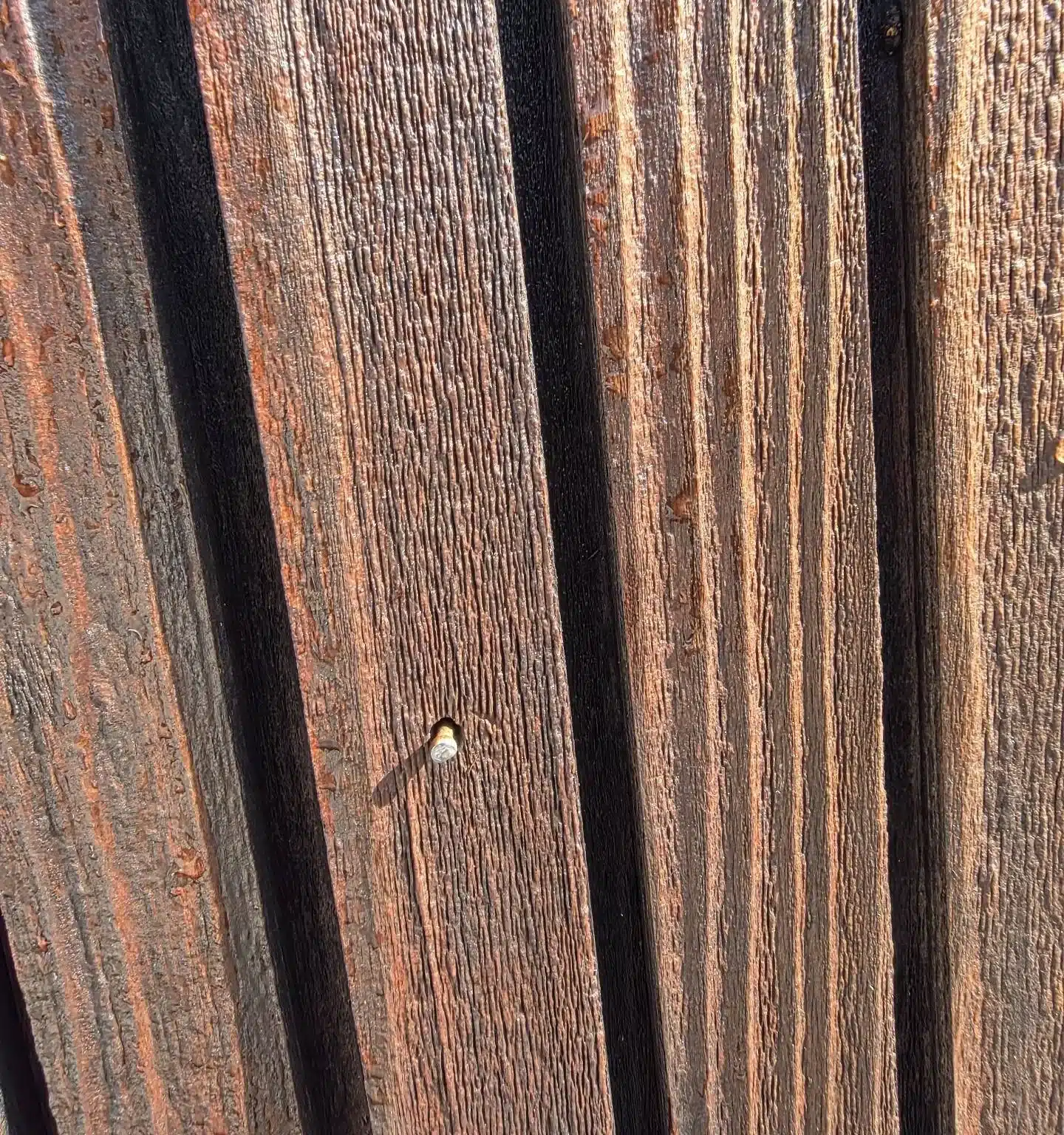
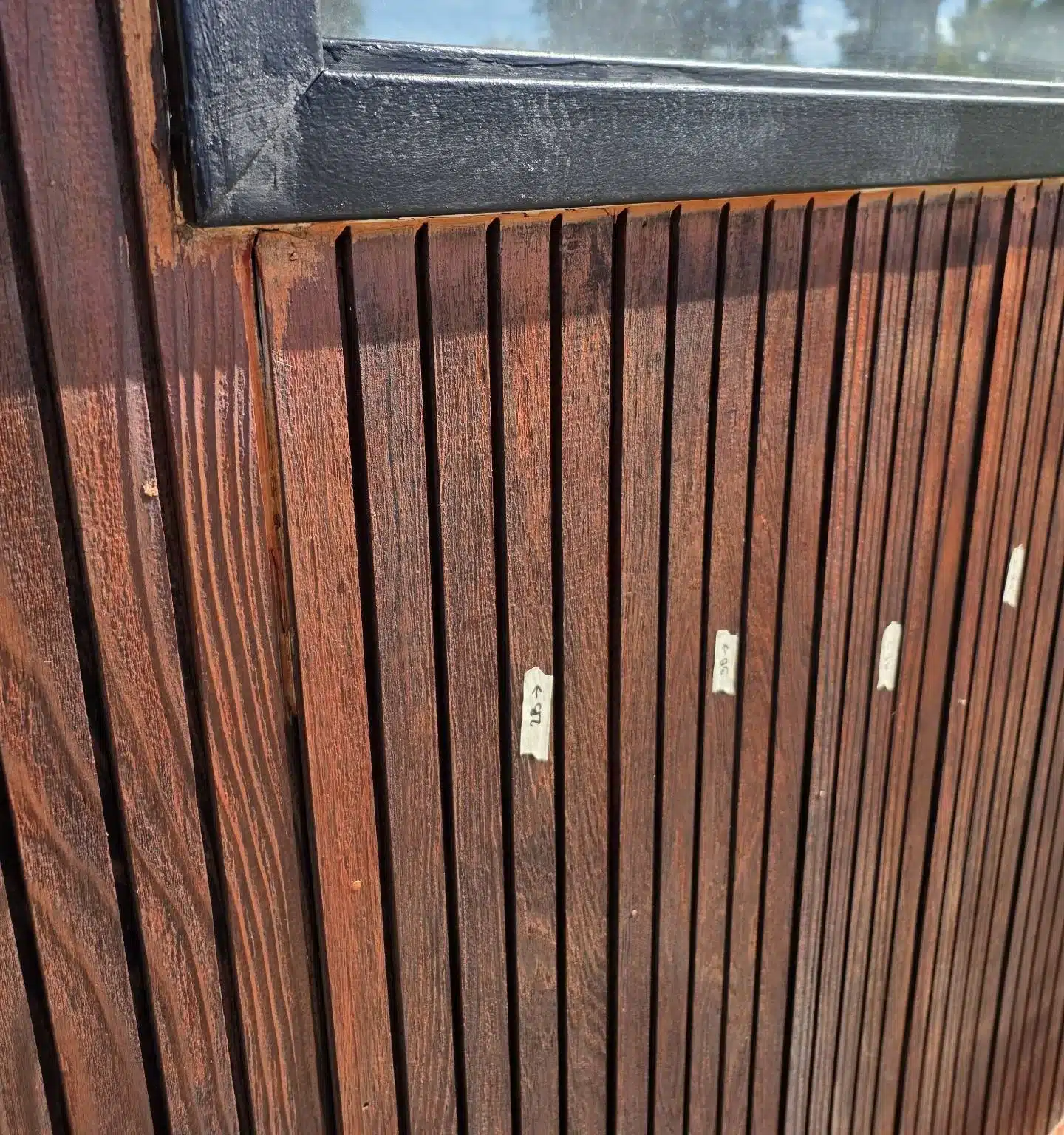
Replacement boards were cut to match the existing profile and fitted individually, so the repaired sections read as part of the same wall rather than as patches. The rest of the siding was cleaned back to sound wood — the grey goes, the board stays — and the whole elevation was refinished together so the colour runs evenly across old boards and new.
Before vs. After
| Feature | Before | After |
|---|---|---|
| Siding surface | Bleached silver-grey, grain raised and splitting | Cleaned back to sound wood and refinished |
| Damaged boards | Several boards weathered past saving | Replaced to match the existing profile |
| Window openings | Exposed and no longer weather-tight | Re-wrapped and re-detailed before the boards went back |
| Original character | At risk of being lost to a modern product | Kept — same custom profile, same house |
| Material | Custom-milled wood, decades old | The same wood, still in place |

Why this matters on a Peninsula mid-century house
Palo Alto, Los Altos and the rest of the Peninsula are full of mid-century houses whose character sits almost entirely in their exterior materials — narrow board siding, deep eaves, big glass. Replace the siding with a modern lookalike and the house still functions, but it stops being the house it was. That matters here in a way it does not everywhere, because these homes trade on exactly that character. The practical catch is sun: unshaded south and west walls weather several times faster than the rest, which is why a wall can look beyond saving on one elevation and be perfectly sound on another. We serve the whole area from Sunnyvale — see our Palo Alto page — and you can see more finished work on our roofing projects page.
“I would recommend Lifetime Roofing. We needed new gutters and resurfacing of our sunroom roof. Our project manager, Matt M, was professional, communicative, and thorough. From the initial quote to when the work was complete, he took care of us every step of the way.”— Winnie L., via Google
Wood siding questions we get asked
How do you tell whether wood siding can be restored or has to be replaced?
Press on it. Sound wood resists; wood that has actually failed gives, feels spongy, or lets a screwdriver sink in. Grey colour on its own means almost nothing — sun damage is usually only a few millimetres deep and comes off with cleaning. The places that genuinely fail first are the bottoms of boards, the ends where water sits, and anywhere around a window or door opening, which is exactly where we found the damage on this house.
What happens to the boards that are too far gone to save?
They come out and get replaced individually, matched to the existing profile so the wall still reads as one surface. That is the part that takes skill on a house like this one, where the siding was custom made and nothing off the shelf matches it. Where boards came off around the openings, we re-wrapped and re-detailed the opening before the new boards went back, because that is where water gets in.
How often does restored wood siding need refinishing?
Expect to refinish every few years rather than never — that is the honest trade-off against fibre cement, and it is the thing homeowners weighing the two decisions worry about most. What you get in return is the original material and the original look, which a replacement product can imitate but not reproduce. South and west walls weather fastest in the Bay Area and will always need attention before the shaded sides do.
Not sure whether your siding can be saved?
We will look at it and tell you honestly — including when replacement really is the better call. See more finished work on our roofing projects page.
Gina K. writes about Bay Area roofing for Lifetime Roofing & Renovation, drawing on the team's 16+ years of experience roofing homes across Silicon Valley.