We tear off worn cedar and wood shake, build a solid new deck over the old skip sheathing, and install a Class A fire-rated roof. Our recent shake conversions in Palo Alto, Saratoga and Campbell ran about $28,000 to $48,000, permits and inspections included.
A cedar shake roof replacement removes the old wood shakes down to the framing, builds a solid deck over the spaced skip sheathing they were nailed to, and installs a new Class A roof system on top. That deck step is what separates a shake job from an ordinary reroof, and it is why shake conversions usually cost more than a shingle-over-shingle replacement.
Class A fire rating — dry wood shake is replaced with a fire-rated shingle or composite assembly, one of the most effective hardening steps for a hillside home.
A real deck under the roof — a full plywood or OSB overlay turns open skip sheathing into continuous support, with any rotten boards replaced.
Leaks stop for good — new synthetic underlayment, peel-and-stick at valleys and penetrations, new drip edge, metal valleys and flashings.
Warranty you can transfer — as a Platinum Preferred contractor we can register Owens Corning's 50-year non-prorated material warranty on lifetime shingles, plus our own 10-year workmanship warranty.
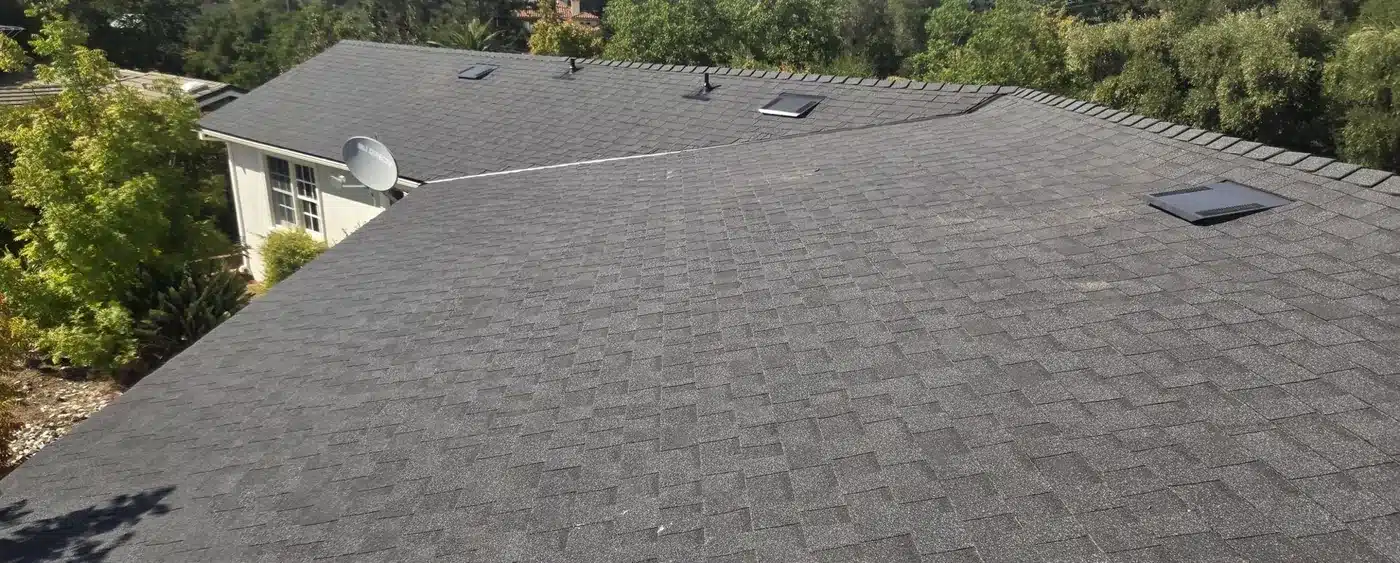
Usually not with untreated wood: in California's mapped Fire Hazard Severity Zones, replacing more than half of a roof within a year requires a Class A roof covering, and untreated cedar shake does not qualify. Many hillside towns in Santa Clara and San Mateo counties add their own stricter rules, so the answer depends on your address. Look it up on the CAL FIRE Fire Hazard Severity Zone map; we confirm the requirement with your building department before quoting and size the bid to it. Most owners choose a Class A shingle, and those who want the wood look choose a composite shake.
A wood shake roof is fuel. Embers land in the gaps between dry shakes, and leaves and oak litter collect on top of them. On the Saratoga hills job, the old shakes sat under oaks and dry brush; the new roof is a Class A shingle assembly over a solid deck. See the Saratoga conversion.
We check the fire-zone and local reroof rules for your address, pull the permit, schedule the tear-off and final inspections, and leave you the product documentation that shows the roof is Class A. Our permits guide covers what inspectors look for.
Every option below goes on the same rebuilt deck and is a Class A system. The difference is the look and the budget.
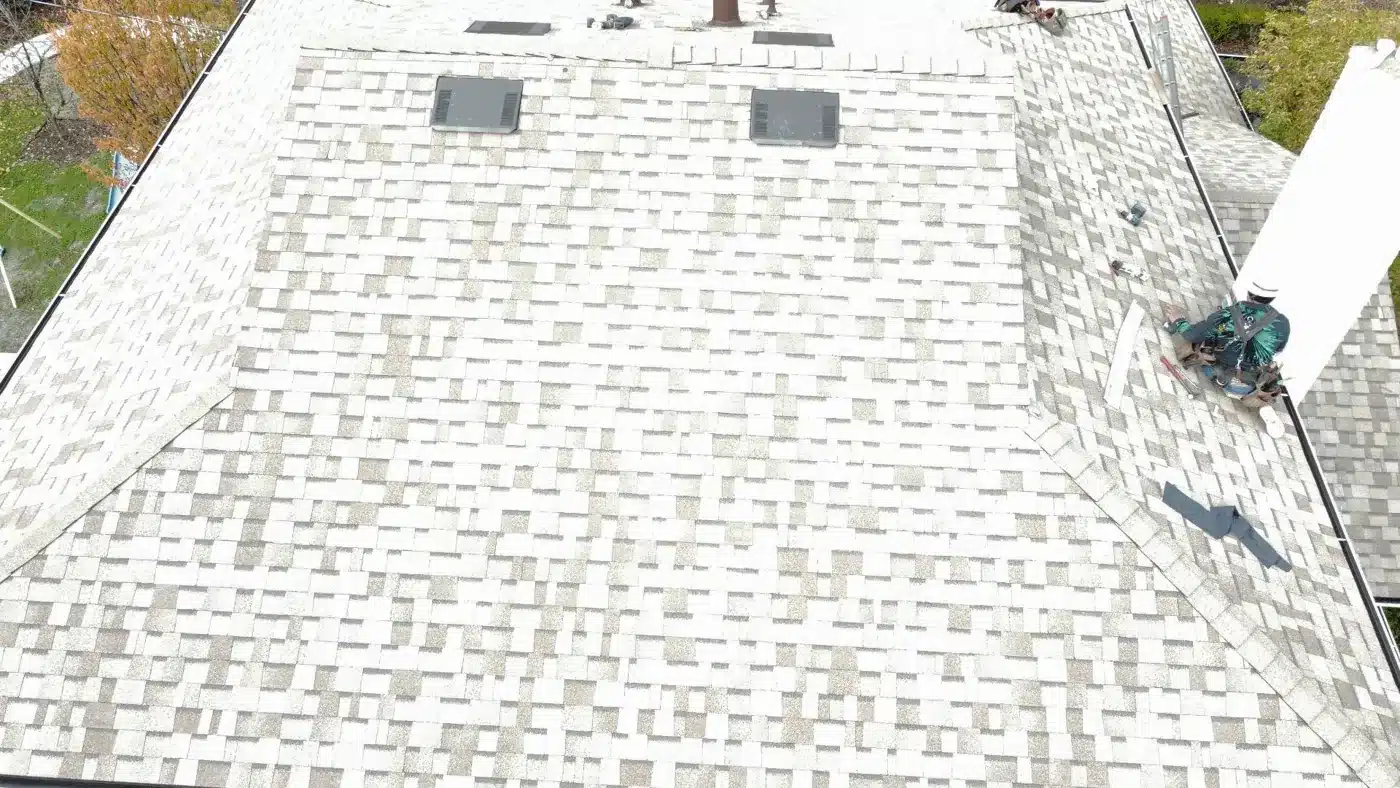
Owens Corning cool-roof shingles meet California's energy code for reroofs and keep the attic cooler. This is what replaced the 1960s shake roof in our Palo Alto project. More on cool roofing.
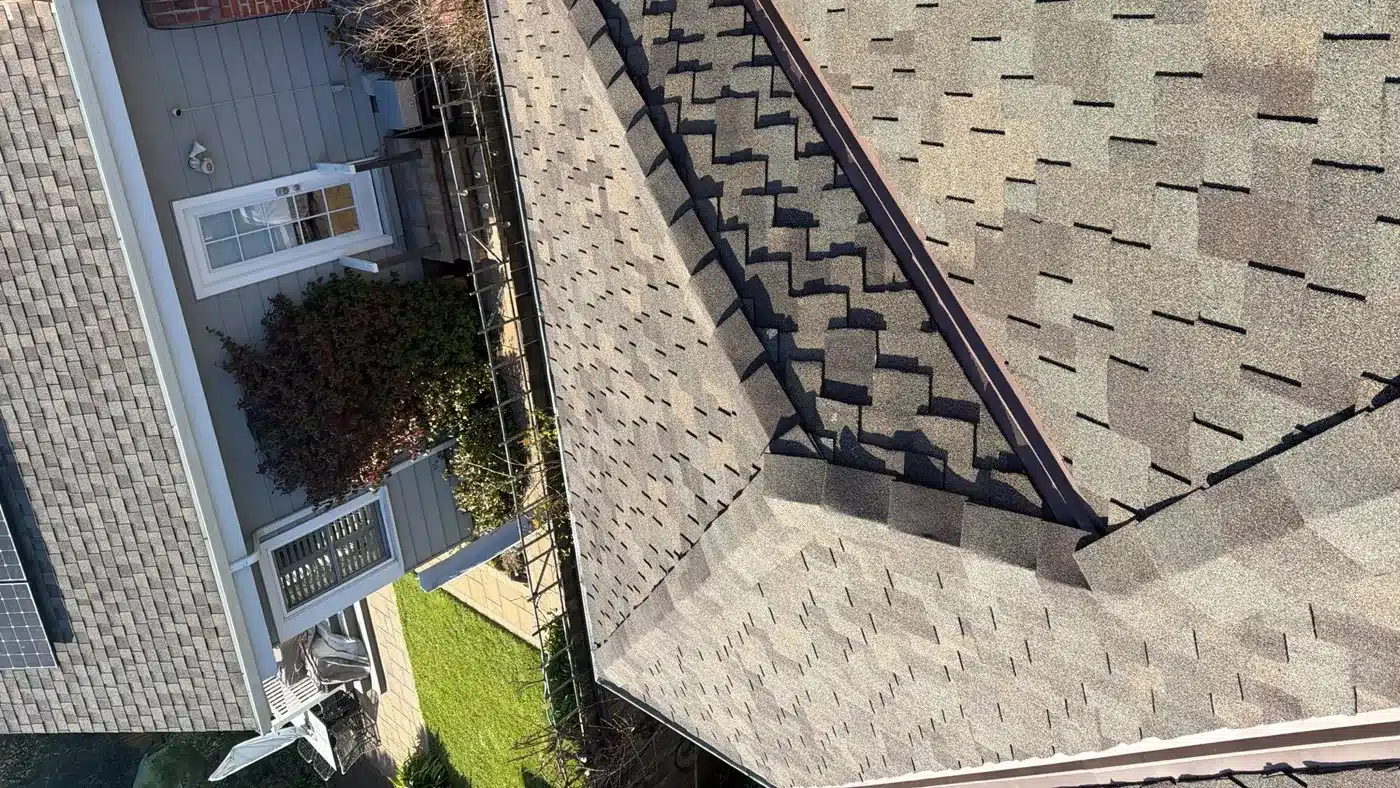
CertainTeed Presidential and similar thick, layered shingles cast deep shadow lines that read closest to shake from the street. Our Campbell wood shake conversion went to Presidential TL.
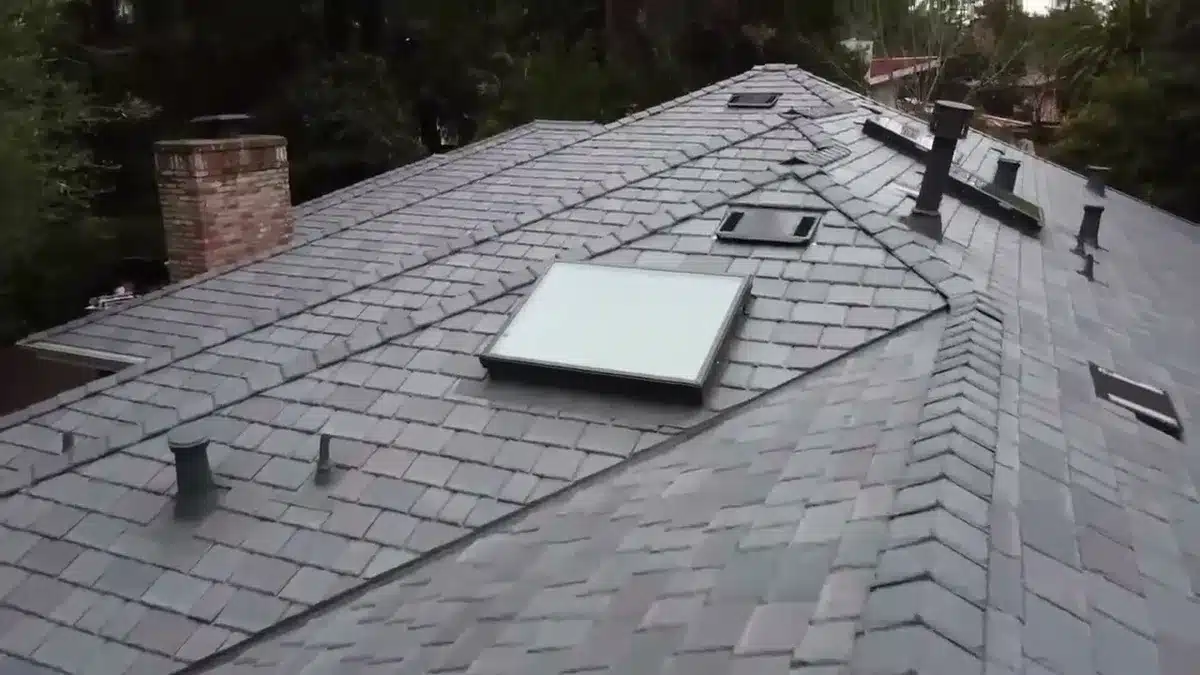
For owners who want to keep the cedar or slate look without the wood, we install composite products from DaVinci and Brava, rated Class A by the manufacturer. This photo is one of our synthetic slate roofs; see synthetic slate roofing.
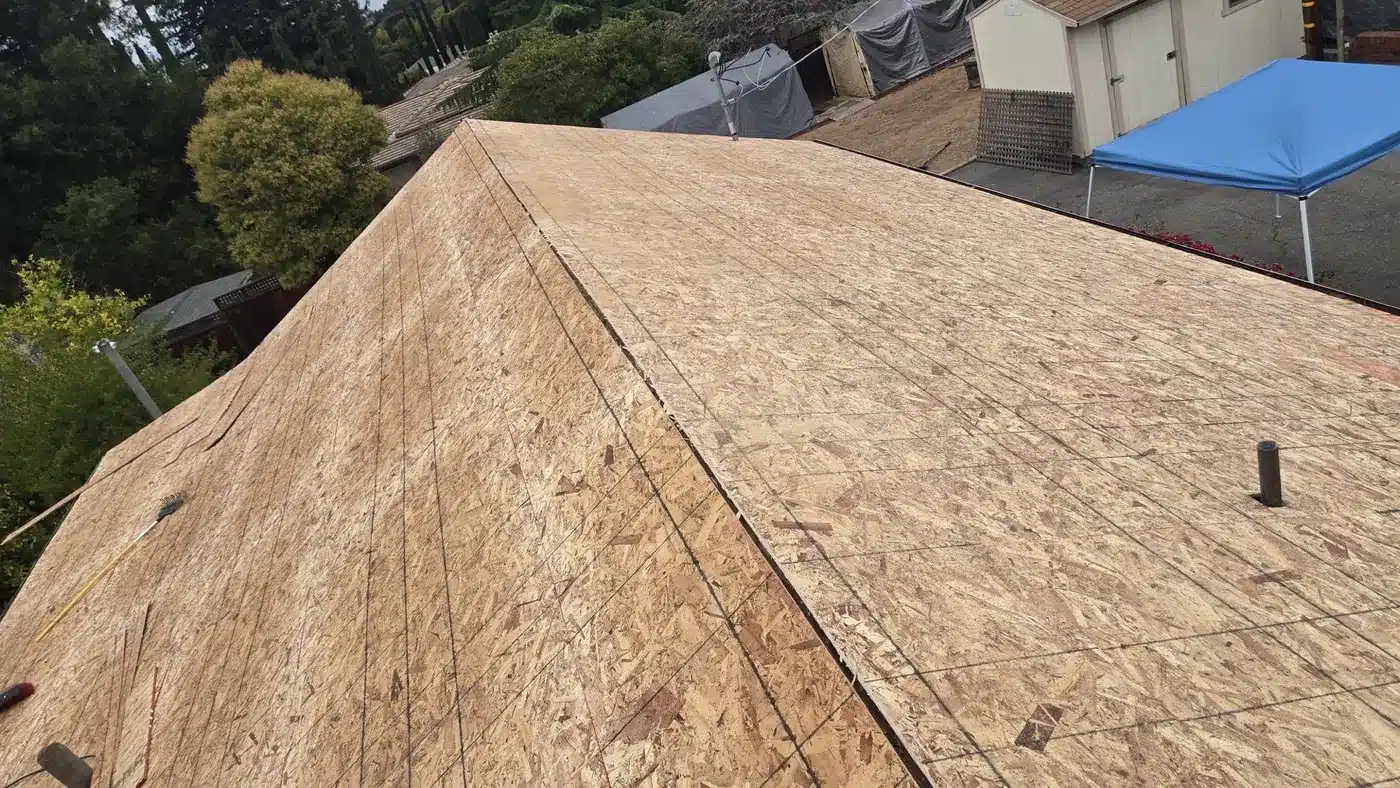
Whatever goes on top, a full plywood or OSB overlay goes on first, fastened through to the rafters. A bid without a deck line item is not a real shake replacement bid.
The shake roofs we replace are usually original to the house: patched for years, holding moisture instead of shedding it, and sitting on boards with air between them.
Dry wood shake is replaced with a Class A assembly, which matters most in the Saratoga, Los Gatos and Palo Alto foothills where brush and oak litter collect on roofs.
Owens Corning lifetime shingles installed by a Platinum Preferred contractor carry a 50-year non-prorated material warranty, transferable once if you sell.
With the roof open, attic work is far cheaper. In Palo Alto the owner added a full attic restoration with new R-38 insulation for $15,000 while the crew was already there.
Six steps, the same on every shake job. The deck step is the one most low bids leave out.
We walk the roof and attic, measure in squares, check for rot and failed valleys, and give you a written quote with the deck overlay priced in.
We confirm the Class A and local reroof rules for your address and pull the building permit.
All shake, old felt, flashings and vents come off. We protect the yard and the house, and haul everything away.
We replace any rotten boards, then fasten a full plywood or OSB overlay through to the rafters so the new roof has continuous support.
Synthetic underlayment with cap nails, peel-and-stick at valleys and penetrations, new drip edge, metal valleys, chimney crickets where needed, then the new roof.
We call for the city's final inspection, magnet-sweep the property, and register your warranty.
We have converted shake roofs from Palo Alto to the Saratoga hills, and every one got a solid new deck, new flashings and a passed final inspection. Family-owned, 16+ years in business, BBB A+.
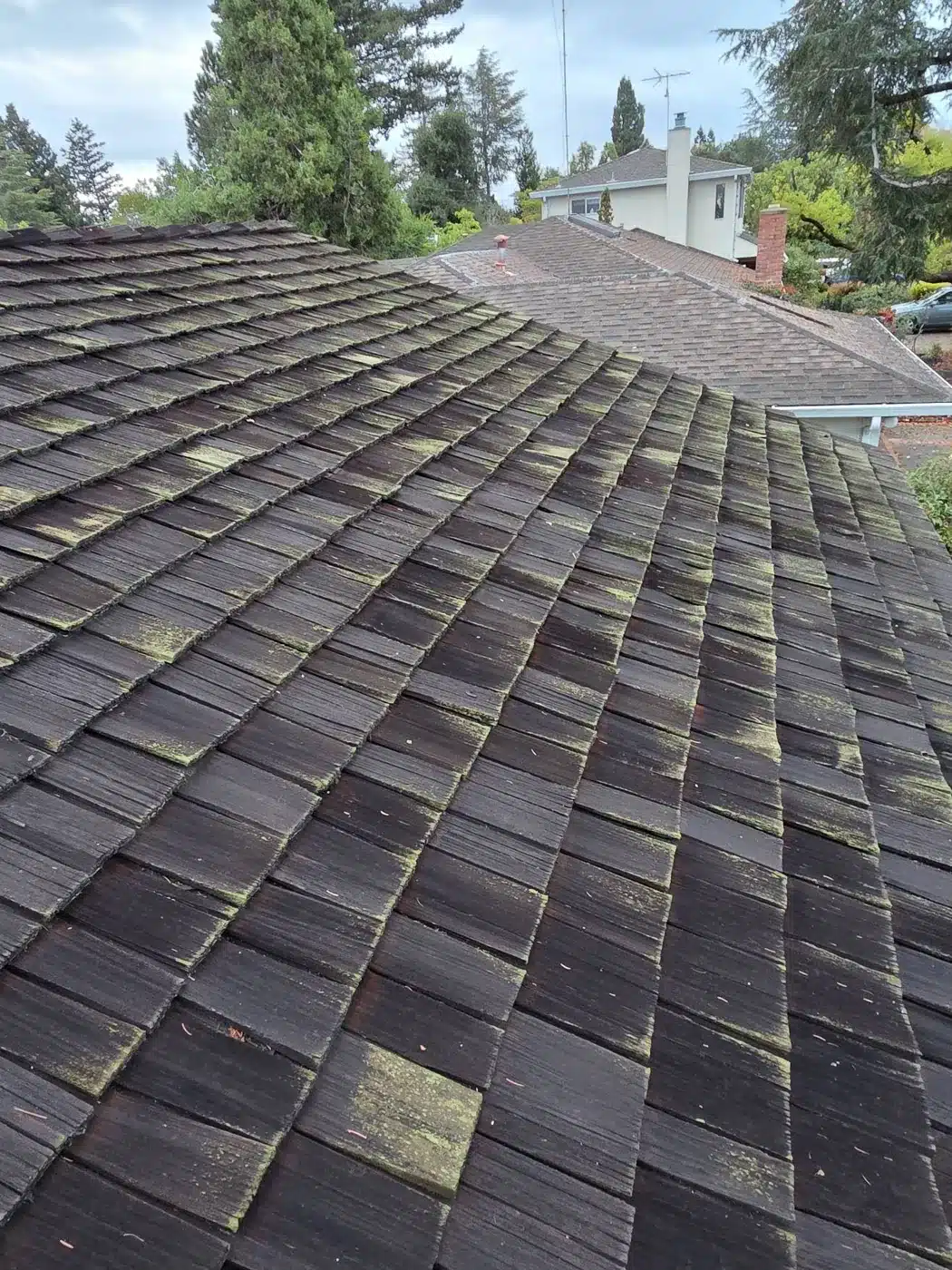
A moss-covered 1960s cedar shake roof in south Palo Alto, replaced before the winter rains. The full case study has every photo and the cost breakdown.
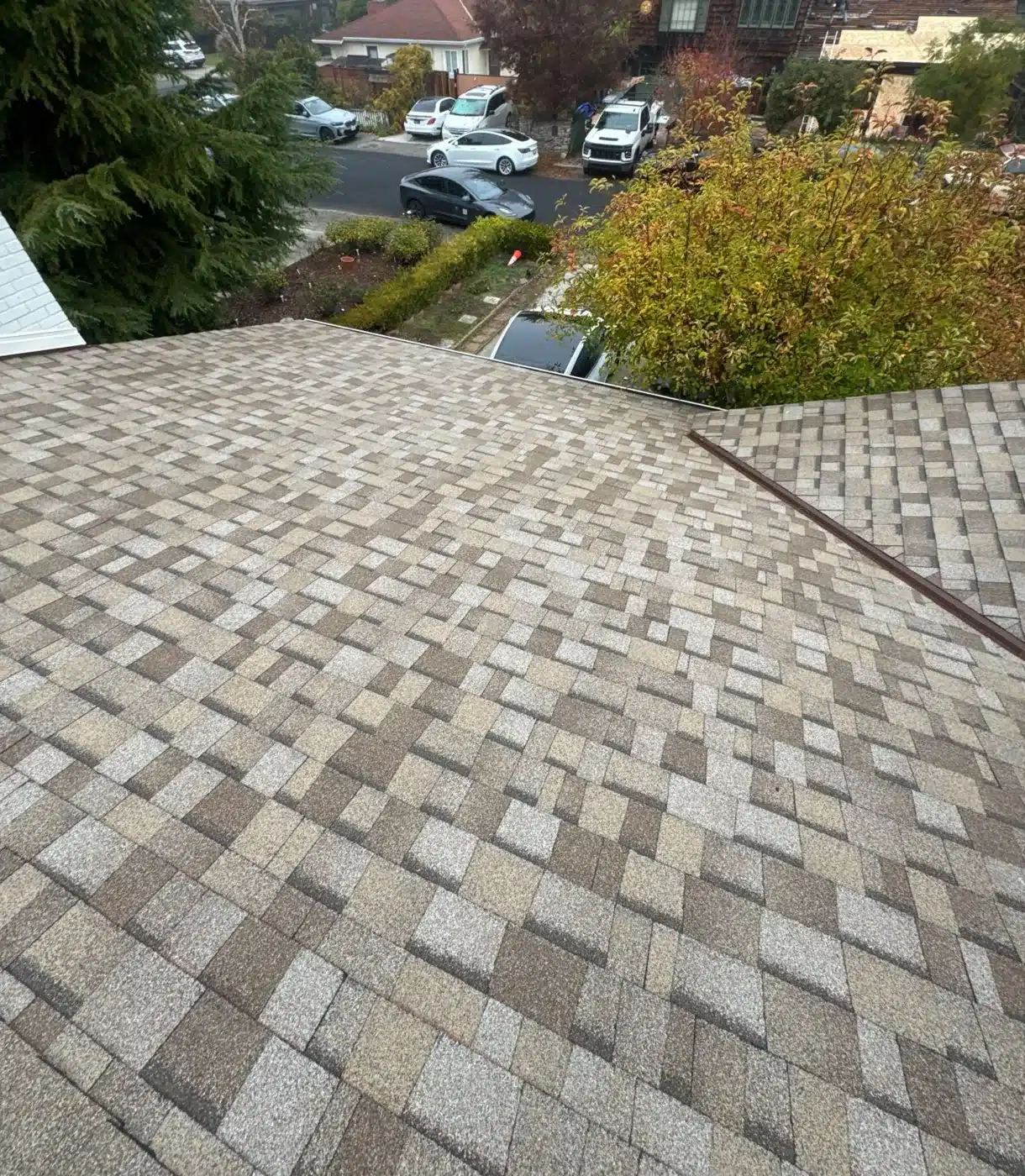
Most cedar shake replacements we do land between about $28,000 and $48,000. Our three most recent documented shake conversions came in at about $28,000 in Palo Alto (roof only, including the $593 permit), about $35,500 for 26 squares in Saratoga, and roughly $40,000 to $48,000 in Campbell depending on the shingle chosen. Shake jobs cost more than a standard reroof because a solid deck has to be built over the old skip sheathing. See the Palo Alto cost breakdown for a line-by-line example.
No. Shakes have to come off, and the deck under them has to be rebuilt first. Cedar shake was nailed to spaced skip sheathing, and asphalt shingles need a solid, continuous deck, so every honest shake replacement includes a full plywood or OSB overlay across the old boards. We explain that step in plywood over spaced planks.
In mapped Fire Hazard Severity Zones, California code requires a Class A roof covering when more than half of a roof is replaced within a year, and many hillside towns add stricter local rules. Untreated wood shake does not meet that, so most Bay Area shake replacements go to a Class A shingle or composite system. Check your address on the CAL FIRE Fire Hazard Severity Zone map, and we confirm the rule with your building department before we quote.
Replace it once shakes are splitting, slipping out of their courses or growing moss across the field, or once a valley has opened up. Cleaning and spot repair only make sense while the wood is still mostly sound. Every shake roof we replaced in Palo Alto, Saratoga and Campbell had reached the point where patches were chasing leaks. Our Campbell restore-or-replace case study walks through the signs.
For most Bay Area homes it is a Class A architectural or designer shingle, such as Owens Corning cool-roof shingles or CertainTeed Presidential, which gives a layered look close to shake. Homeowners who want to keep the cedar look choose a composite shake from DaVinci or Brava, which costs more but is rated Class A by the manufacturer.
Yes. A full shake tear-off is a reroof, and every city we work in requires a building permit and inspections. We pull it and schedule the inspections. On our Campbell shake job the city passed the tear-off inspection and the final, and the Palo Alto permit was $593. More detail is in our guide to roofing permits and codes.
Book a free inspection. We will tell you honestly whether it can be repaired or needs replacing, and give you a written quote with the deck, permit and Class A requirements built in.