Roof Inspection · Bay Area
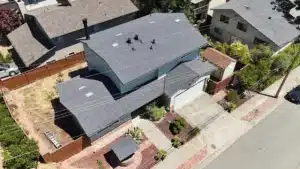
Chimneys are where most roofs leak first, and the flashing is almost always the reason — not the chimney, not the shingles around it. On this Hayward roof the previous repair was a band of foil tape wrapped around the base of the flue, holding back the weather on a roof that looked perfectly sound from the ground.
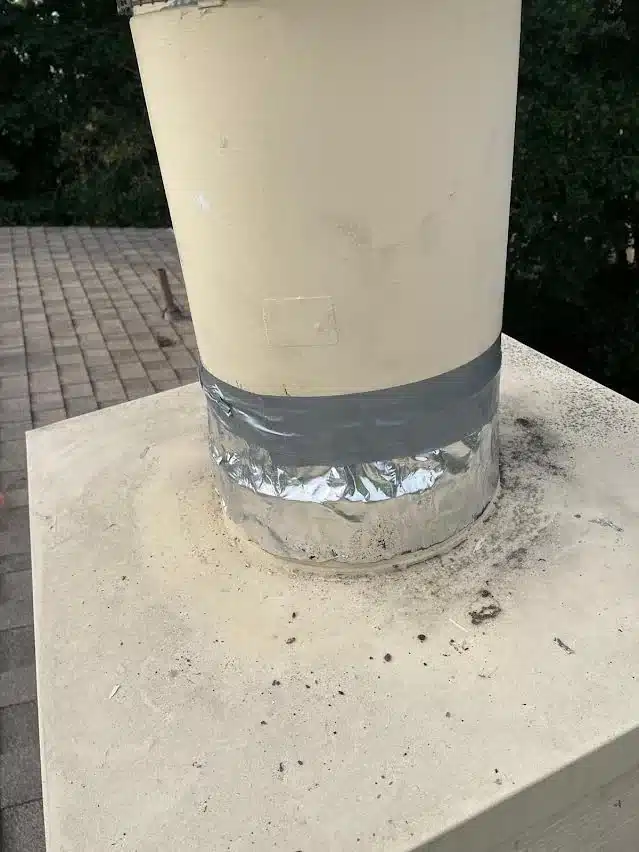
Look at the joint where the chimney meets the roof, not at the chimney itself. Failing flashing shows up as rust or staining running down from that joint, sealant that has cracked or pulled away, tape or roofing mastic used in place of metal, a collar lifted at one edge, or damp and daylight around the penetration on the underside of the deck in the attic. Any one of those means water is already getting past the detail, whether or not it has reached a ceiling yet.
A Bay Area homeowner asked r/Roofing for help assessing their chimney flashing and roof condition. Most of the replies came back the same way — that the useful photograph is of the joint, not of the chimney — which is exactly where the answer lives.
Why the chimney leaks before the rest of the roof does
A field of shingles or tile is a simple thing: overlapping courses shedding water downhill. Every penetration through that field is an interruption, and an interruption has to be engineered. A chimney is the largest interruption on most roofs — it is wide, it sits across the slope so water piles up behind it, and it moves independently of the roof structure as the house expands and contracts through the year.
That movement is why chimney details fail on a schedule. Sealant is the part with the shortest life; it shrinks, hardens and eventually splits at the joint it was bridging. Metal lasts far longer, but only if it was lapped in the right order in the first place. And where someone has reached for tape or a tube of mastic instead, the clock is much shorter still — a season or two, not a decade.
What an inspection actually checks at a chimney
The check starts with the order of the layers, because that is what decides whether the detail works at all. Water has to be able to run onto metal and off again without ever finding an upward-facing seam. On a masonry chimney that means step flashing woven into each shingle course, counterflashing let into a mortar joint above it, and a cricket on the uphill side if the chimney is wide enough to dam water. On a framed chase like this one it means a metal chase cover on top, a flue penetrating it, and a storm collar sealing the pipe to the cover.
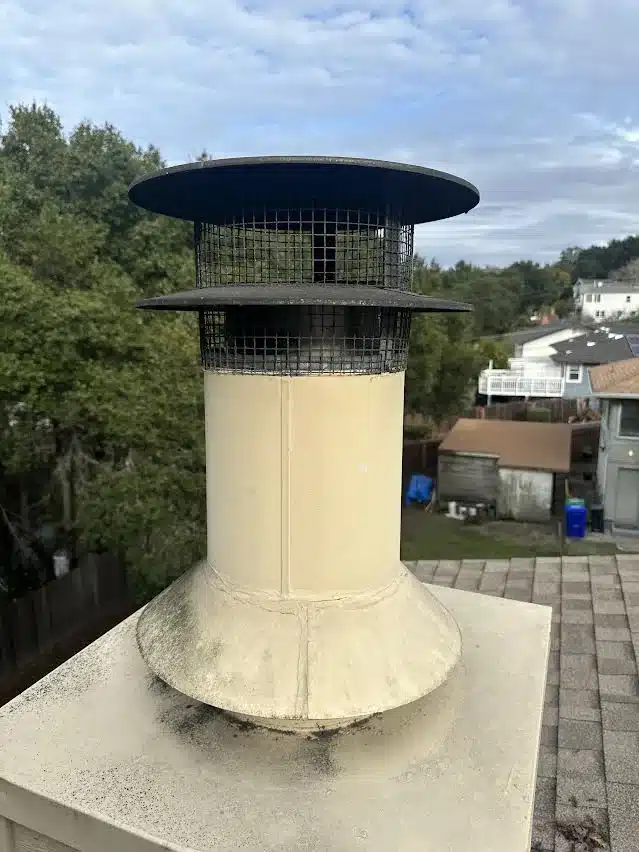
Then the inspector reads the evidence. Rust tracks running downhill from the joint, dark staining on the roof covering below the chimney, sealant that has pulled away from one face, a collar that has lifted at an edge, granules stripped in a fan shape below the detail. Inside, the attic side of the deck around the penetration tells you whether water has actually been getting through and for how long — those marks stay after the wood dries. Our roof inspection is free and covers all of it, with photographs of what was found.
What a proper repair looks like
On this job the tape came off, the joint was cleaned back to sound metal, and the flue was sealed properly: a new storm collar bedded and sealed to the chase cover, so water landing on the pipe runs onto the cover and off the roof instead of into the chase. The chase itself was re-sided and painted, and a new cap went on the flue.
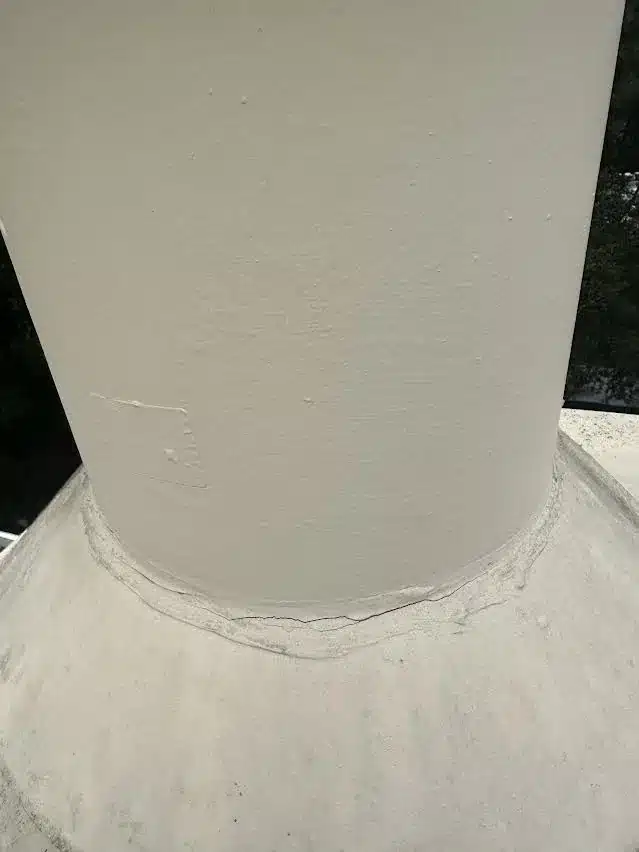
None of that is a large job, which is the point worth making. Caught at the flashing, this is a half-day repair. Left until the water has been tracking down the inside of the chase for a few winters, it becomes framing, sheathing and often the ceiling below — and at that stage the roof covering has to come off around the chimney to put it right. The difference between the two is almost entirely how early someone looked.
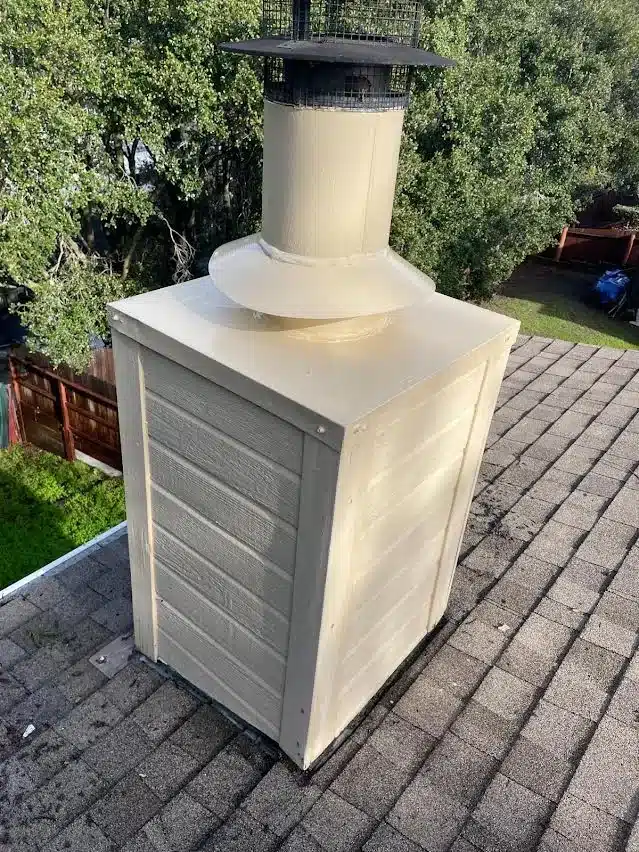
The two-minute check from the ground. Stand where you can see the chimney against the sky with binoculars or your phone camera zoomed in. You are looking for three things: a dark stain fanning downhill from the base, anything silver, grey or black that looks like tape rather than metal, and a gap or lifted edge where the flashing meets the chimney. Any of the three is worth a closer look before the rain starts.
Chimney flashing questions
Is chimney flashing something a roofer repairs, or a chimney company?+
Can chimney flashing be resealed, or does it have to be replaced?+
The chimney is not used any more — does the flashing still matter?+
Have the chimney looked at before the storms
Bay Area storm season starts in late October, and chimney details are the first thing to give. An inspection now means a half-day repair on a dry roof rather than a ceiling repair in January.
Book a Free Inspection Call (408) 685-2177See recent projects · Lifetime Roofing & Renovation, Inc. · Sunnyvale, CA · CSLB #1090028 · 4.8★ on Google
Gina K. writes about Bay Area roofing for Lifetime Roofing & Renovation, drawing on the team's 16+ years of experience roofing homes across Silicon Valley.