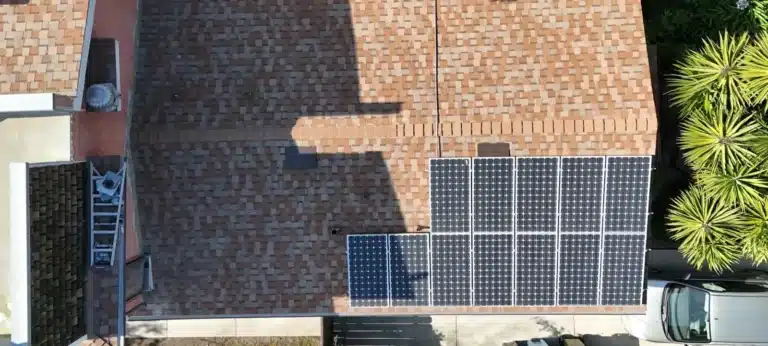
A section replacement is the right call when the wear is confined to one part of the roof: on this Berkeley home we tore off one worn section of about nine squares down to the deck, sealed it with self-adhered underlayment, flashed it into the stucco walls, finished it in new CertainTeed shingles and reinstalled the solar panels — in under a week.
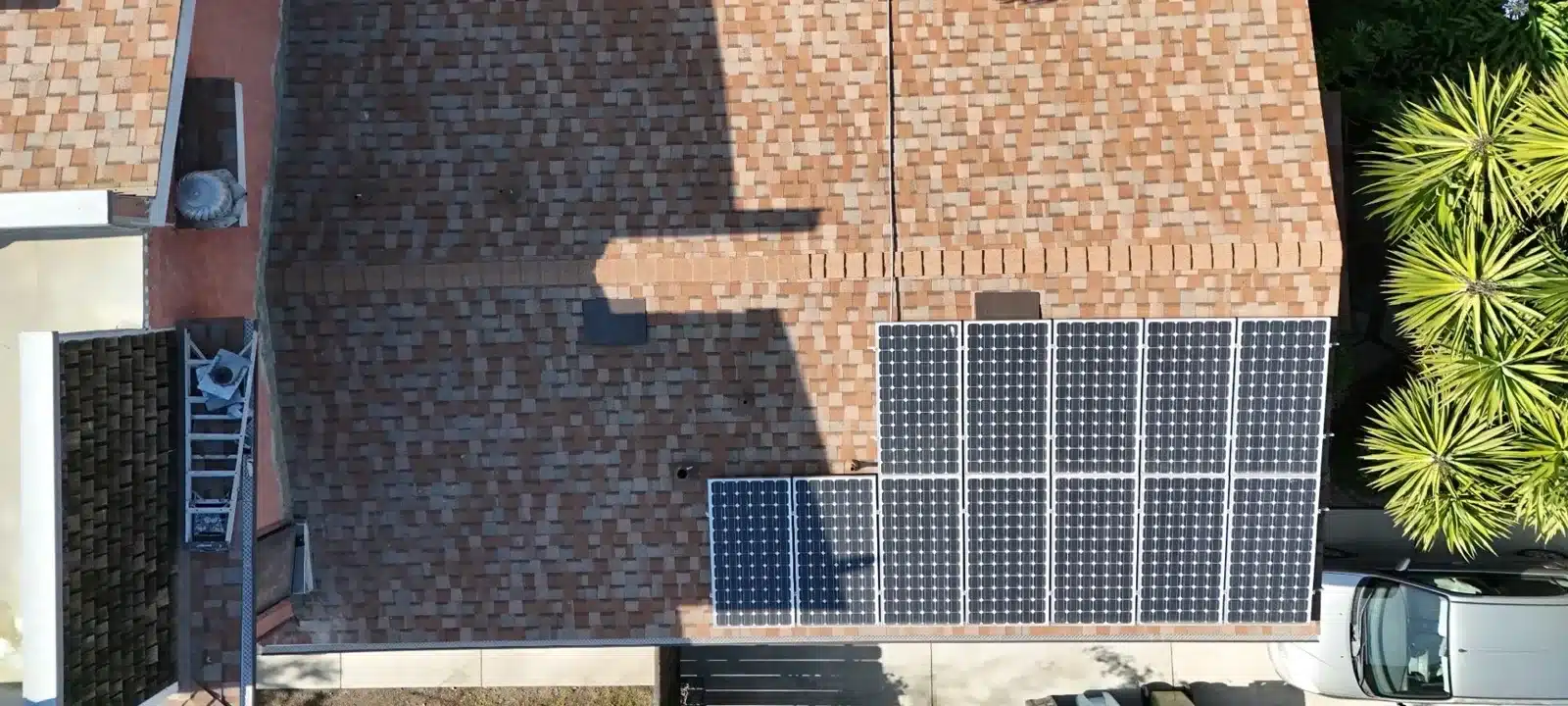
Replace only the worn section when the rest of the roof is genuinely sound and the new section can be tied into it cleanly at the edges; replace the whole roof when the wear is spread across every slope. On this Berkeley home the failing area was one defined section of about nine squares, so we tore that section off, installed self-adhered underlayment, new flashing at the stucco walls and new CertainTeed shingles, and put the solar panels back on top. A Northern California homeowner on r/Roofing asked exactly this after five roofers split on whether to replace only the old section or the whole roof.
One Section of Three-Tab Shingles That Had Worn Out
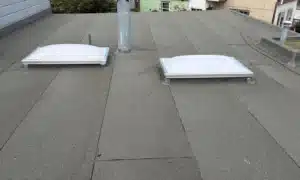
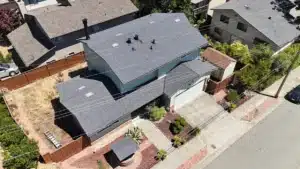
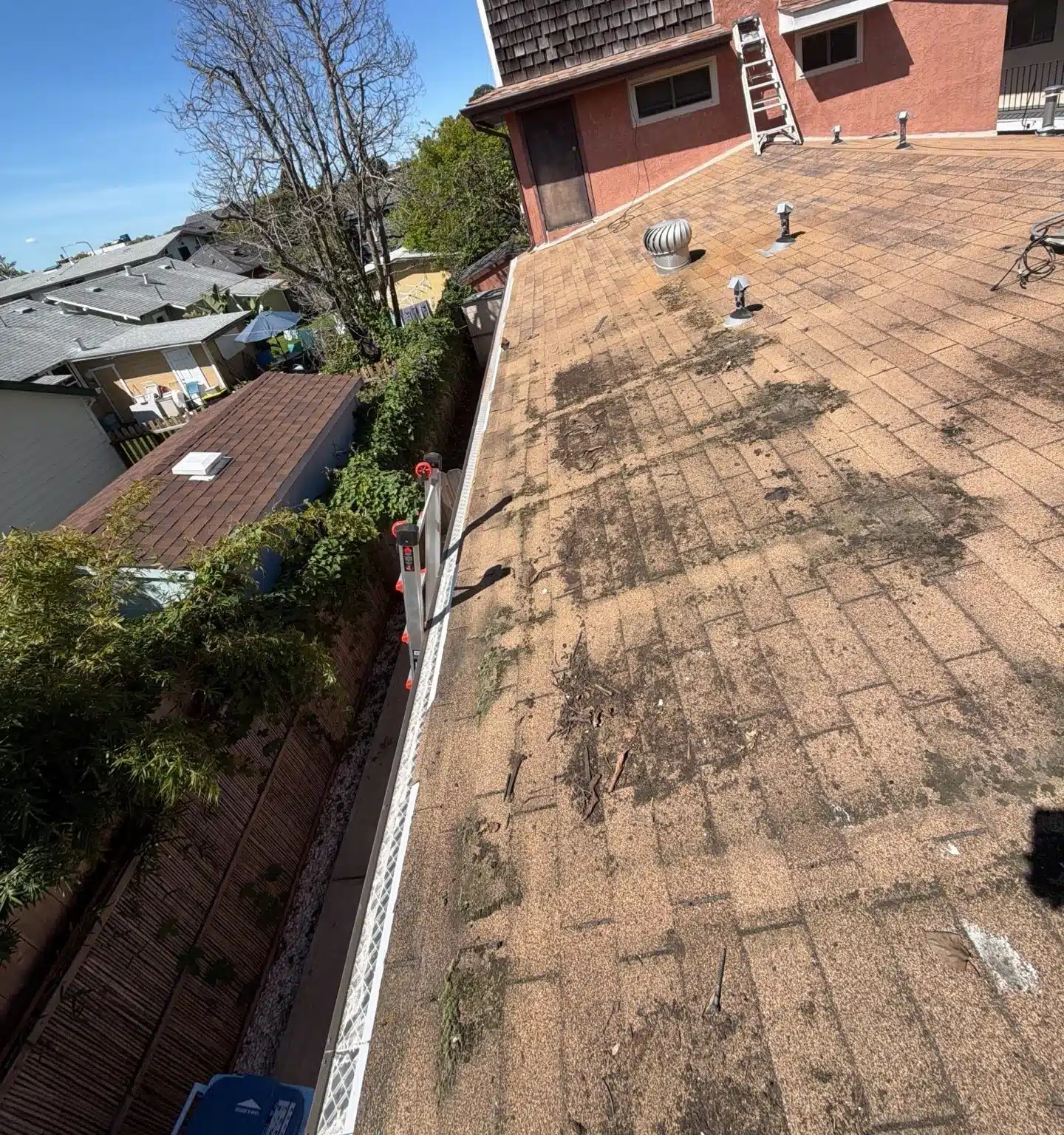
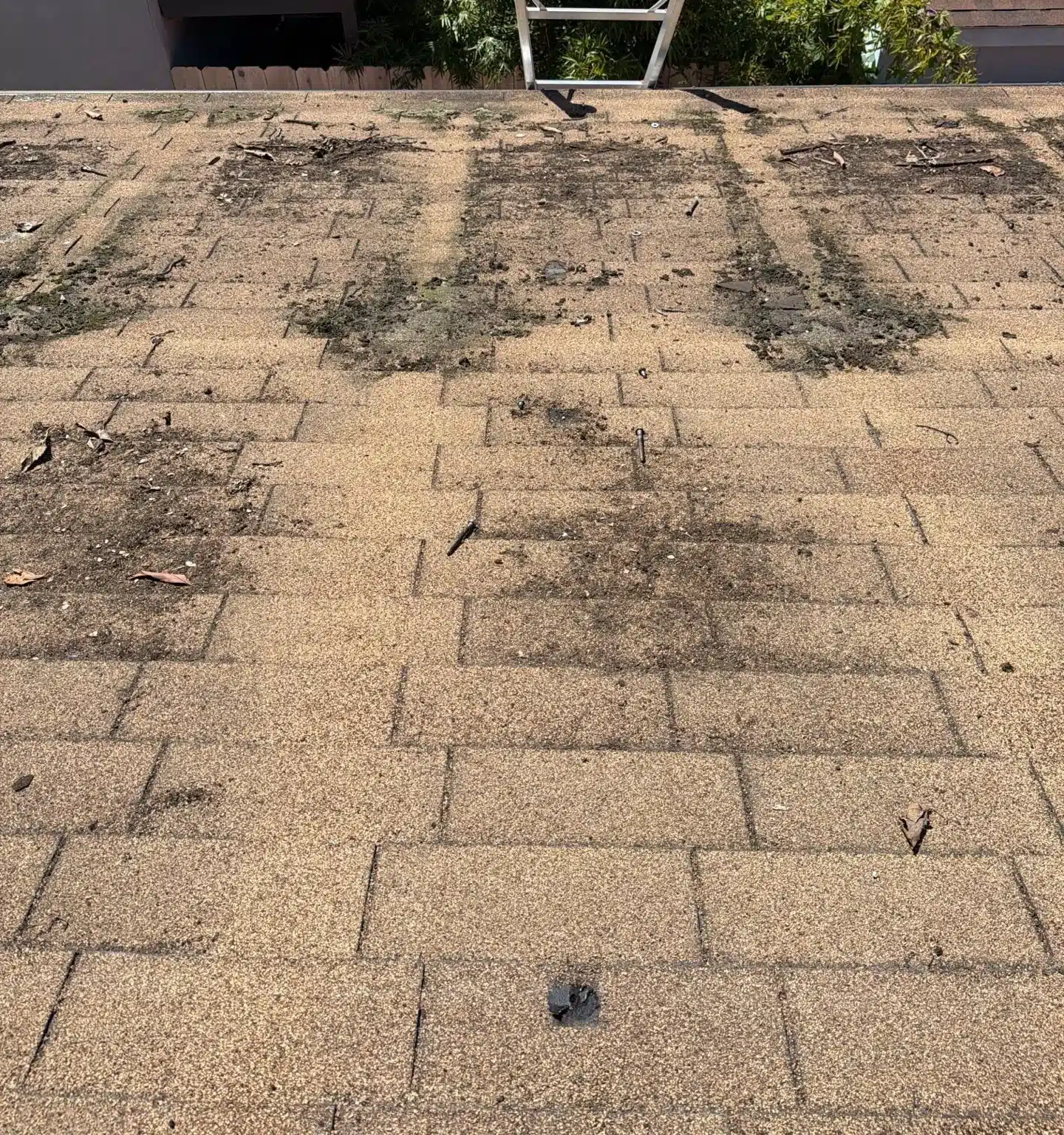
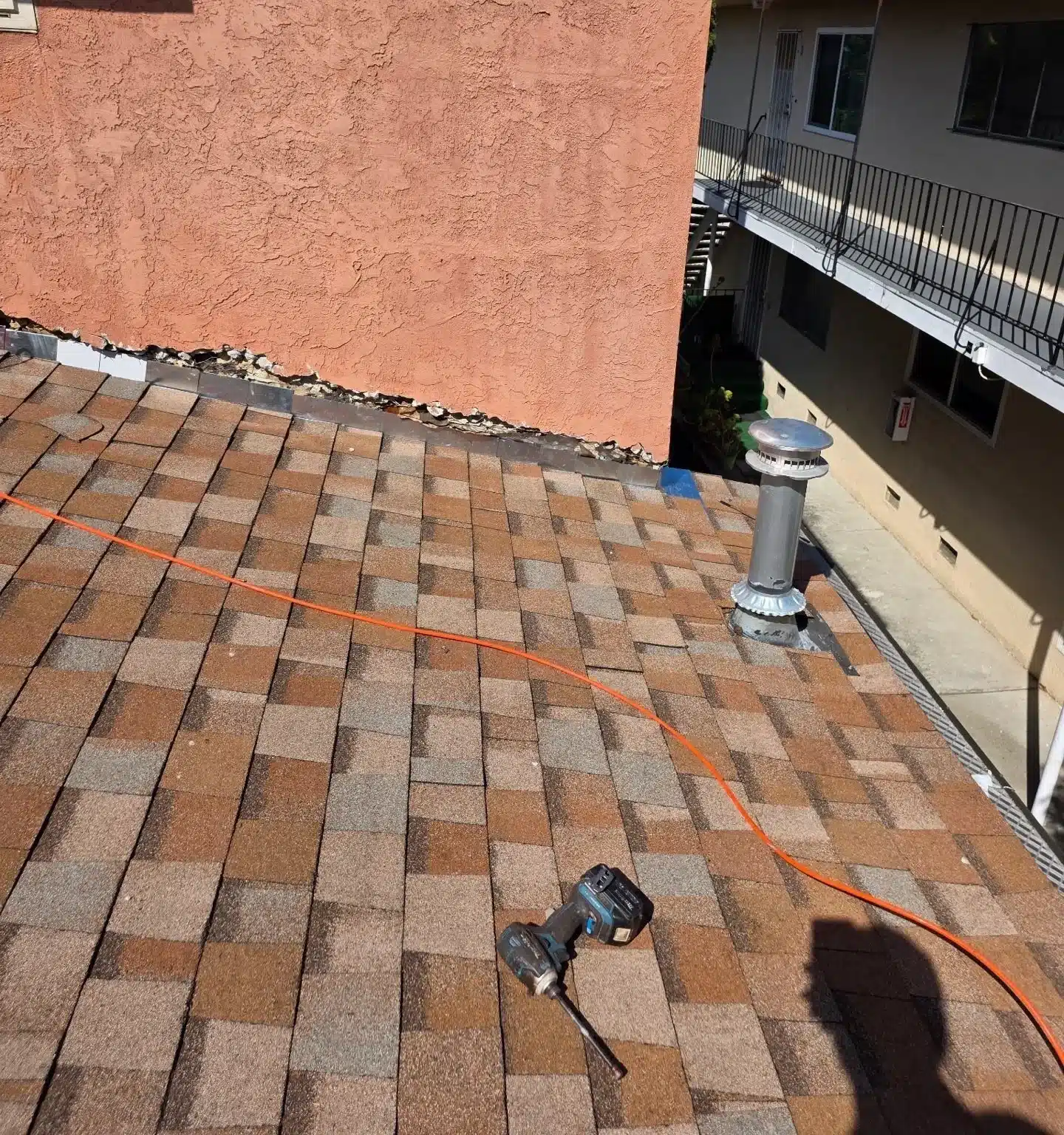
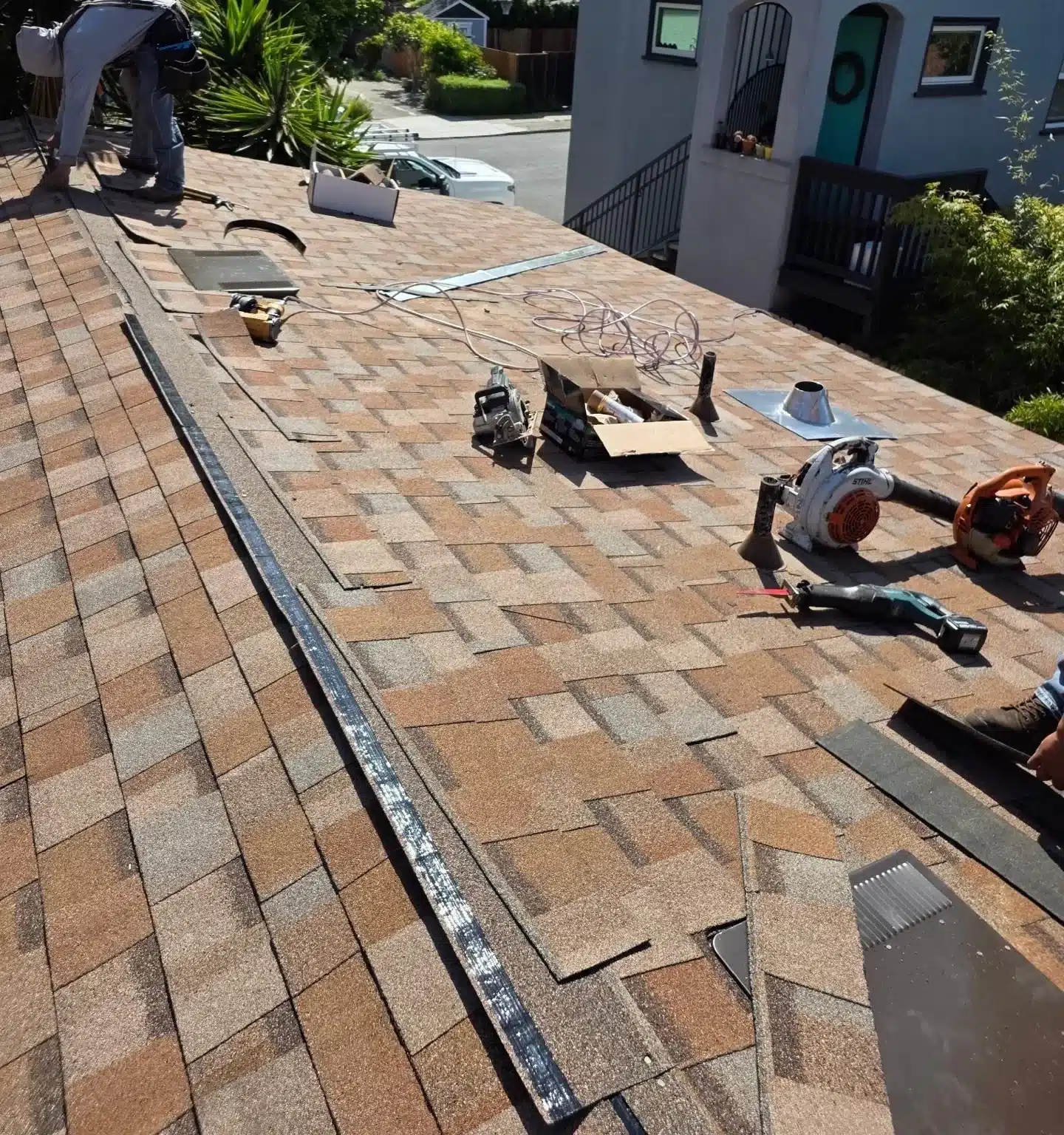
This Berkeley home has a stucco exterior with a low-pitched roof section that runs up against two-story walls — the kind of roof-to-wall joints that are hardest to keep watertight. The section in question was covered in old three-tab shingles that had lost most of their granules. Whole courses had faded, dark wear patches had spread across the field, and debris was collecting on the surface instead of shedding off. The solar panels on this section had already been taken off their mounts, leaving the stanchions sticking up through shingles that were past saving.
Tear Off the Section, Seal It, Tie It Back Into the Walls
A partial reroof only works if the new section is better than a patch: it has to come off down to the deck, be waterproofed as a complete system, and be flashed properly where it meets the walls and the rest of the roof. So the plan for this section was a full tear-off, self-adhered (peel-and-stick) underlayment across the whole section instead of standard felt, new flashing at the stucco walls, new pipe flashings, and new CertainTeed architectural shingles in the Painted Desert color. Self-adhered underlayment is worth the extra step on a low-pitched section like this one: it bonds to the deck and seals around every nail, so wind-driven water that gets under a shingle has nowhere to go. Once the new section was down, the solar panels went back on top of it.
Tear-Off, Peel-and-Stick, Shingles, Solar Back On
Work started on April 23. The crew stripped the old shingles from the section down to the deck and cleared the stanchions and old flashings, then rolled self-adhered underlayment across the entire section, running it up and into the joint where the roof meets the stucco walls.
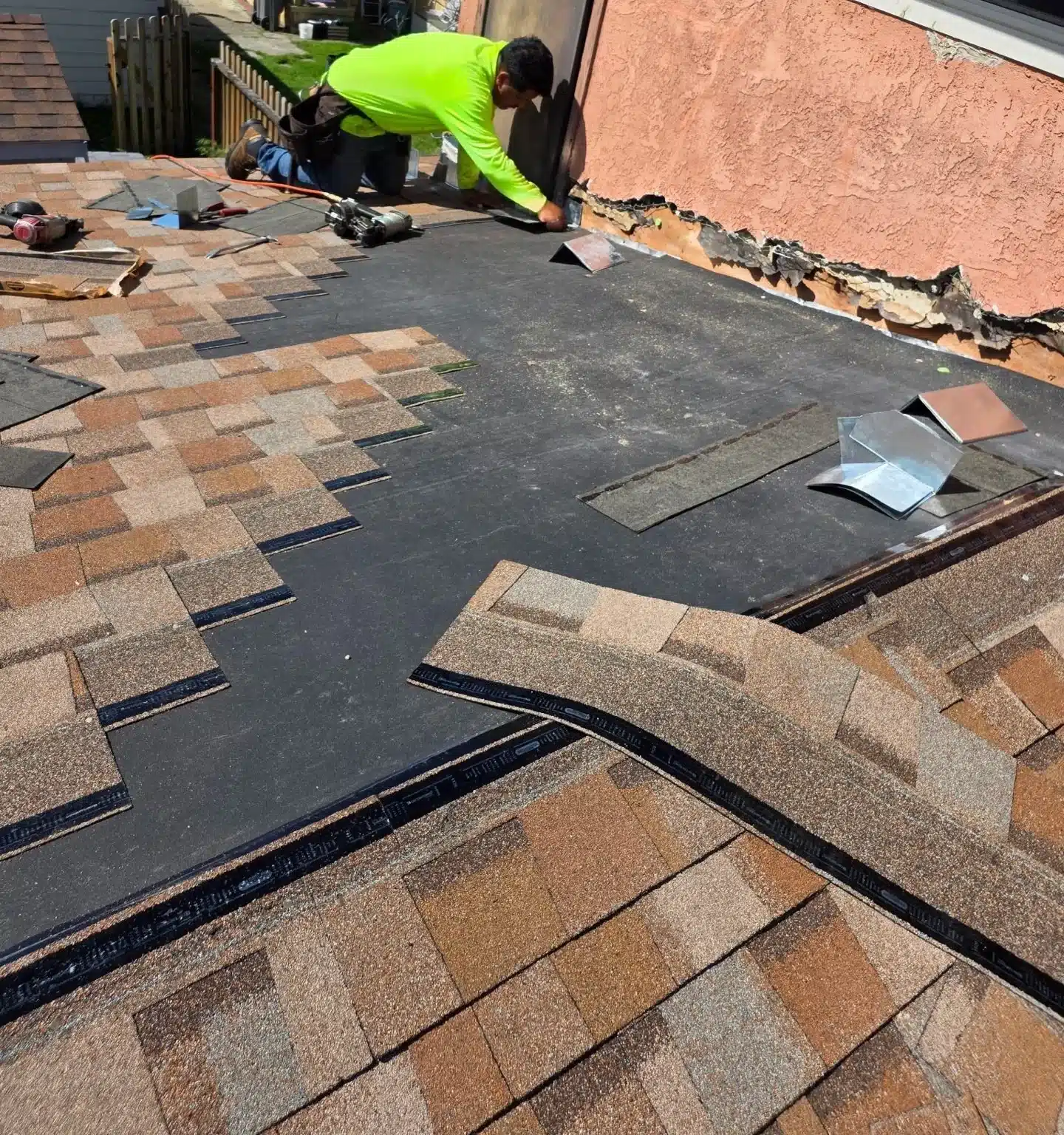
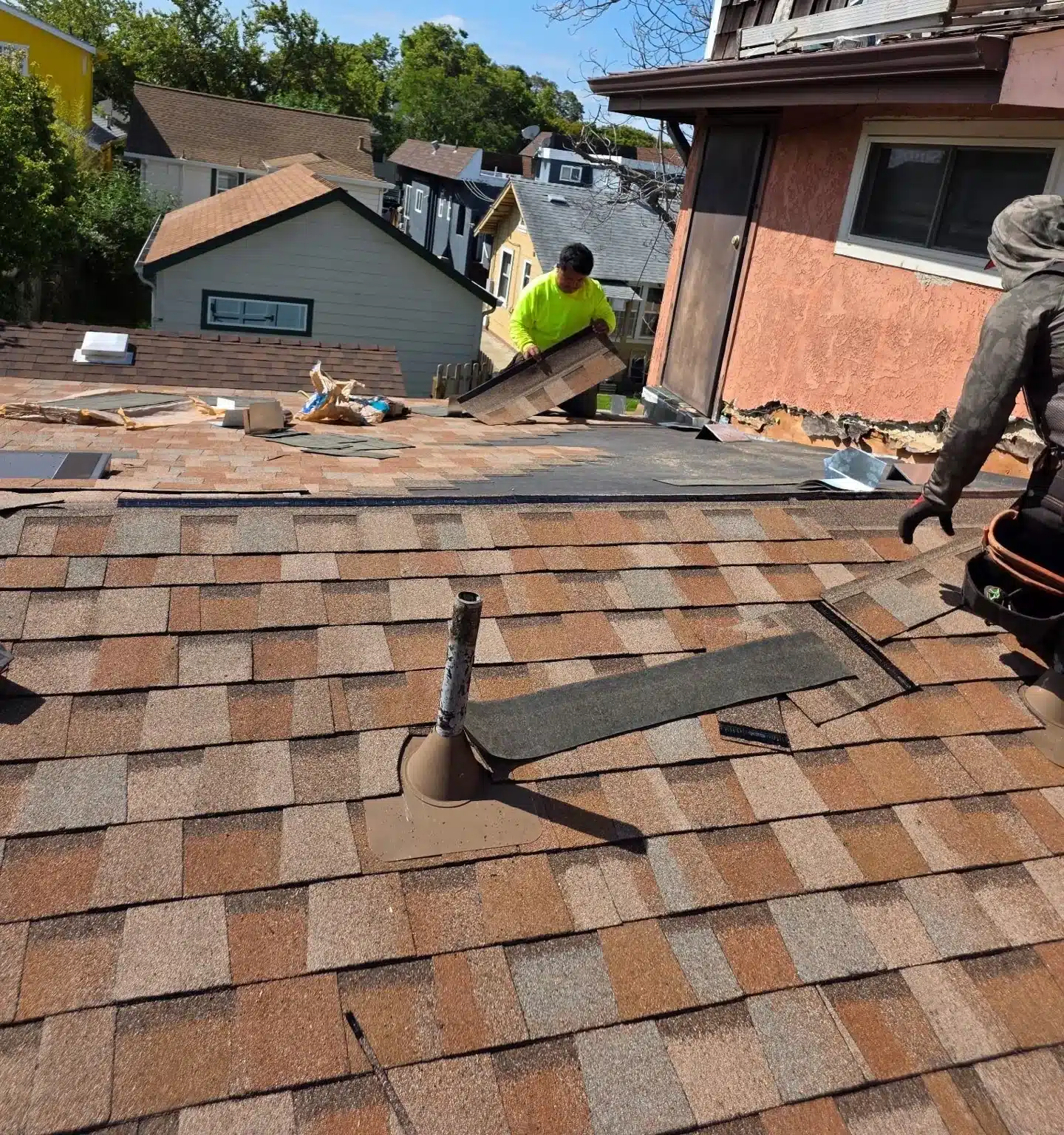
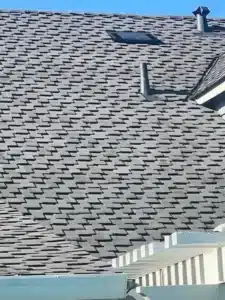
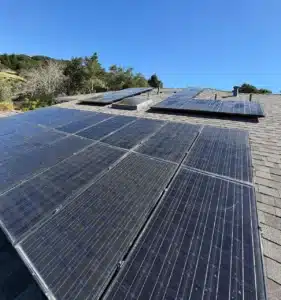
New shingles went on over the membrane, with new flashing worked in at every wall and new boots on every pipe penetration, then ridge and hip caps to finish. The solar panels were reinstalled on the new section once the shingles were down. The section was complete by April 27, five days after the crew started.
Before vs. After
| Feature | Before | After |
|---|---|---|
| Shingles | Worn three-tab, granules gone | New CertainTeed architectural shingles |
| Underlayment | Original | Self-adhered membrane across the whole section |
| Roof-to-wall joints | Original flashing at the stucco | New flashing at every wall |
| Penetrations | Old pipe flashings | New pipe flashings |
| Solar | Off the roof | Reinstalled on the new section |
| Scope | — | One section, about nine squares, finished in five days |

Why Section Reroofs Come Up So Often in Berkeley
Berkeley’s older homes have often been added to and re-roofed in stages, so it is common for one part of a roof to wear out years ahead of the rest. When that happens, replacing only the failing section is a sound decision, as long as it is done as a complete roof system — down to the deck, fully underlaid and properly flashed — rather than as a large patch. If the wear is spread across every slope, the honest answer is a full replacement; our repair vs. replacement guide walks through how to tell the difference, and our Berkeley roofing page covers the work we do in the city. If solar is part of your roof, see our solar-ready roofing guide.
“When rainy weather interrupted, they rescheduled and promptly got things done between storms. The new roof is beautiful and has already stood up to very nasty weather without issue.”— Bruce P., via Google
Partial Roof Replacement — FAQs
Will new shingles on one section match the rest of the roof?
Rarely perfectly, because the existing shingles have weathered. A section that is a separate plane, sits behind a wall or is mostly out of view hides the difference well; a section in the middle of the front slope usually does not.
Is a partial roof replacement worth it?
Yes, when the rest of the roof has years left and the new section is done as a full system with proper flashing where it meets the old roof and the walls. If the remaining roof is close to the end of its life too, one full replacement is usually the better investment.
How long does it take to replace one section of a roof?
A section of about nine squares, like this Berkeley job, took five days including tear-off, self-adhered underlayment, wall flashing, shingles and reinstalling the solar panels.
Not Sure Whether You Need a Section or a Whole Roof?
We will look at every slope and tell you which it is. See more finished work on our roofing projects page.
Gina K. writes about Bay Area roofing for Lifetime Roofing & Renovation, drawing on the team's 16+ years of experience roofing homes across Silicon Valley.