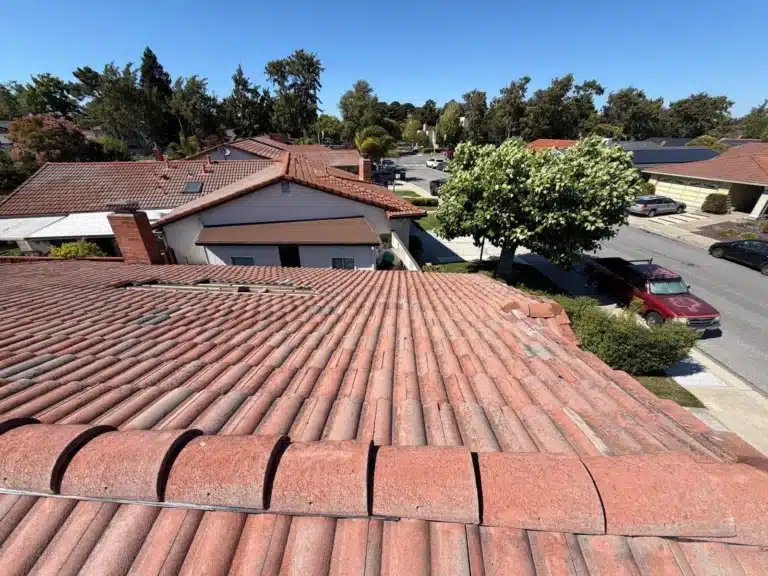
You can keep good concrete tile and still get a new roof: on this San Mateo home we lifted all 27 squares of the original tile, replaced the old spaced-board deck with new plywood, laid new underlayment and battens, and re-laid the same tiles — a full reroof in about a week, with the home’s original look intact.
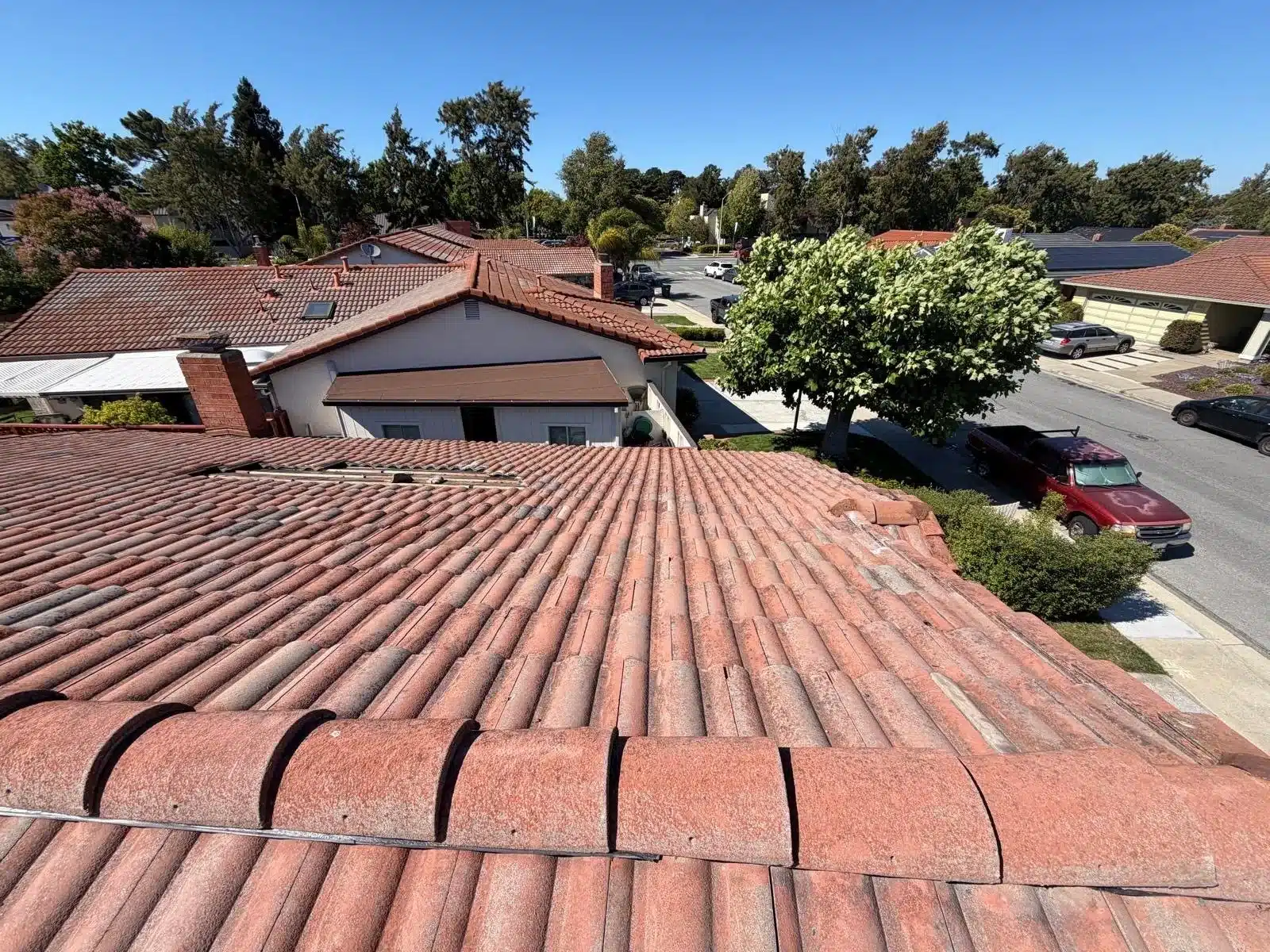
Yes — if the concrete tiles themselves are sound, lifting them, rebuilding everything underneath and re-laying the same tiles is a legitimate way to reroof, and it is usually the better call on a concrete tile roof whose tiles have outlived their underlayment. On this single-story San Mateo home the roughly 50-year-old tiles were still solid, but the layers under them were done, so we lifted every tile on all 27 squares, sheathed the old spaced boards in new plywood, put down new underlayment and battens, and set the original tiles back on top. A homeowner on Building Advisor asked exactly this question: the tiles looked fine, so could they be removed, re-underlaid and re-laid, or should they be replaced too?
A 50-Year-Old Tile Roof Whose Tiles Outlived Everything Under Them
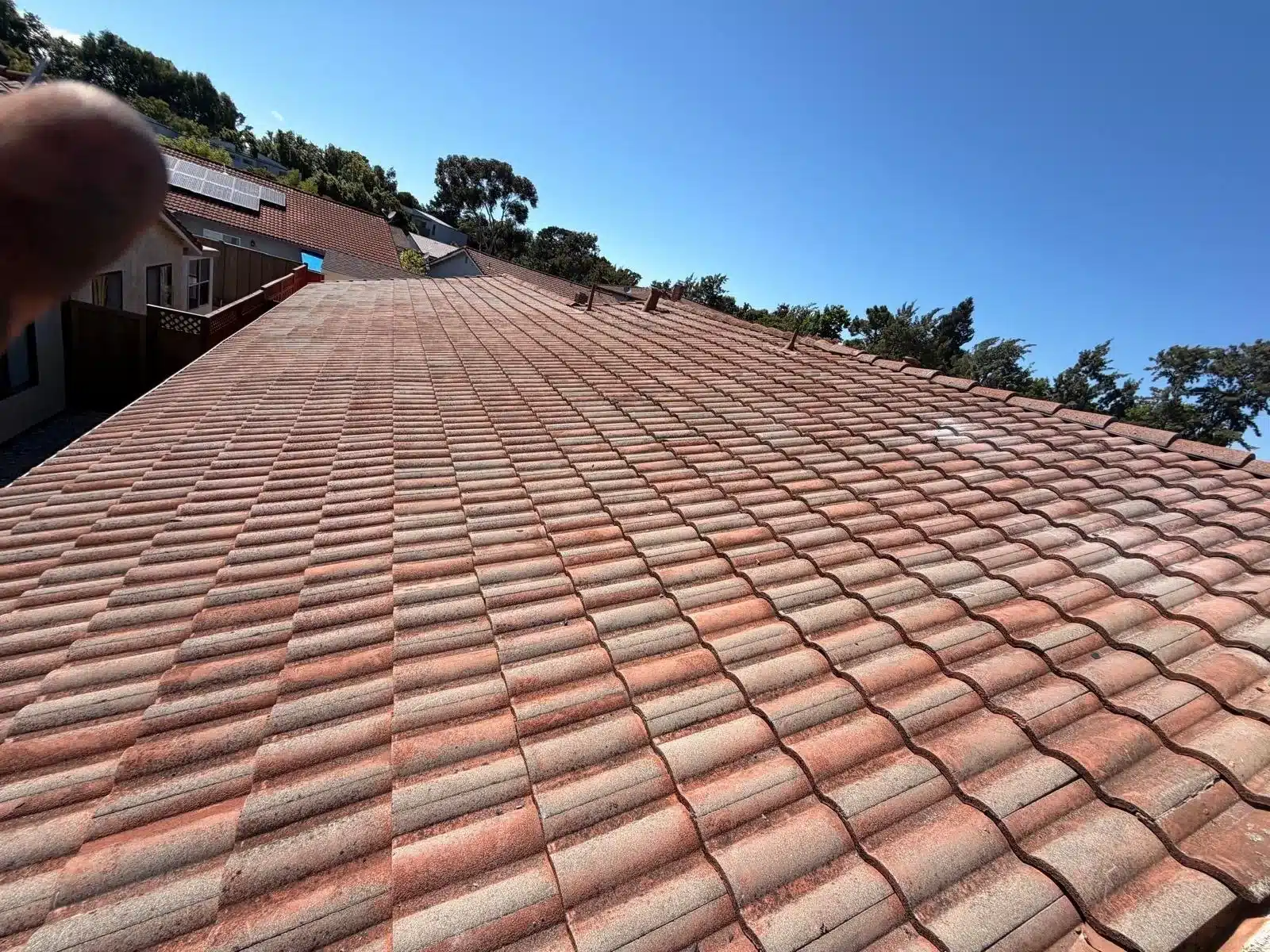
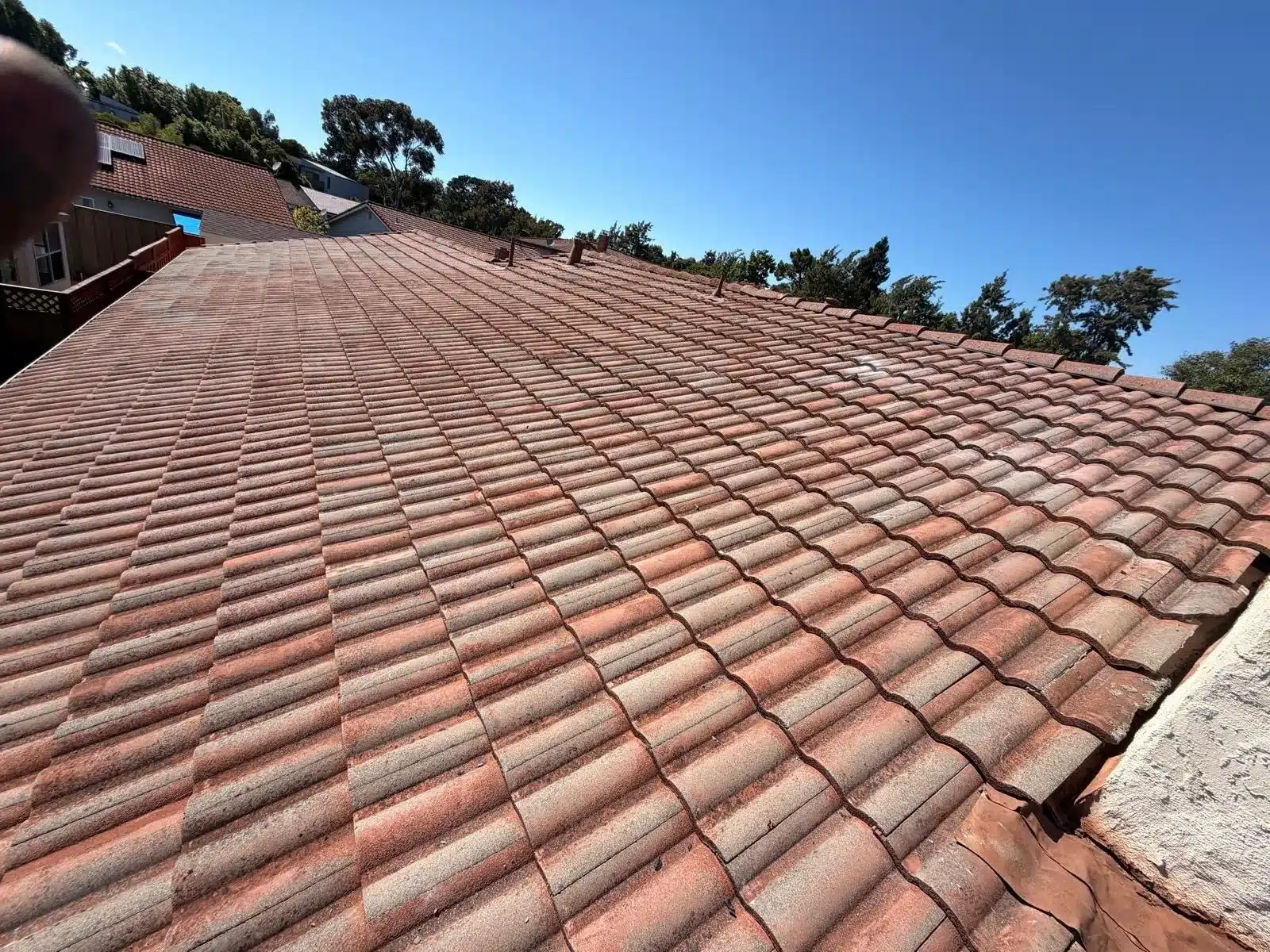
This is a single-story home in a San Mateo neighborhood of concrete tile roofs, and its roof was about 50 years old when the homeowner called us. From the street it looked fine — and that is exactly the trap with concrete tile. The tile is the part you see, but it is not the part that keeps water out. Underneath, the felt underlayment does that job, and on a roof this age the felt has usually dried, cracked and stopped sealing around fasteners long before the tile shows any sign of trouble. The homeowner first asked about redoing one section. Once we walked the roof and talked through it, he chose to do the whole roof at once rather than reset part of it now and the rest later. The first rows we lifted confirmed the call: the roof had been built the old way, with tile laid over spaced boards instead of a solid deck.
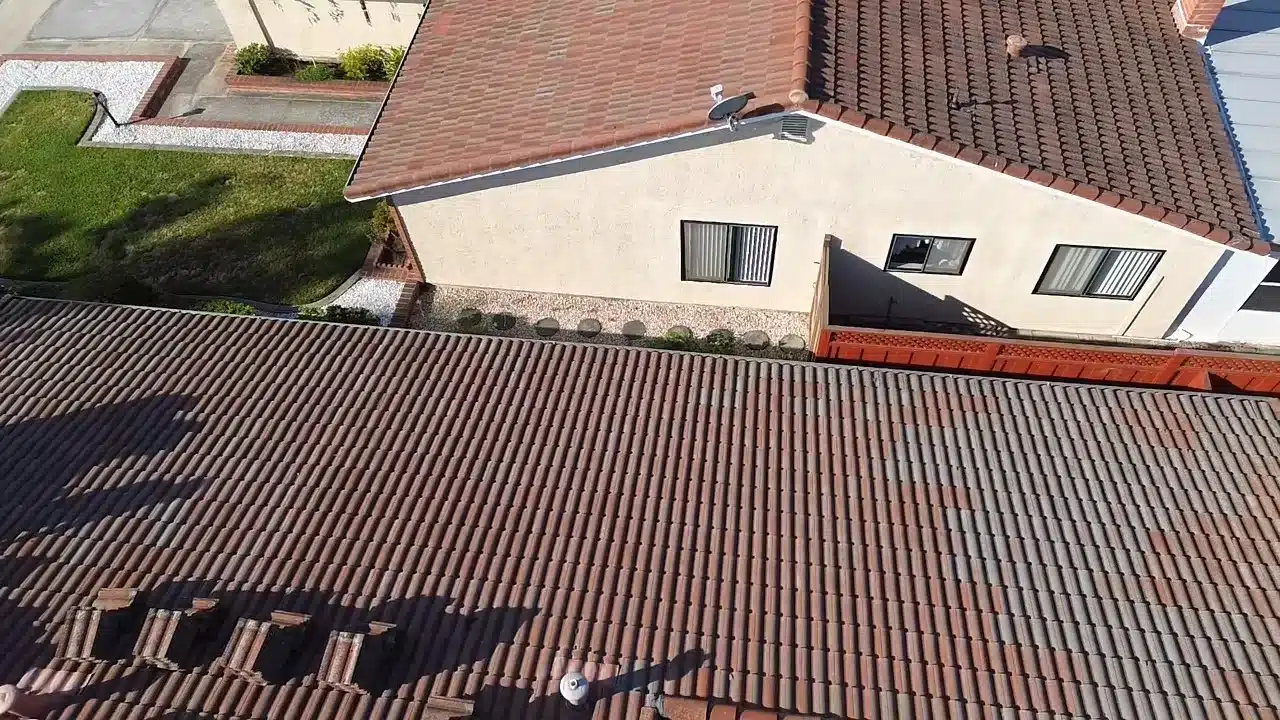
Keep the Tile, Rebuild Everything Beneath It
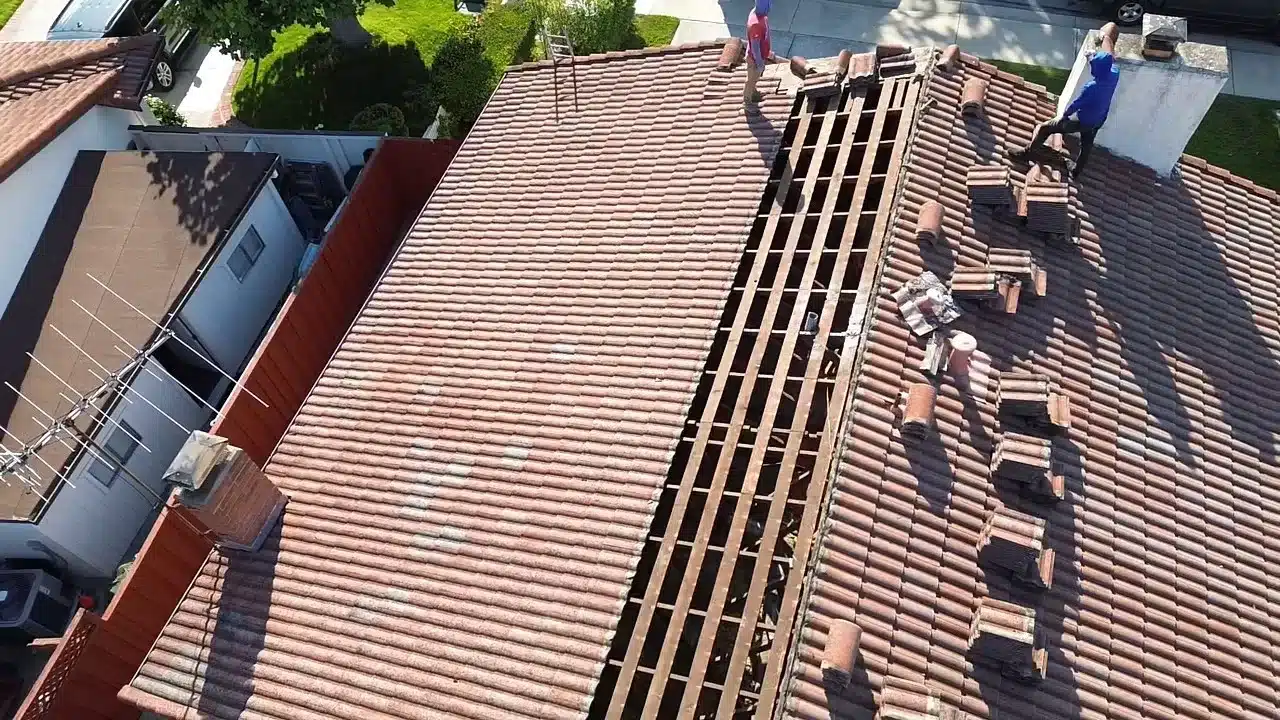
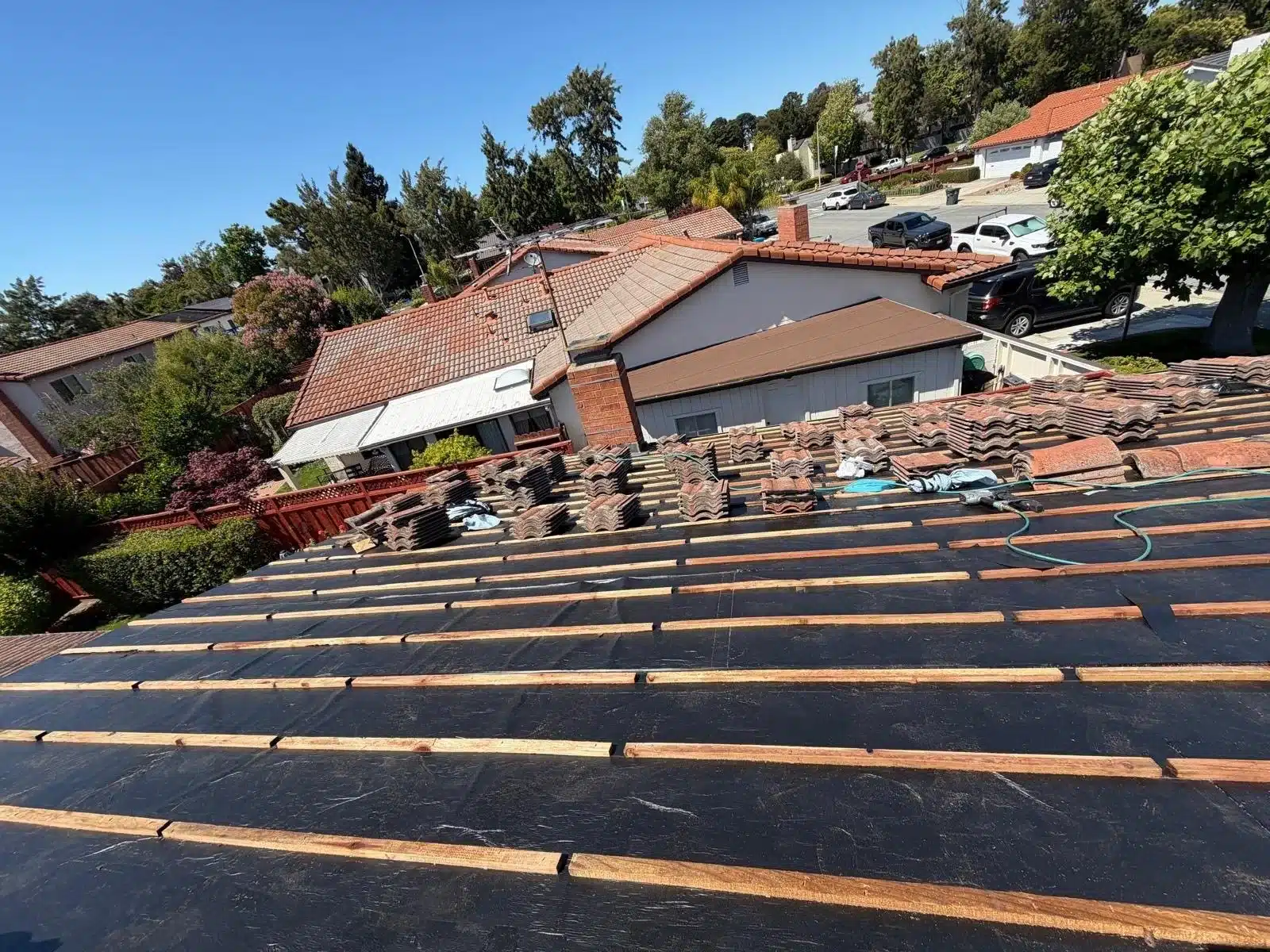
Concrete tile is heavy, durable and, when it is not cracked or eroded, good for decades more. Throwing sound tile away to buy new tile of the same kind adds material cost and landfill without adding life to the roof. What a 50-year-old tile roof needs is a new waterproofing layer and a sound base to fasten to. So the plan was a concrete tile reset — what many roofers call a lift-and-relay: lift every tile and stack it on the roof, sheathe over the spaced boards with new plywood so the roof has a continuous deck, install new underlayment and new battens, then re-lay the original tile and reset the ridge. On a reset, any cracked tiles found during the lift get swapped for matching pieces, which is the main thing that separates a reset from an ordinary tile roof repair. Midway through planning, the homeowner also asked about the fascia and trim, and we added that woodwork to the scope so the roof edge would be new along with everything else.
Permit, Lift, Re-Deck, Re-Lay
San Mateo requires a permit for a reroof, so we pulled it before any tile came off; it was issued at the start of June and posted on site. Work began on June 18. The crew lifted the tile course by course and stacked it on the roof itself, which keeps the tiles close to where they will go back and avoids hauling thousands of pieces up and down a ladder twice. With the tile off, the original spaced boards were fully exposed — you can see the insulation in the attic through the gaps in the first photo below.
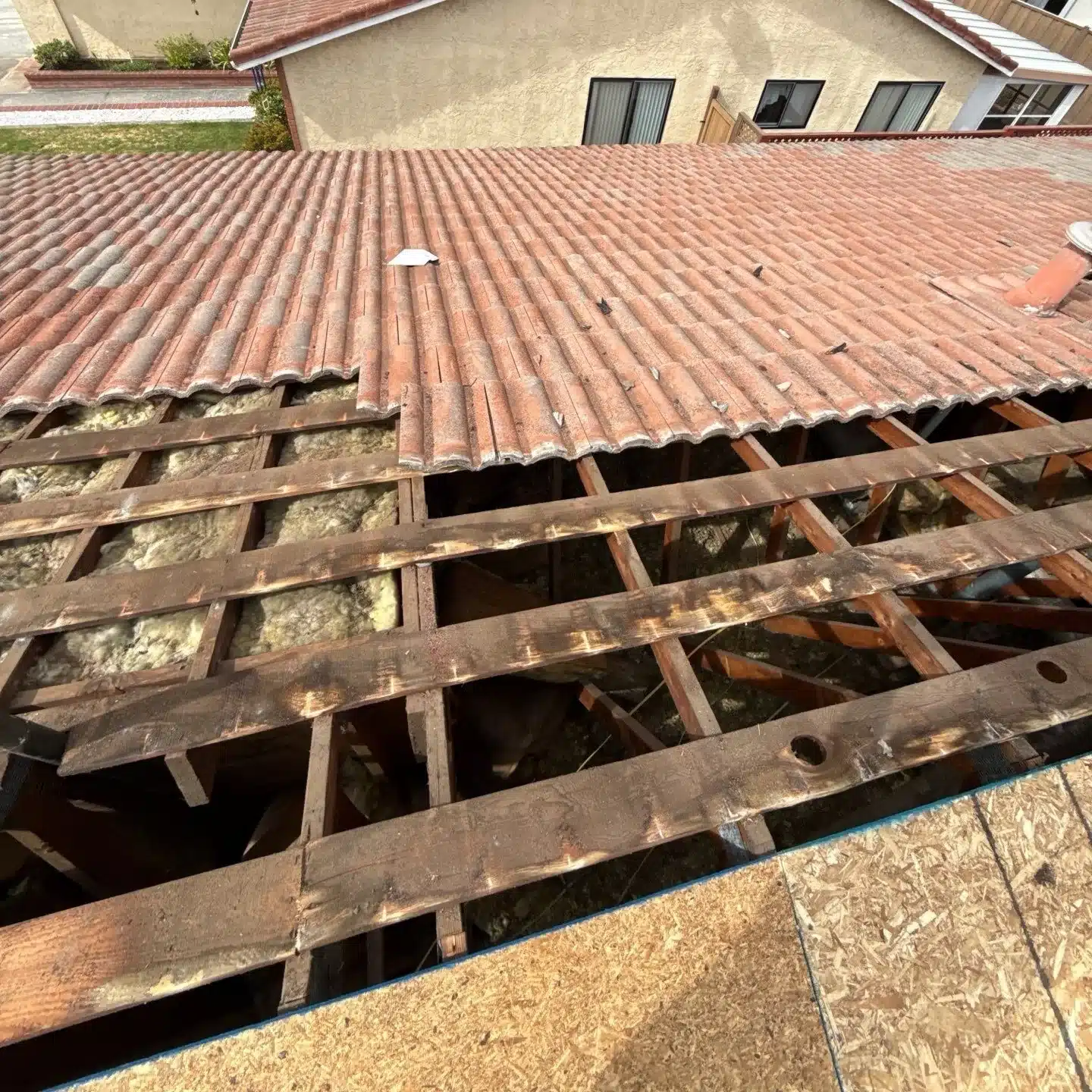
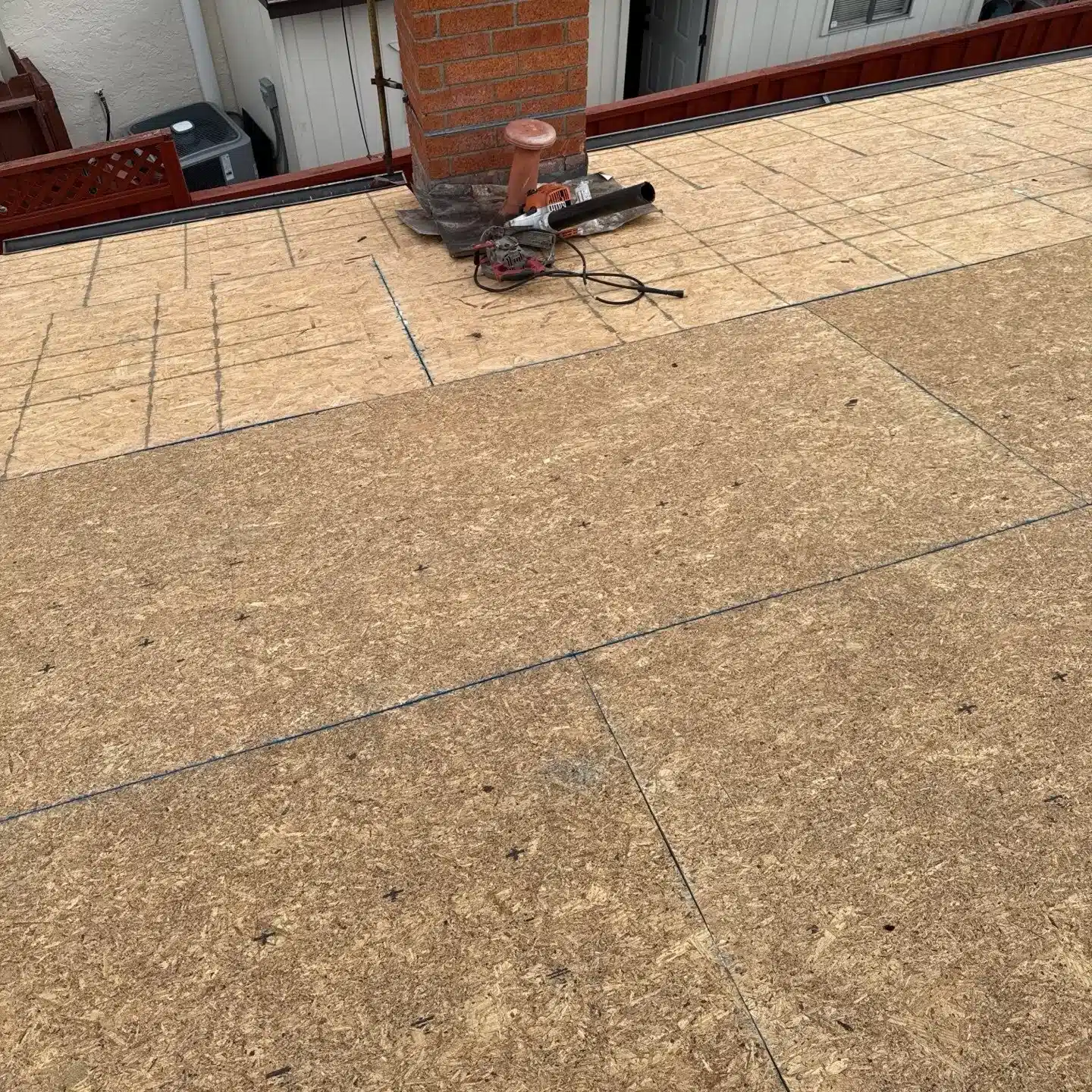
New plywood went down over the spaced boards across the entire roof, giving the new underlayment a solid, continuous surface instead of bridging gaps between boards. Over the plywood we installed new underlayment and new wood battens, which give each row of tile something to hang on and let water that gets past the tile drain down and off. The original tiles were then carried back across the roof and re-laid course by course, with the ridge tiles reset last. The job moved from first tile lifted to a finished roof in about a week, and the homeowner rated the work 5 out of 5 on our completion form.
Before vs. After
| Feature | Before | After |
|---|---|---|
| Deck | Spaced boards with gaps | New solid plywood across the whole roof |
| Underlayment | Original, about 50 years old | New underlayment and new battens |
| Tile | Original concrete tile | Same tile, lifted and re-laid |
| Fascia & trim | Original woodwork | Replaced as part of the job |
| Permit | — | City of San Mateo reroof permit |
| Curb appeal | Original tile roof look | Unchanged — the same tile, re-laid |
Why a Tile Reset Makes Sense on San Mateo’s Older Tile Homes
Many of San Mateo’s older single-story homes were built with concrete tile over spaced boards, and many of those roofs are now reaching the point where the tile is fine but the underlayment is not. For those homes a reset keeps the house looking exactly like its neighbors while replacing every layer that actually keeps water out. Adding solid plywood at the same time matters too: it gives the new underlayment full support and gives the roof a proper deck for the next few decades. If you have a tile roof anywhere in the county, our San Mateo County roofing page covers the local work we do, and for a similar job elsewhere see our plywood over spaced planks case study in San Jose.
“Permits, inspection, and approval from my city was all handled seamlessly.”— Livia S., via Google
Tile Reset — FAQs
How do you know if concrete tiles are good enough to reuse?
Look for tiles that are whole, not cracked or crumbling at the edges, and not so eroded that the surface has worn through. Most concrete tile that has simply weathered is still serviceable; the few broken or brittle pieces found during the lift get swapped for matching tile.
Do you have to add plywood under a tile roof when you reset it?
Not always, but when the roof was built on spaced boards it is the right time to add it. On this San Mateo home we sheathed the whole roof in plywood so the new underlayment sits on a continuous deck rather than spanning gaps between boards.
How long does a tile roof reset take?
For an average single-story home, plan on about a week of roof work once the permit is issued. This 27-square San Mateo reset went from first tile lifted to finished roof in about a week.
Have a Tile Roof That Looks Fine but Leaks?
We will tell you whether your tile can be saved and what the layers under it need. See more finished work on our roofing projects page.
Gina K. writes about Bay Area roofing for Lifetime Roofing & Renovation, drawing on the team's 16+ years of experience and 1,000+ completed roofs across Silicon Valley.