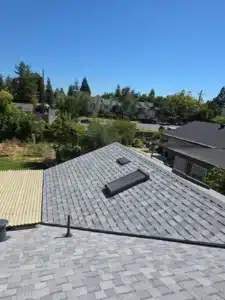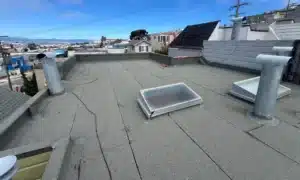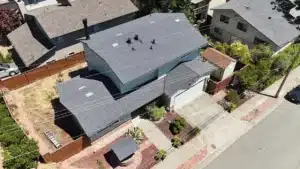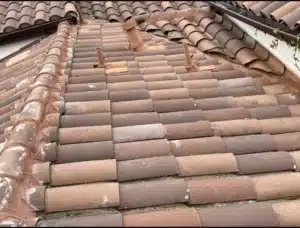
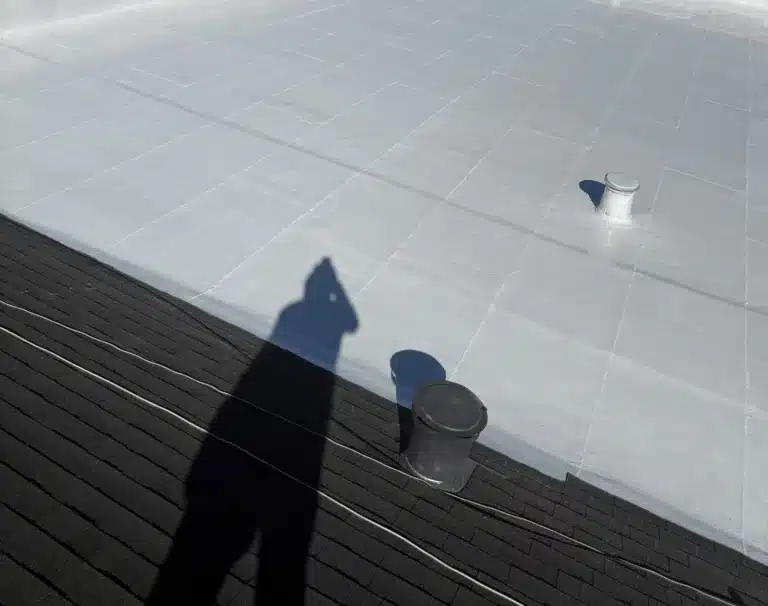
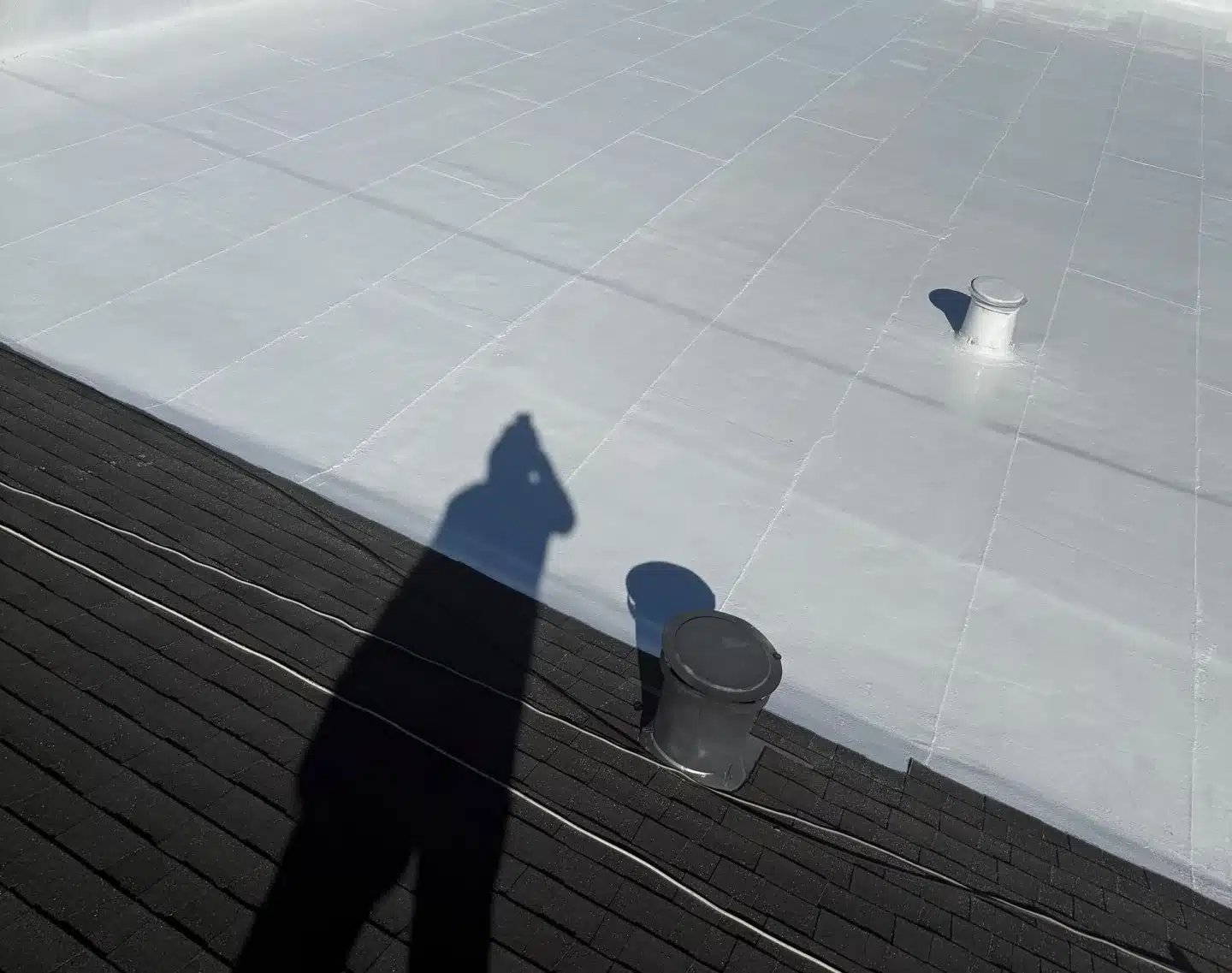
A failed built-up roof over Rodeo Autotech Tire Pros had worn through to bare plank decking, so coating it would have sealed the damage in. Lifetime Roofing tore off all 40 squares, rebuilt the deck, installed a new torch-down system and finished the low-slope section with a reflective silicone overlay — without the shop closing for a day.
Should a commercial flat roof be restored with a coating, or torn off completely?
Coat it only if the roof underneath is still sound and dry; tear it off when the deck or insulation is already wet, because a coating seals that moisture in instead of removing it. On this Rodeo project the old built-up roof had failed through to bare plank decking in several places, so a restoration coating would have trapped the damage. Lifetime Roofing tore the 40-square roof off, rebuilt the deck, installed a new torch-down system and then applied a reflective silicone overlay on top — a coating doing the job it is actually good at, protecting a sound new surface rather than hiding a failed one. A commercial property owner on r/Roofing asked exactly this after three contractors gave three different answers — a layover, a full tear-off, and a five-year silicone restoration.
A working auto shop with a roof that had run out of patches
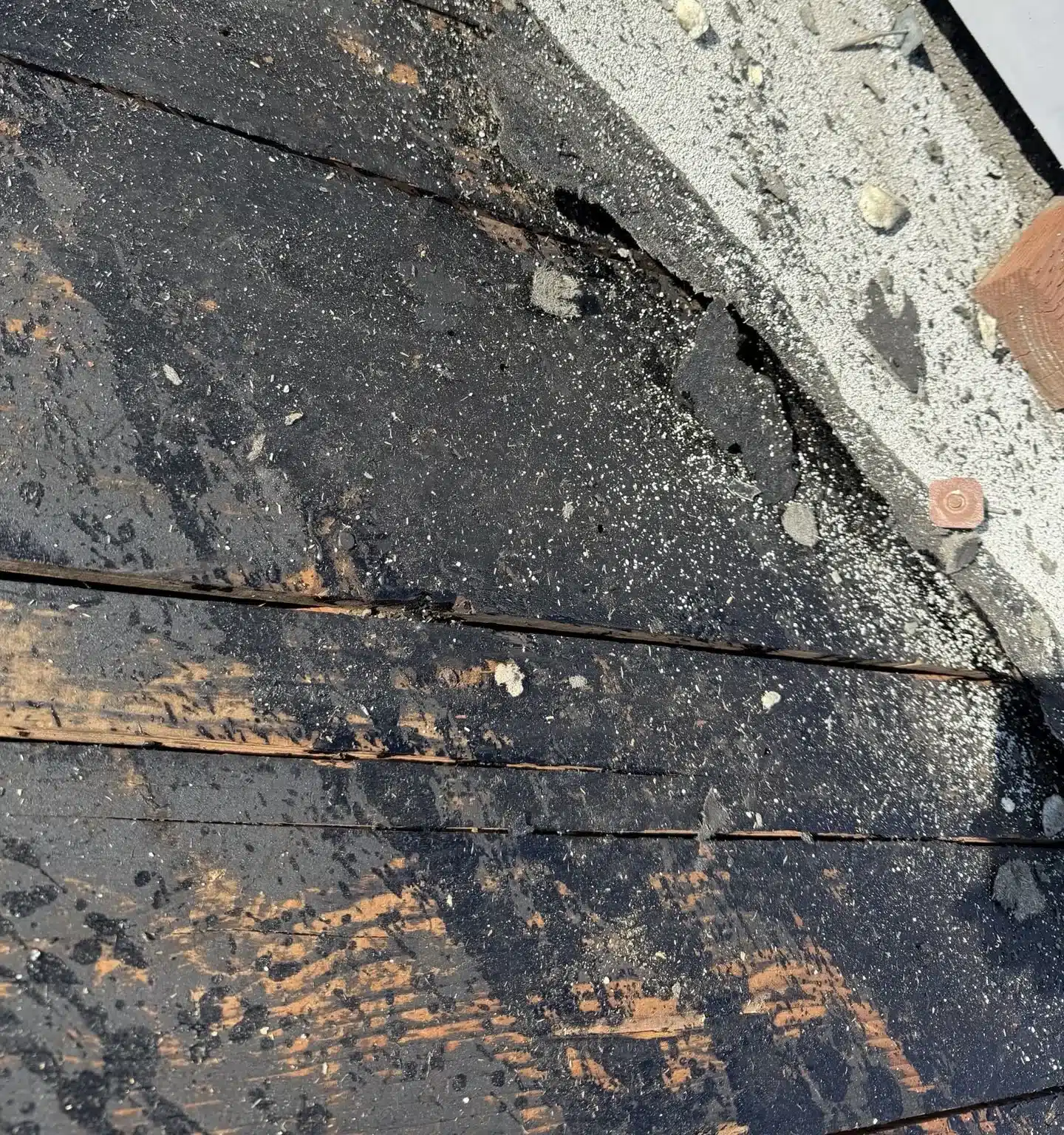
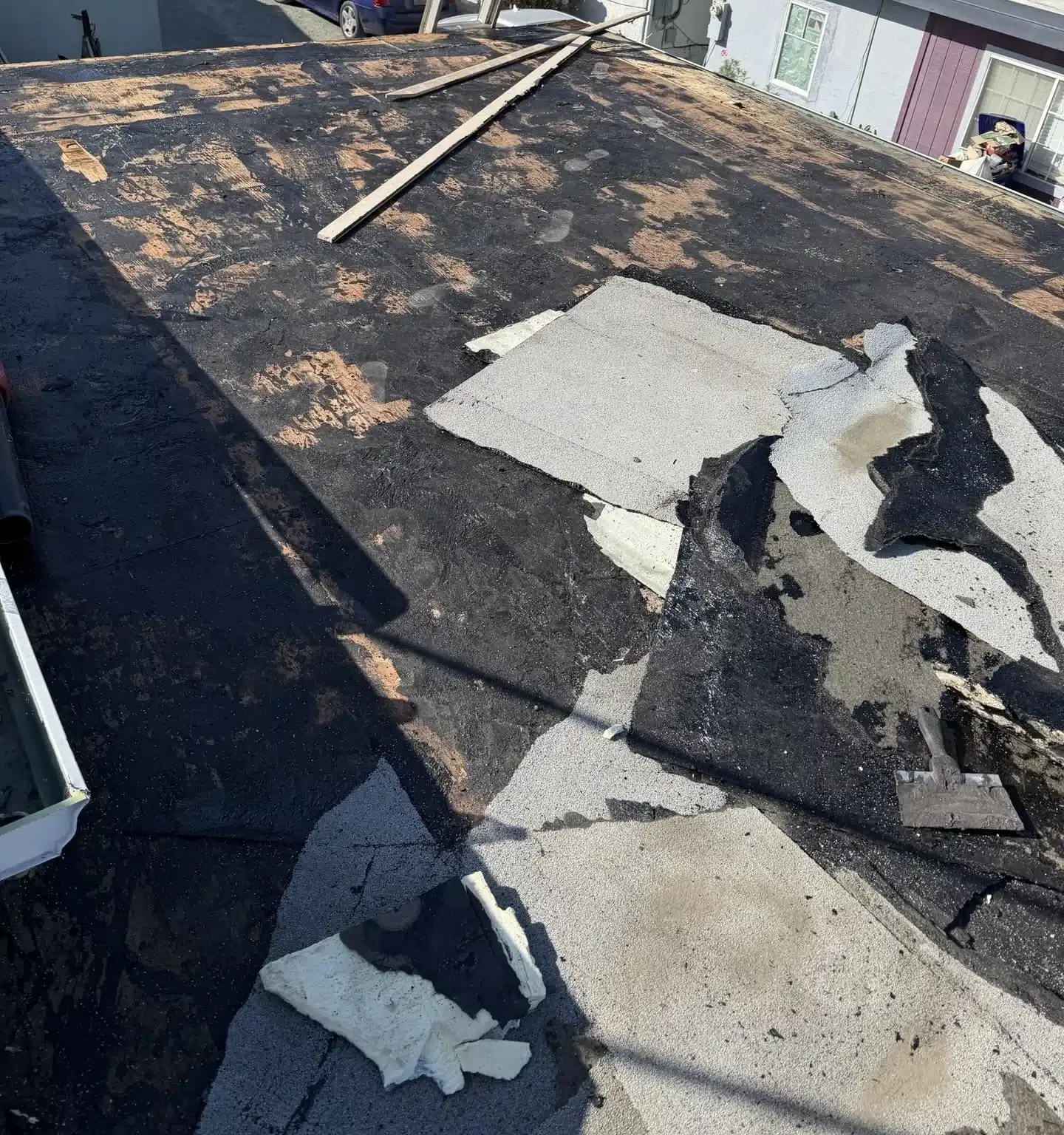
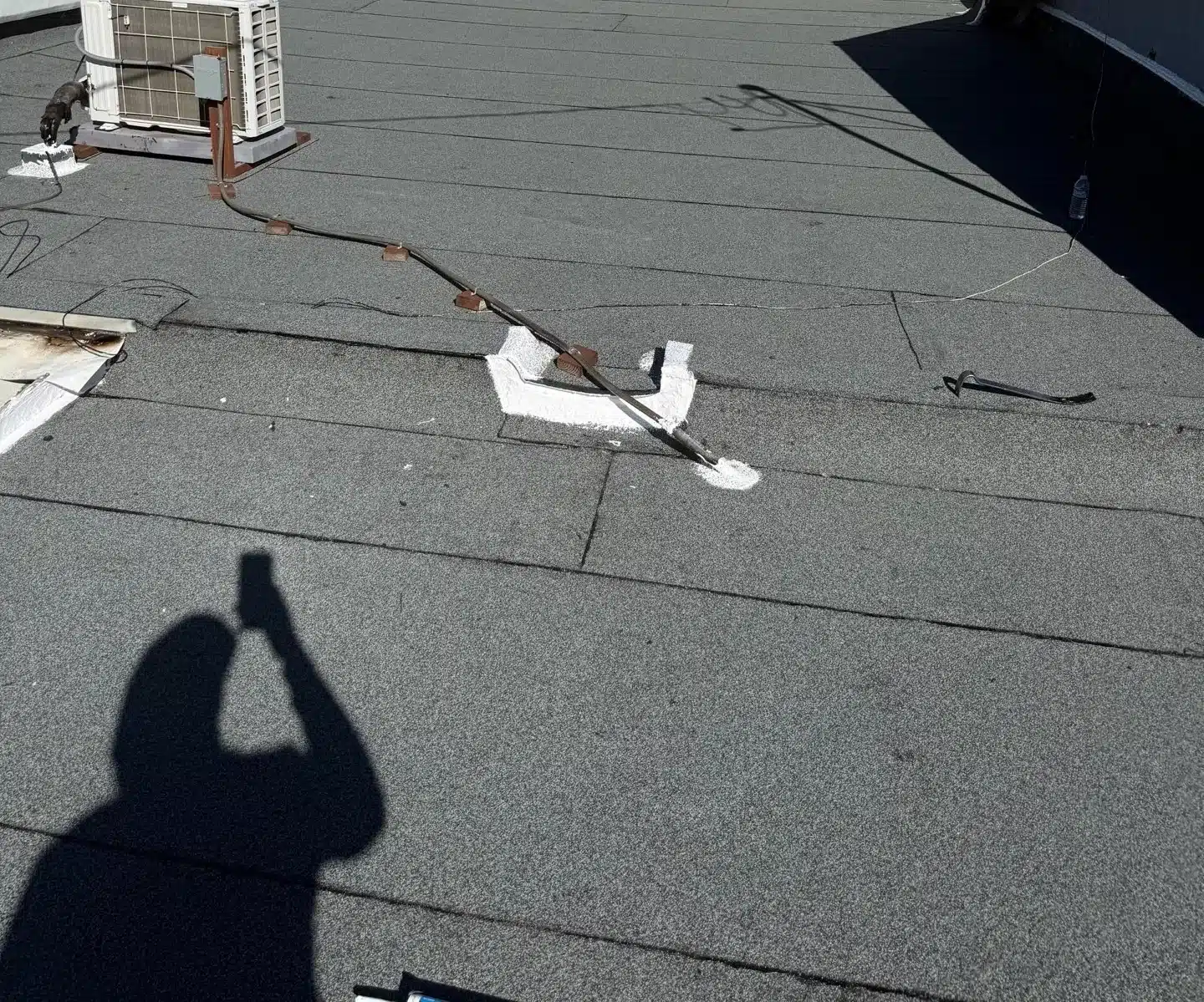
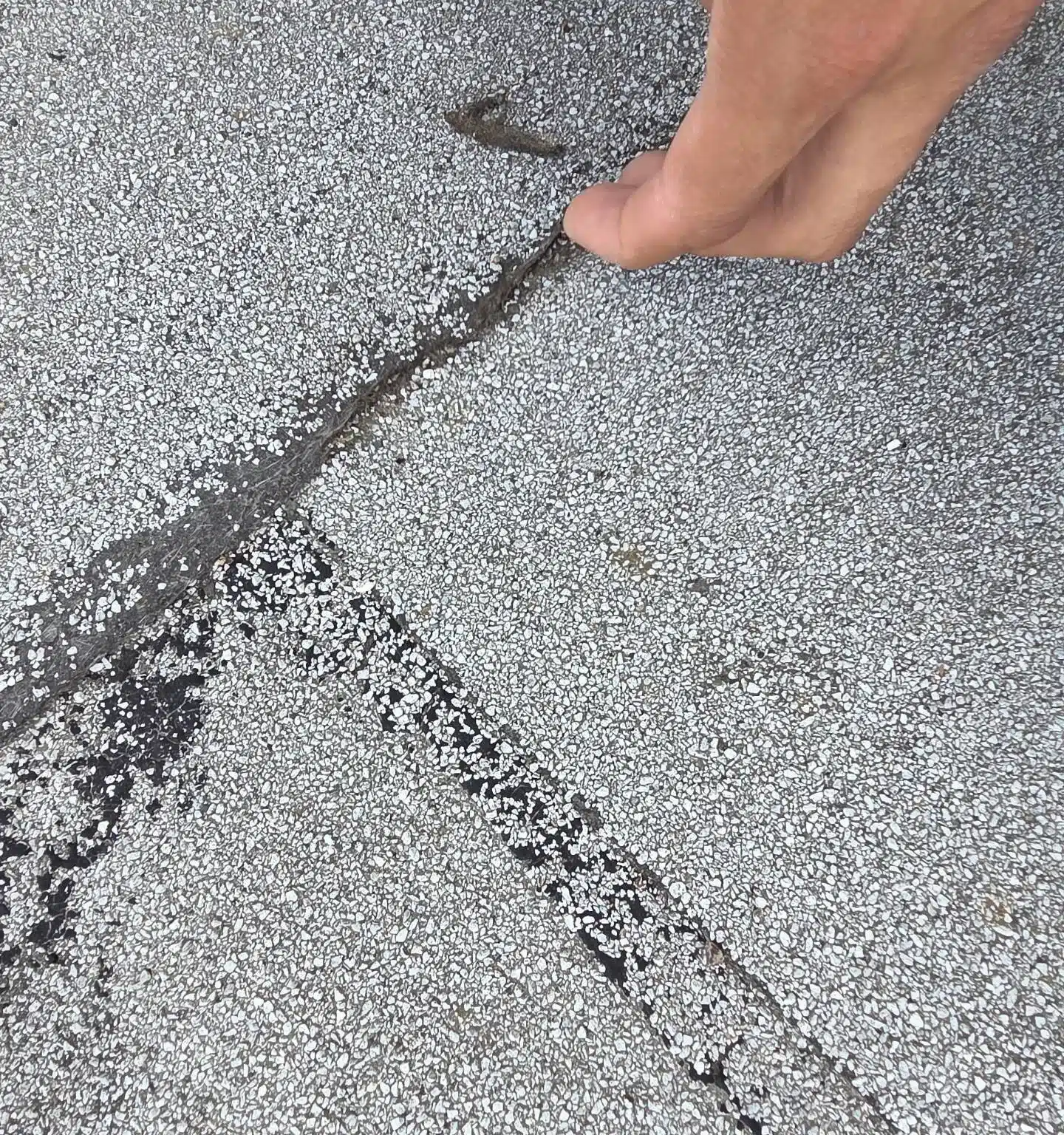
Rodeo Autotech Tire Pros is a tire and repair shop in Rodeo, the kind of low-slope commercial building that gets patched for years before anyone prices a replacement. By the time we opened it up, the old built-up roof had gone past the point where patching helps: the membrane had torn away in sheets, and in several places the bare plank decking was open to the sky. Rooftop condensers sat directly on the failing surface. Repeated repairs had stacked material on top of material, which is what a restoration coating would have been applied over if anyone had sold one.
Tear-off first, coating second — in that order
The owner’s real choice was between a cheap coating now and a roof that would last. A silicone restoration is a genuinely good product, but it is a protective layer, not a repair: applied over a torn membrane and damp decking it locks moisture against the wood and the roof keeps rotting out of sight. We specified a full tear-off, deck repair, and a new torch-down modified-bitumen system — the right system for a roof this flat, carrying foot traffic and HVAC units — and then the silicone overlay on the low-slope section, where it reflects heat and adds a seamless waterproof skin over a surface that is actually sound. The same logic applies to smaller low-slope roofs; see our flat roof repair page for how we assess them.
Four-day rebuild over an open business
Work started on 21 September 2026 under a City permit, with True Gen Roofing running the crew. The old roof came off in sections rather than all at once, so no part of the building was ever left open overnight — the shop stayed open and cars kept moving through the bays. With the membrane gone, the full extent of the decking damage was visible for the first time.
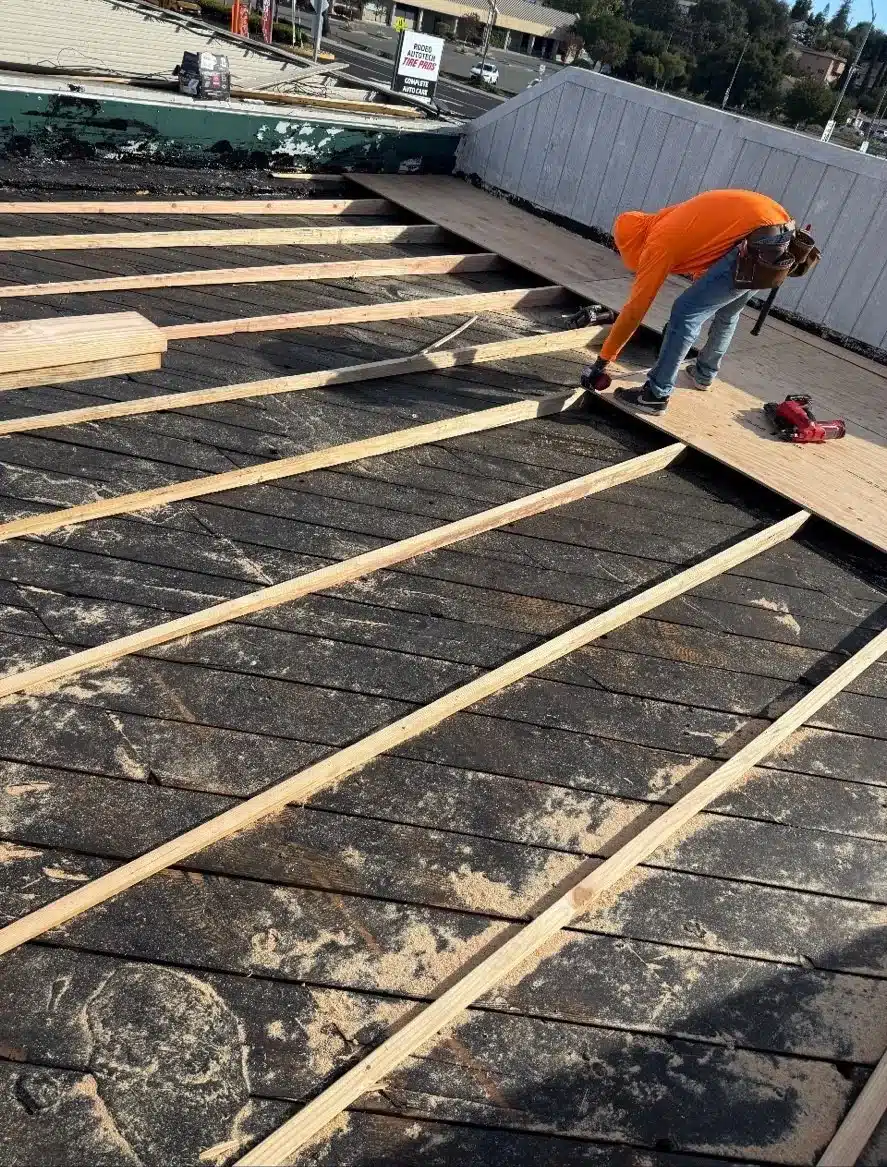
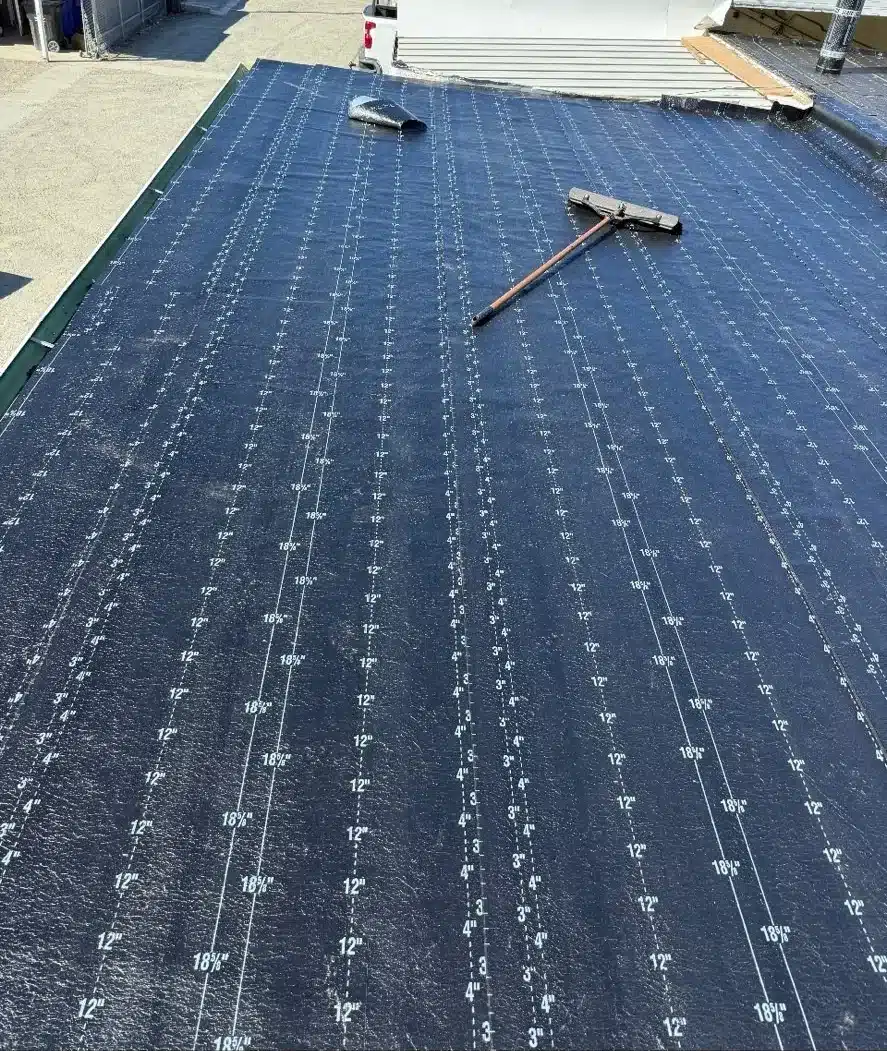
New boards went down over the sound plank deck, then the base sheet was mechanically fastened in rows across the field. The torch-down cap sheet followed, with every seam rolled and sealed by hand and each rooftop penetration and HVAC curb flashed individually — the details that actually decide whether a flat roof leaks. The silicone overlay went on last, once the new surface was clean and cured.
Before vs. After
| Feature | Before | After |
|---|---|---|
| Roof system | Failed built-up roof, patched repeatedly | New torch-down with reflective silicone overlay |
| Deck condition | Bare plank decking exposed in several areas | Rebuilt and fully covered |
| Water resistance | Open seams and torn membrane | Fully sealed, continuous surface |
| Heat and sunlight | Dark, heat-absorbing surface | Reflective white coating on the low-slope section |
| Business disruption | Leak risk over an operating workshop | Completed without closing the shop |
| Expected service life | At end of life | Decades, with the coating renewable on schedule |

What this means for Contra Costa business owners
Commercial buildings along the Carquinez Strait take weather from both directions — damp marine air off the water and hard, direct summer sun on an unshaded flat roof. That combination ages a dark low-slope roof fast, and it is why a reflective finish earns its keep here rather than being a nice-to-have. It is also why coating-only proposals are so common in this corridor: the roofs look tired long before anyone has checked what is underneath. If you own commercial property anywhere in the county, our Contra Costa roofing page covers the areas we serve, and you can see more finished work on our roofing projects page.
“We had a leak and two roofers (from different companies) tried to fix it, with no success. Eventually, we decided to get a new roof. … I wanted to review them right away, but waited on purpose for winter and multiple rains, to make sure everything was sealed, and so far so good.”— Monika K., via Google
Commercial flat roof questions we get asked
How long does a commercial flat roof replacement take?
This 40-square roof was torn off, rebuilt and finished in a few working days, starting 21 September 2026. A shop like this stays open throughout, because flat-roof work happens above the ceiling rather than inside the building. Timelines stretch when the deck turns out to be worse than it looked, which is why we open a section before quoting a firm schedule.
What is a silicone roof overlay, and how long does it last?
A silicone overlay is a liquid coating rolled or sprayed over a finished flat roof to form a seamless, reflective, waterproof skin. On a sound roof it typically lasts around 10 to 20 years and can be recoated rather than replaced, which is what makes it attractive to building owners. The catch is that it only works over a sound substrate — over wet insulation or a failed membrane it seals the problem in.
How do you tell whether the insulation under a flat roof is wet?
You cut and look. A core sample through the roof shows the layers and whether the insulation is saturated, and infrared scanning can map damp areas across a large roof before anyone cuts. Ponding water, soft spots underfoot and staining on the ceiling below are all signals worth a core sample. Any contractor proposing a restoration coating on an older roof without checking is guessing.
Got a flat roof you have been patching?
We will tell you honestly whether it can be coated or needs replacing — including when a coating is the right answer and the cheaper one. See more finished work on our roofing projects page.
Gina K. writes about Bay Area roofing for Lifetime Roofing & Renovation, drawing on the team's 16+ years of experience roofing homes across Silicon Valley.