
Most flat roofs do not fail across the field. They fail at the seams, the penetrations and the edges — and a repair is only worth paying for once you know which one gave way.
Flat roof repair means locating the breach, confirming whether water has already reached the insulation or deck below, and restoring the membrane with material the existing system will actually bond to. A low-slope roof is a single waterproof plane, so a repair is rarely a matter of swapping a component the way a slipped tile or a torn shingle is. On TPO or PVC that means a heat-welded patch of compatible membrane. On modified bitumen it means a torch- or cold-applied cap sheet lapped correctly into the existing field. On a built-up roof it means rebuilding the ply at the failure and re-flashing the detail that let the water in.
We find where water enters before pricing anything. — Trace, then quote
Welded or lapped in the same system you already have. — Compatible materials
We probe for trapped moisture before a patch goes down. — Insulation checked
Most repairs we do are on roofs someone else built. — Any installer
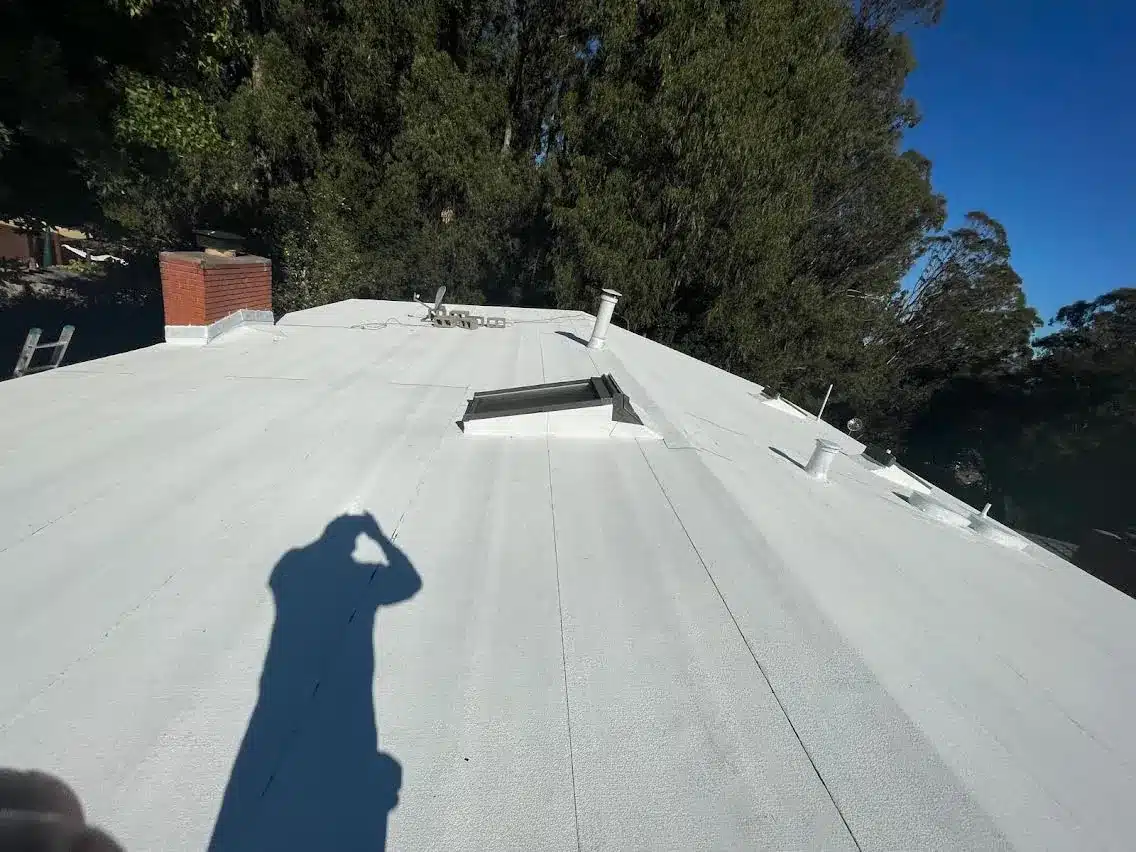
A flat roof can be repaired when the failure is localised — one seam, one penetration, a run of edge metal — and the membrane away from it is still flexible and intact. Replacement becomes the honest answer when leaks appear in unrelated areas, when the membrane is brittle or splitting, or when the insulation below it is saturated. Standing water is the thing people get wrong in both directions: ponding is a drainage fault, not a membrane fault, and a new membrane over the same flat spot ponds again.
A single locatable leak that follows heavy rain rather than appearing constantly; membrane still flexible away from the failure; damage confined to a seam, penetration, scupper or run of edge metal; insulation probing dry a foot back from the breach.
Leaks in unrelated areas or moving between storms; membrane brittle, chalked or splitting when flexed; saturated insulation or a deck that gives underfoot; seams opening across the roof rather than at one lap.
Almost every flat roof leak we trace ends at one of these four. Knowing which one decides the material, the method and the price of the repair.
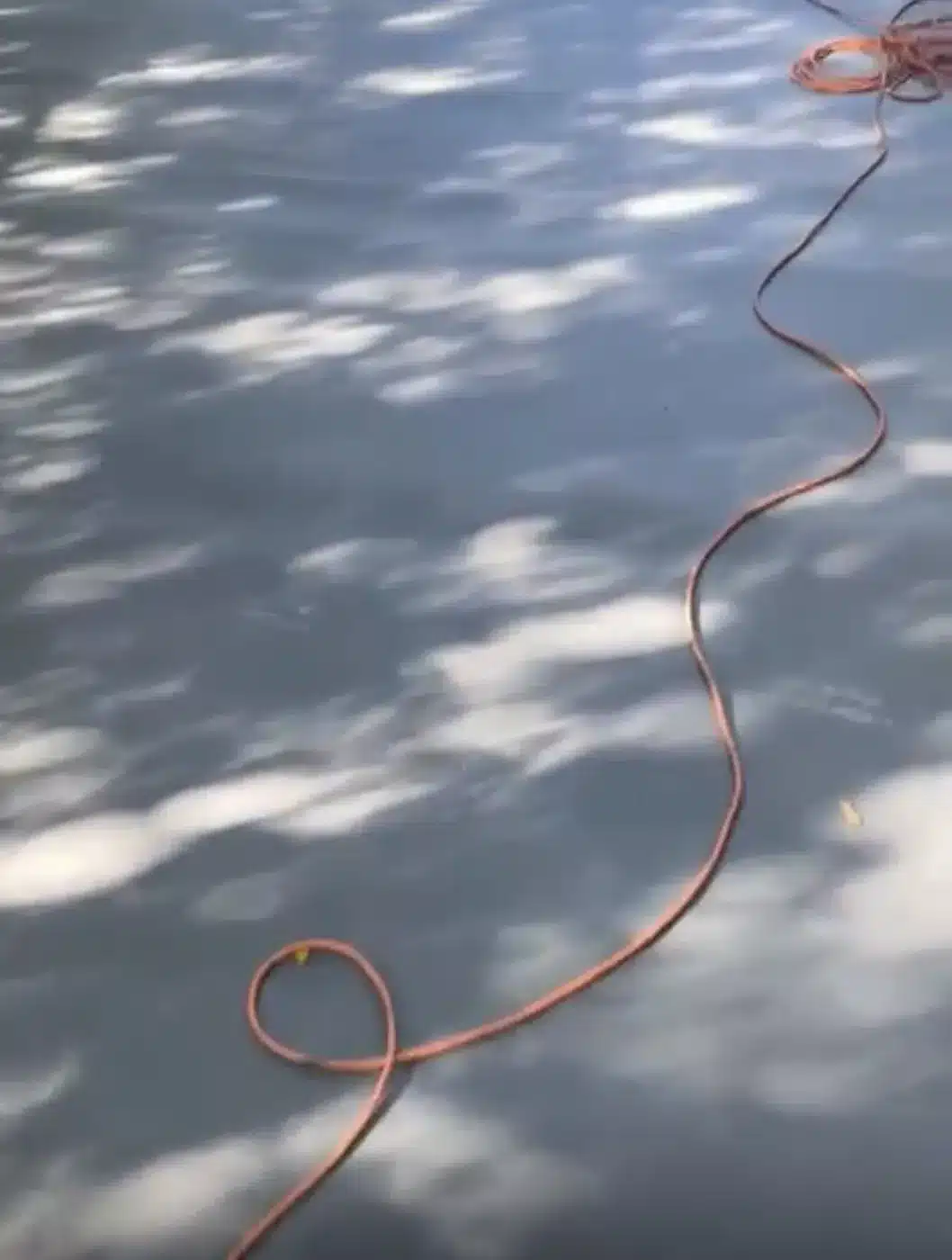
Where two sheets meet. On TPO and PVC the weld either held or it did not, and a probe along the lap finds the open section. Repaired with a welded patch spanning well past the failure — not a bead of sealant laid over the top of it.
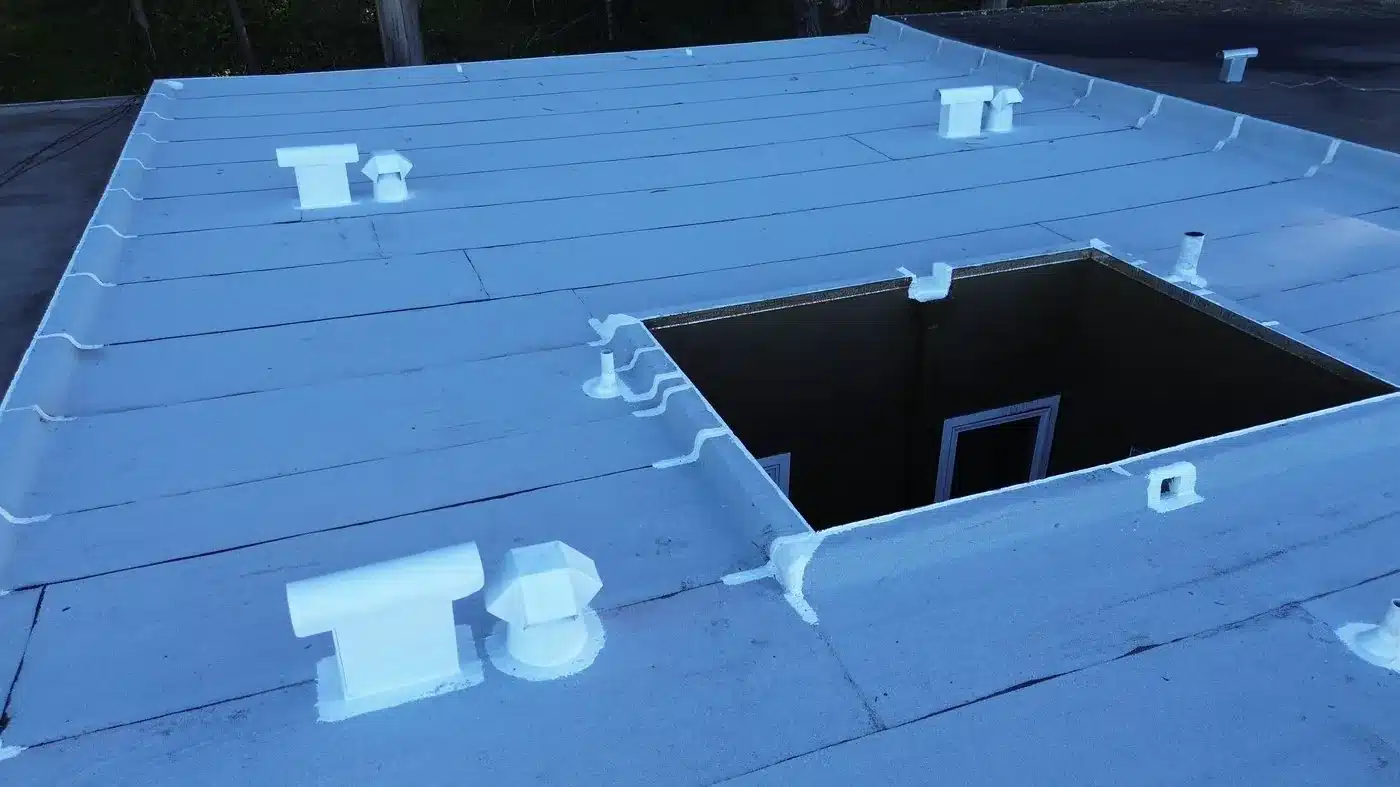
Vents, drains, condenser stands, conduit, skylight and lightwell curbs. Almost every flat roof leak we trace ends at something that comes through the roof. The repair rebuilds the flashing detail properly rather than burying it under mastic.
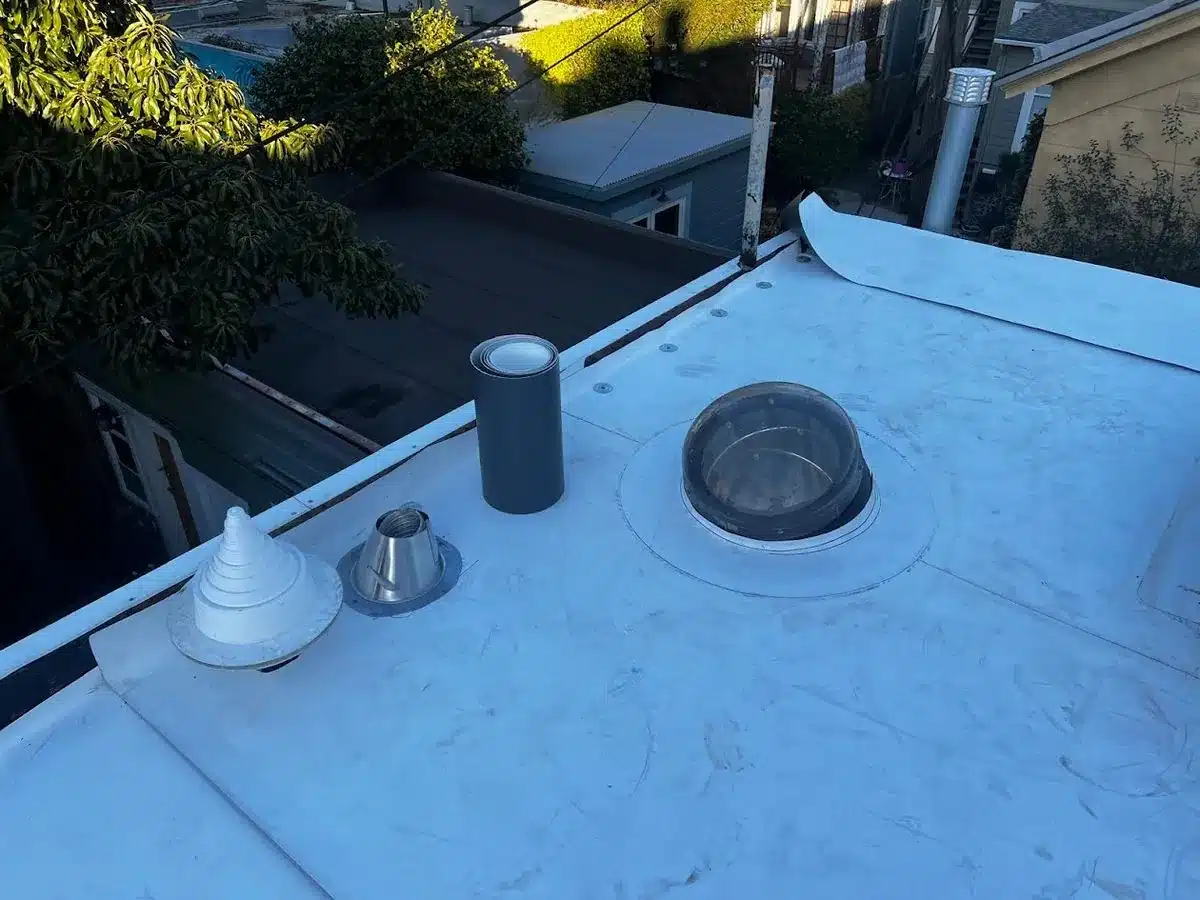
The city failure mode. Water runs to a parapet, the wall termination cracks or the scupper throat rusts through, and the leak appears in a room with no roof above it. Repaired by re-detailing the wall termination and lining or replacing the scupper.
Tapered insulation, added drains, corrected falls. This is the repair that stops the next three repairs, and it is the one most often skipped because it costs more than a patch and looks less like a fix.
Three things separate a repair that lasts from one that buys a season.
Water entering at a scupper can travel twenty feet along a deck seam before it drops through a ceiling. Repairing above the stain is the most common wasted flat-roof repair there is, so we trace the entry point first.
A TPO or PVC repair is heat-welded in compatible membrane so the patch becomes part of the sheet. Sealant moves at a different rate to the membrane and reopens at the next thermal cycle.
If the insulation is saturated, a surface patch seals the water in rather than out. We probe or core before quoting so the scope reflects what is actually under the membrane.
Three steps, and you see the evidence at each one.
On the roof, not from the ground and not from a drone photograph. We locate the entry point, check every penetration and the full perimeter, and probe for trapped moisture.
A written scope naming the failure and its location, the material and method of repair, and what is not included — dry rot, deck replacement, interior damage, permits. Every item is tied to a photograph from the roof walk.
Welded or lapped in compatible material, flashings rebuilt, drains and scuppers cleared, debris removed. We show you the finished detail before we leave.
TPO, PVC, EPDM, torch- and cold-applied modified bitumen, built-up roofing and coating systems — across homes, apartment buildings and commercial property from San Jose to San Francisco. If you want the longer view of how the systems compare, our flat roof pros and cons guide covers the trade-offs, and TPO roofing in San Francisco covers the city's parapet-walled roof decks. For whole-building work see commercial roofing in San Jose, and if water is coming in right now, emergency roof tarping stops it first. Membrane specifications and reflectance ratings referenced here follow CRRC and NRCA guidance.
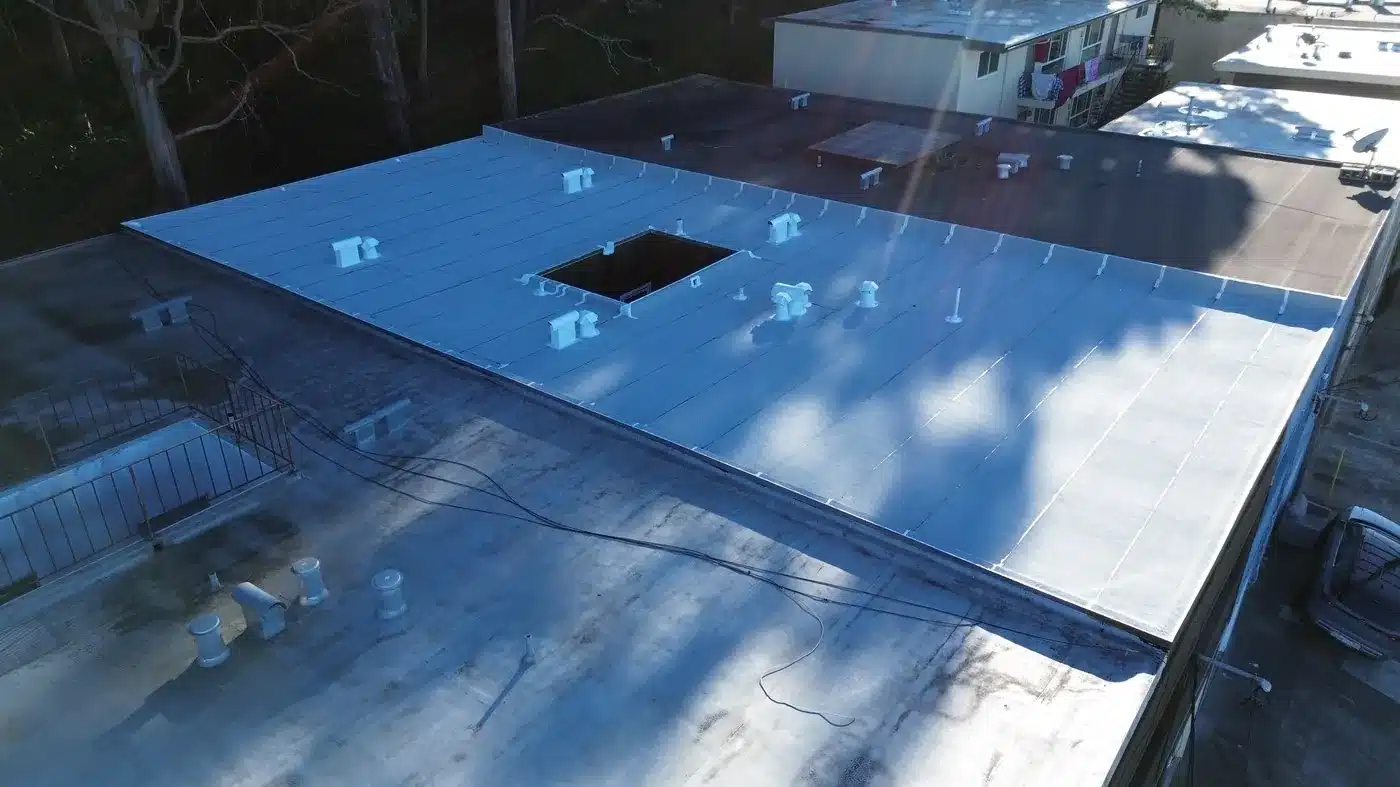
A city low-slope roof with a failing surface over a habitable floor — overlaid in TPO rather than torn to the deck, with the perimeter and penetrations re-detailed.
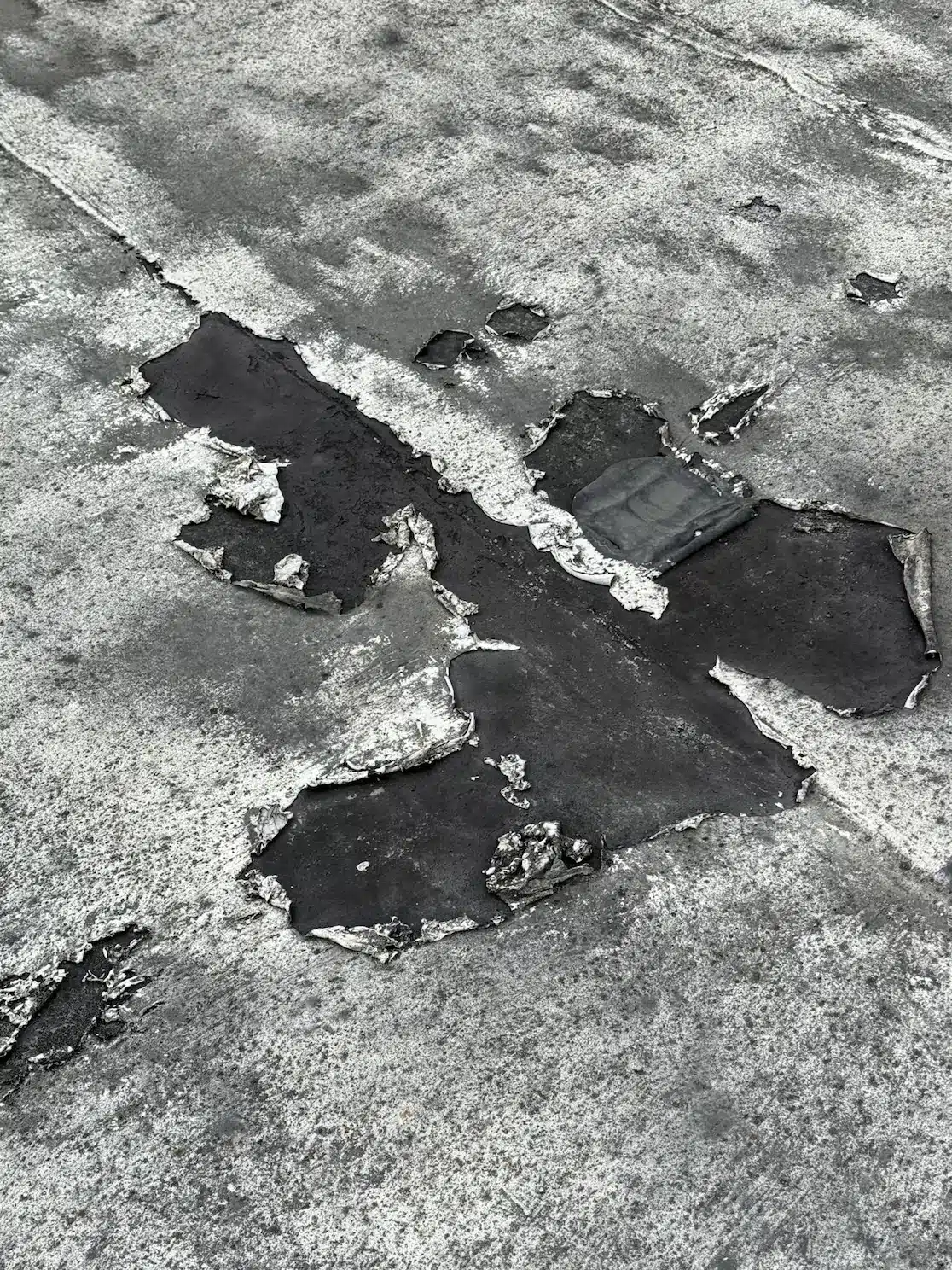
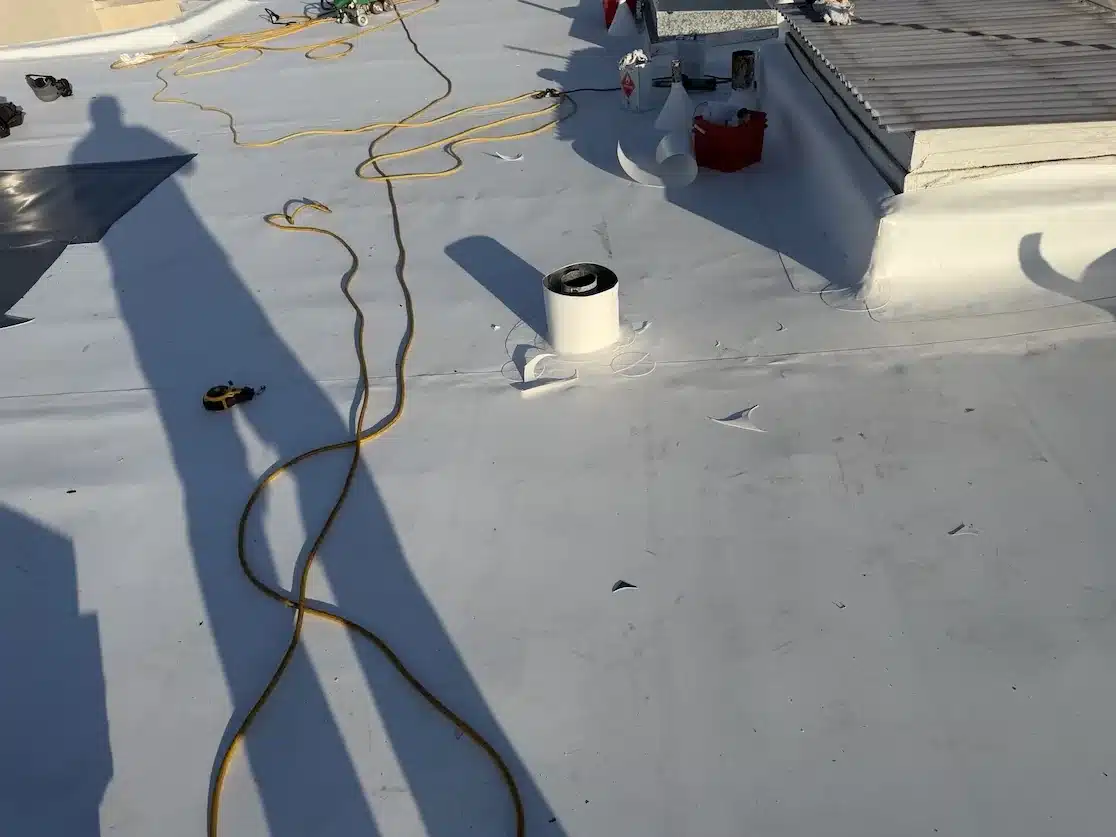
A flat roof can be repaired when the failure is localised — one seam, one penetration, a run of edge metal — and the membrane away from it is still flexible and intact. Replacement becomes the honest answer when leaks appear in unrelated areas, the membrane is brittle or splitting, or the insulation below it is saturated. We check the insulation before quoting, because a surface patch over wet insulation traps the water instead of stopping it.
Ponding is a drainage problem rather than a membrane problem. Water still standing more than about 48 hours after rain usually means the fall is wrong, a drain or scupper is blocked or undersized, or the insulation has compressed. Replacing the membrane over the same flat spot ponds again — the fix is tapered insulation, a corrected fall, or a drainage change.
Not as a permanent repair. TPO is repaired with a heat-welded patch of compatible membrane, which fuses to the existing sheet. Sealant and roof cement fail at the next round of thermal movement, which is why a caulked TPO seam typically reopens within a season.
Water entering a flat roof can travel a long way along a deck seam or a layer of insulation before it finds a way down. The stain marks where it exited, not where it entered, which is why a repair has to start with a trace rather than a patch above the stain.
Yes. Most of the flat roof repairs we carry out are on systems installed by someone else, including buildings where the original contractor is long gone. We identify the existing system first so the repair material is compatible with it.
A well-installed single-ply membrane such as TPO typically gives 20 to 30 years, and modified bitumen a comparable span, provided drainage works and the details at parapets and penetrations are maintained. Most flat roofs we are called to have failed at a detail long before the field of the membrane wore out.
We trace the leak, show you the photographs, and give you a written scope covering repair and replacement where both are genuinely options — so the decision is yours and it is based on evidence.