A commercial roof replacement removes the old roof down to the deck, repairs or replaces damaged decking and insulation, and installs a new low-slope system such as TPO, PVC or torch-down modified bitumen, with new flashing at every drain, curb and edge. That is the difference from a repair or a restoration coating: everything under the membrane gets looked at, and anything wet comes out. We replace commercial roofs on warehouses, offices, retail, light industrial and multi-family buildings across San Jose and the Bay Area.
Down to the deck — old layers, wet insulation and rotted boards come off, so nothing failing is sealed under the new roof.
Drainage fixed, not just covered — tapered insulation and reworked drains end the ponding that shortens a flat roof's life.
Title 24 cool roof — reflective, CRRC-rated membranes that pass San Jose's permit inspection.
Phased around your business — tear-off and dry-in by section so tenants and operations keep running.
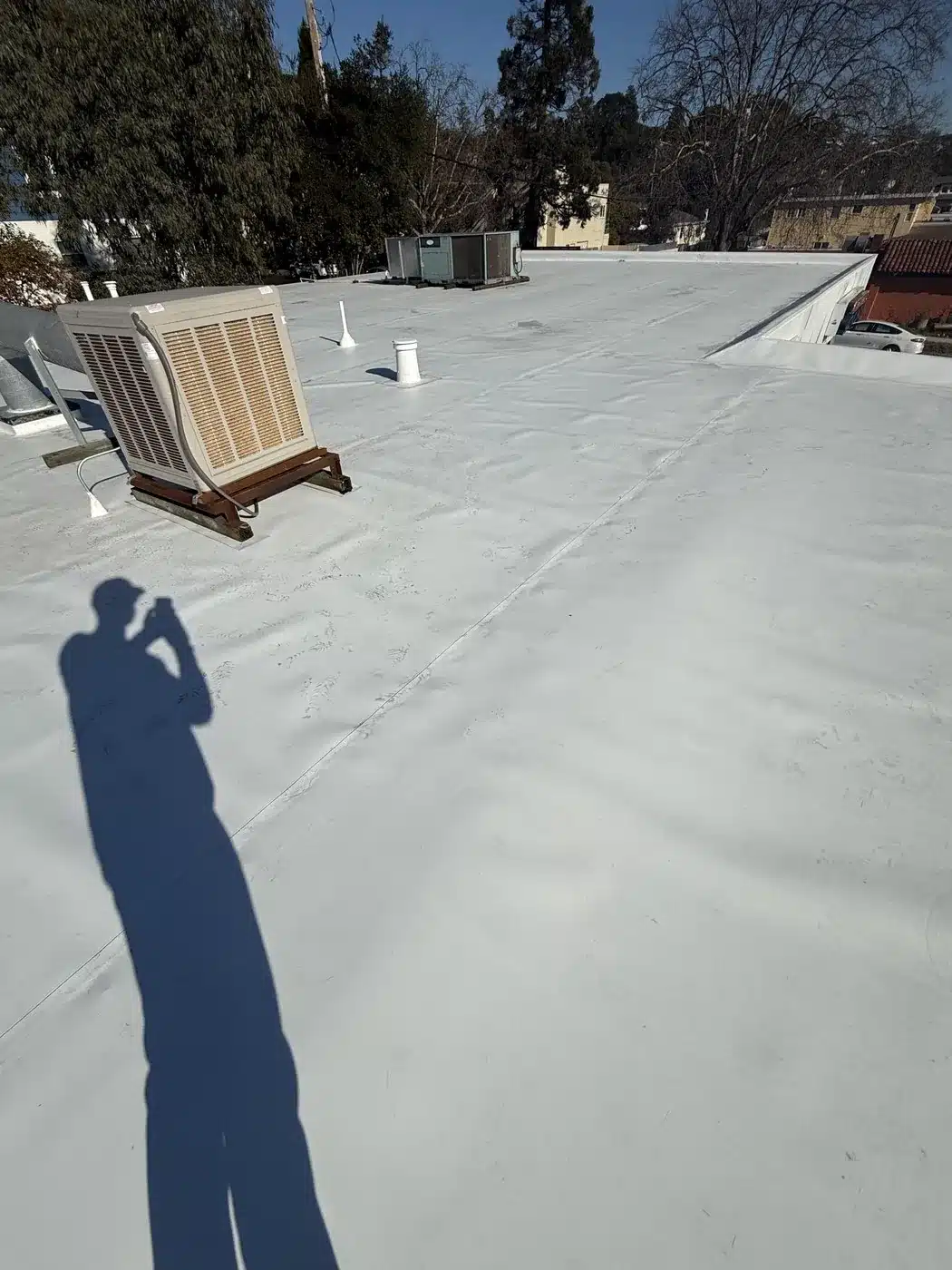
In most cases, yes: California's Title 24 energy code requires most low-slope commercial re-roofs to use a cool-roof membrane that meets minimum aged solar reflectance and thermal emittance, which in practice means a CRRC-rated product with an SRI of about 75 or higher. The rule applies when you replace more than half of the roof, and the city checks it at the permit inspection. White TPO and PVC meet it easily; a dark membrane usually needs a reflective cap sheet or coating on top. The current standards are published by the California Energy Commission, and product ratings are listed by the Cool Roof Rating Council.
A compliant membrane costs little or nothing extra over a non-compliant one, and a reflective roof lowers the cooling load on rooftop units. See our cool roofing guide for how the numbers work.
We pick a rated product for your roof from the commercial roofing products and brands we trust, pull the permit, keep the CRRC label and spec sheet on file for the inspector, and register the manufacturer warranty when the job is done.
The right system depends on what the roof carries, how it drains and what comes out of the building's vents. These are the four we install most often on commercial replacements.
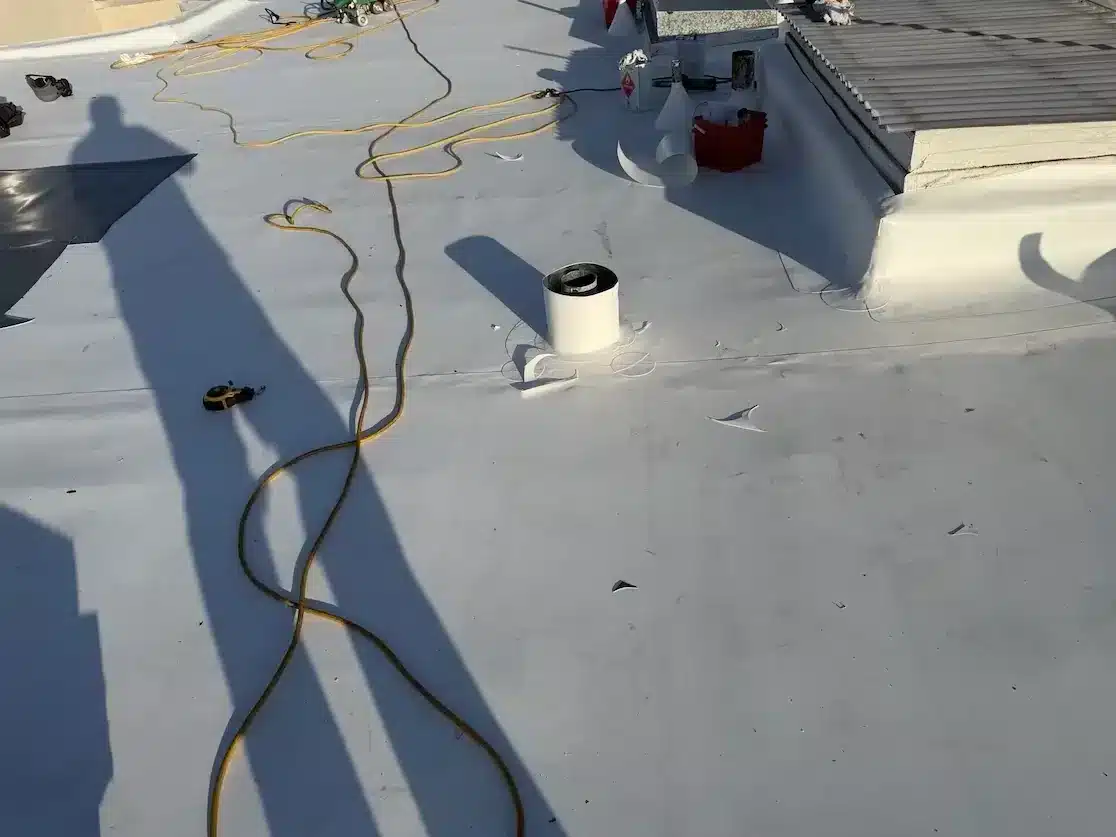
A white, reflective membrane with heat-welded seams. The default choice for warehouses, offices and retail roofs that need to meet Title 24. PVC is its chemical-resistant cousin for restaurants and plants.
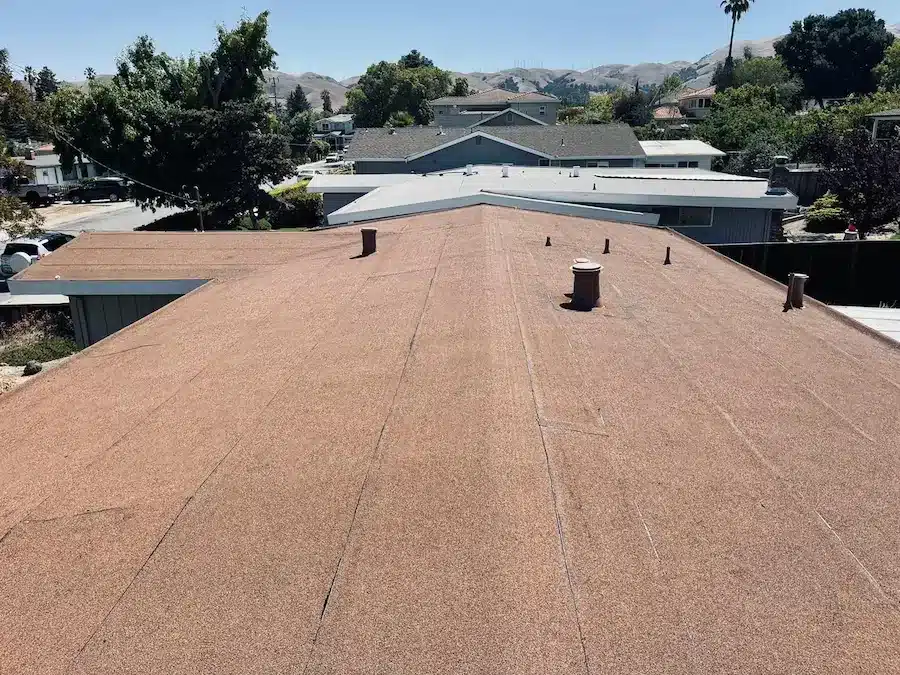
Multi-ply torch-applied membrane that stands up to foot traffic and rooftop equipment. Also what we install when converting old gravel roofs to a 3-ply modified-bitumen system.
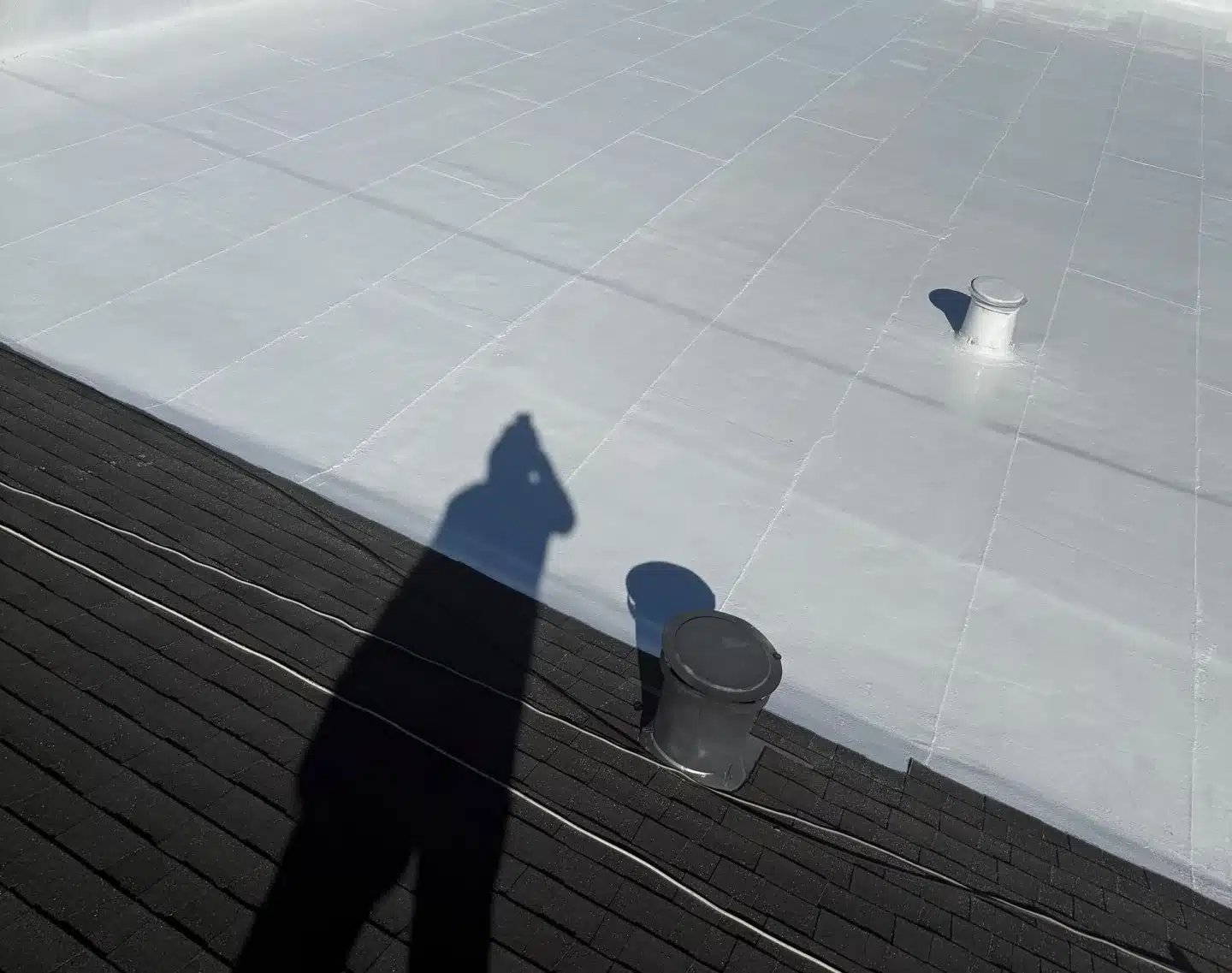
A seamless, reflective silicone coating applied over a sound, dry roof. It protects and cools a good surface; it is never a substitute for tearing off a wet one.
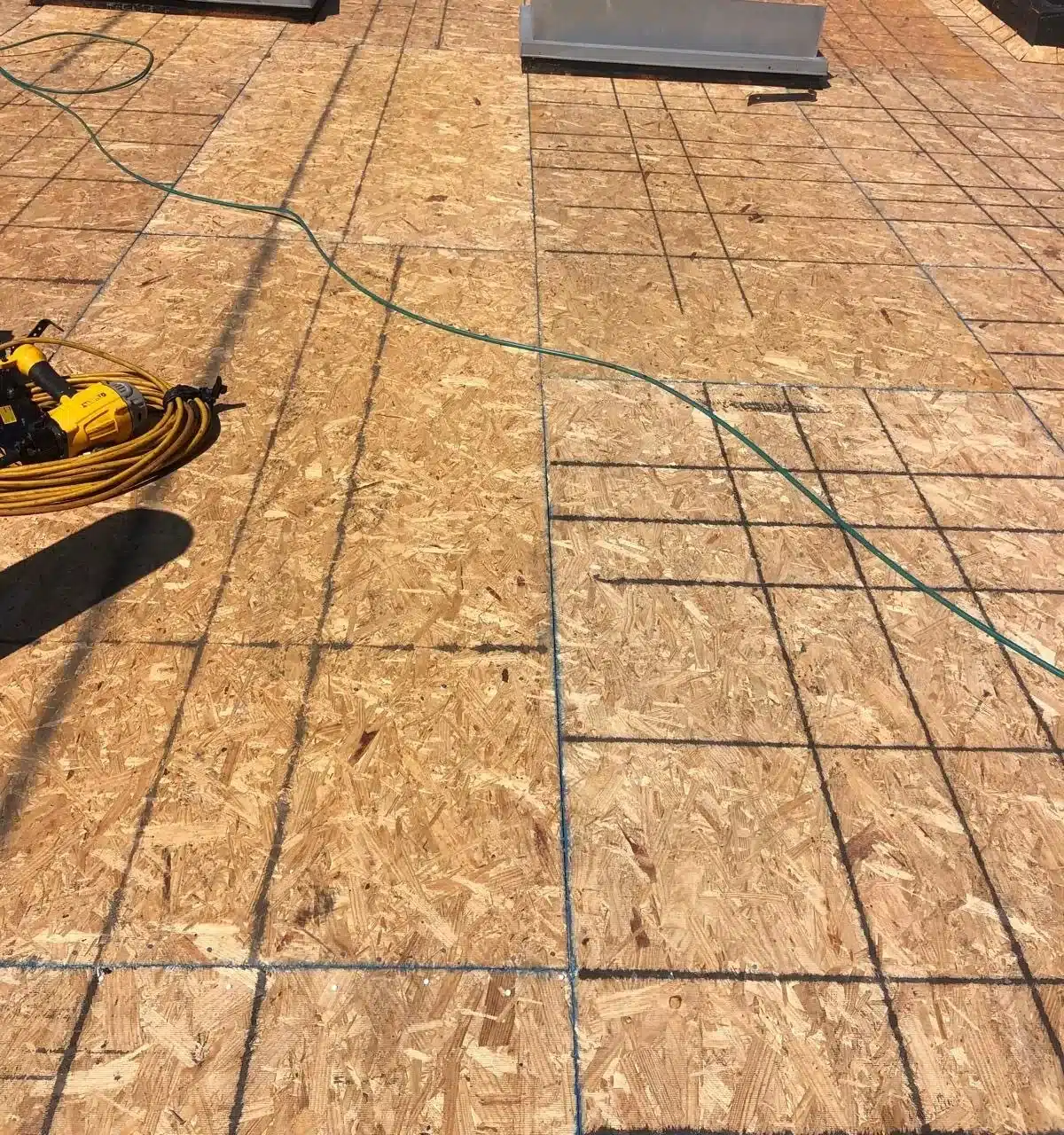
When the old roof has let water through, rotted boards and wet insulation come out and new sheathing goes down before any membrane. Tapered insulation board adds R-value and slopes water to the drains.
Repairs make sense until the roof underneath is failing. If you are seeing these, it is time to price a replacement, or start with a commercial roof inspection to find out.
When patches stop holding, water is usually travelling through wet insulation or a damaged deck, which a repair on the surface cannot reach.
Water still standing two days after rain breaks down the membrane early. Fixing it means re-sloping with tapered insulation or reworking drains during a replacement.
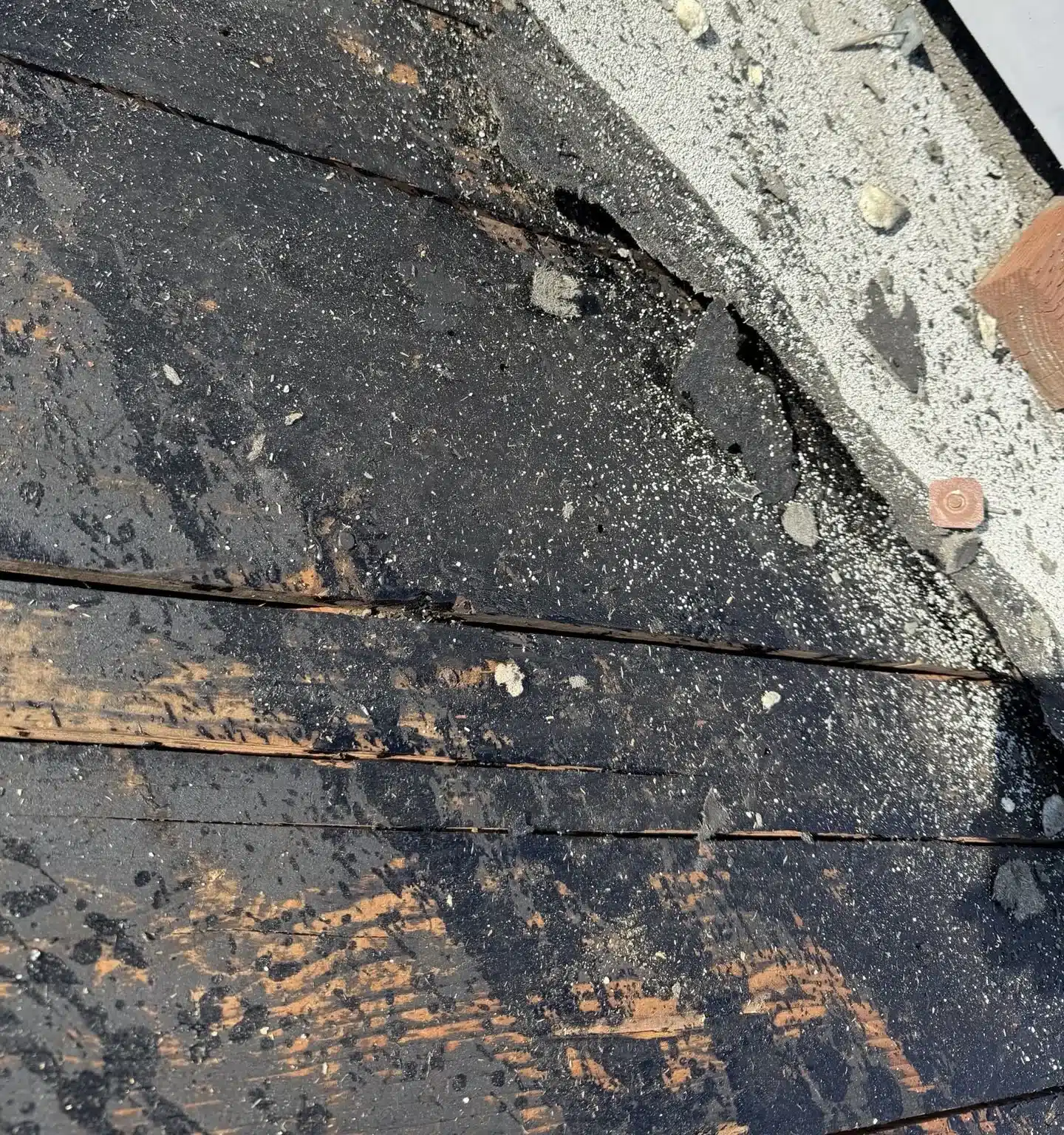
Blistered or shrinking membrane and open seams mean the system has reached the end of its life. Bare decking showing through, as on our Rodeo project, means it already has.
Every replacement follows the same five steps, and you get the scope, the schedule and the warranty paperwork in writing.
We walk the roof, check the drains, curbs and deck, and give you a photo-documented, line-item proposal with the system we recommend and why.
We pull the city permit and plan the work in sections around your hours, deliveries and tenants.
Old layers come off down to the deck. Damaged boards and wet insulation are replaced, and tapered insulation goes in where water ponds.
The new system goes down with heat-welded or torched seams, and every drain, curb, penetration and roof edge gets new flashing and edge metal.
We walk the finished roof with you, close out the permit, and hand over photos plus the manufacturer and workmanship warranty paperwork.
We have been replacing roofs in San Jose and the Bay Area since 2010 from our office in Sunnyvale. We are a licensed C-39 roofing contractor, an Owens Corning Platinum Preferred contractor and CertainTeed certified, with an A+ BBB rating.
An auto shop whose old built-up roof had worn through to bare plank decking. We tore off all 40 squares, rebuilt the deck, installed a torch-down modified-bitumen system and finished the low-slope section with a reflective silicone overlay. Read the full Rodeo case study, or see a residential flat roof replacement in San Francisco where the decking also had to go.

Two of our own jobs: a flat roof replacement in Sunnyvale from tear-off to finished membrane, and a white TPO cool-roof installation on a San Jose industrial building.
More answers on our roofing questions page, including why a flat roof that leaks every winter is not normal and a flat roof maintenance checklist.
Most commercial roof replacements in San Jose run about $7 to $14 per square foot installed. Where a roof lands in that range depends on the system (TPO, PVC or torch-down modified bitumen), how many old layers come off, how much decking has to be replaced, and whether tapered insulation is needed to fix ponding. We give a written, line-item quote after a free rooftop inspection, and if the existing roof is still sound and dry we will tell you when a coating would cost less than a tear-off.
For most San Jose warehouses, offices and retail buildings it is a white TPO membrane: it is reflective enough to meet Title 24 cool-roof rules, and its seams are heat-welded rather than glued. Torch-down modified bitumen is the better choice for roofs that carry foot traffic and rooftop HVAC units, and PVC suits restaurants and plants that vent grease or chemicals onto the roof. Our commercial roofing page compares the systems in more detail.
Only if the roof underneath is still sound and dry. A silicone or acrylic restoration coating is a protective layer, not a repair: applied over wet insulation or a rotted deck it seals the moisture in. On our Rodeo auto shop project the old built-up roof had worn through to bare plank decking, so we tore it off, rebuilt the deck, installed torch-down and only then added a silicone overlay.
Usually, yes. We tear off and dry-in the roof in sections so the building is never left open overnight, and we schedule the noisiest work around your hours. On the Rodeo auto shop, a 40-square tear-off and rebuild took four days and the shop stayed open the whole time.
Yes. A commercial roof replacement needs a building permit, and the city checks Title 24 cool-roof compliance as part of it. We pull the permit, schedule the inspections and keep the product's CRRC rating on file for the inspector.
Twice a year: once in the fall before the rainy season and once in spring after it. Clogged drains, split seams and failed flashing around rooftop units are cheap to fix when they are found early; see our commercial roof inspections.
Book a free rooftop inspection. You get photos of what we found, the system we recommend, and a line-item price, with no obligation.