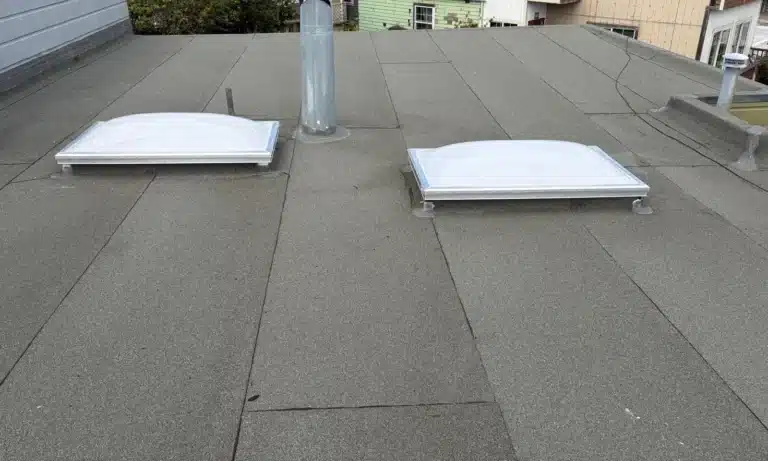
A flat roof gives a leak very little room to hide. A short checklist, done twice a year and after storms, catches most problems while they are still small repairs.
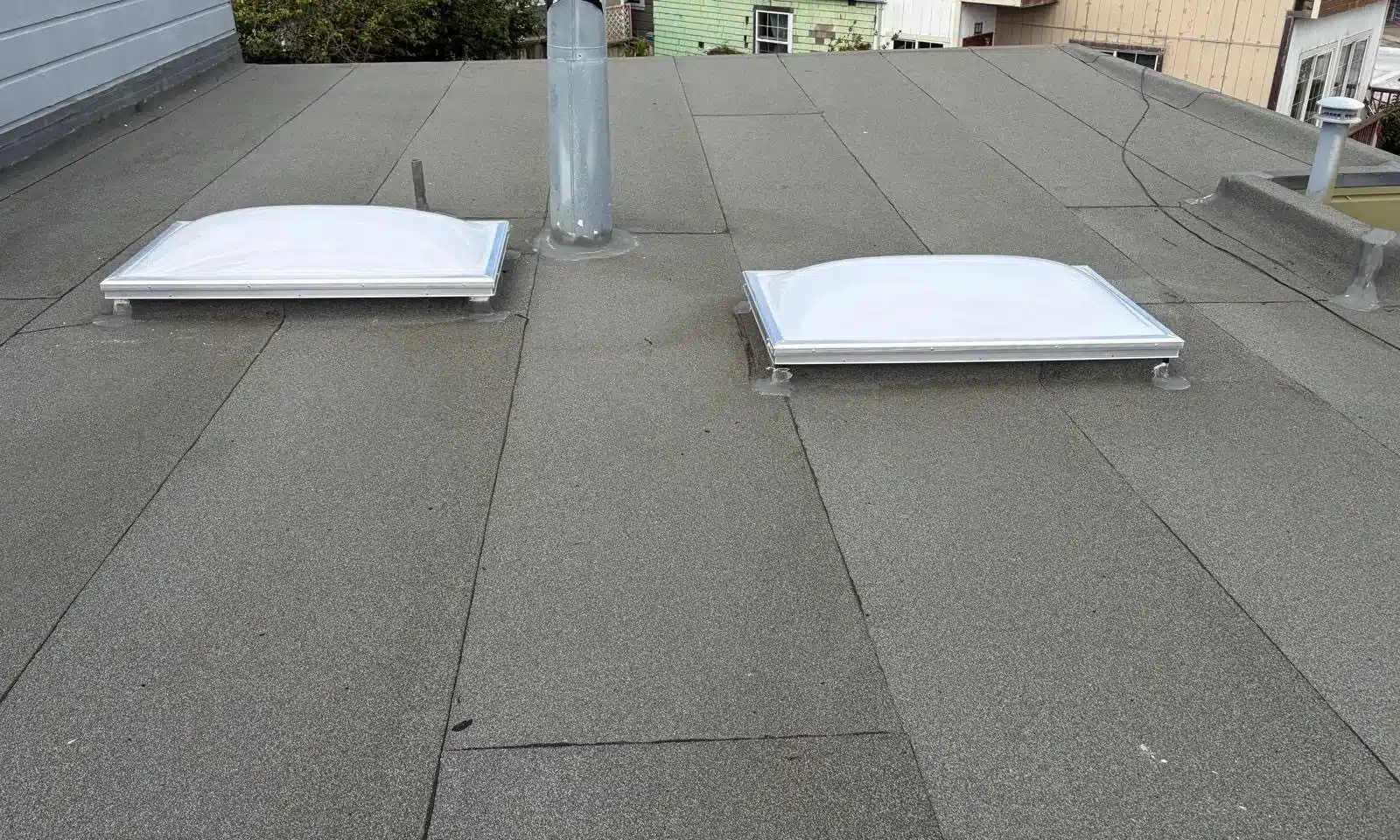
Inspect the roof twice a year, once before the rainy season and once in spring, and again after any major storm. Keep drains, scuppers and gutters clear, look for standing water, and check the seams, the flashings and every penetration. Fix small problems as soon as you find them, keep foot traffic to marked walkways, and keep a written record of every inspection and repair. On a flat roof, water has nowhere to run, so a clogged drain or a failed seam shows up as a leak quickly. Most flat roof leaks start at the same few places, which is why a short, regular checklist catches most of them early. A coating can extend the life of a sound roof, but it will not fix wet insulation or failed seams, so have the roof assessed before you pay for one.
This question was asked on Reddit’s r/Roofing in November 2025: read the original thread.
Water has nowhere to go but the drain
A pitched roof sheds water by gravity, and a small defect often takes time to leak. A flat or low-slope roof relies on a continuous membrane, sealed seams and working drains. When a drain clogs, water backs up and finds every weak point at once, so the cause of most flat roof problems is the same short list: drainage, seams, flashings and penetrations.
That is also why a maintenance routine works so well on flat roofs. You are not hunting for a hidden fault across a complicated roof. You are checking a handful of places in the same order each time. For commercial buildings in San Jose, our commercial roofing team does this as a commercial roof inspection, with photos and a written report you can keep on file.
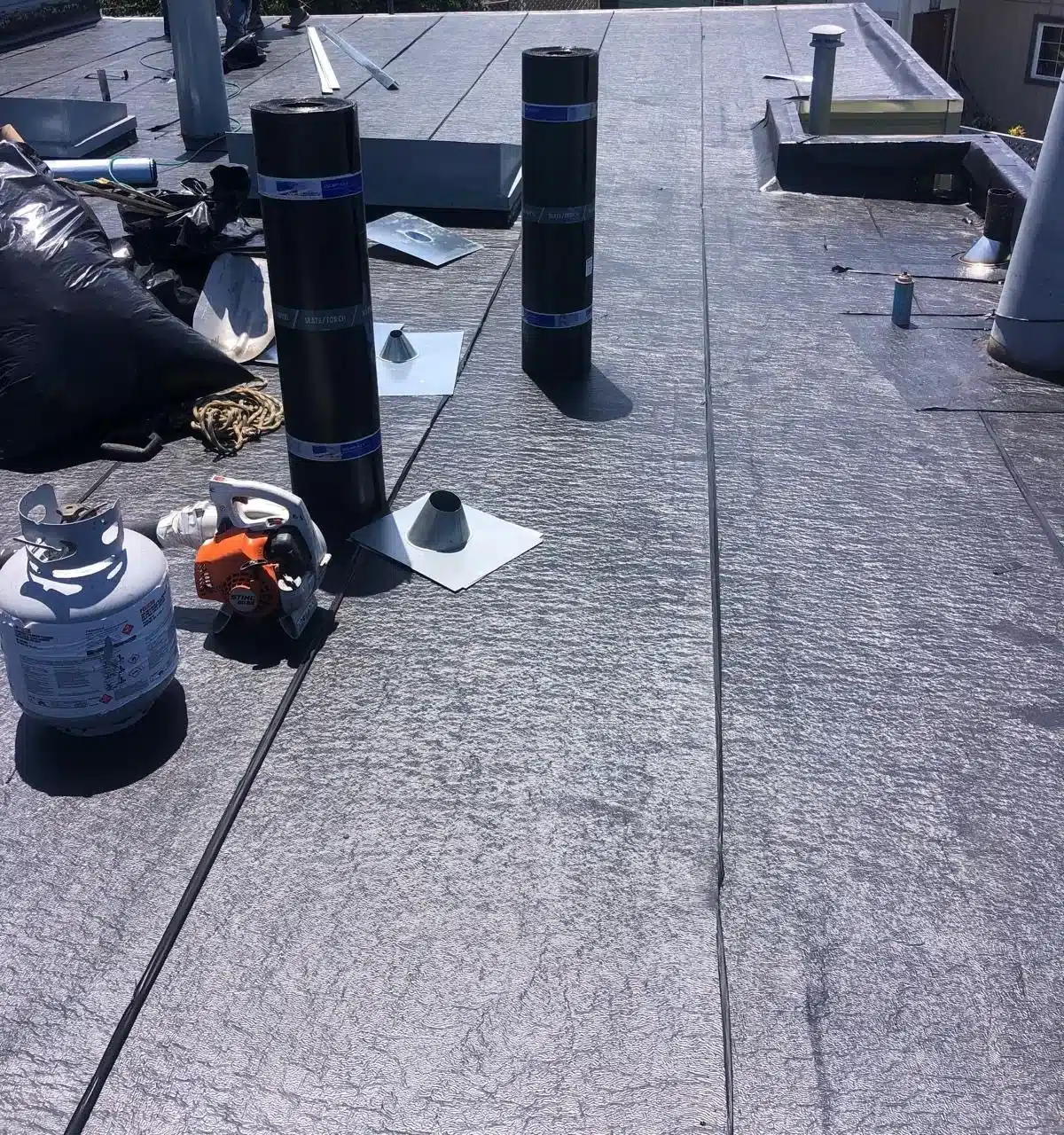
What to check on a flat roof, and when
| What to check | What you are looking for | When |
|---|---|---|
| Drains, scuppers and gutters | Leaves, grit and debris blocking the outlets; water backing up on the roof | Before the rainy season, after storms |
| Standing water | Puddles that are still there a couple of days after rain, which point to drainage or deck problems | After each significant rain |
| Seams and laps | Open, lifting or cracked seams; fishmouths at the edges of the membrane | Twice a year |
| Flashings and parapets | Gaps, torn flashing, loose metal or failed sealant where the roof meets a wall or curb | Twice a year |
| Penetrations | Pipe boots, vents, skylight curbs and HVAC curbs with cracked sealant or loose collars | Twice a year |
| Membrane surface | Blisters, punctures, cracks, worn spots and areas of heavy foot traffic or equipment wear | Twice a year |
| Debris and vegetation | Branches, trash, moss or plants that hold moisture against the roof | Each visit |
| Inside the building | New ceiling stains, damp insulation or musty smell under the roof | Monthly in the wet season |
A general maintenance guide, not a substitute for an inspection of your roof. Follow the roof manufacturer’s maintenance requirements if the roof is under warranty.
Take dated photos each time. A simple record of what you saw and what was done shows when a problem started and helps if a warranty claim is ever needed. If you find a leak, a torn seam or a damaged flashing, get it looked at promptly. We offer emergency commercial roof repair when a leak cannot wait.
Which roof you have changes what to look for
TPO and PVC are single-ply membranes with heat-welded seams, so the seams and the flashings at walls and curbs deserve the closest look. Modified bitumen and built-up roofs have layers and a granulated or coated surface, so look for blisters, splits and worn surfacing. In California, the Title 24 energy code sets cool-roof requirements for many low-slope roofs, which is why many roofs here are white or reflective. Our cool roofing page explains what that means for your building.
Coatings are sometimes sold as the answer to every flat roof problem. They can extend the life of a roof that is aging but dry, but they do not cure wet insulation, failed seams or a damaged deck. A good contractor will test or inspect first and tell you whether the roof is a candidate. For a wood deck question, see our post on TPO over a wood deck, and for repairs see flat roof repair.
When maintenance is no longer enough, the options are a repair, an overlay or a replacement. We cover the replacement side on our commercial roof replacement page, and you can see how a full low-slope replacement goes in our San Francisco flat roof project.
Flat roof maintenance questions
How often should a flat roof be inspected?
A common recommendation is twice a year, typically before the rainy season and again in spring, plus after any major storm or after anyone else has worked on the roof, such as an HVAC technician. Keeping a dated record of each inspection also helps if you ever need to make a warranty claim.
Are roof coatings worth it on a flat roof?
They can be, on a roof whose membrane and insulation are still sound. A coating adds a protective, often reflective layer and can extend the life of a roof that is aging but dry. It does not repair wet insulation, failed seams or a damaged deck, so the roof should be tested and repaired first. Ask the contractor what the coating is expected to do and what it will not.
What causes most flat roof leaks?
Most leaks start at the same places: drains and scuppers that are blocked or poorly sealed, seams that have opened up, flashings at walls and curbs, and penetrations such as vents, pipes and HVAC supports. The membrane in the middle of the roof is usually the last place to fail, so checking those details covers most of the risk.
Can I walk on a flat roof to inspect it?
On a low, dry residential roof with a safe access point, a careful visual check can be done by an owner. On commercial roofs, access, edge protection and fall protection rules apply, and walking on a membrane can damage it. For a commercial building we recommend a professional inspection and photos you can keep on file.
How long does a flat roof last?
It depends on the material, the quality of the installation and the maintenance. Published manufacturer and industry ranges for common systems such as TPO, PVC, modified bitumen and built-up roofing generally run from about 15 to 30 years. Regular maintenance is what keeps a roof at the top of its range.
Want a second set of eyes on your flat roof?
We will inspect the drains, seams, flashings and penetrations, send you photos, and tell you honestly what needs attention and what does not. Lifetime Roofing & Renovation, Inc., CSLB #1090028 (C-39).
Gina K. writes about Bay Area roofing for Lifetime Roofing & Renovation, drawing on the team's 16+ years of experience roofing homes across Silicon Valley.