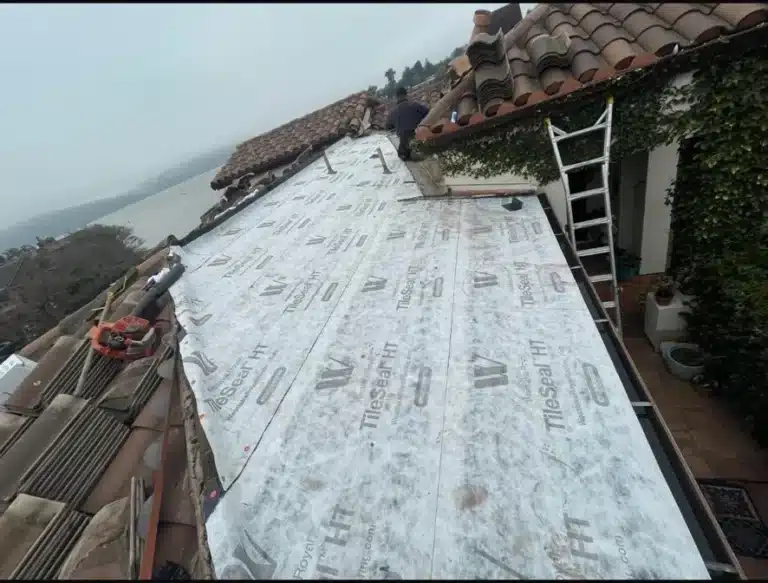
In a lift and relay the tiles usually go back on, so the underlayment is the real roof you are buying. It is the layer that keeps water out, and the one you will not see again for decades. That makes it the line on the quote worth reading most closely.
Lift and relay: should the new underlayment under tile be double felt or peel-and-stick?
For most Bay Area tile roofs, a high-temperature synthetic or self-adhered underlayment rated for use under tile is the better long-term choice. Two layers of felt can meet code, but felt is usually the part of a tile roof that wears out first, and you only want to lift the tile once. Use a fully self-adhered membrane where water concentrates, at valleys, eaves, walls and around penetrations, and on low-slope sections. Whatever product you choose, check that it is listed for tile, that it is installed to the manufacturer’s instructions, and that it meets California’s tile rules for your slope.
A homeowner with a 2004 concrete tile roof asked exactly this on Reddit’s r/Roofing in September 2026, weighing double 30-pound felt against a full ice and water membrane.
Tile sheds most of the rain. The underlayment stops the rest.
Concrete and clay tile are not watertight on their own. Wind-driven rain gets under the laps, runs down the underlayment and out at the eave. The tile protects that layer from sun and impact, and the underlayment does the waterproofing. When a tile roof leaks, the tile is rarely the problem. The underlayment beneath it has dried out, cracked, or been worn through at a valley.
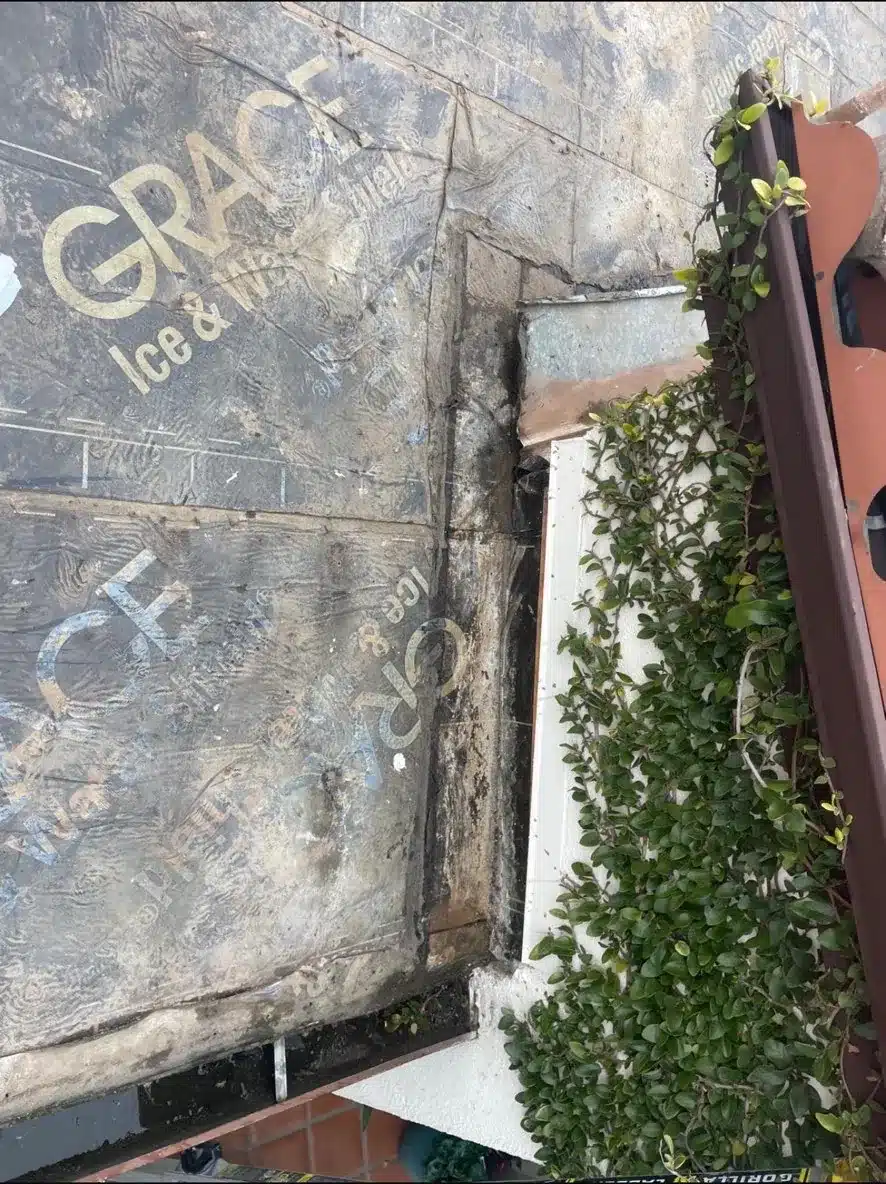
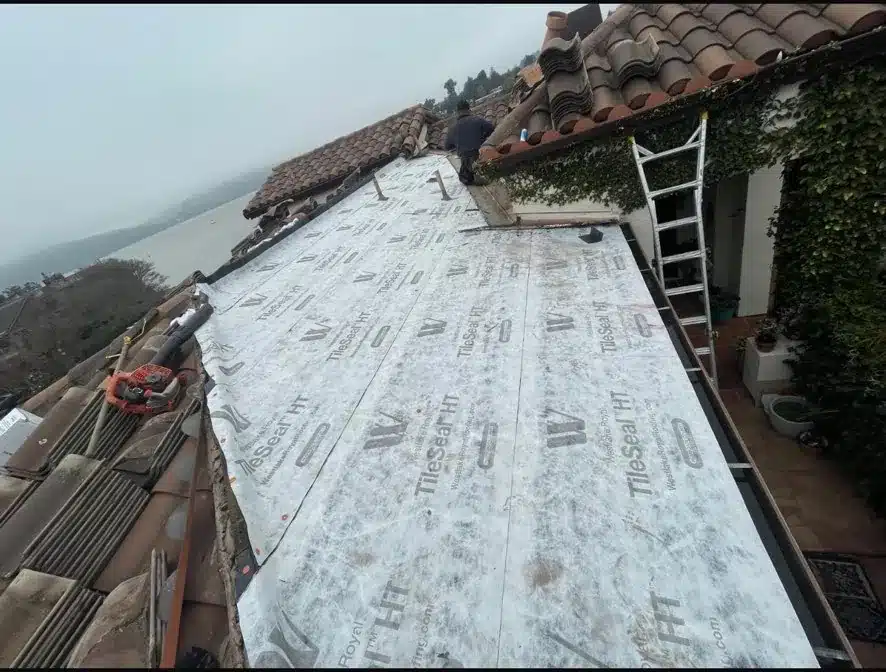
That is also why the choice matters more on tile than on shingles. A shingle roof is replaced as a whole. On a tile roof, every repair to the underlayment means lifting tile, so the underlayment you choose now decides when the roof next has to be opened.
Double felt, synthetic, or fully self-adhered
Choosing lift and relay underlayment comes down to three kinds of product, and most good jobs combine two of them.
| Option | What it is | Where it fits |
|---|---|---|
| Two layers of felt | Asphalt-saturated felt, often two layers lapped half over each other | Meets code on many roofs and costs least, but it is usually the first part of a tile roof to wear out |
| High-temperature synthetic | A woven or coated synthetic sheet rated for the heat under tile | A longer-lasting field underlayment; nailed or capped, so details still need extra sealing |
| Self-adhered membrane | A peel-and-stick membrane that bonds to the deck and seals around nails | Best at valleys, eaves, walls, penetrations and low-slope sections; a whole-roof option if it is rated for tile |
| Mixed system | Synthetic or felt in the field, self-adhered at the details | The common middle ground, and often the best value on a Bay Area tile roof |
A general guide. Product listings, the tile manufacturer’s instructions and your city’s inspector have the final say for any one roof.
What California requires
California’s residential code (section R905.3) sets the minimums for clay and concrete tile. Tile needs a slope of at least 2.5 in 12. Between 2.5 and 4 in 12 it needs two layers of underlayment, and from 4 in 12 up it needs at least one. The code is a floor, not a recommendation. If your home is in a Very High Fire Hazard Severity Zone, ask the building department about the added fire rules for tile, such as eave closures or a mineral-surfaced cap sheet, before you compare quotes.
How a lift and relay is put back together
On a recent clay tile leak in Benicia, the crew lifted about three squares of tile, removed the old battens and the aged membrane, installed Westlake Royal TileSeal HT, a high-temperature underlayment made for tile, sealed the corner at the wall with a membrane strip, fastened new redwood battens, flashed the pipe vents back in, and relaid the original tile. The full job is in our Benicia tile leak repair case study.
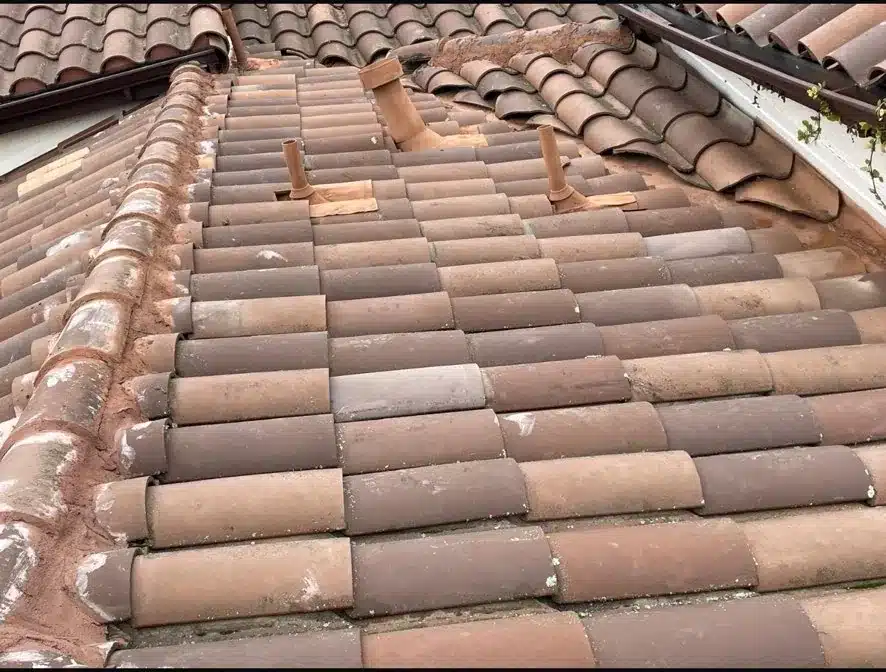
The same order applies to concrete tile. Our concrete tile roofing page explains what we look for before recommending a lift and relay, and our tile roof repair service covers smaller sections like the Benicia job. For a full concrete tile reset, see the San Mateo lift and relay.
Five things to check on a lift and relay quote
The underlayment by name. “New underlayment” is not a scope. The quote should name the product, say how many layers, and say whether it is listed for use under tile.
The details. Valleys, eaves, roof-to-wall joints, chimneys, skylights and pipes are where tile roofs leak. Ask what goes there: a self-adhered membrane, new valley metal, new flashings.
Battens and decking. Ask whether the battens are replaced and how damaged sheathing is handled once the old underlayment is off.
Tile breakage. Some tiles break when they are lifted. The quote should say how many replacements are included and how they will be matched.
Permit and warranty. Most Bay Area cities treat a full lift and relay as a re-roof that needs a permit, so ask who pulls it. Get the workmanship warranty in writing. Ours is 10 years on repairs.
If you are still deciding whether the roof needs this work yet, our guide to how often a tile roof needs maintenance covers the signs, and this Morgan Hill job shows what aged underlayment looks like once the tile is lifted.
Tile underlayment questions
How long does the underlayment under a tile roof last?
Usually much less time than the tile above it. Concrete and clay tile can last 50 years or more, but older felt underlayment often wears out after roughly 20 to 30 years, sooner where heat, debris or blocked valleys keep it wet. That gap is why tile roofs are lifted and relaid rather than replaced.
Do I need ice and water shield on a tile roof in the Bay Area?
Not for ice, because ice dams are not a Bay Area problem. A self-adhered membrane is still worth using where water concentrates: valleys, eaves, roof-to-wall joints, around skylights and pipes, and on any low-slope section. Covering the whole roof with it is an option, not a requirement, and it must be a product rated for the heat under tile.
Can the old tiles be reused in a lift and relay?
Usually, yes. Sound tiles are lifted, stacked and laid back on the new underlayment and battens. Expect some breakage, so the job should include matching replacement tiles, and the contract should say how many are included and what happens if more are needed.
Do battens need to be replaced during a lift and relay?
Often, yes. Old battens can be rotted, split or nailed through the old underlayment in ways that would puncture the new one. On a recent clay tile repair in Benicia we installed new redwood battens over the new underlayment before the tile went back on.
Planning a lift and relay?
We will lift a few tiles, show you photos of the underlayment, and tell you honestly whether you need a section repair or a full lift and relay. Lifetime Roofing & Renovation, Inc., CSLB #1090028 (C-39).
Gina K. writes about Bay Area roofing for Lifetime Roofing & Renovation, drawing on the team's 16+ years of experience roofing homes across Silicon Valley.