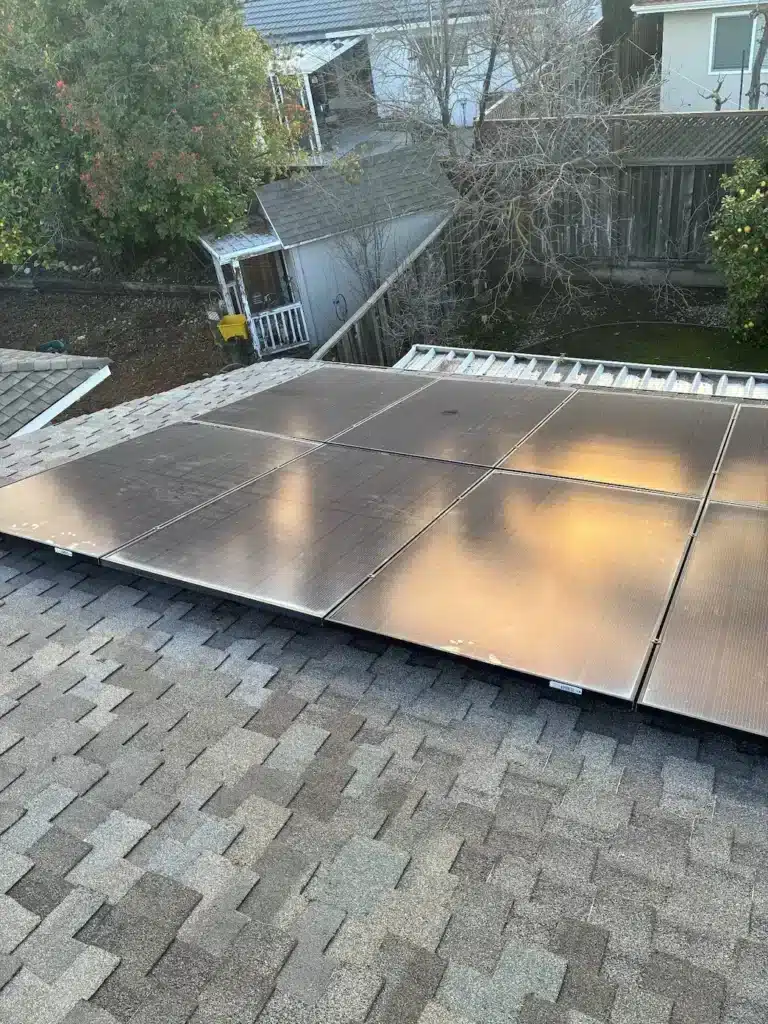
Yes — when the damaged section sits directly under the array, the panels come off first. On Como Lane in San Jose, our crew detached four solar panels, repaired the Presidential-style asphalt shingle roof beneath them, and reset the array as one coordinated project — completed across a work window from late 2025 into early 2026 and closed out with the homeowner paid in full.
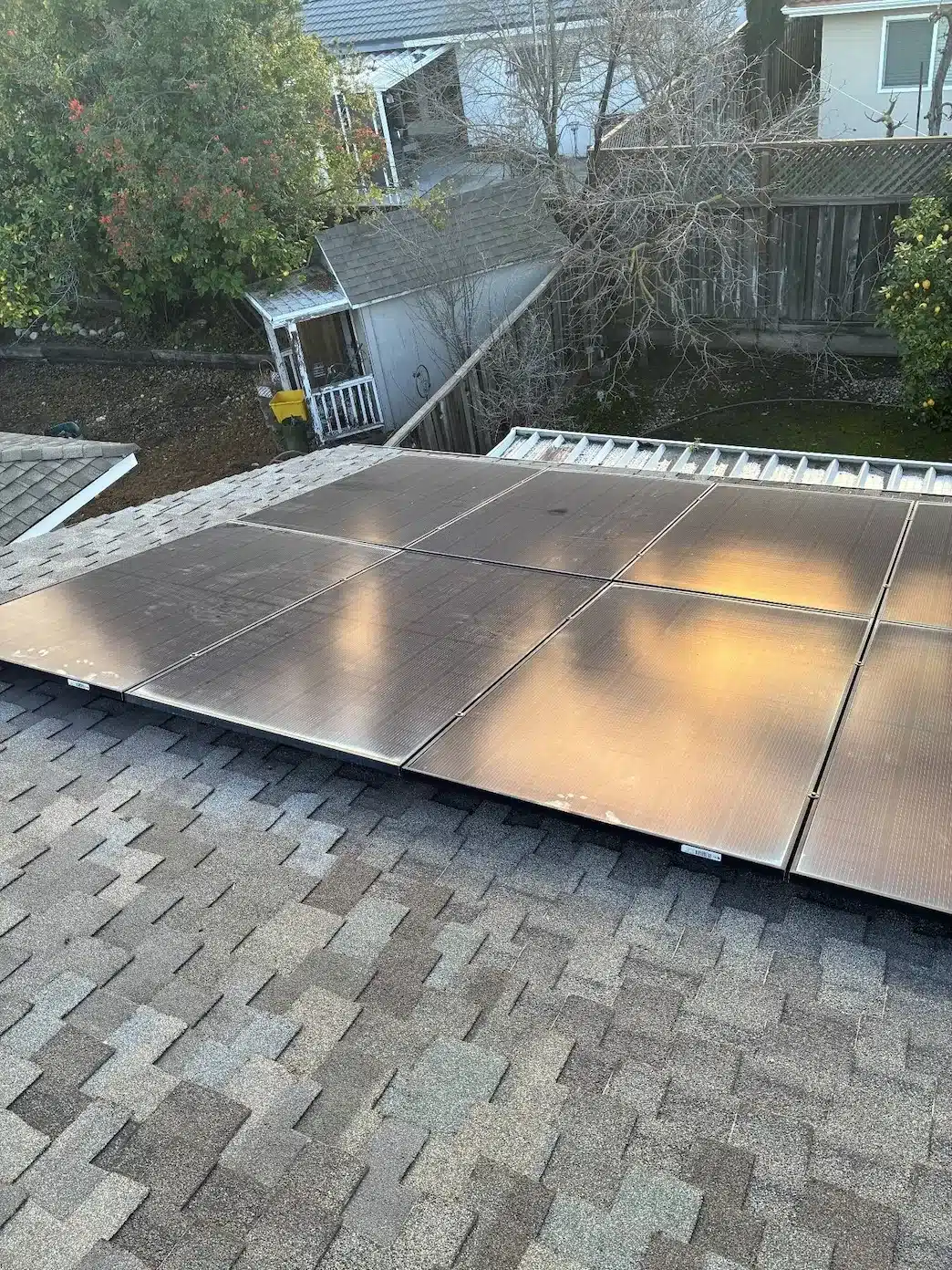
Yes — when the roofing work is directly beneath the array, the panels have to come off first; there is no reliable way to repair or re-shingle the deck under a mounted panel. On this Como Lane project, four panels sat over the failing section, so the job ran in three phases: a careful detach and set-aside, the roof repair itself, and a full reinstall once the new surface was sound. If the damage is away from the array, you may not need to touch the panels at all — one of the first things worth confirming during a roof inspection.
Moss and Curled Shingles Hiding Under the Array
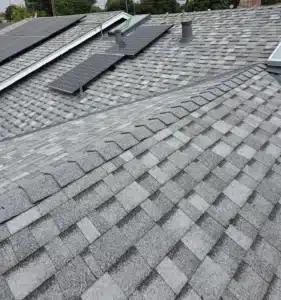
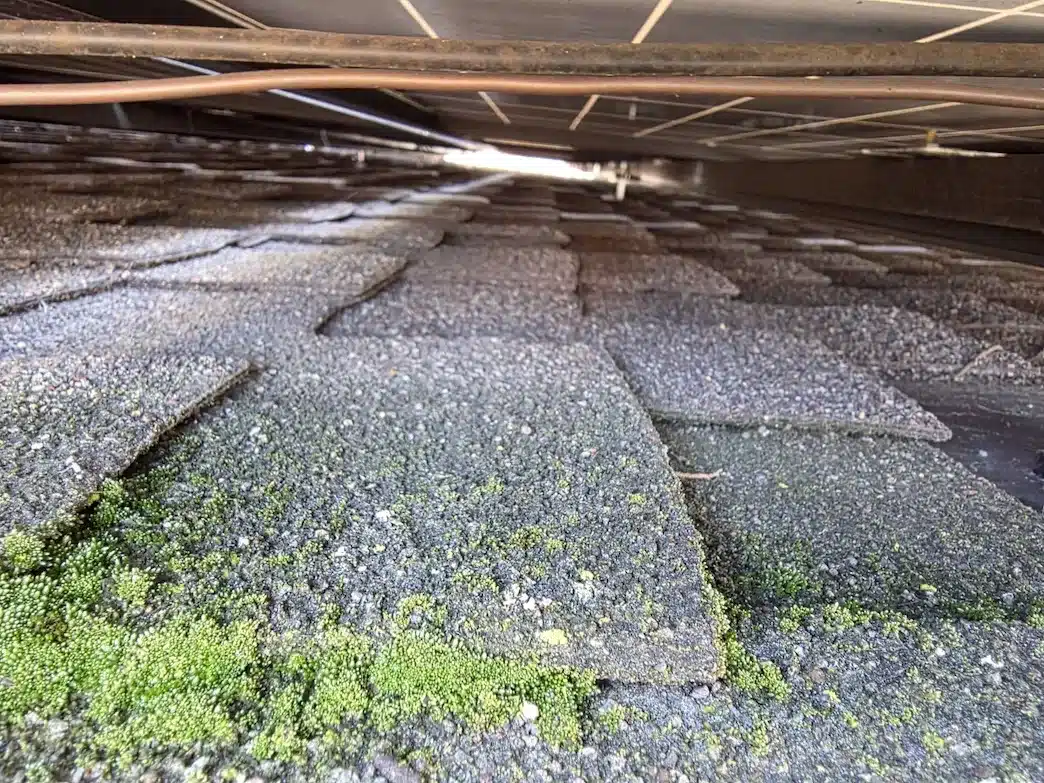
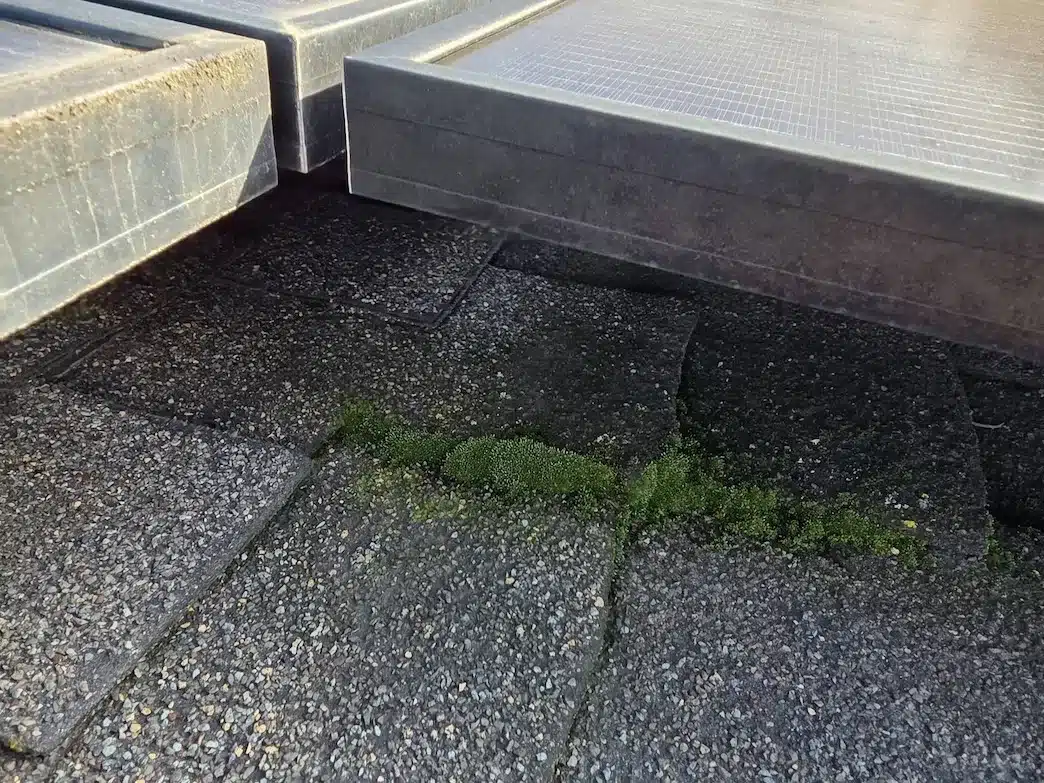
From the ridge, this roof looked tired but serviceable. The real story was underneath the solar panels: an array shades the shingles below it and holds moisture long after the rest of the roof has dried out, and our inspection found moss colonies and curled, lifting shingles concentrated in exactly the section the panels covered. That’s a common pattern on solar homes — the panels shield the shingles from UV but trap damp, and because nobody can see under the array, the deterioration goes unnoticed until it shows up as a leak. The homeowner caught it in time: the damage was still contained to one section, which kept this a targeted roof repair under solar panels instead of a full replacement.
A Targeted Section Repair — Not a Full Tear-Off
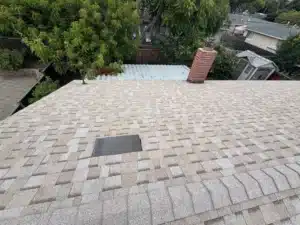
Because the deck was sound and the deterioration was contained, we scoped this as a focused section repair using premium Presidential-style designer shingles to match the home — with the solar detach-and-reset built into the same contract. That last part matters: some roofers won’t touch panels over warranty and electrical liability concerns, and homeowners end up bounced between a roofing crew and a solar company with two separate timelines. Here there was one scope, one crew responsible end to end, and no loose ends for the homeowner to manage. It’s the same philosophy behind our asphalt shingle roofing work across San Jose: fix what needs fixing, properly, and don’t sell a full roof replacement the roof doesn’t need.
Detach, Repair, Reset — How the Work Ran
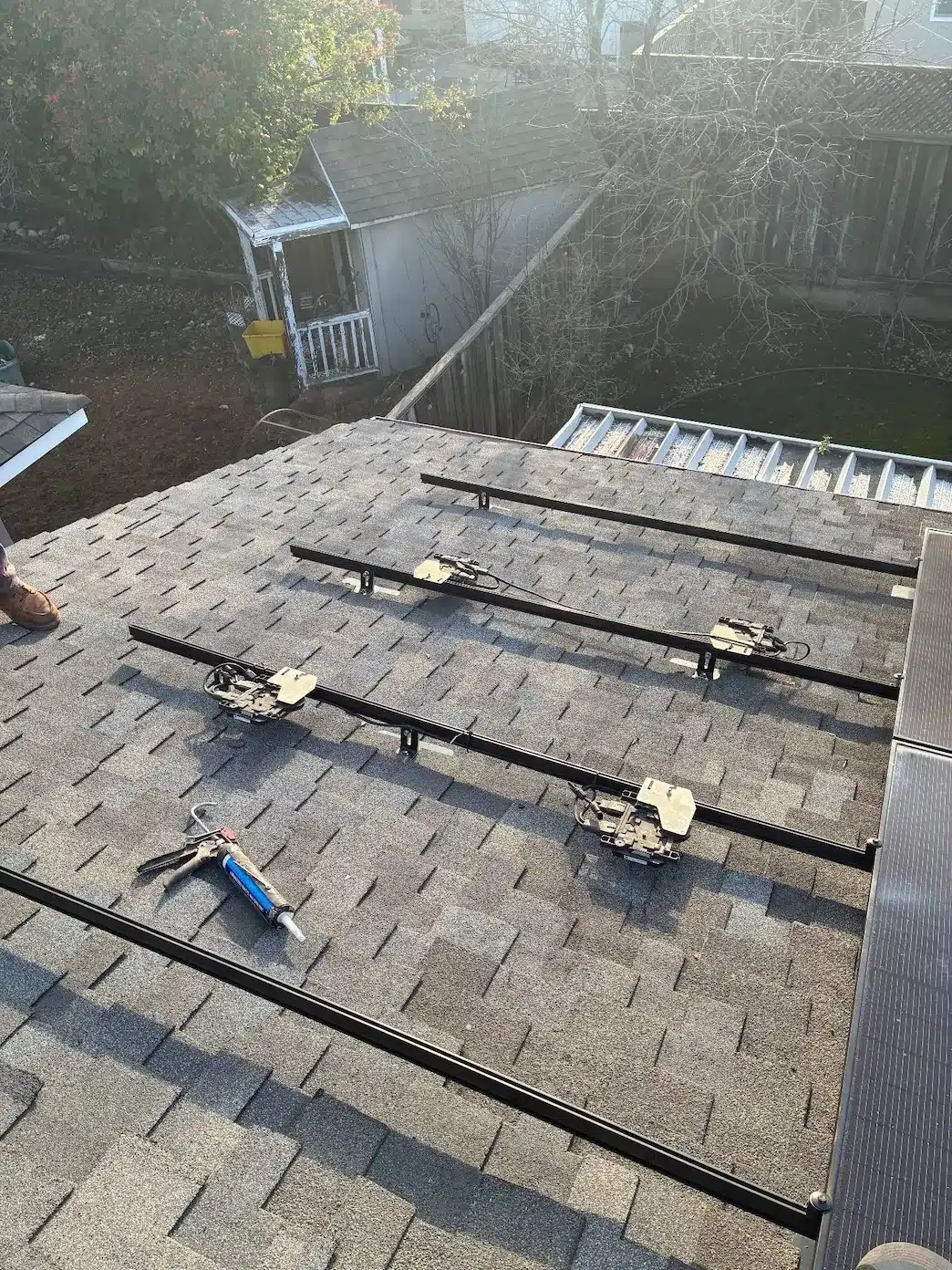
Phase one was the solar detach: the four panels over the repair zone were de-energized, unbolted, and set aside safely, leaving the racking exposed. With the section clear, the crew stripped the old shingles down to the plywood deck and confirmed the wood underneath was dry and structurally sound — the finding that kept this a repair rather than a rebuild.
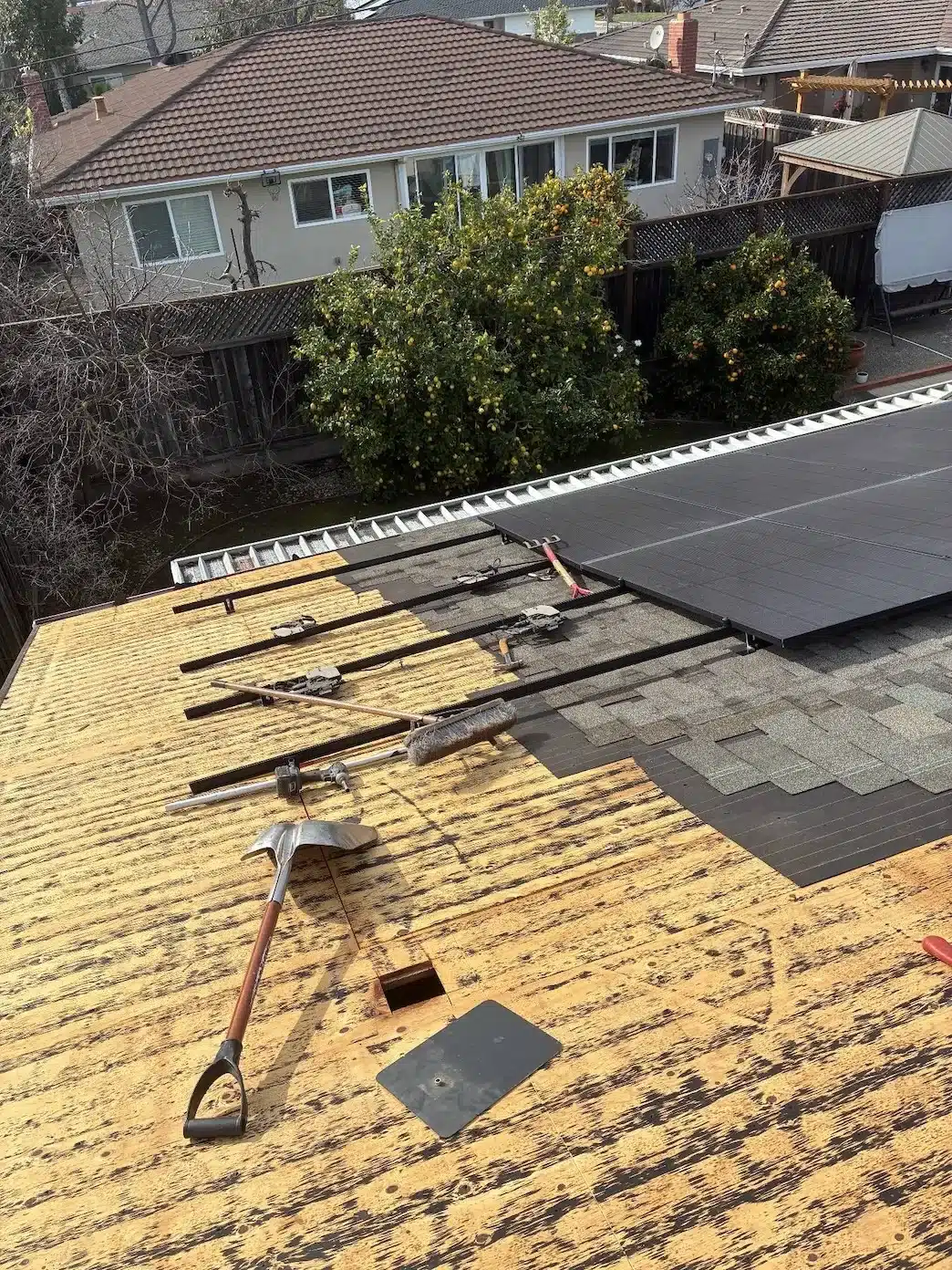
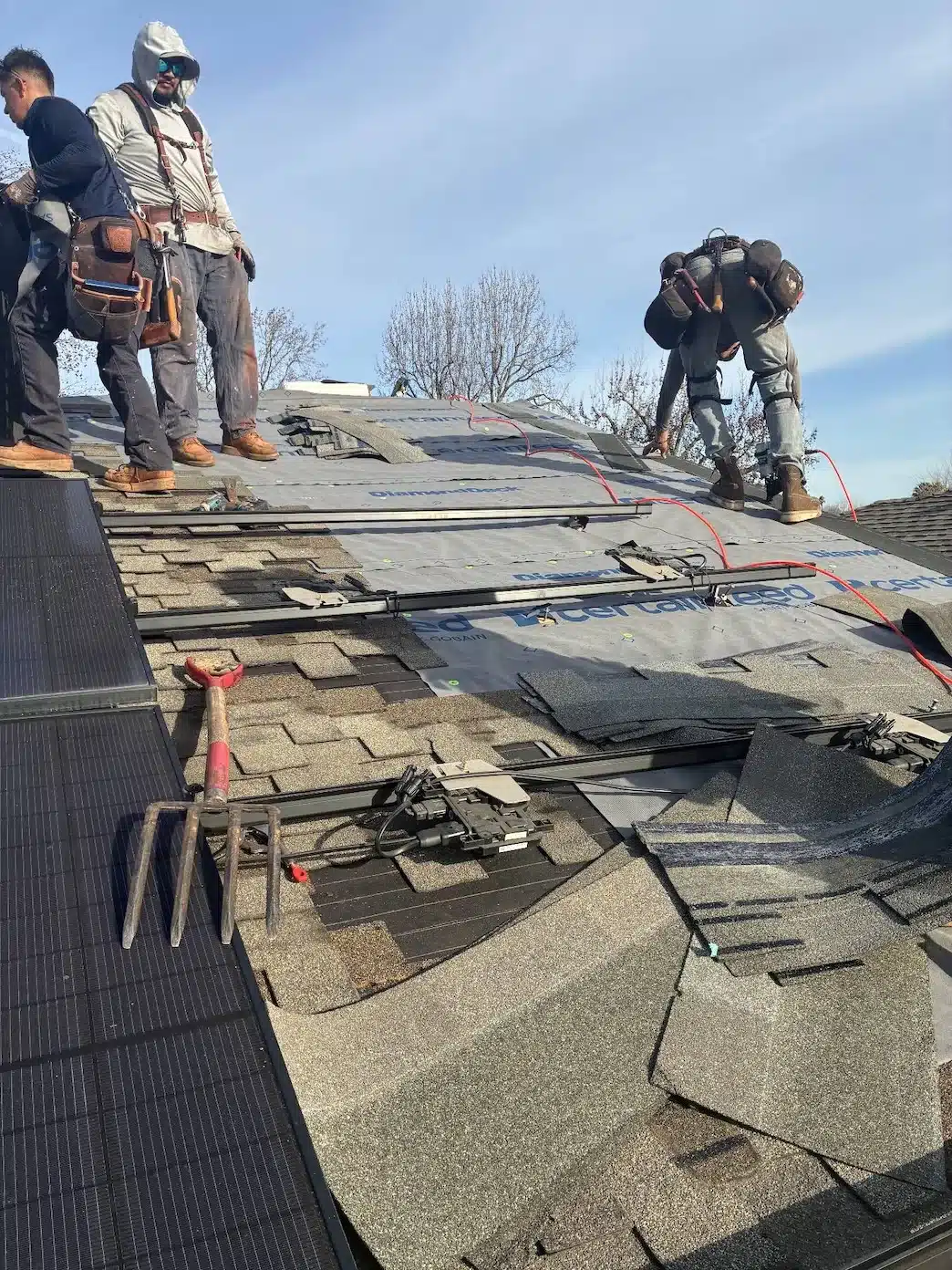
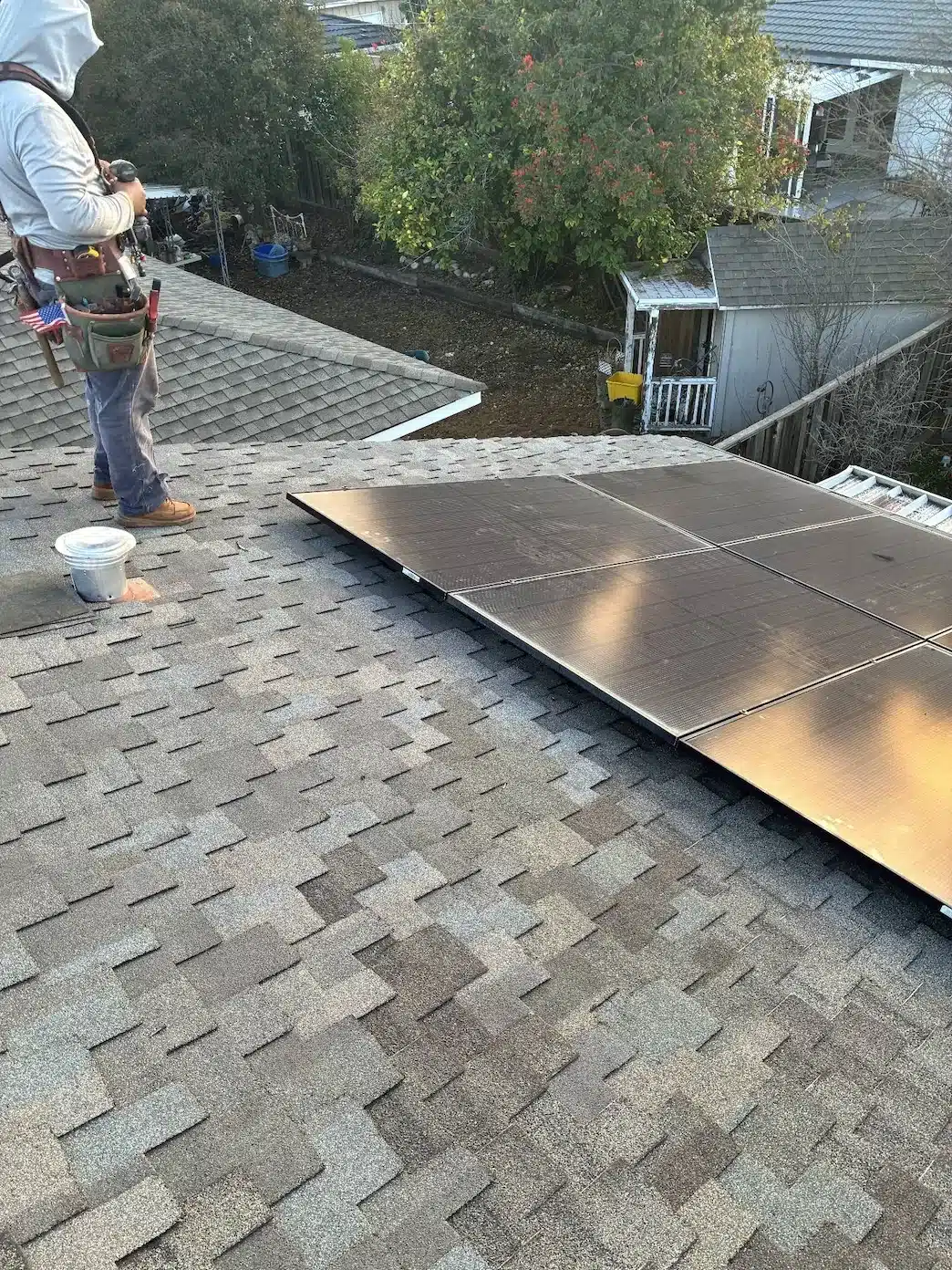
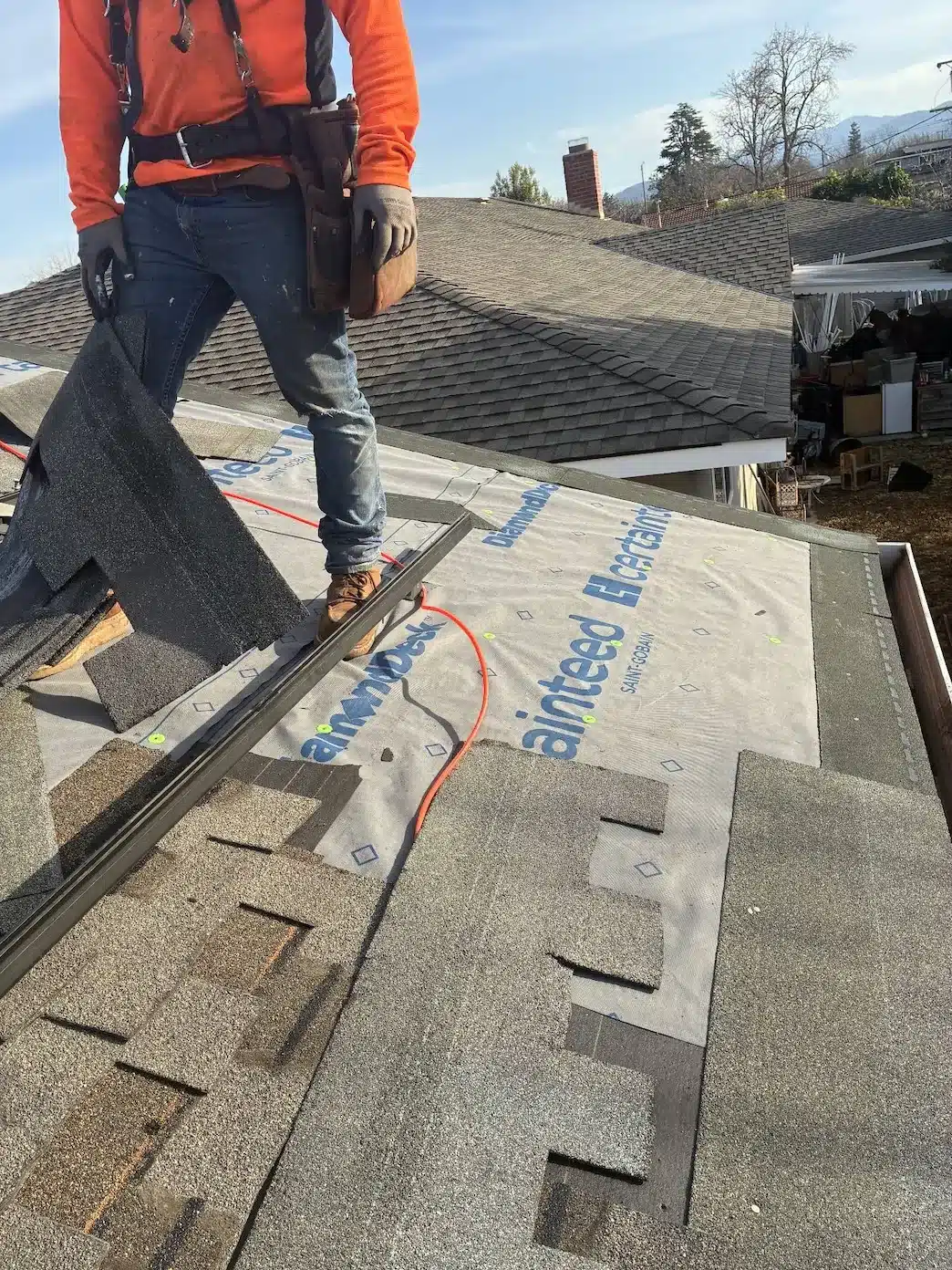
Phase two rebuilt the surface: CertainTeed DiamondDeck synthetic underlayment went down first, fitted cleanly around the mounting hardware, followed by the Presidential-style shingle courses. Phase three was the reset — every rail mount re-flashed and sealed on the new surface, the four panels re-secured, and the connections verified. The panels went back on only after the roofing beneath them was confirmed complete, so the finished array isn’t hiding any unfinished work.
Before vs. After
| Feature | Before | After |
|---|---|---|
| Section under the array | Moss, curled and lifting shingles | New Presidential-style shingle field |
| Underlayment | Aged felt at the end of its life | CertainTeed DiamondDeck synthetic |
| Roof deck | Condition unknown, hidden by panels | Opened, inspected, confirmed sound |
| Mount penetrations | Original seals, aging in place | Re-flashed and resealed on new shingles |
| Solar array | 4 panels over a failing section | Detached, reset and re-secured by one crew |
| Project status | Leak risk over living space | Closed out — homeowner paid in full |
Why Roof Repair Under Solar Panels Matters in San Jose
San Jose has one of the highest residential solar adoption rates in the country, and many of those arrays were installed on roofs that already had a decade or more of wear. That math is catching up: thousands of South Bay homes now have aging shingles hidden under panels nobody has looked beneath in years. The lesson from Como Lane is that roof repair under solar panels doesn’t automatically mean a full replacement or a two-contractor headache — caught early, it’s a contained repair with the detach-and-reset folded into one scope. If your array went up on an older roof, a free roof inspection that includes a look under the panel edges is cheap insurance.
Solar + Roof Repair Questions, Answered
Will a roofing company handle the solar panels, or do you need a separate solar installer?
Some roofers won’t touch panels because of warranty and electrical liability concerns, which leaves homeowners bounced between their roofer and their solar company. The cleaner path is a roofing contractor who either handles the detach-and-reset directly or coordinates it inside one project, so you’re not managing two crews and two timelines. On this job, the solar detach and reinstall were built into the scope rather than left as a loose end for the homeowner to solve.
How much does it cost to remove and reinstall solar panels for roof work?
Costs vary widely by array size, roof complexity, and region — homeowners online report quotes from a few thousand dollars up to $6,000 for the detach-and-reset on larger systems. The right way to think about it is per-panel and per-project rather than a flat rule of thumb: a four-panel detach tied to a targeted repair, like this one, is far more contained than a full-home array pulled for a complete tear-off. Ask for the solar handling as its own line item in your quote so you can see exactly what you’re paying for.
Should you reinstall the existing panels or replace them while the roof is open?
If the panels are relatively recent and performing well, reinstalling them is almost always the sensible move, and that’s what made sense here. The calculus only changes if the array is old, underperforming, or near the end of its service life — some homeowners use roof work as the natural moment to upgrade. For a functioning, reasonably modern array, paying to reset the same panels is money well spent compared to prematurely retiring hardware with years of production left.
Roof Trouble Under Your Solar Array?
We handle the panels and the roof as one project — inspection, detach, repair, and reset, with no second contractor to chase. See more completed work in our project gallery, or book a free inspection today.
What homeowners are asking on Reddit
These are real questions posted publicly on Reddit. We have linked each thread and answered it from our own job experience in the Bay Area.
Am I being ripped off to remove and reinstall panels during roof replacement?
Reddit question · asked on r/solar — view the thread
Our answer: Detach-and-reset is normally quoted per panel in California, and quotes vary widely. Get the panel count and the per-panel rate in writing, and confirm who re-inspects the array afterwards.
Need to replace roof but solar company wants to charge an exorbitant amount to temporarily remove panels
Reddit question · asked on r/solar — view the thread
Our answer: You are not obliged to use the original solar installer for the detach and reset. Do check your panel warranty terms first, then compare quotes.
Gina K. writes about Bay Area roofing for Lifetime Roofing & Renovation, drawing on the team's 16+ years of experience and 1,000+ completed roofs across Silicon Valley.