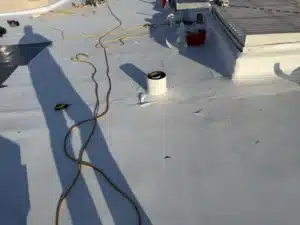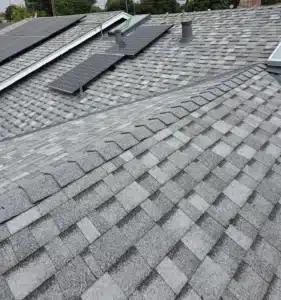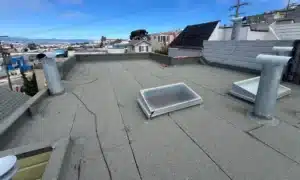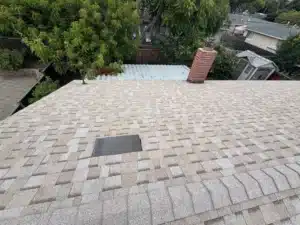
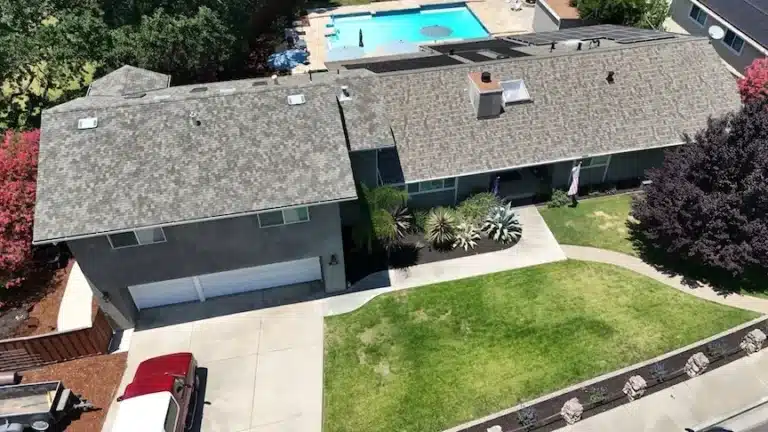
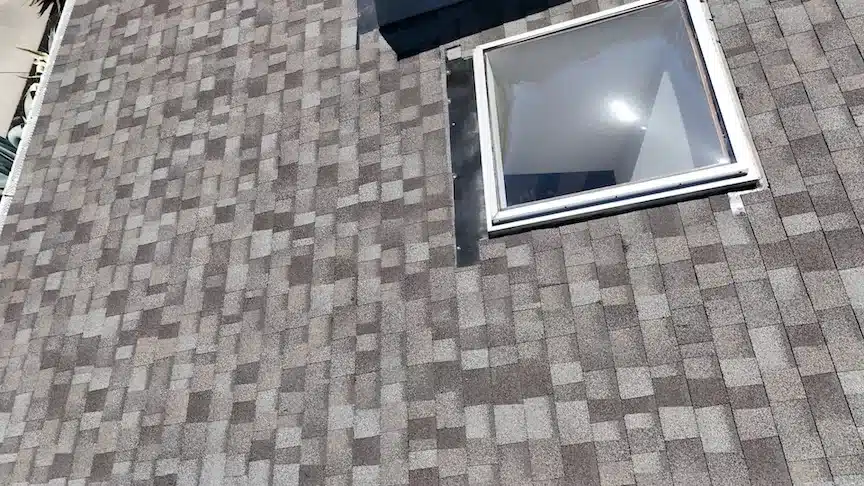
On a hillside ranch home in Pleasanton we tore the roof down to bare framing, installed an entirely new OSB deck, dried it in with Owens Corning ProArmor synthetic underlayment, and finished it in Owens Corning Duration COOL shingles — then re-flashed every skylight and reset both the solar PV array and the solar pool panels. The homeowner watched most of it happen, which is exactly what we tell people to do: the four things worth watching are the decking, the drip edge, the underlayment, and the flashing.
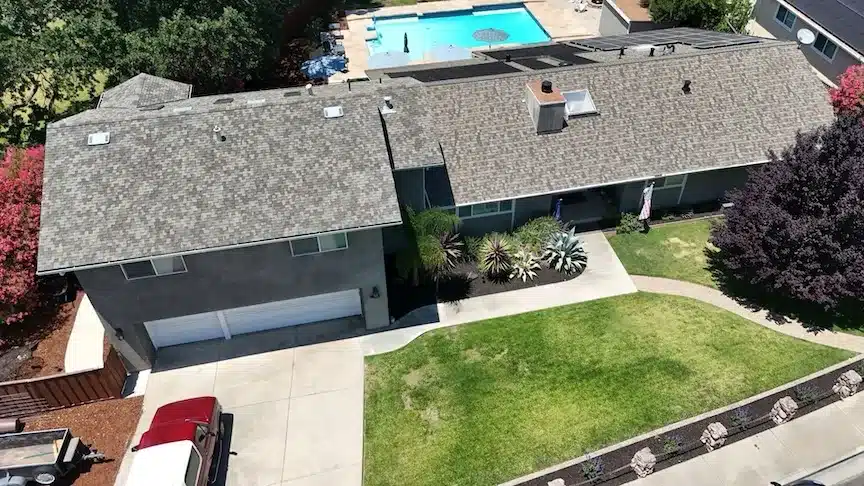
Watch four things: the condition of the roof decking once the old shingles come off, the drip edge at every eave and rake, the underlayment and valley protection going down before the shingles, and how the crew handles flashing at chimneys, skylights, and pipe boots. On this Pleasanton reroof, tear-off exposed a deck that needed full replacement, so new OSB went down before a single shingle was opened — and every skylight was pulled and re-flashed rather than sealed around. You can tell a careful crew from a sloppy one just by watching whether they slow down at those transitions or speed up.
A Hillside Pleasanton Ranch With a Tired Roof and Rot at the Eaves
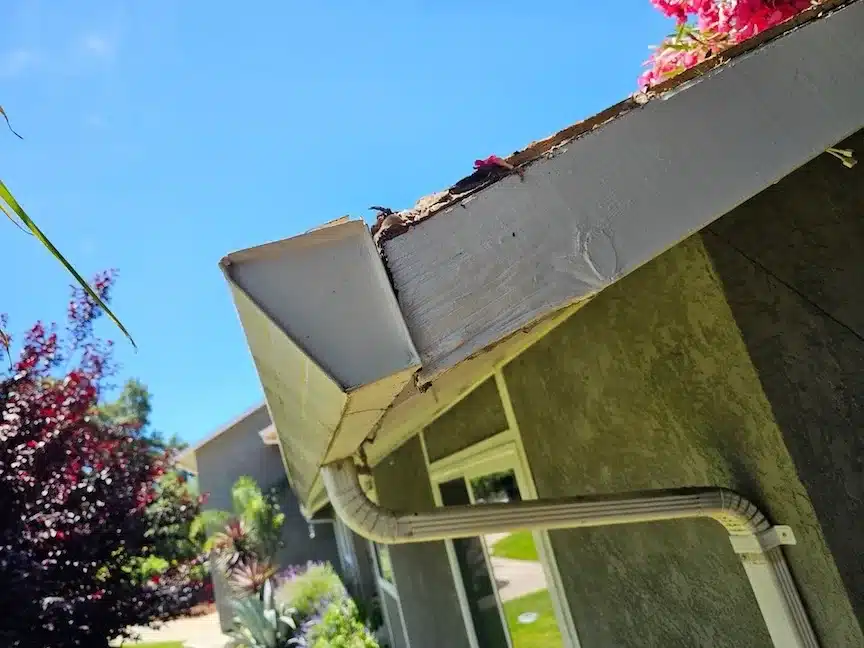
This is a single-story ranch on a Pleasanton hillside — long roof planes, wide overhangs, a stucco chimney, several skylights, a rooftop solar PV array, and a bank of solar pool panels. The shingle field had faded unevenly and lost granules across the sun-exposed slopes. Up close at the gutter line, the fascia and eave trim had gone soft: a rotted board with the paint separating away from it, right where water had been running behind the gutter instead of into it.
That combination is the reason a "roof-over" was never on the table here. You cannot nail a new roof to wood that is failing, and you cannot fix a fascia you have just buried under new shingles. Everything had to come off first so we could see what we were actually nailing into.
A Complete System: New Deck, ProArmor Underlayment, Duration COOL Shingles
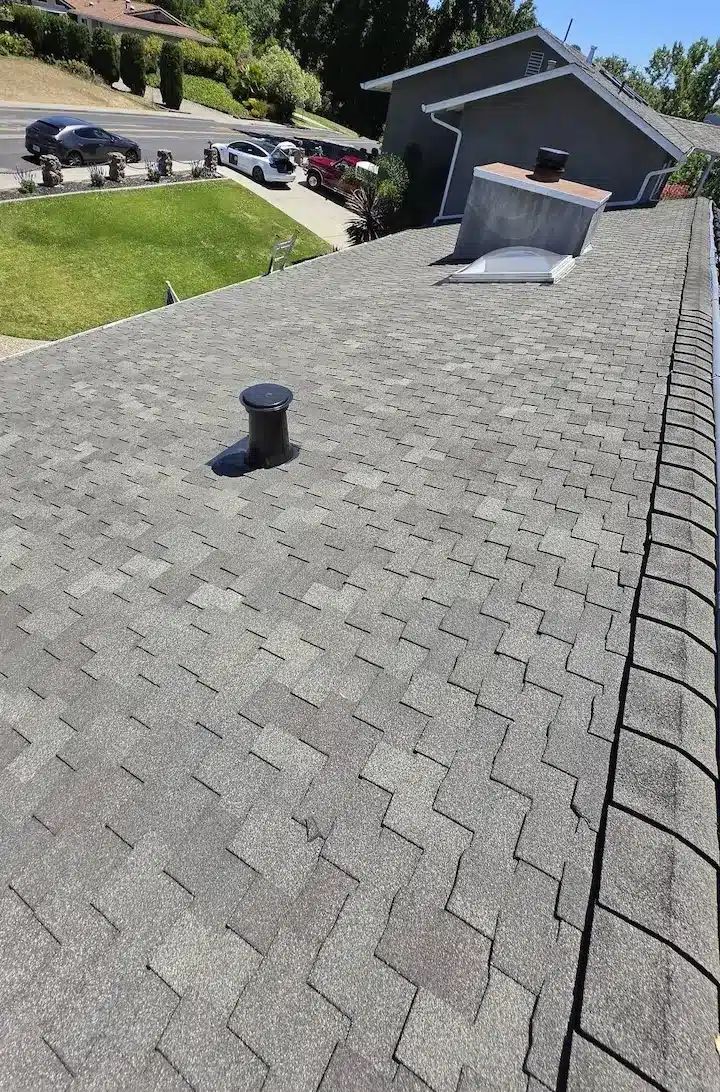
We specified a full roof replacement as a system rather than a shingle swap. The deck was replaced in its entirety with new OSB sheathing, code-nailed to the rafters, so the fasteners holding this roof down are biting into fresh wood. Over that went Owens Corning ProArmor synthetic underlayment — a tear-resistant, breathable dry-in layer that outperforms felt on long, hot, sun-baked planes like these.
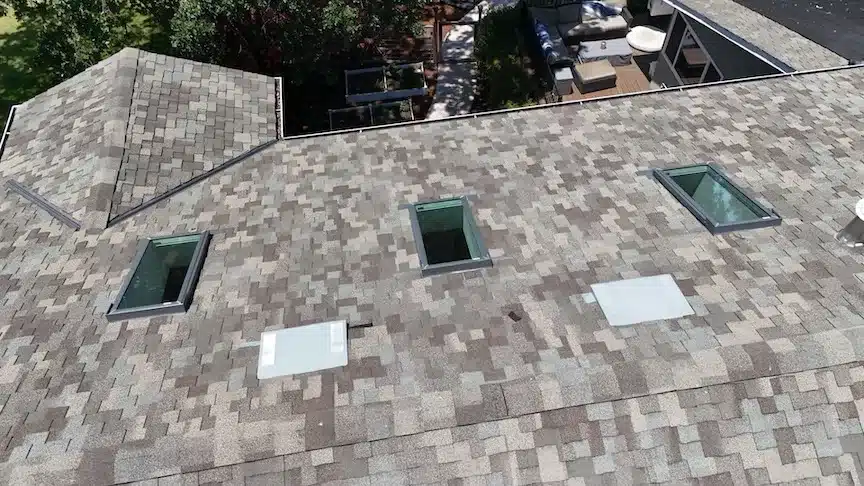
The finish shingle is Owens Corning Duration COOL, a solar-reflective architectural shingle that carries a cool-roof rating and meets California Title 24 reflectance requirements. On a Tri-Valley hillside that bakes all afternoon, that reflectivity is not a marketing line — it is less heat driven into the attic on 100-degree Pleasanton summer days. Duration COOL also uses Owens Corning’s SureNail reinforced nailing strip, which matters on exposed hillside slopes where wind gets under a roof edge.
Tear-Off, Re-Deck, Dry-In, Reset
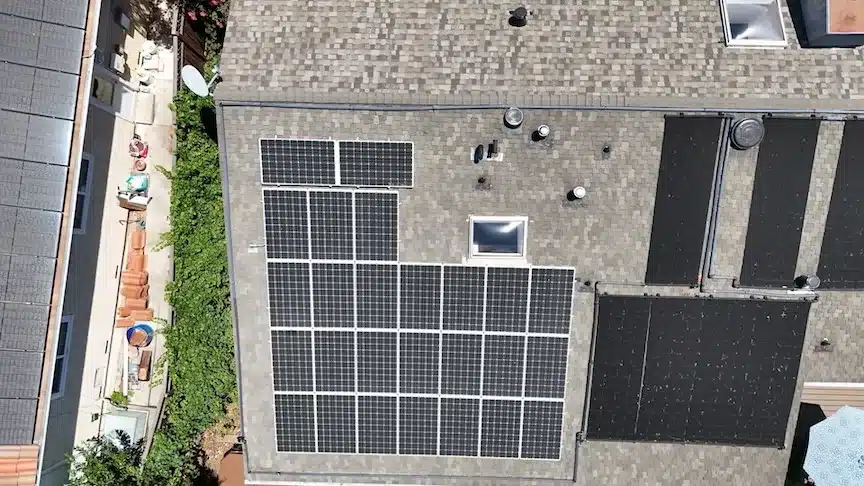
Day one started on the ground, not the roof: landscaping and the pool deck covered, vehicles moved clear of the drip line, and the solar PV array and solar pool panels carefully detached and staged so nothing was walked on. Then the full tear-off — old shingles, old underlayment, old flashing, all of it stripped to the framing. That is the moment a homeowner should be paying attention, because a bare deck is the only honest look you will ever get at your roof.
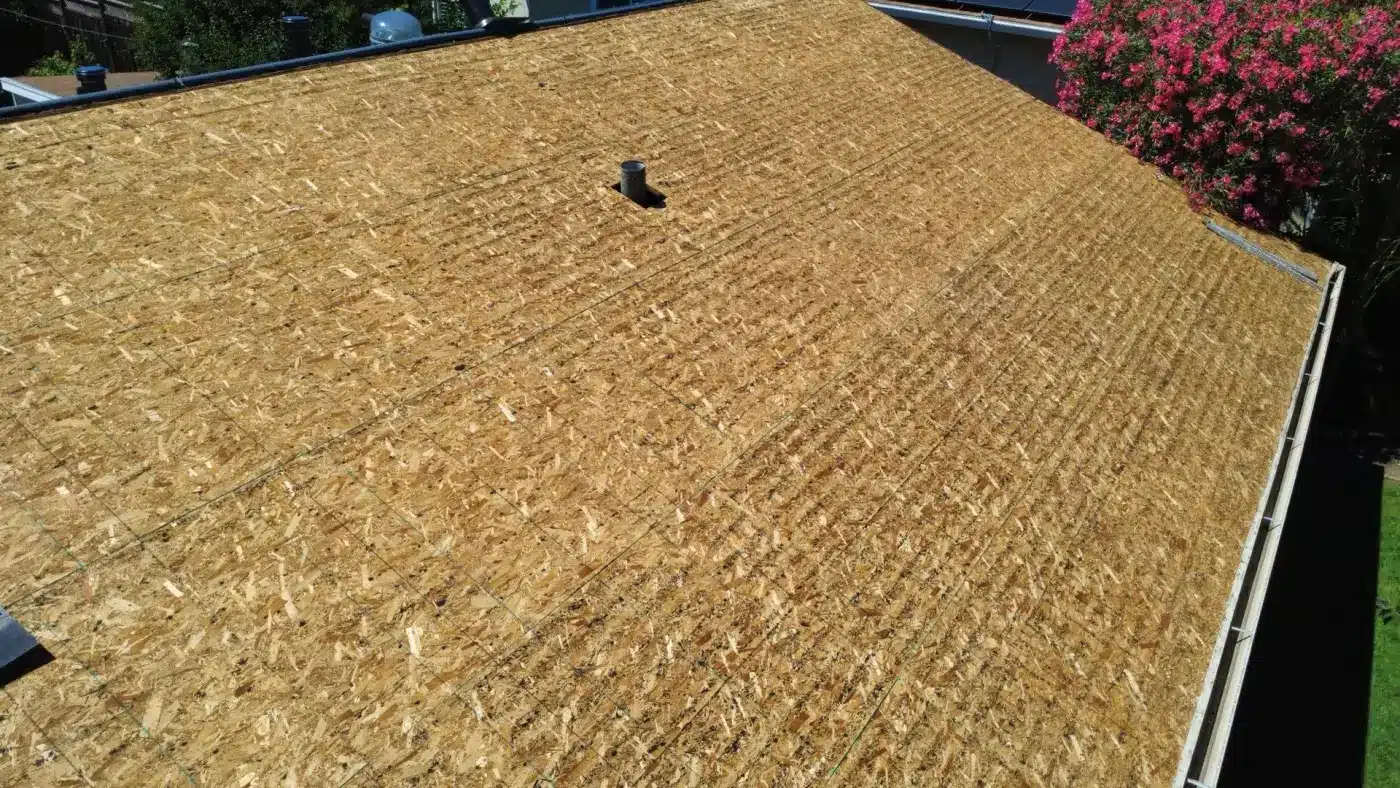
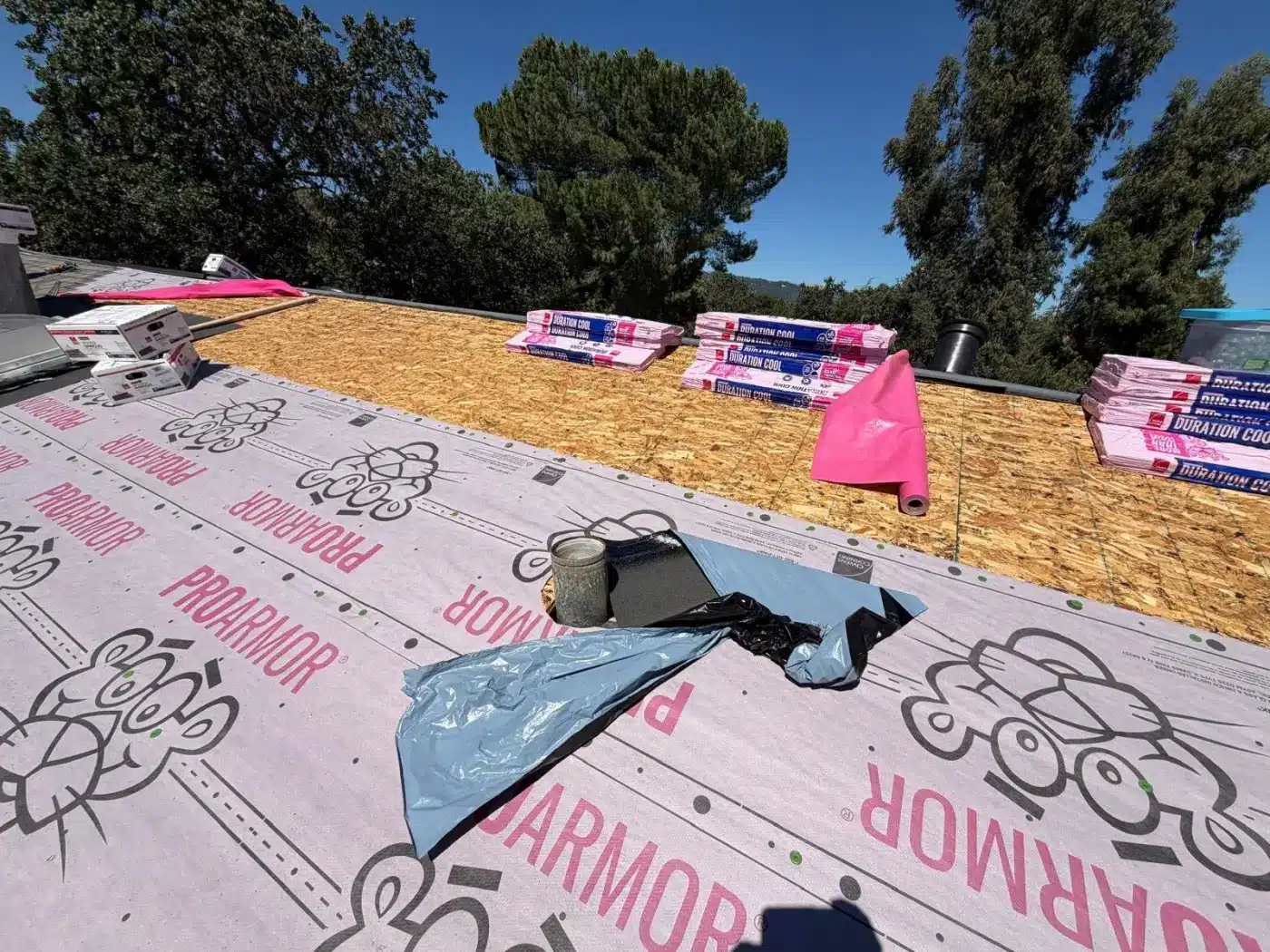
With the deck down and the rotted fascia replaced, we dried the roof in with ProArmor, set drip edge at every eave and rake, and rebuilt the flashing at each penetration. Every skylight was pulled and reset on a new flashing kit rather than sealed around, and the chimney got new counterflashing tucked in properly instead of a bead of mastic. Then the Duration COOL field went on, the vents and pipe boots were replaced, and the solar PV and pool panels were reset onto the finished roof. Last came the part homeowners notice most: a magnetic roller over the lawn, driveway, and planting beds, and a walk of the whole property before the crew left.
Before vs. After
| Feature | Before | After |
|---|---|---|
| Roof deck | Original sheathing, unknown condition under the shingles | Full new OSB deck, code-nailed to the rafters |
| Underlayment | Original layer, removed with the tear-off | Owens Corning ProArmor synthetic dry-in |
| Shingles | Faded field with granule loss on sun-exposed slopes | Duration COOL architectural, Title 24 cool-roof rated |
| Fascia & eave trim | Rotted board and separating trim at the gutter line | Damaged boards replaced before dry-in |
| Skylights & chimney | Original flashing, dependent on sealant | Every unit pulled, re-flashed, and reset |
| Solar PV & pool panels | Mounted on a roof at the end of its life | Detached, protected, and reset on the new roof |
Three Questions Homeowners Actually Asked — and How We’d Answer Them
At Lifetime Roofing and Renovation, we hear the same worries again and again — usually from first-time homeowners who have never lived through a roof replacement and are terrified of getting it wrong. To show how we approach those concerns, we pulled three genuine questions homeowners have posted publicly online and answered each one the way we would walk a customer through it in person, using the Pleasanton job above as the reference.
Case 1: “Having my roof replaced. What should I look for?”
“We are under contract for a new asphalt roof, new decking on part of the house, plus new gutters. I’ll be home for part of the day, so I can watch. I’ve never had a roof installed — I’m a first-time homeowner. What should I look for while they’re working?”
The situation: a nervous first-timer who wants to keep an eye on the crew but does not know what "good" looks like.
How we’d answer it: This is exactly the customer we love working with, because a homeowner who watches carefully keeps everyone honest. Before the crew starts, take photos of your yard, driveway, and landscaping so there is a record if anything gets bumped. Move vehicles away from the house, because tear-off means falling debris. As the work happens, the two details that matter most are the ice-and-water shield along the eaves and valleys — your first defense against leaks — and the drip edge, the metal flashing that steers water into the gutter instead of behind it. We install drip edge whether or not gutters are going up; anyone who tells you it is optional is cutting a corner. Watch the decking, too: when the old roof comes off, any soft or rotted wood should be replaced, not shingled over — on the Pleasanton roof above, that meant the entire deck. Finally, a good crew runs a magnetic roller over the yard at the end and hands you both a manufacturer warranty and a separate workmanship warranty.
The honest truth we share: you can tell a careful crew from a sloppy one just by watching whether they slow down at the flashing, vents, and pipe boots. We would rather you watch than wonder.
Case 2: “What should I ask and look for? I live where winters are frigid and windy.”
“I need a new roof on my house and garage. Besides making sure the company is licensed, bonded, and insured, I know absolutely nothing. What should I ask? What should I avoid? Gutters before or after? How far ahead should I get quotes? I don’t know what I don’t know, and I don’t want to be taken advantage of.”
The situation: a homeowner in a harsh climate making a big purchase with almost no reference points — and openly afraid of being upsold.
How we’d answer it: In a cold, windy climate you are not buying "good shingles," you are buying a complete roofing system. Ask about the shingle’s wind rating, ice-and-water protection at the eaves and valleys to guard against ice-dam leaks, a real ventilation plan with balanced intake and exhaust, and how flashing is handled around chimneys and walls. Get everything — materials, brands, warranties — in writing.
On your specific questions: gutters generally go on after the new roof, unless the existing ones are damaged or badly pitched. Start gathering two or three written quotes a couple of months ahead so you are not rushed. And here is the part we feel strongly about: be cautious with any company using high-pressure, "sign today for 50% off" tactics. Those offers are usually the most expensive quotes dressed up with urgency. A trustworthy contractor will walk you through their install process step by step, explain likely surprise costs like rotted decking before the job starts, and never make you feel pressured to sign on the spot. You said you do not know what you do not know — that is normal, and it is our job to close that gap, not exploit it.
Case 3: “What questions should I ask to make sure this company is a good installer?”
“Getting a new roof soon and collecting estimates. Single-family home, first time replacing a roof. Google reviews can only tell you so much. What are good questions to ask?”
The situation: a careful shopper who knows reviews are not the whole picture and wants to vet the actual installer.
How we’d answer it: Reviews are a starting point, not a decision. The most revealing questions are the ones about how the work actually gets done. Ask who performs the labor — some companies subcontract everything, so you never see the same crew twice. Ask what happens if they find bad decking after tear-off, since that is where costs can jump, and confirm there is a full tear-off rather than a roof-over on top of the old shingles. Ask to see photos of recent jobs, and ask whether they will document your project with photos throughout — every image on this page came from one real Pleasanton reroof. Confirm license, general liability, and workers’ comp insurance, and ask who pulls the permit; a legitimate contractor pulls it themselves and never asks you to.
The best advice we can give echoes what one homeowner heard and repeated: do not pay until you are satisfied, raise every concern early and loudly, and get any sore spots ironed out within a day or two of completion. A good job is one you can see is done right. You can browse more of ours on our roofing projects page.
The Common Thread — and Why It Matters in the Tri-Valley
Across every one of these real questions, the same anxieties show up: Am I being taken advantage of? What am I supposed to be watching for? Who actually stands behind the work? Our answer is transparency — written scopes, honest talk about surprise costs, documented work, real warranties, and no pressure to sign. If you have a question like the ones above, ask us. We would rather answer it before the job than after. For a worked example one town over, see our Livermore shingle roof replacement.
Pleasanton adds its own wrinkles. Tri-Valley summers run hotter than the rest of the Bay Area, which is why a Title 24 cool-roof shingle is worth specifying rather than defaulting past. Hillside lots catch wind at the eaves and rakes, so drip edge and a properly nailed deck are structural, not cosmetic. And rooftop solar is everywhere here — if your roof replacement involves panels, the detach-and-reset has to be planned into the schedule from day one, not improvised on tear-off morning.
Roof Replacement FAQs
Can new shingles go over the old roof, or does the decking have to be replaced?
A full tear-off is the only way to know what condition your decking is in, and any soft or rotted sheathing has to be replaced rather than covered. A roof-over hides problems and adds weight without fixing anything. On the Pleasanton project above, tear-off led to a complete new OSB deck, plus replacement of the rotted fascia at the eave line that no roof-over would ever have caught.
Who removes and resets solar panels during a roof replacement?
Your roofing contractor should coordinate the detach-and-reset and build it into the written scope before work starts. On this Pleasanton home both the solar PV array and the solar pool panels were detached and staged before tear-off, then reset onto the finished shingle field. Ask how it will be handled, who is responsible if a panel or conduit is damaged, and whether the reset is included in the quoted price.
Who pulls the permit for a roof replacement, and what happens if they find rotted wood?
A licensed contractor pulls the permit themselves and should never ask you to pull it in your own name. As for rotted wood, ask before you sign how it is priced, because that is where costs most often jump after tear-off. A good contractor tells you the per-sheet or per-board rate up front, shows you the damage on the roof or in a photo, and gets your approval before replacing it.
Planning a Roof Replacement in Pleasanton?
We will walk your roof, show you what we find, and put the whole scope in writing before anyone climbs a ladder. See more documented jobs on our roofing projects page.
Watch this project
A full shingle reroof taken down to bare deck in Pleasanton: new OSB decking, ProArmor underlayment, Owens Corning Duration COOL shingles and a solar detach and reset.
Gina K. writes about Bay Area roofing for Lifetime Roofing & Renovation, drawing on the team's 16+ years of experience and 1,000+ completed roofs across Silicon Valley.