Roof Inspection · Bay Area
A leak that shows up once a year is not a small leak that behaves itself. It is a leak with conditions — a specific wind direction, a certain rainfall angle — and the water is getting in every time those conditions are met, whether or not it reaches your ceiling.
Should I Worry About a Small Roof Leak That Only Happens Once a Year?
Yes — an intermittent leak is a real leak with a narrow trigger, not a minor one. The water is entering whenever the conditions line up, and between appearances it soaks framing, insulation and decking where nobody can see it. The cost of finding it now is an inspection; the cost of finding it in three years is usually the decking as well.
A homeowner asked this on r/HomeImprovement after a stain appeared twice in three years, always after rain from one particular direction, with a dry attic in between. Two roofers had already declined the job.
Why an occasional leak is harder to find than a constant one
A roof that leaks every time it rains is straightforward: the failure is open, water finds it immediately, and a competent roofer can usually trace it in one visit. A roof that leaks twice in three years is a different problem, because the failure only opens under specific conditions — wind driving rain sideways under a course of shingles, water backing up at a blocked valley during heavy rainfall, a chimney flashing that only fails when the rain comes from the west.
That is why some roofers decline the work. They cannot guarantee a fix they cannot reproduce, and a hose test on a still afternoon will not recreate a forty-mile-an-hour crosswind. It is honest of them to say so. It does not mean the leak is harmless.
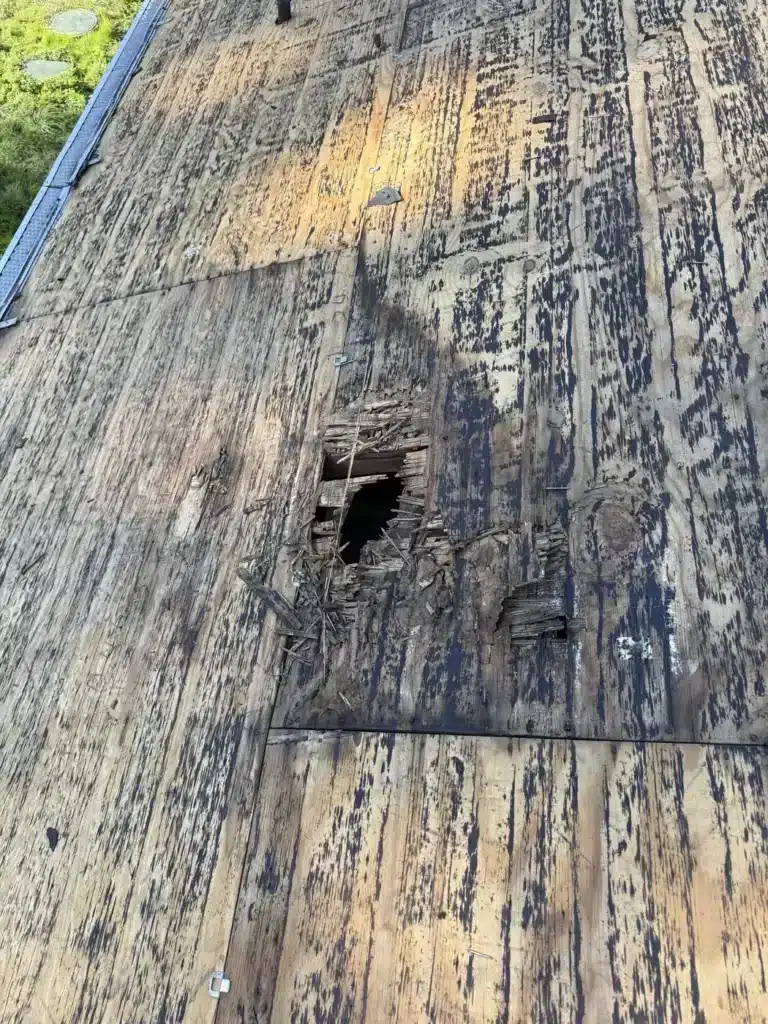
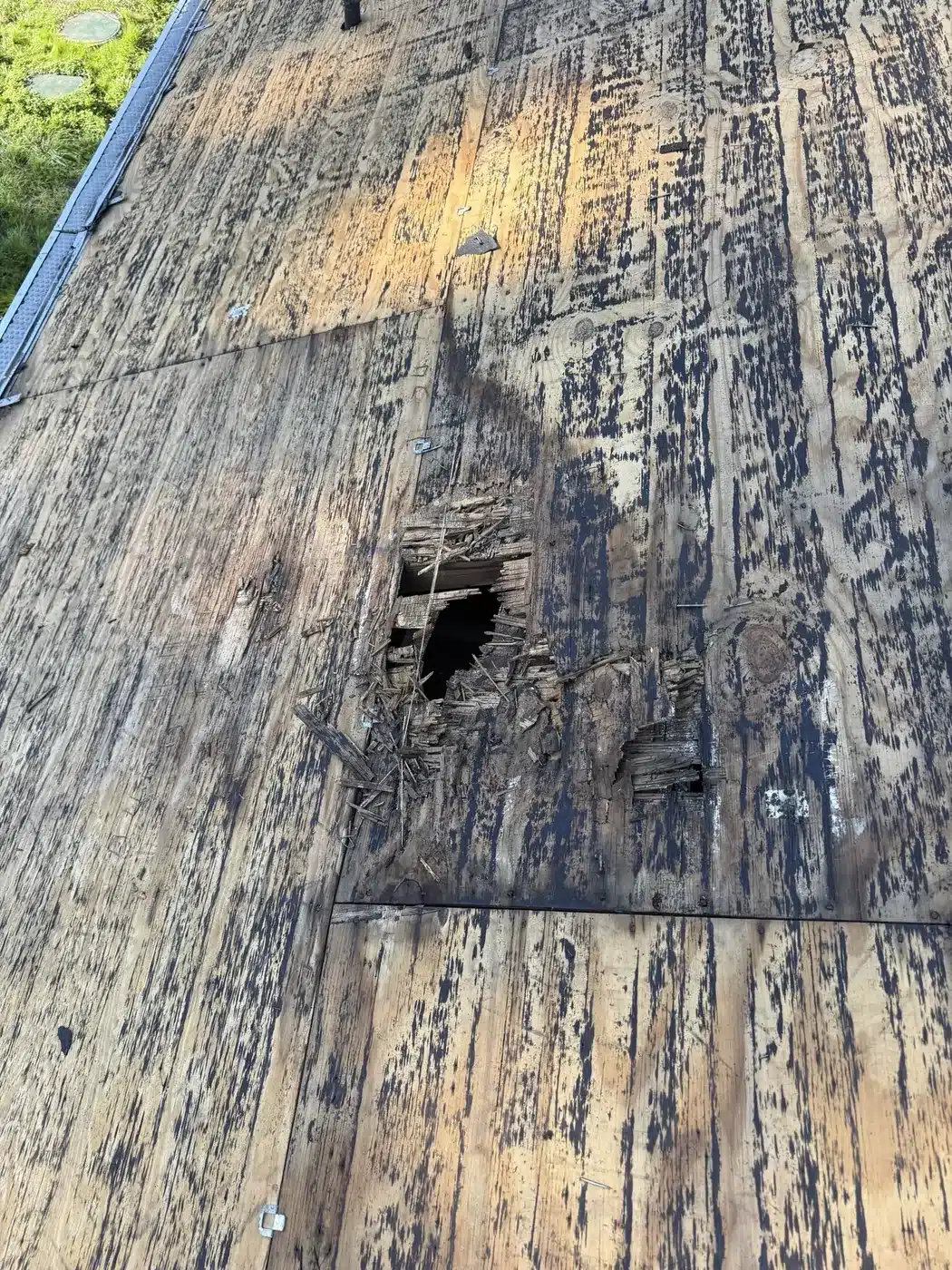
The thing to understand is what happens in between. Water that enters at the flashing and runs down a rafter does not evaporate politely. It wets framing, it compresses and ruins insulation where it lands, and it feeds the slow rot that turns a repair into a decking replacement. By the time a stain reappears on the ceiling, the water has usually been travelling for a while.
What an inspection actually looks for
Finding an intermittent leak is detective work, and it starts inside rather than on the roof. The attic tells the truth: staining on the underside of the decking, rust tracks on nail shanks, dark lines down rafters, insulation that is flattened or discoloured in one spot. Those marks persist long after the wood dries, which is exactly why they are useful — they record every episode, not just the last one.
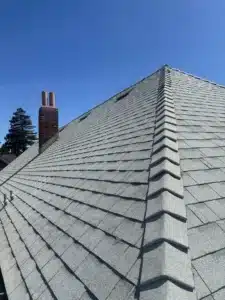
From there the search moves uphill. Water almost never enters directly above where it appears; it lands, runs along a rafter or the underside of the sheathing, and drips at the first obstruction. The entry point is usually several feet up-slope, and typically at a transition: a chimney, a skylight, a vent penetration, a valley, a wall junction, or the point where an addition meets the original roof.

What you should get back is a written report with photographs of what was found and where, an explanation of the likely mechanism, and a clear answer on whether this is a repair or the first sign that the roof is finished. Our roof inspection is free and includes all of that.
When once a year becomes every week
Intermittent leaks rarely stay intermittent. The mechanism that lets water in under one specific condition tends to widen: a lifted shingle course loosens further each storm, sealant at a flashing continues to shrink, a nail that has backed out keeps backing out. The trigger conditions get easier to meet, and the leak that appeared once a year starts appearing after ordinary rain.
There is also the question of what the roof is telling you about its age. If the shingles are curling, the granules are collecting in the gutters and the leak is at a detail rather than a puncture, you may be looking at the end of the roof’s service life rather than a discrete fault — which is a different conversation about money, and worth having before the winter rather than during it. Our guide on roof repair versus replacement covers where that line usually falls, and if the leak turns out to be active and urgent, roof repair in San Jose explains what a same-week fix involves.
The practical test. If your leak has appeared more than once, has appeared sooner than last time, or has spread further across the ceiling, stop waiting for the pattern to reveal itself. Those three signs mean the mechanism is opening up, and each rain from here adds to what has to be repaired.
Intermittent roof leak questions
How do roofers find a leak that is not leaking today?+
Can a roof leak cause mould even if the ceiling looks dry?+
Is a roof inspection worth it if the leak only happens once a year?+
Get the leak found before the rain starts
Bay Area storm season begins in late October. An inspection now means either a small repair on a dry day, or a plan made calmly rather than during the first big storm.
Book a Free Inspection Call (408) 685-2177See recent projects · Lifetime Roofing & Renovation, Inc. · Sunnyvale, CA · CSLB #1090028 · 4.8★ on Google
Gina K. writes about Bay Area roofing for Lifetime Roofing & Renovation, drawing on the team's 16+ years of experience and 1,000+ completed roofs across Silicon Valley.