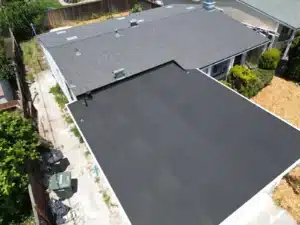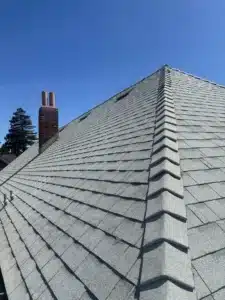
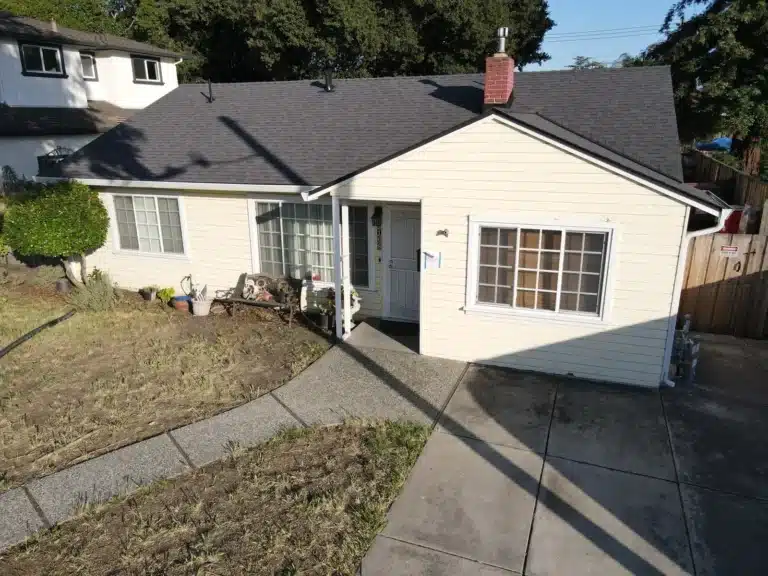
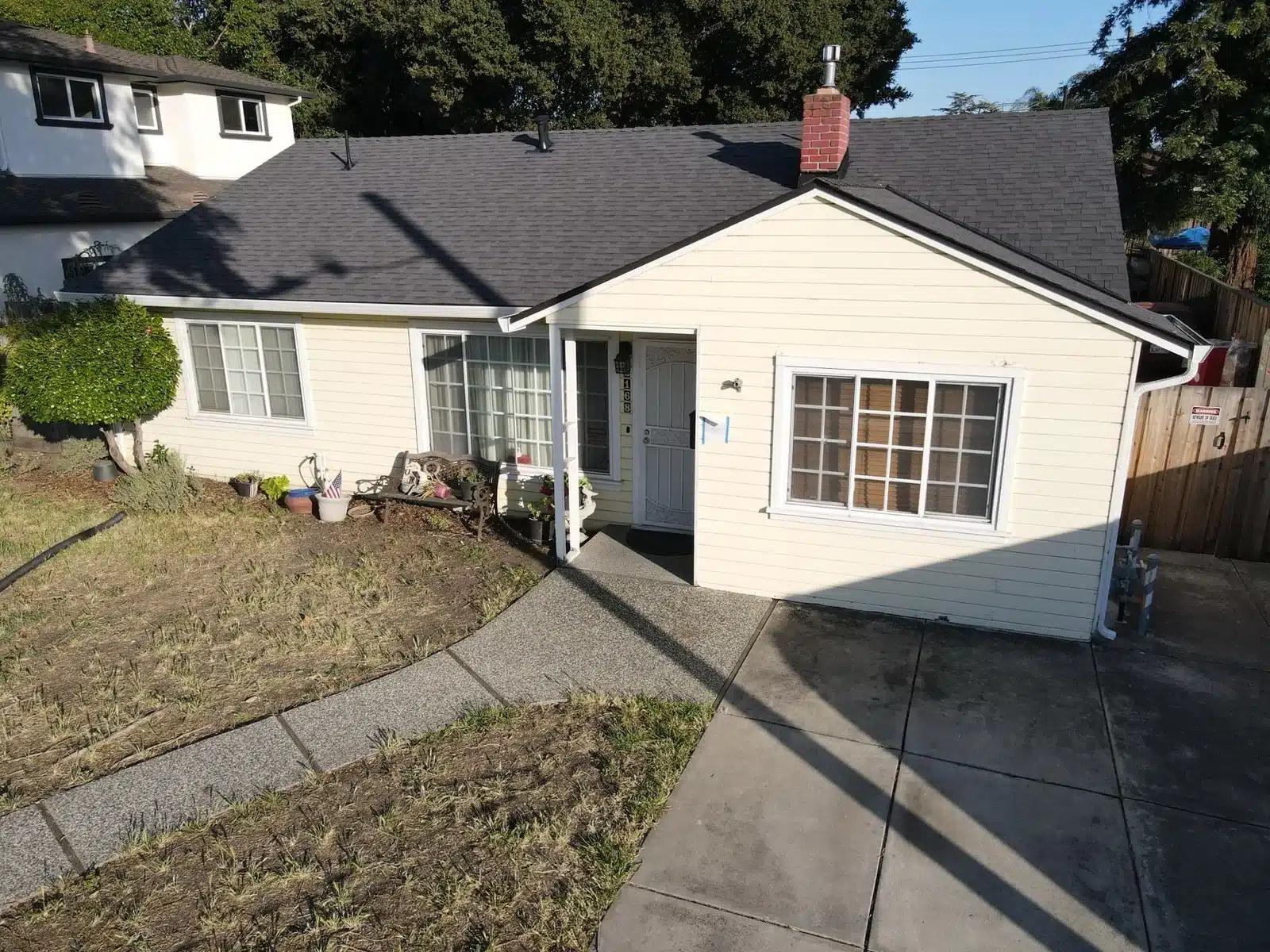
A full tear-off, complete re-deck and re-roof of a single-storey ranch house in Santa Clara: 23 squares stripped to the framing, the entire roof re-sheeted in new OSB, synthetic underlayment, and finished in Night Sky architectural shingles. Permitted through the City of Santa Clara. Work ran through May 2026.
Can I Just Replace the Rotted Deck Board, or Does the Whole Section Have to Come Up?
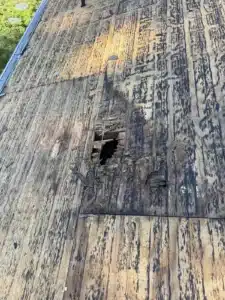
It depends on what the rot is telling you. One soft board with dry, solid decking all around it is a patch. Rot that repeats across a roof — or a deck that was never continuous to begin with — is a re-deck, and patching it just moves the problem. On this 2168 Forbes Avenue ranch house in Santa Clara the tear-off answered the question in about ten minutes: the boards were split and holed in more than one place, and the original deck was spaced planking with gaps you could see daylight through. So the whole roof was re-sheeted in new OSB before any underlayment went down. The honest rule is that nobody can tell you which one you have until the old roofing is off — so the quote should price both.
A homeowner asked this on r/Roofing — one rotted deck board, or the whole section? The replies split, because everyone was picturing a different deck underneath. This is what one of those decks actually looked like once the shingles were off.
What was actually under the shingles
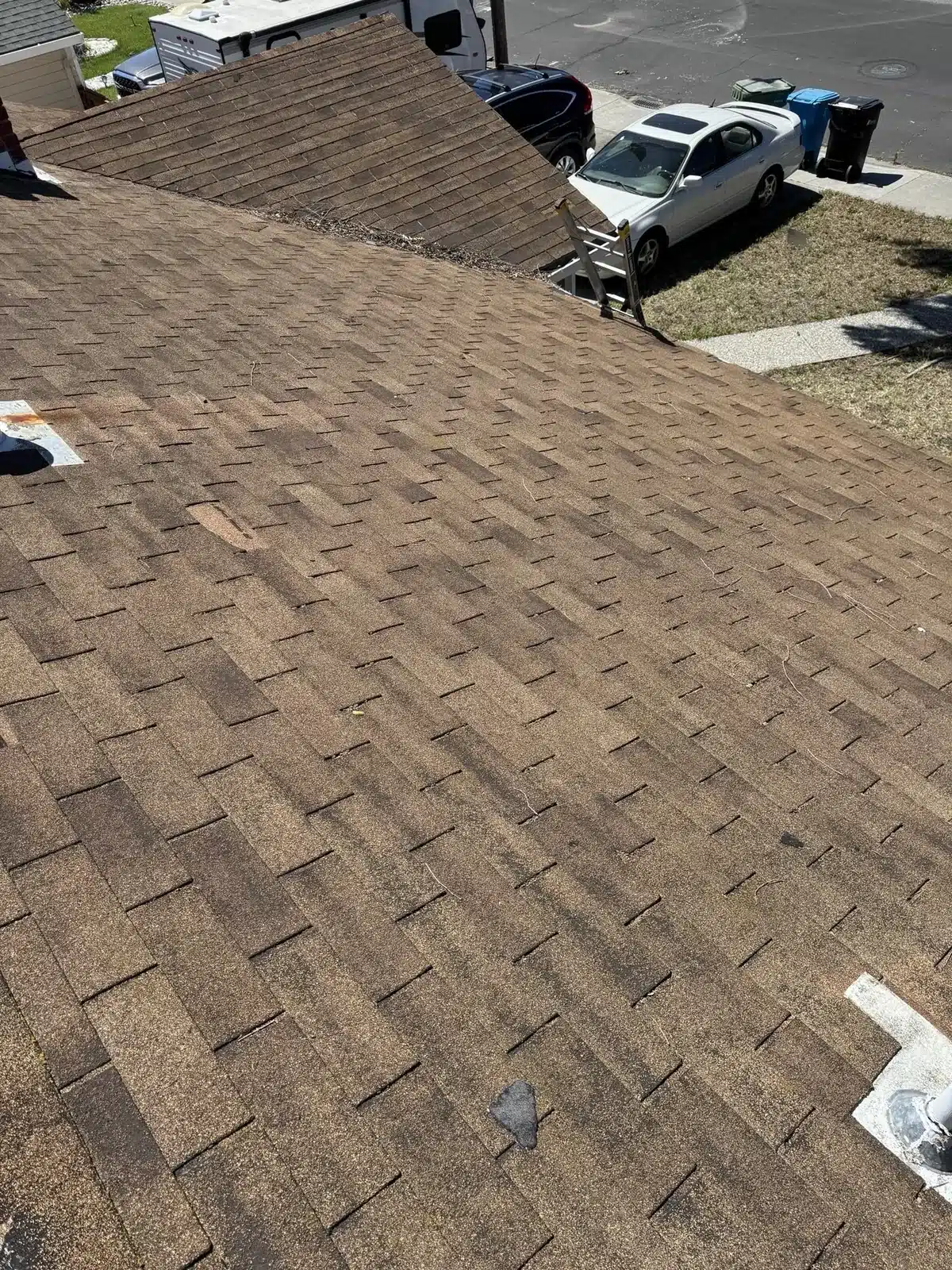
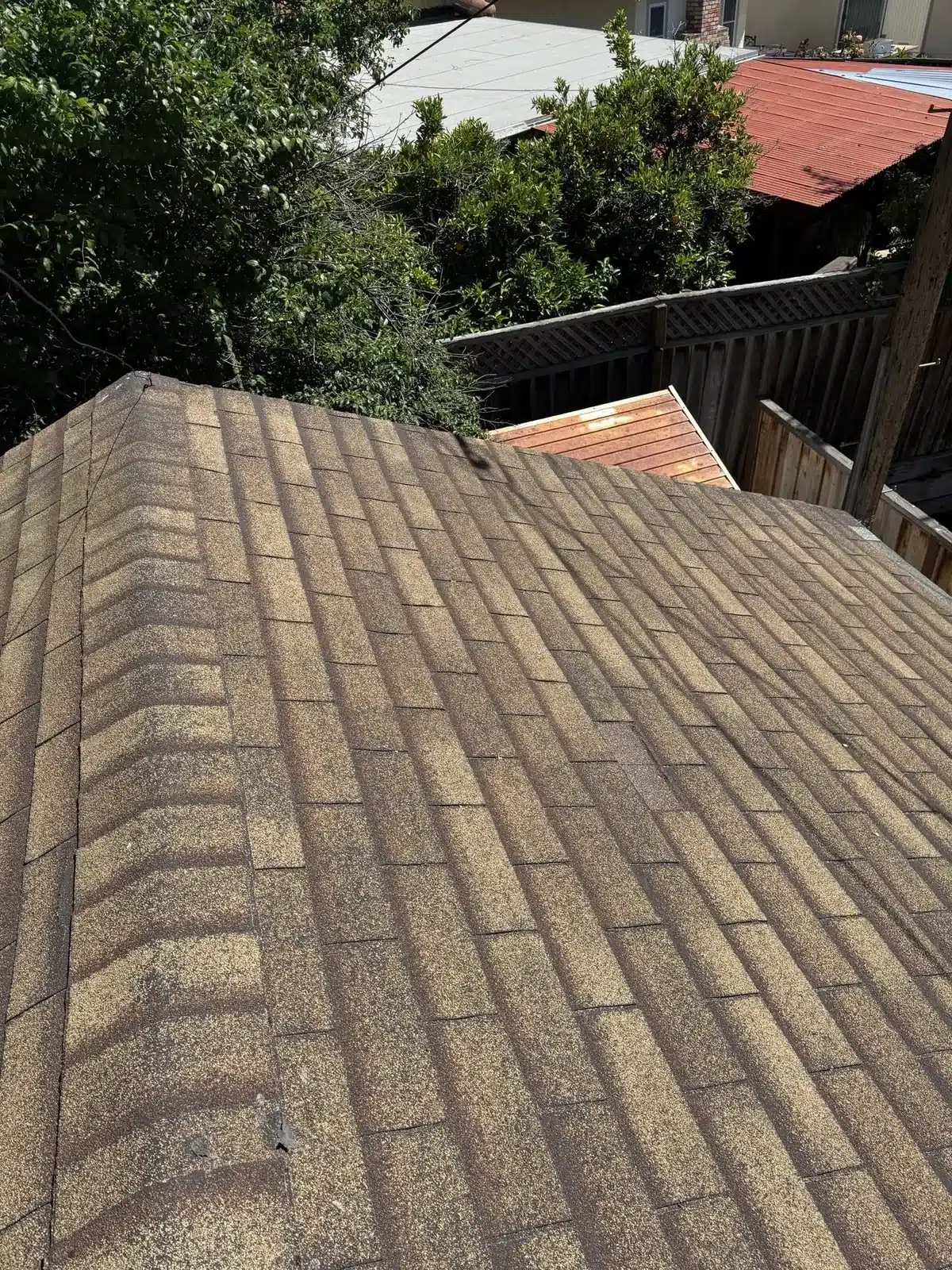
From the street this was an ordinary Santa Clara ranch with an ordinary tired roof: brown three-tab shingles, granules worn down to the mat in the sun-facing runs, tabs curling at the edges. The kind of roof where a homeowner reasonably asks whether a couple of bad spots can just be dealt with.
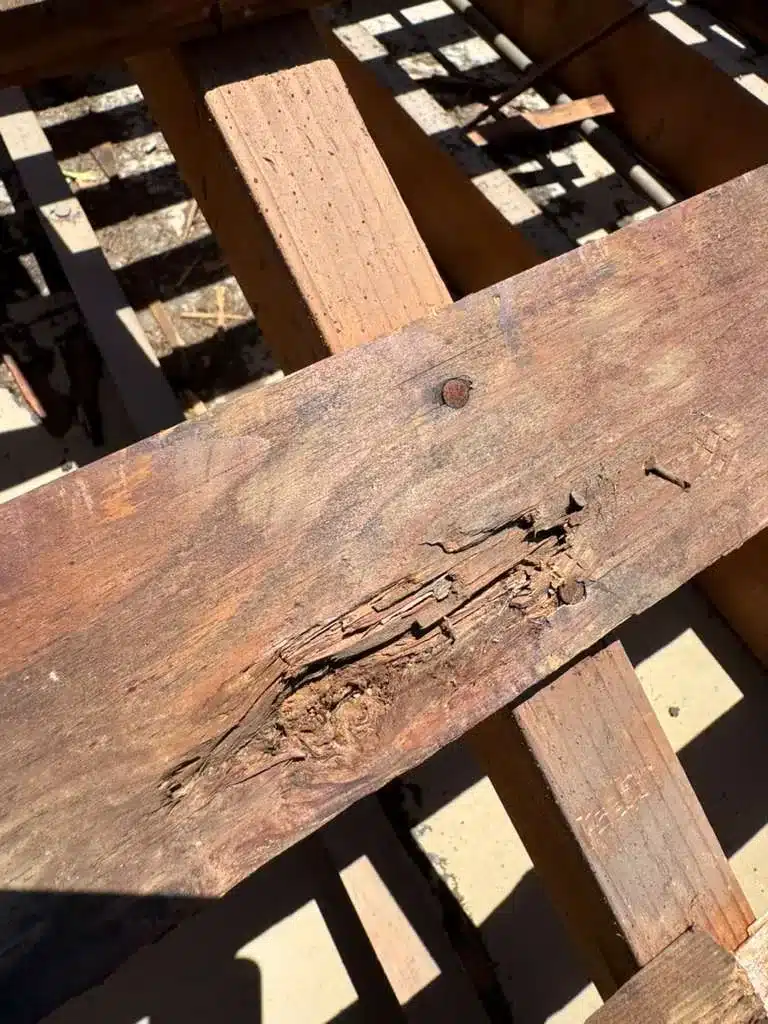
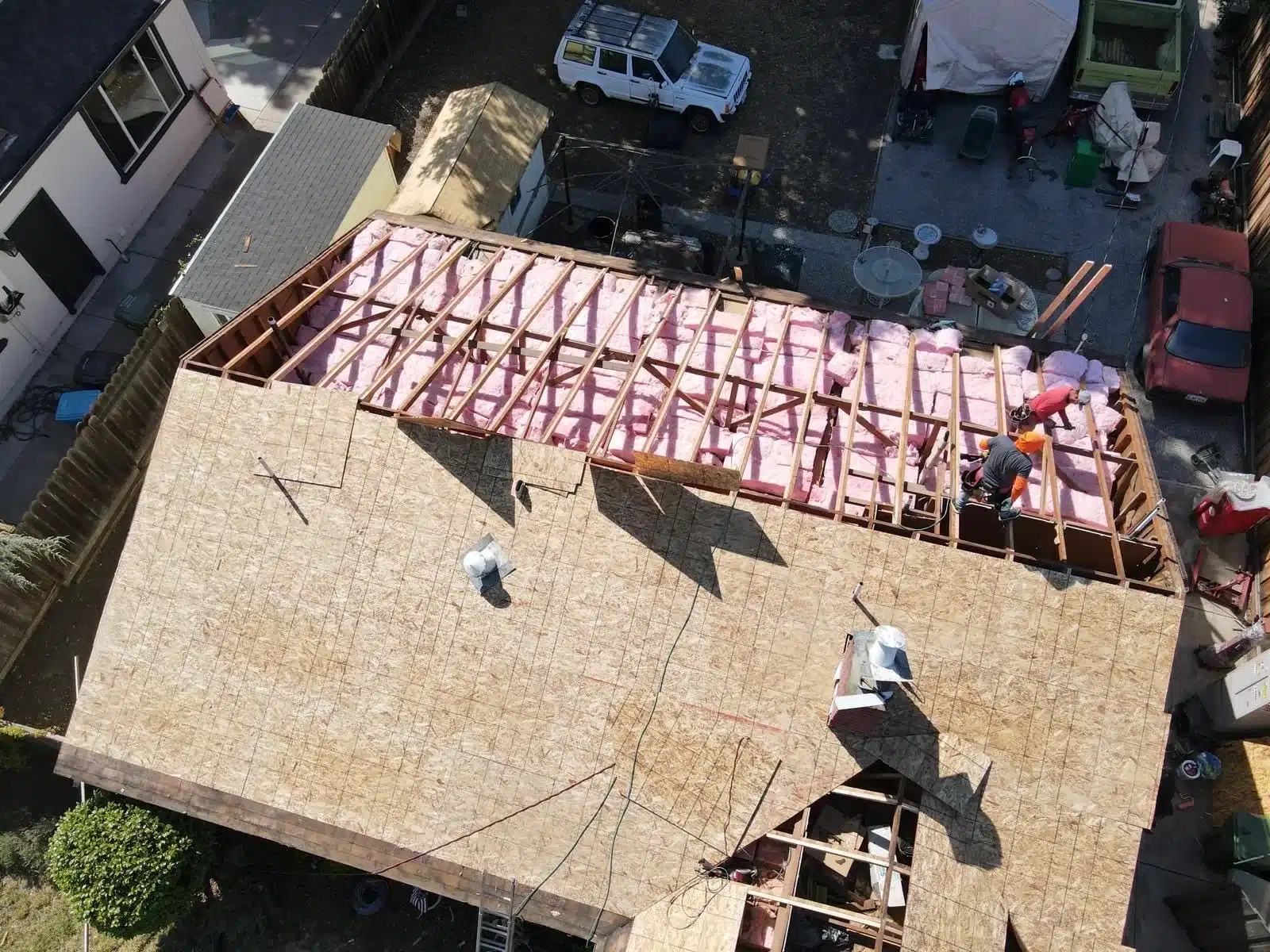
The tear-off gave a different answer. Under the shingles the decking was original 1x planking, laid with gaps between the boards the way roofs were built before plywood became standard. Several boards had split through or rotted around old fastener holes, and once a section was stripped you were looking straight down between the rafters at the batt insulation in the ceiling.
That is the moment the scope of a job is really decided. A deck like this cannot hold modern asphalt shingles properly — the nails need continuous wood under them, not every other few inches — and replacing the worst four or five boards would have left the same weak surface everywhere else. So the decision was the whole deck, not a patch.
A complete new deck, then the roof
The old roofing and the old planking came off, the framing was checked as it was exposed, and the entire roof — all 23 squares of it — was sheeted in new OSB. Working slope by slope kept the house closed in: no part of the roof was left open overnight, which matters even in a dry Bay Area May.
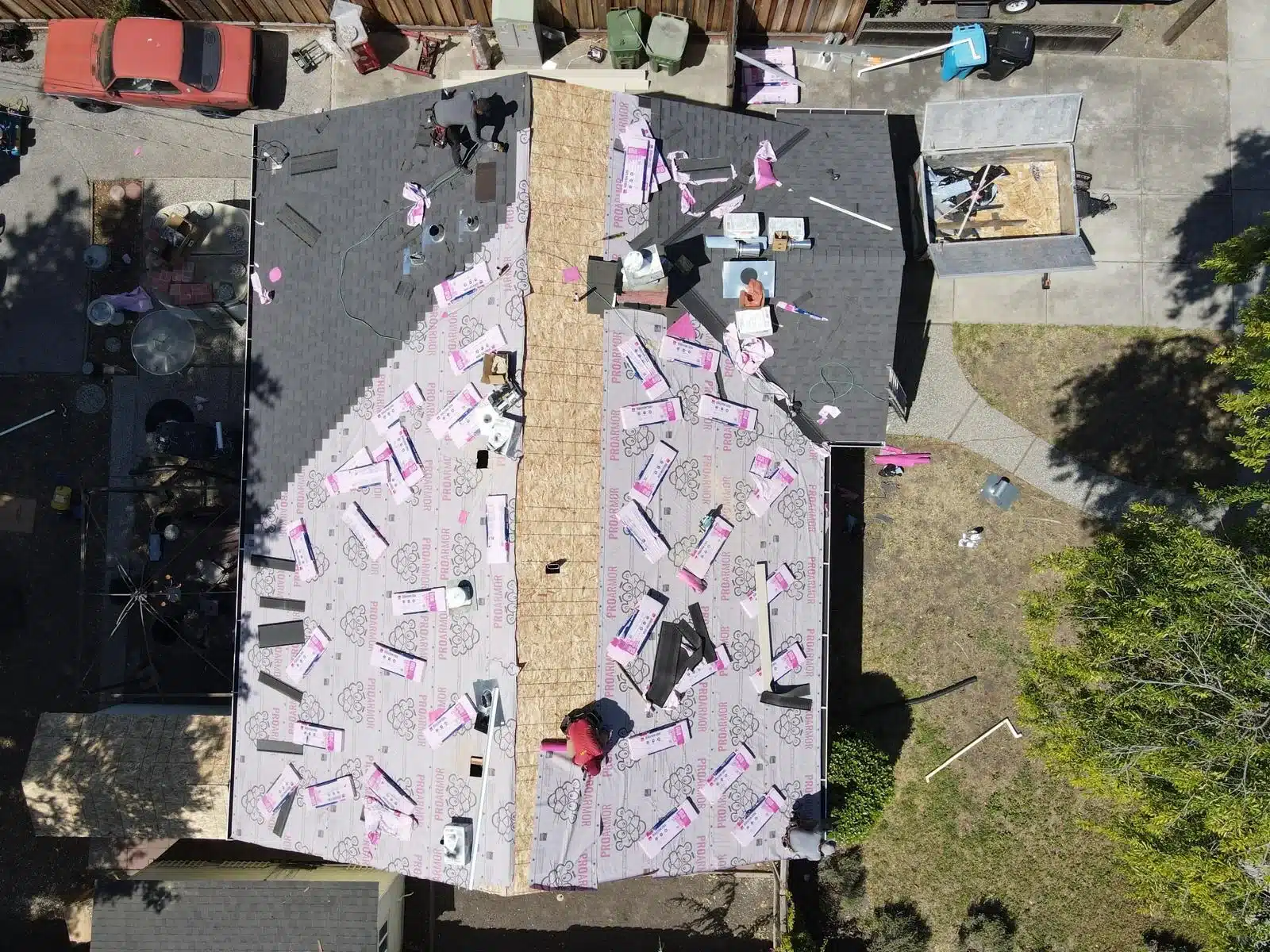
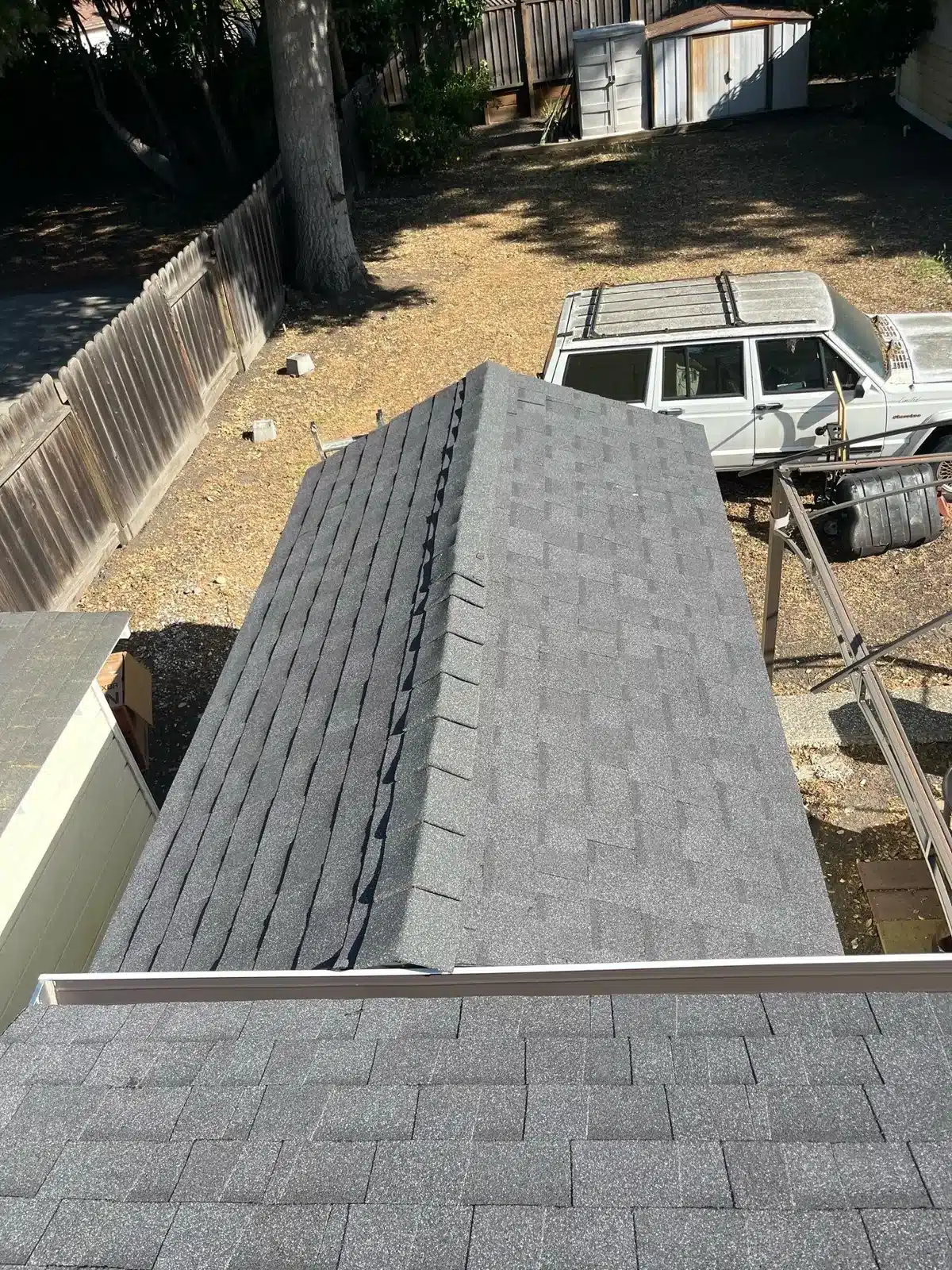
Over the new deck went synthetic underlayment rather than felt. It is tougher underfoot during installation, it will not wrinkle if it catches moisture, and on a roof this size the whole field was covered and dried in within a day. Then architectural shingles in Night Sky, a dark charcoal, with ridge caps run to match.
The work was permitted through the City of Santa Clara and inspected before the job closed.
How the week ran
The roof was photographed and measured before anything was touched — that is where the before shots on this page come from. Tear-off began mid-May, and the rot showed up almost immediately: boards that came away in pieces, and open bays where the planking had already failed.
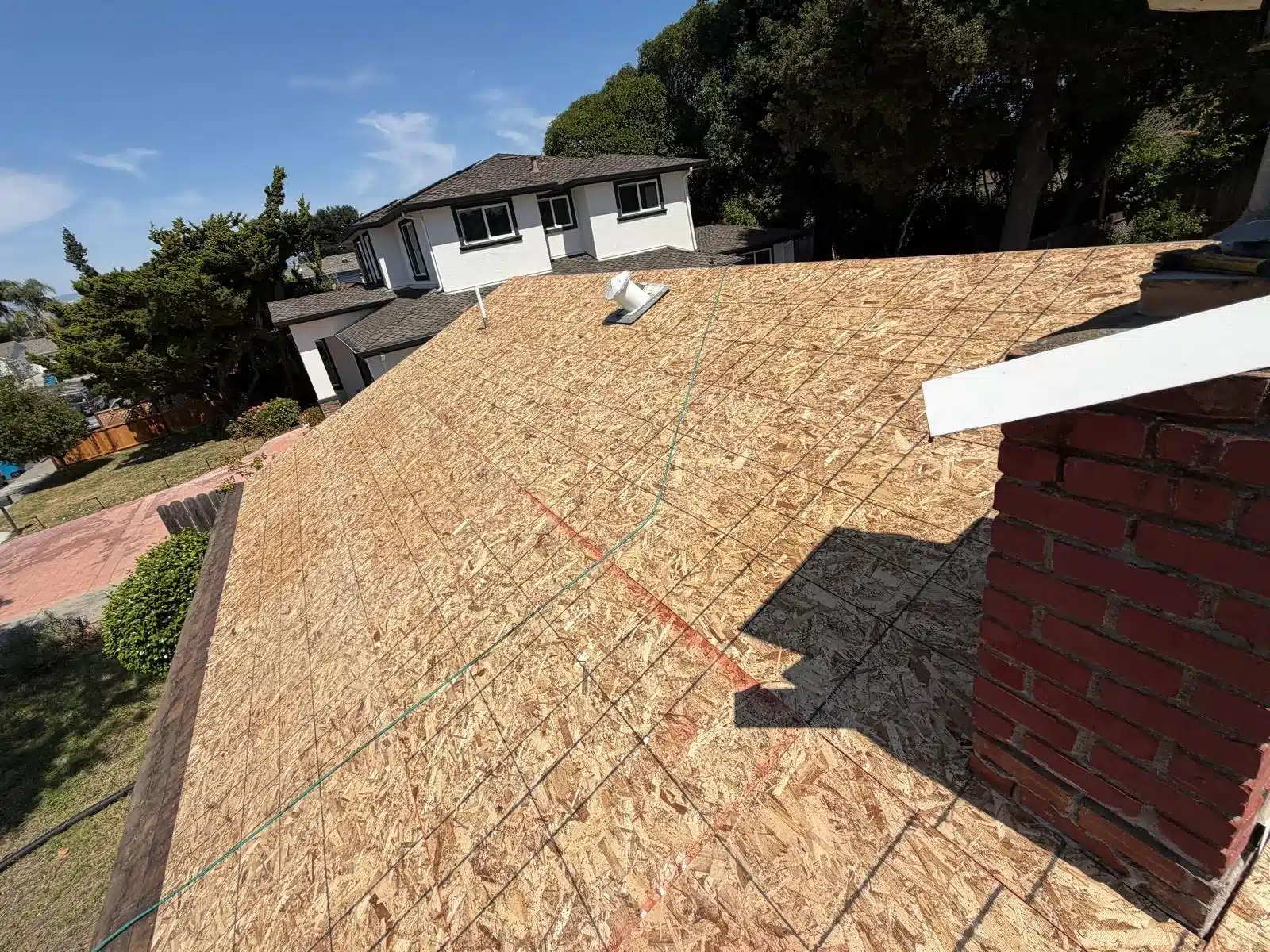
Decking went down over the following two days, underlayment the day after that, and the shingles and ridge caps behind it. The last photograph on this page — the finished house from the front — was taken a fortnight later, once the site was long cleared.
Before vs. After
| Feature | Before | After |
|---|---|---|
| Roof deck | Original spaced 1x planking, boards split and rotted in several places | Entire roof re-sheeted in new OSB decking |
| Roof covering | Worn brown three-tab shingles, granules gone in the sun-facing runs | Architectural shingles in Night Sky, ridge caps to match |
| Underlayment | Aged felt over open board gaps | Synthetic underlayment over a continuous deck |
| Fastening surface | Nails landing partly in the gaps between planks | Continuous nailable deck across all 23 squares |
| Permit | — | Permitted and inspected by the City of Santa Clara |
| Scope | 23 squares, single-storey ranch | Full tear-off, full re-deck, full re-roof — May 2026 |
What to take from this if a roofer has found rot on your house
First: ask what the deck is, not just how many boards are bad. On Bay Area houses built before the 1960s, spaced planking is common, and it changes the job from a re-roof into a re-deck. That is a real cost, but it is a known one, and it is far better established before the crew arrives than discovered on day two. It is common enough on this side of the valley that it shapes how we quote roofing in Santa Clara in the first place.
Second: read how the quote handles the unknown. A bid that quietly assumes the deck is sound is not cheaper — it just defers the conversation to the least convenient moment. Ours states what happens if the decking is bad, at an agreed rate, before anyone gets on the roof.
Third: patches are legitimate. If your decking is plywood or OSB, dry, and one sheet is soft under a failed flashing, replacing that sheet is the right call and anyone telling you otherwise should explain why. The test is whether the surrounding deck is sound and continuous — not whether the roofer would prefer a bigger job. What a full tear-off and re-deck involves is set out on our roof replacement page, and more finished jobs are in the project gallery.
Questions about rotted decking and re-decking
How do I know if my roof decking needs to be replaced or just repaired?
The deciding factor is whether the sound decking around the damage is continuous and dry. Isolated rot in an otherwise solid plywood or OSB deck — usually under a failed flashing, valley or vent — is a patch, and a sheet or two gets cut out and replaced. Rot that appears in several separate places, or an original deck made of spaced boards rather than sheets, points to a full re-deck, because a patch leaves the same weak nailing surface everywhere you did not touch. Neither call can honestly be made from the ground.
Why can’t asphalt shingles be nailed onto old spaced plank decking?
Because a share of the nails land in the gaps. Spaced or skip sheathing was designed for wood shakes and shingles, which needed to dry from underneath, so the boards were deliberately laid with air between them. Asphalt shingles need continuous support and a nailable surface under every fastener. The usual remedy, and the one used on this Santa Clara roof, is to sheet the entire roof in new decking before any shingles go on.
Do I need a permit to replace a roof in Santa Clara?
Yes. A residential re-roof in the City of Santa Clara requires a building permit, and the work is inspected. A licensed roofing contractor should pull it as a matter of course and the permit number should appear on your paperwork. If a bid does not mention a permit, that is worth asking about directly — an unpermitted roof can surface later as a problem when the house is sold.
Not sure whether your deck needs patching or replacing?
We will get on your roof, tell you what the decking is likely to be, what we can and cannot know before tear-off, and what each outcome would mean. Free, in writing, and no pressure.
Gina K. writes about Bay Area roofing for Lifetime Roofing & Renovation, drawing on the team's 16+ years of experience and 1,000+ completed roofs across Silicon Valley.