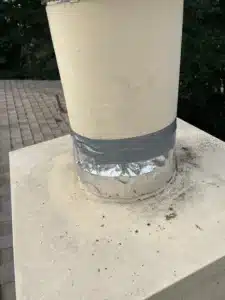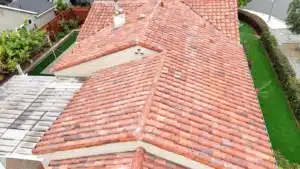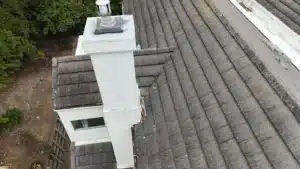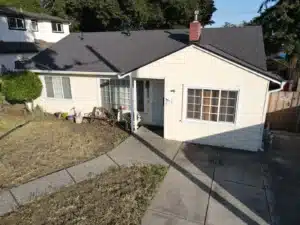
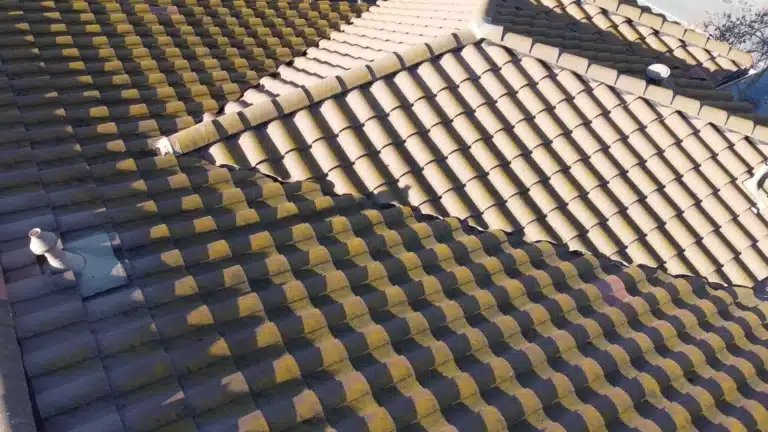
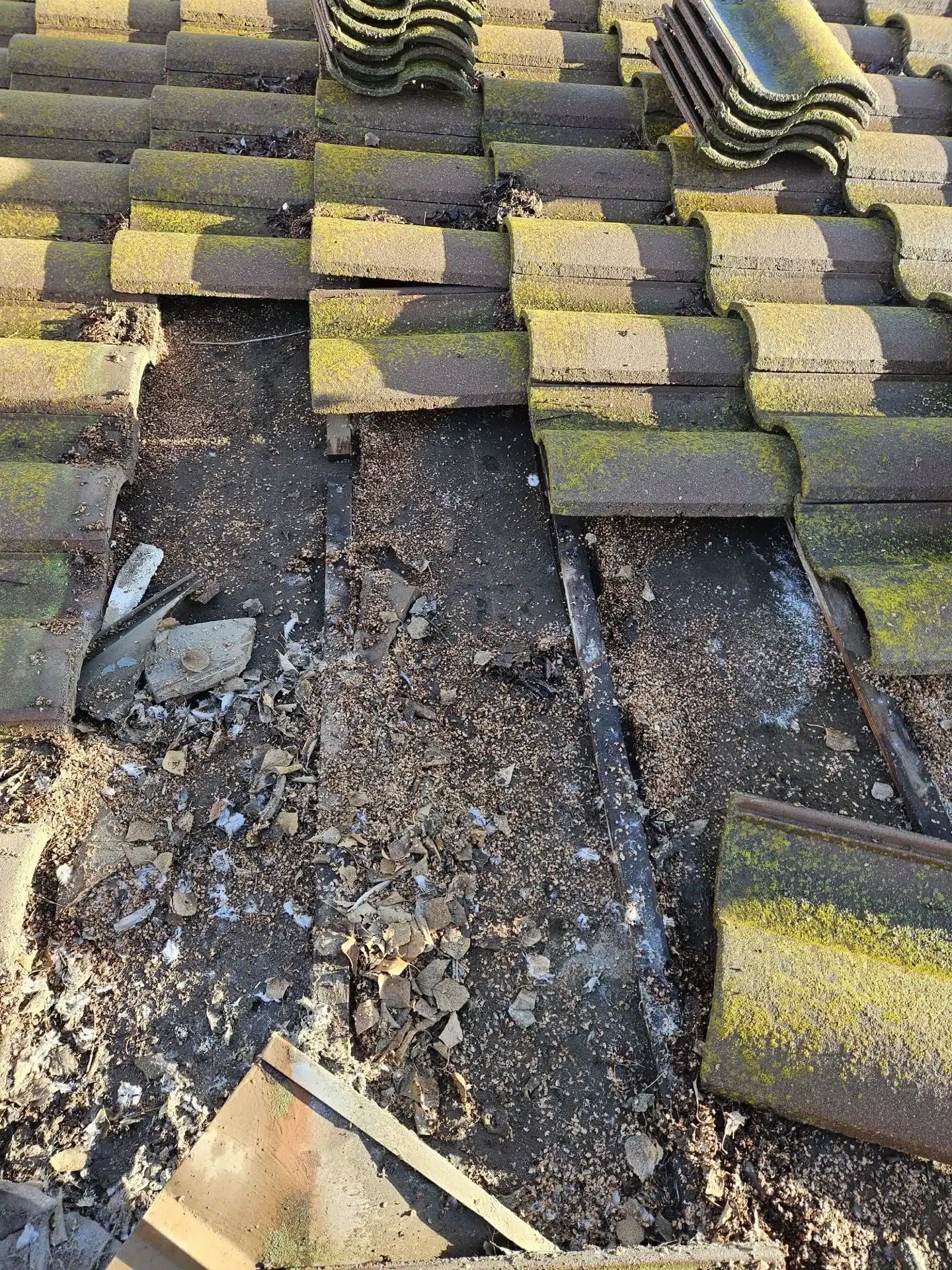
Moss on a concrete tile roof is a symptom, not a verdict. On this Morgan Hill home the tile itself was still sound after more than twenty years — what had failed was the underlayment beneath it, so we lifted and stacked the original tile, replaced the damaged deck and the underlayment, and set the same tile back down.
Our tile roof is covered in moss — am I in trouble?
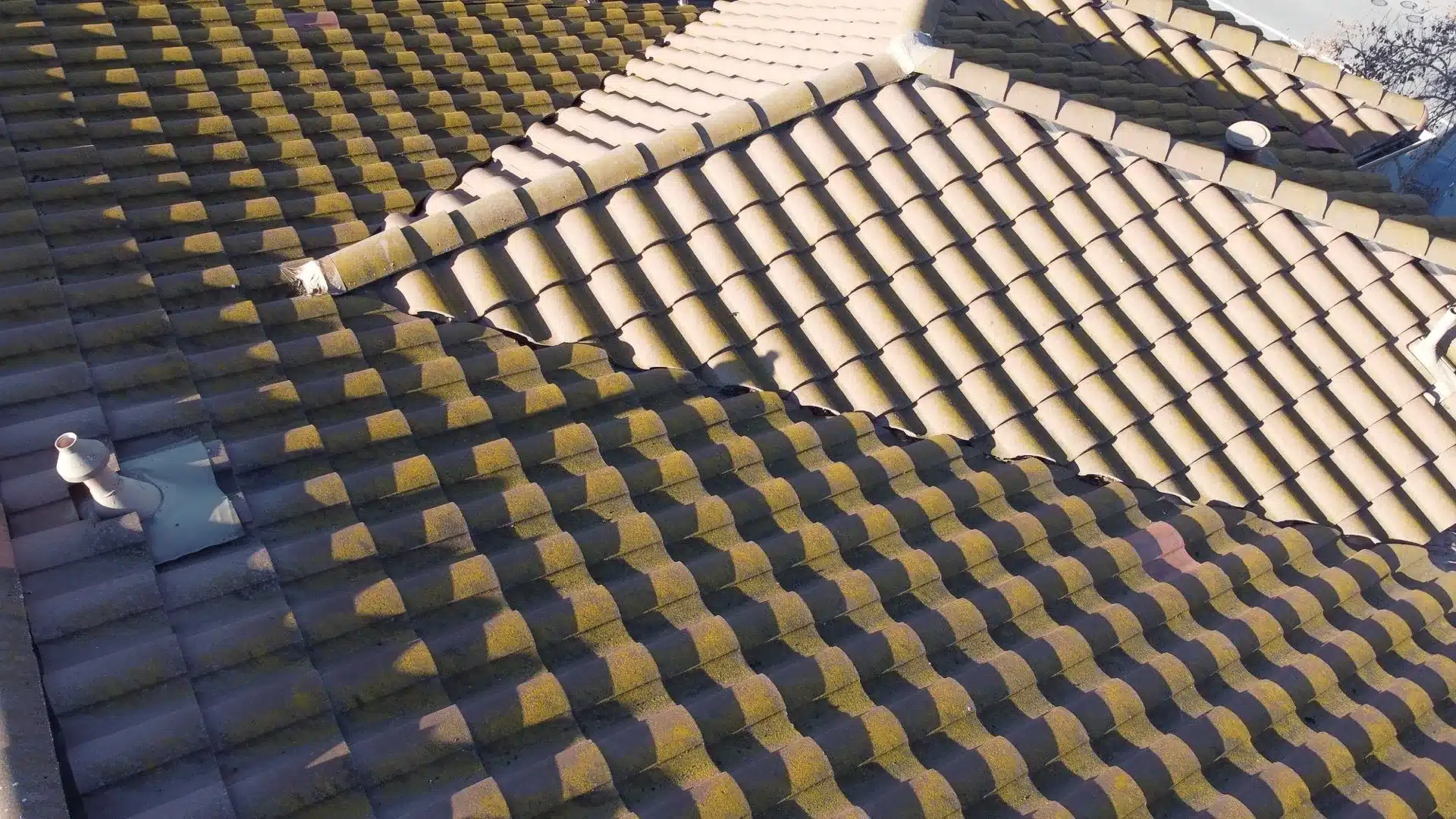
Usually not in the way you fear — moss on a concrete tile roof almost never means the tile is finished, because the tile outlives the waterproofing layer underneath it by decades. What moss does do is hold water against the roof and hide what is happening below it, which is why the honest answer comes from lifting a few tiles rather than looking up from the driveway. On this Morgan Hill home the tile was sound and reusable after more than twenty years in place; the underlayment beneath it had broken down, and sections of the plywood deck had gone with it. A homeowner asked a version of this exact question on r/Roofing after moss started spreading across their roof, and the answers split mostly because nobody in the thread could see what was under the tile.
A Big Tile Roof With Moss on Every Shaded Plane
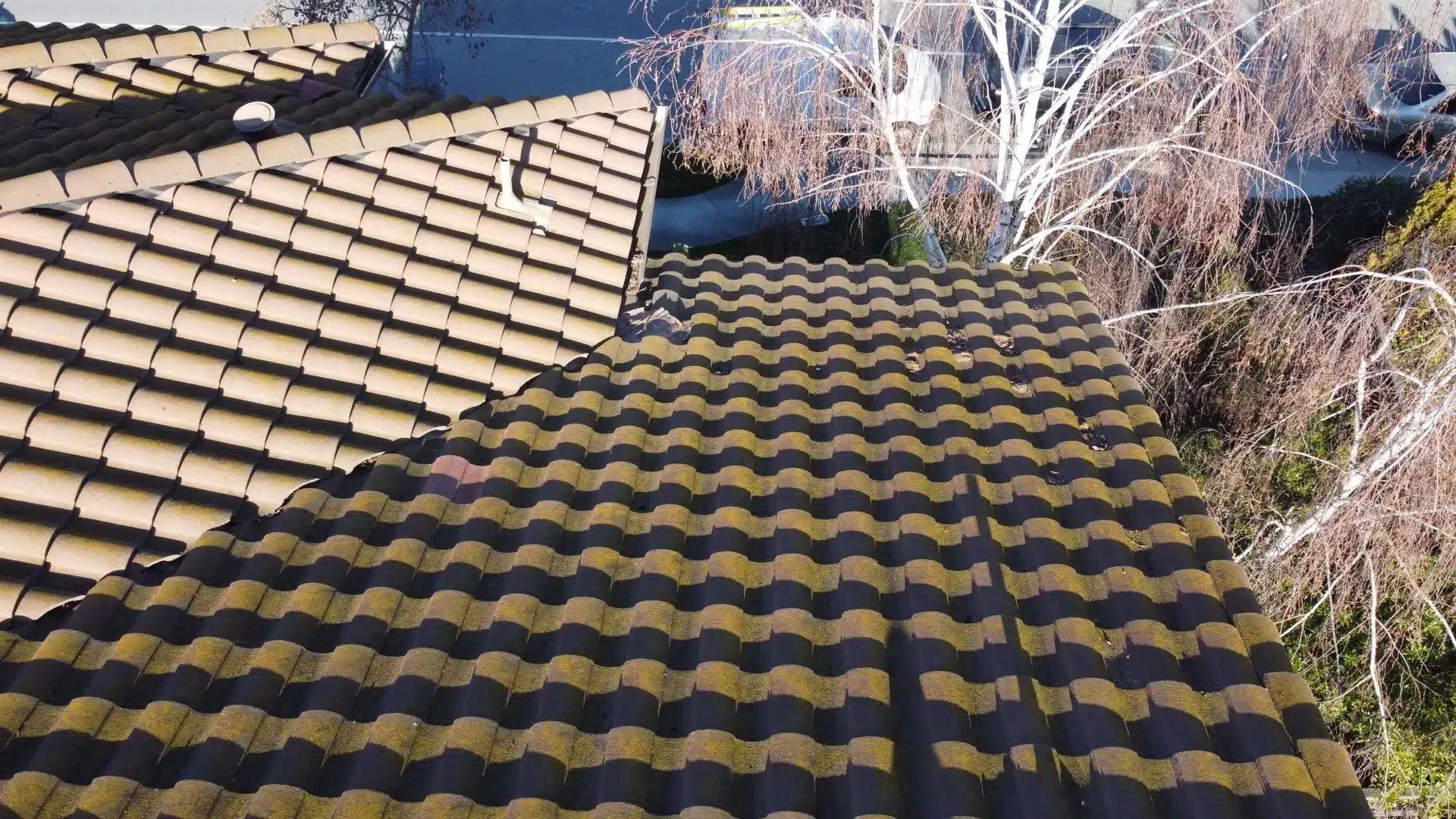
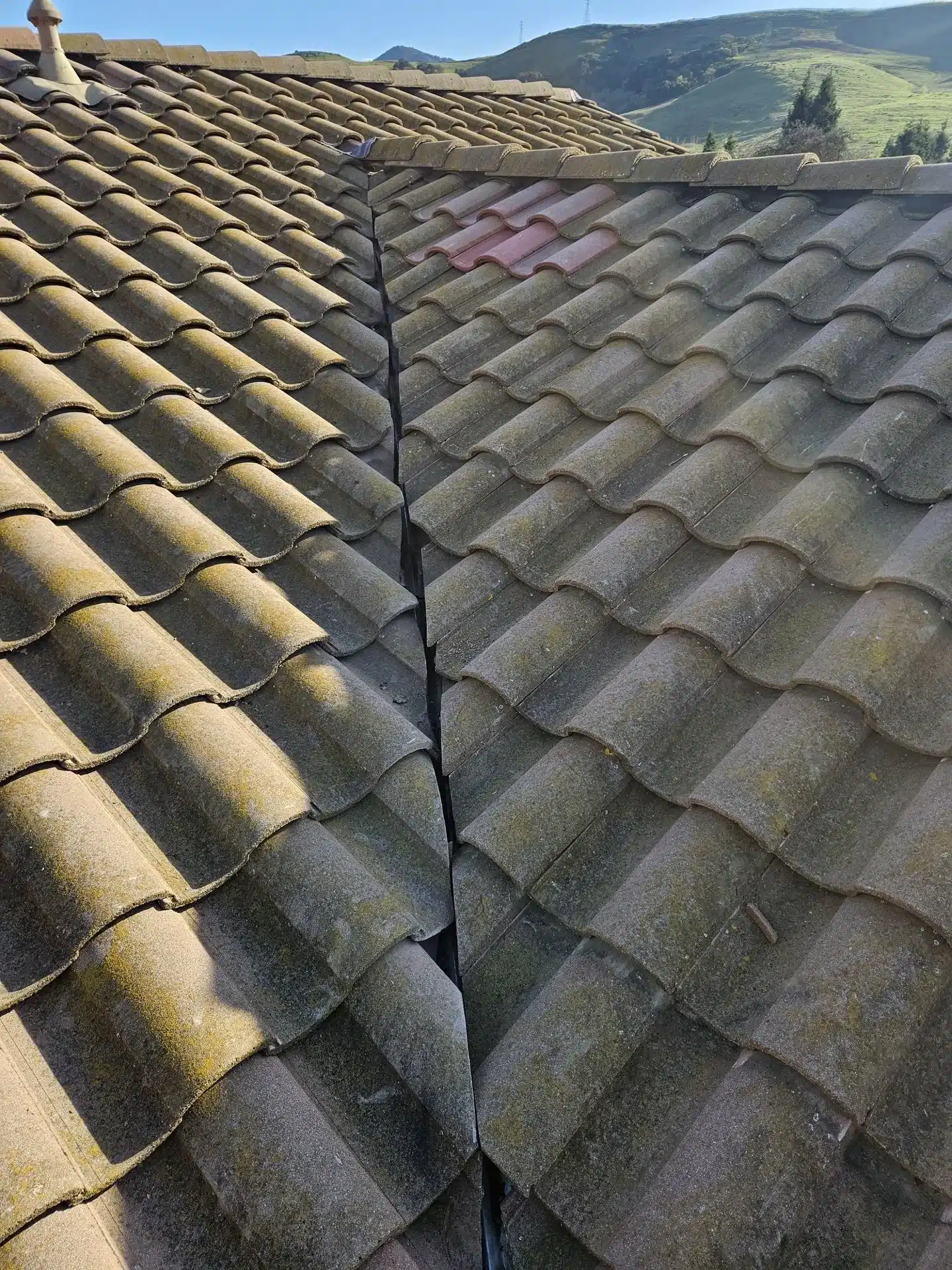
The house is a two-storey Morgan Hill home with a large, complicated concrete S-tile roof — a dozen planes, several hips and open valleys. From the drone survey the split was obvious: the sun-facing planes were still the original tan, while every shaded and north-facing plane had gone black-green under dense moss and lichen. Closer in, the roof told a second story. Bands of mismatched tile ran across two planes where someone had patched broken pieces years earlier, tiles had slipped out of course along a hip, and debris had packed into the pans. None of that is unusual on a tile roof of this age, and none of it, on its own, condemns the roof. The question was what the patching had been chasing.
Why the Tile Stayed and Everything Under It Went
Concrete tile and the underlayment beneath it age on completely different clocks. The tile is rated for 50 years or more and mostly just gets dirty; the underlayment is the layer actually keeping water out of the house, and it has a service life closer to 20 to 30 years. When a tile roof of this age starts leaking, the tile is rarely the problem. Lifting a section here confirmed it — the tile came up intact and reusable, while the underlayment underneath had gone brittle and broken up, and the plywood below it had softened in patches. So the job was a lift and relay rather than a replacement: strip and rebuild every layer under the tile, then put the original tile back. If you are weighing the same decision, our pages on concrete tile roofing and roof repair versus replacement cover where each answer applies.
How a Lift and Relay Actually Works
The tile comes off by hand, course by course, and gets stacked on the roof rather than dropped to the ground — the whole point is that these pieces are going back on. With the tile off, the old underlayment and battens were stripped to bare plywood and the packed debris cleared out, which is the first moment anyone can actually see the deck.
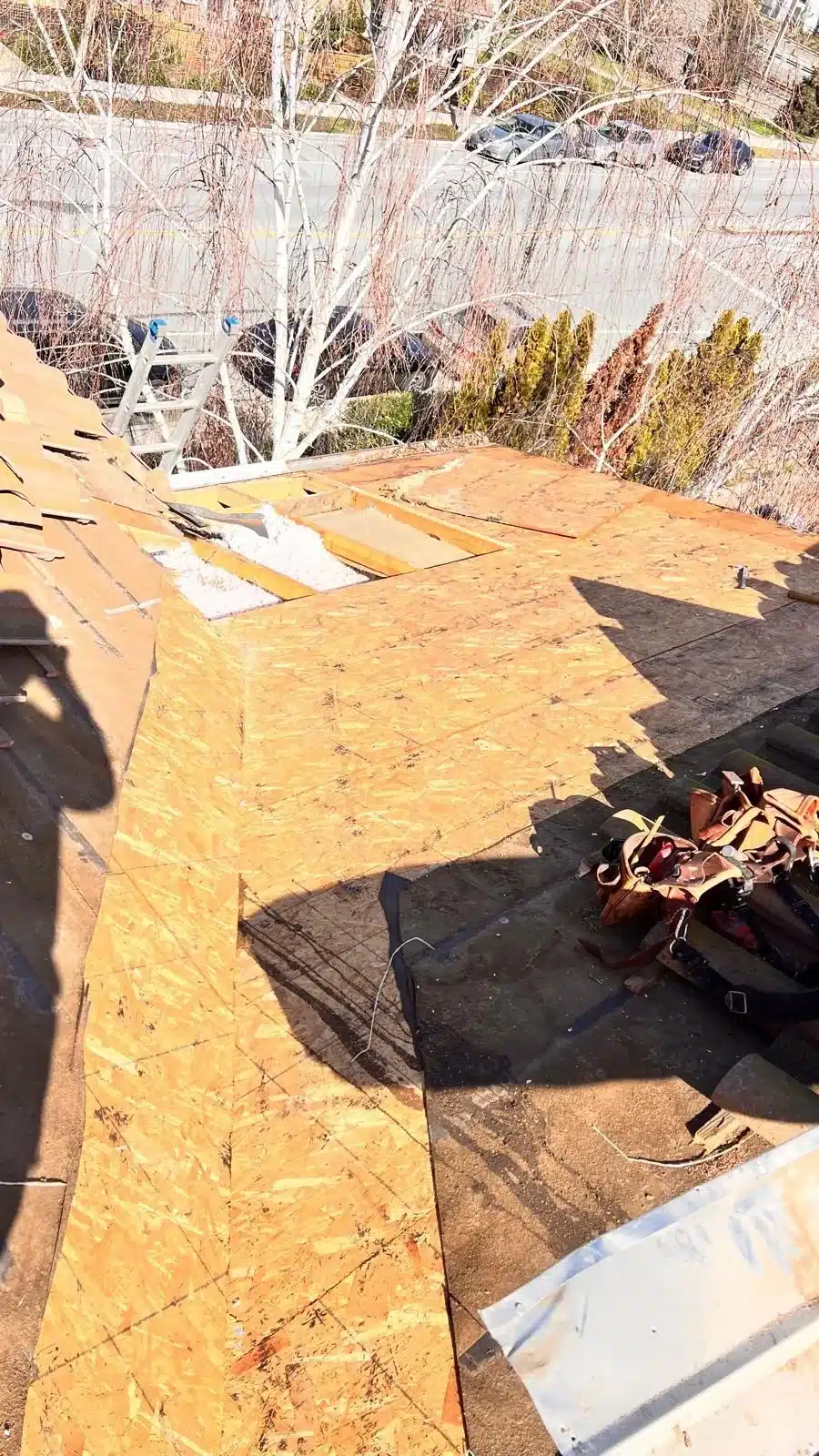
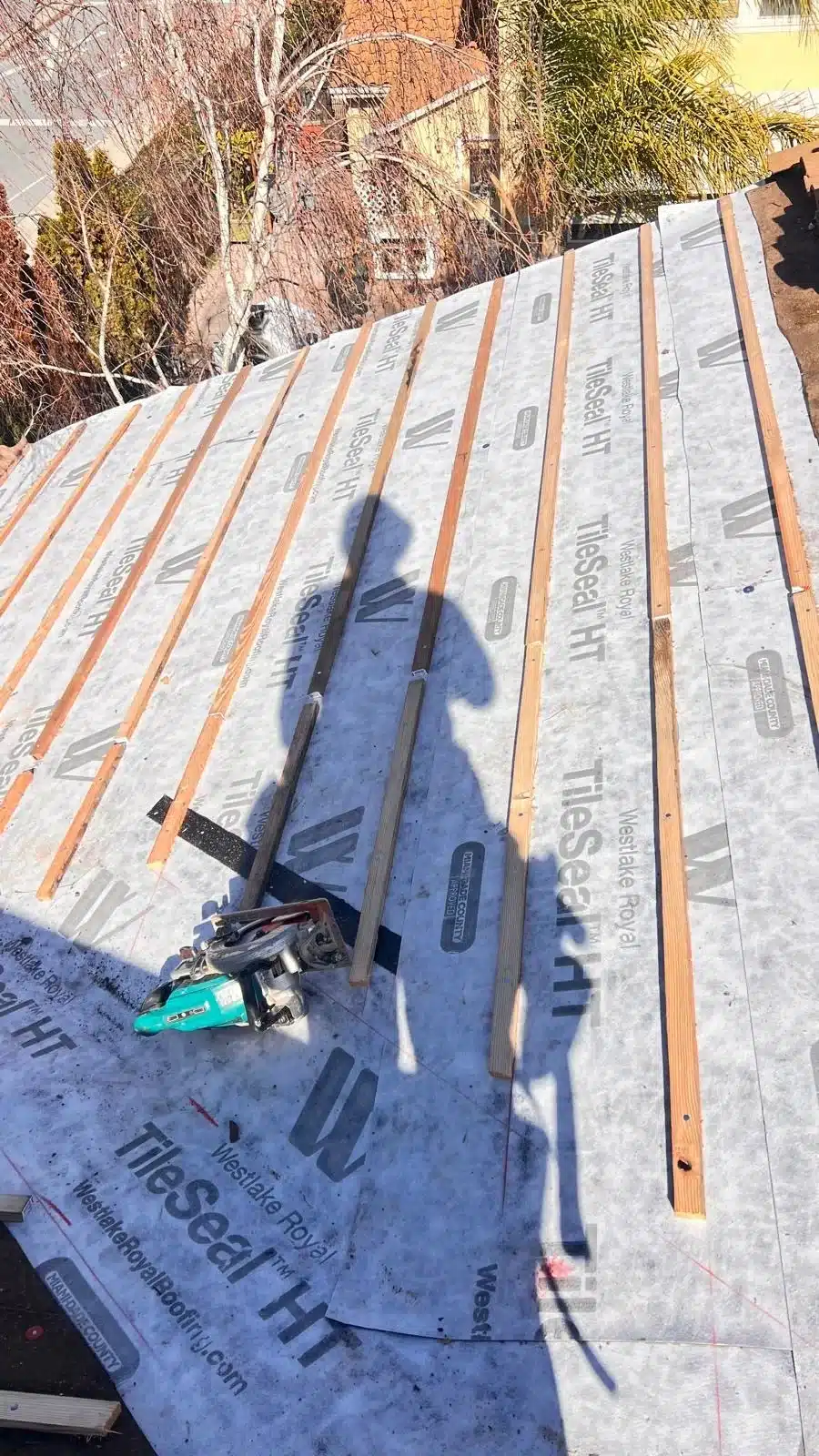
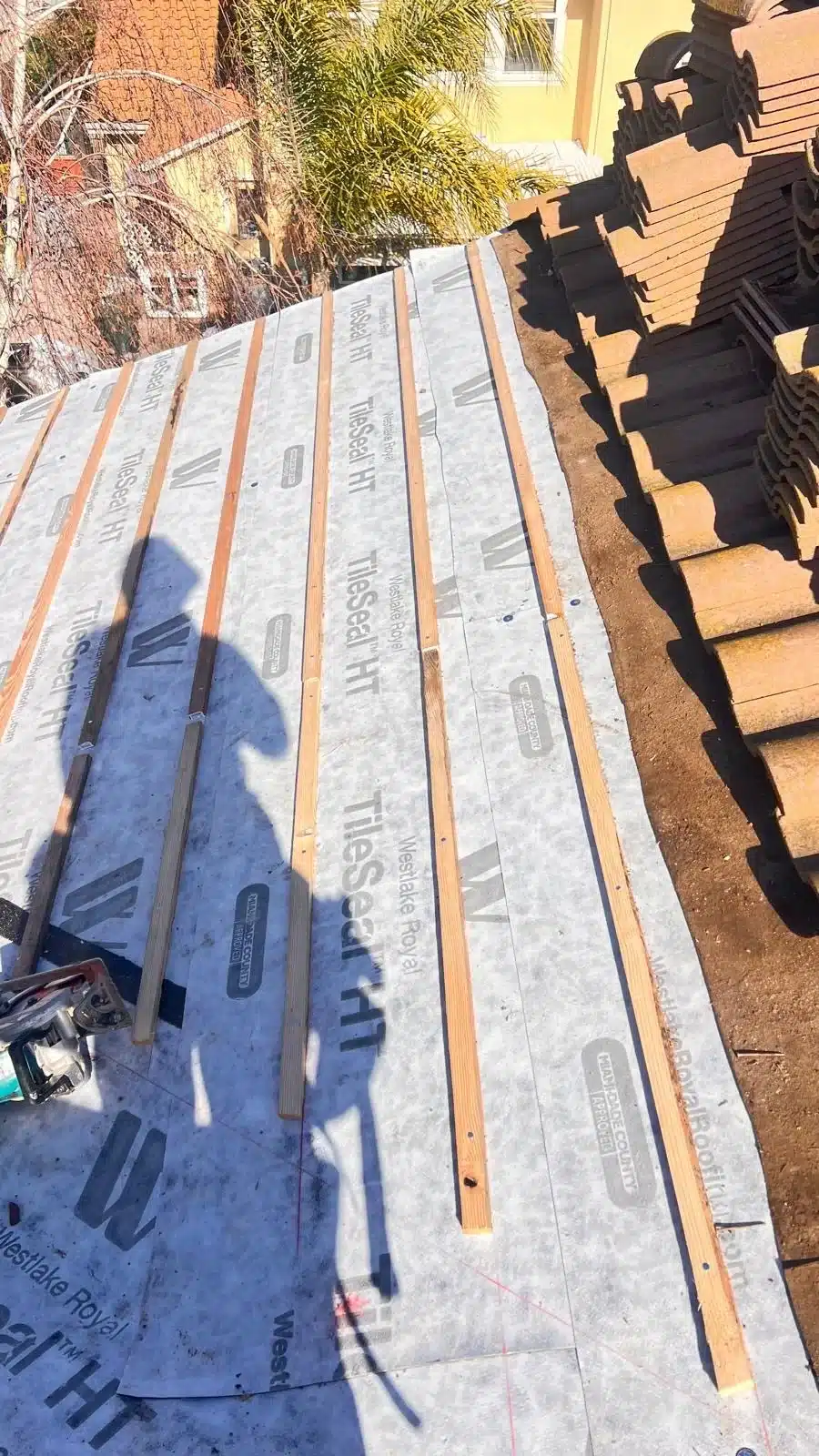
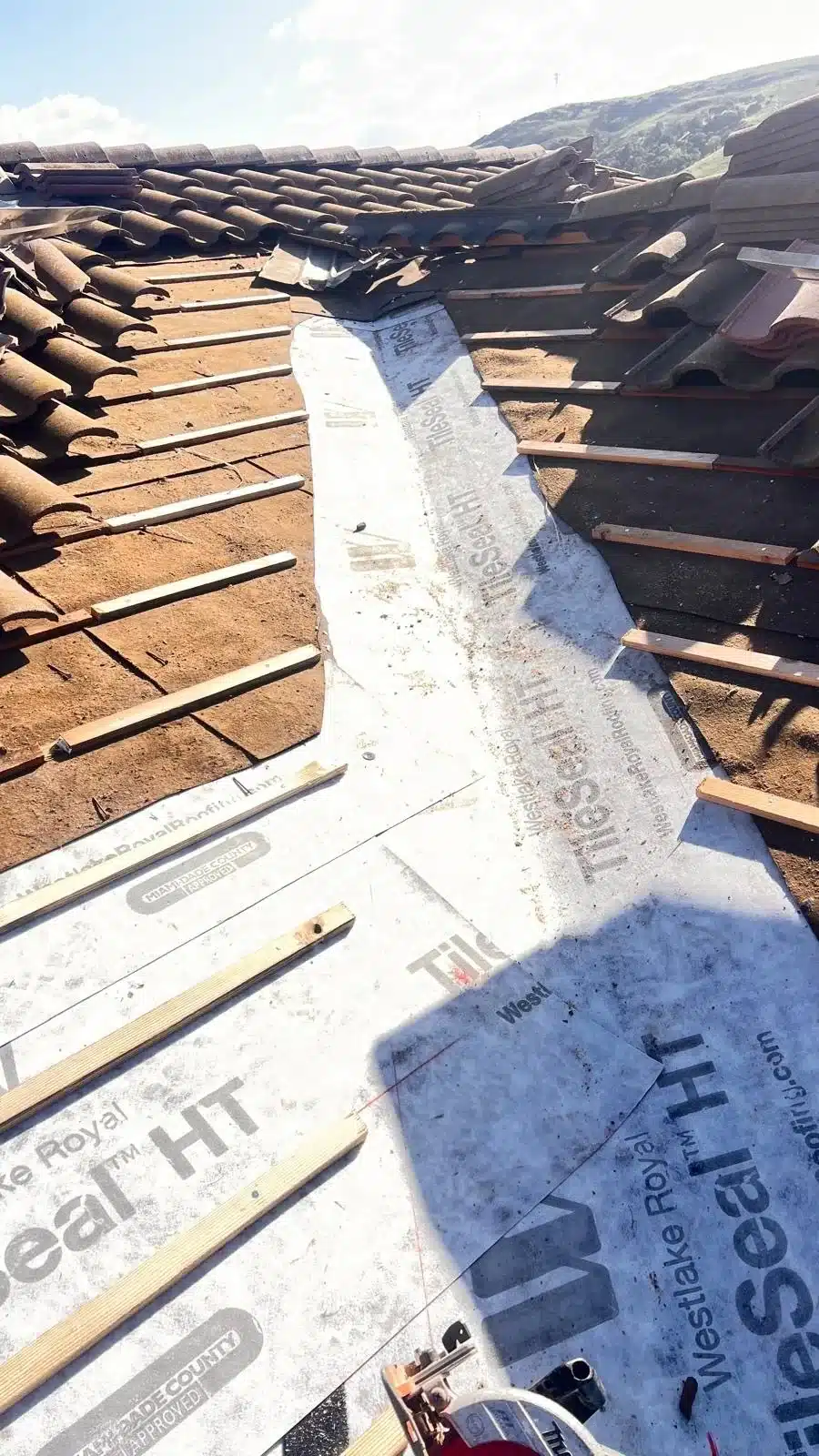
Every sheet of plywood was checked and the soft ones cut out and replaced. Then the new waterproofing went on: Westlake Royal TileSeal HT, a high-temperature self-adhered underlayment built for exactly this — living under tile, in full sun, for decades. New battens were set over it to carry the tile, and the original tile went back course by course, with replacement pieces used only where tiles had actually broken. That mix is why a relaid roof often shows a few tiles in a slightly different shade for the first season or two.
Before vs. After
| Feature | Before | After |
|---|---|---|
| Waterproofing layer | Original underlayment past its service life, no longer shedding water into the gutters | New Westlake Royal TileSeal HT high-temperature underlayment across every plane |
| Roof deck | Plywood soft and damaged in sections beneath the failed underlayment | Damaged sheets cut out and replaced with new plywood before anything went back down |
| Tile | Sound concrete tile, moss-covered, with mismatched patch tiles from earlier repairs | The original tile cleaned off and relaid; new tile only where pieces had actually broken |
| Battens | Original battens weathered along with the underlayment | New battens set over the new underlayment |
| Scope | A roof widely assumed to be at the end of its life | Only the layers that had genuinely failed were replaced |
Why This Keeps Coming Up on Morgan Hill Roofs
Morgan Hill sits at the south end of the valley with the hills right behind it, and that shapes what happens to a tile roof here: long damp winters that keep the shaded planes wet for months, then hot dry summers that cook whatever is under the tile. The subdivisions that went up through the 1990s and early 2000s were built almost entirely in concrete tile, which means a large share of the town’s roofs are now arriving at the same point at the same time — tile with plenty of life left, sitting on underlayment that has none. Knowing that difference is the whole job, and it is why we look under the tile before quoting anything as a roofing company in Morgan Hill. More finished work is in the project gallery.
“They did a great job, timely, clean and the project manager was very personable and attentive to all my concerns. He sent me pictures of the attic and gas vent that I was concerned about and assured me it was intact and the roofers didn’t disrupt it.”
Questions Homeowners Ask About Moss and Tile Roofs
Can you reuse concrete roof tiles when the underlayment is replaced?
Yes, in most cases. Concrete tile is a 50-year-plus material and the underlayment beneath it is the part with a shorter service life, so a lift and relay reuses the existing tile and replaces only what failed. Breakage during handling is normal and gets made up with replacement tiles, which is why a relaid roof often carries a few pieces in a slightly different shade. Our concrete tile roofing page sets out where this works and where it does not.
How long does the underlayment under a tile roof last?
Typically 20 to 30 years, against 50 years or more for the tile itself. That gap is why so many Bay Area tile roofs reach a point where the roof looks structurally fine from the street but leaks anyway. If your tile went on in the 1990s or early 2000s, the underlayment is the part to have looked at, not the tile.
Does moss actually damage a concrete tile roof?
Moss does not eat concrete tile, but it causes three real problems: it holds moisture against the roof long after rain stops, it blocks water from draining off the tile the way it was designed to, and thick growth can lift the edges of tiles enough to let wind-driven rain past. It is also a reliable sign that a plane stays wet, which is exactly where underlayment fails first. Treat it as a reason to book a roof inspection, not as an emergency on its own.
Not Sure Whether Your Tile Roof Needs Replacing?
We will get on the roof, lift a few tiles and tell you what is actually under them — including when the answer is that you do not need us yet. See more finished work in the project gallery.
Gina K. writes about Bay Area roofing for Lifetime Roofing & Renovation, drawing on the team's 16+ years of experience and 1,000+ completed roofs across Silicon Valley.