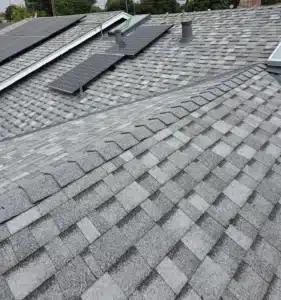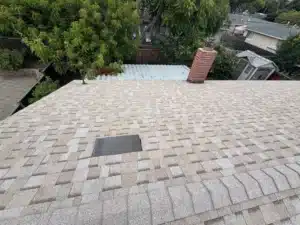
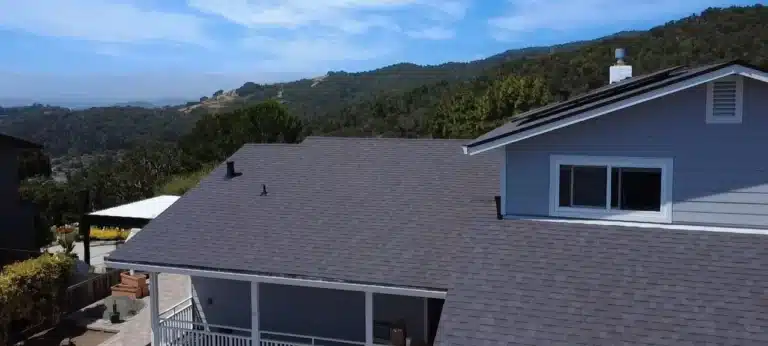
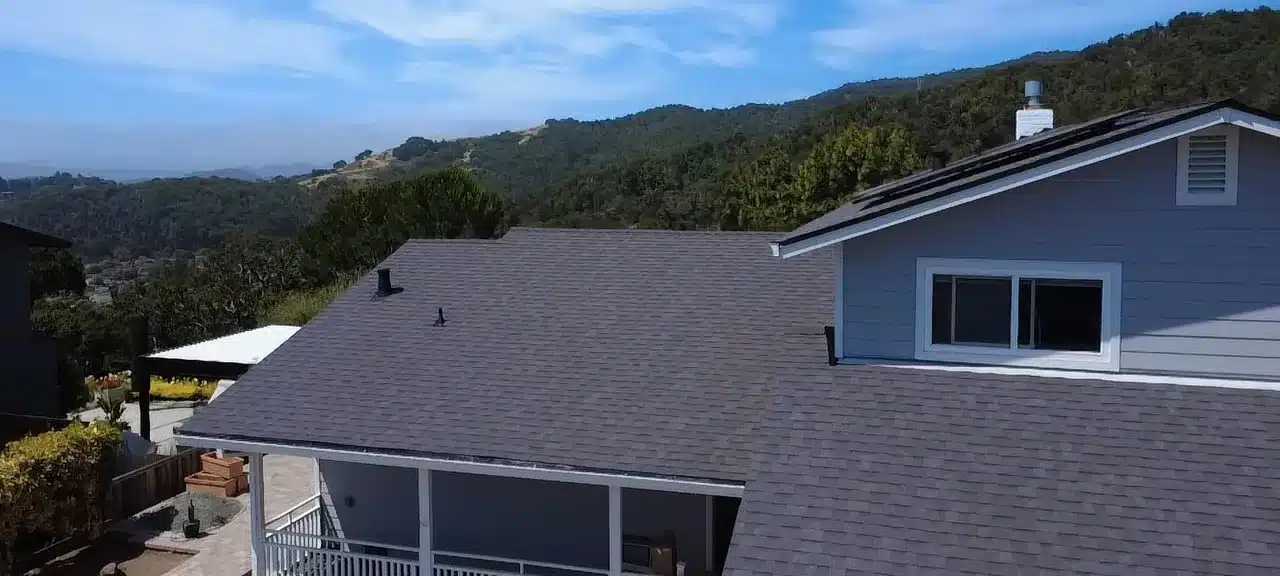
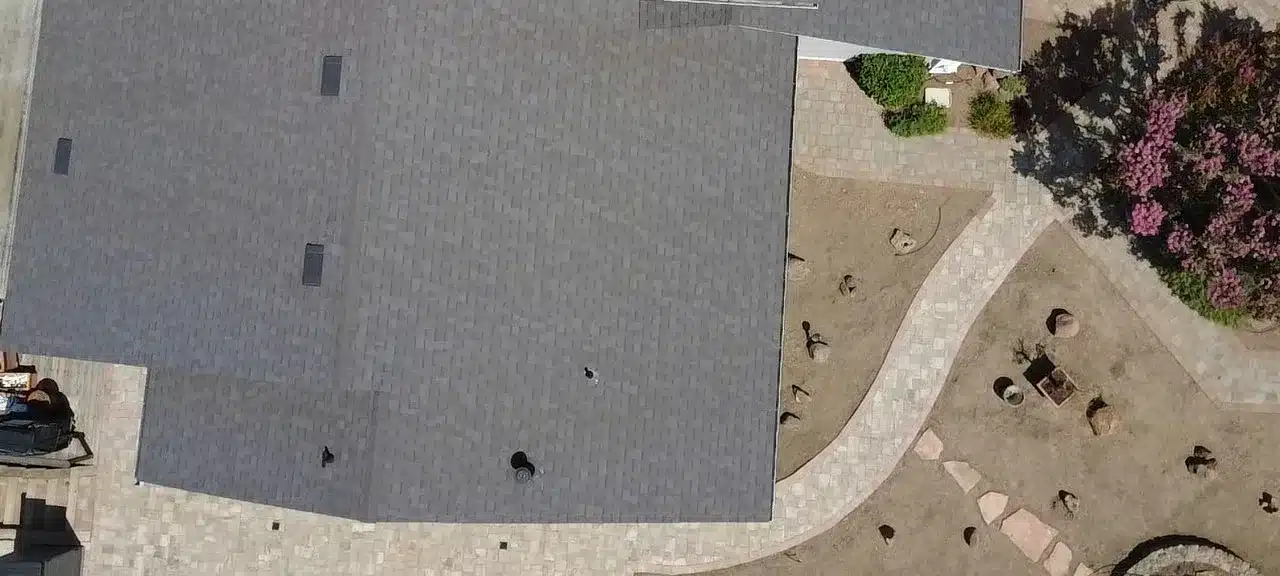
A hillside San Rafael roof that had been patched in half a dozen places reached the point where another repair would only have bought months, so we replaced it outright: full tear-off, a new OSB deck, ProArmor synthetic underlayment and Owens Corning TruDefinition Duration COOL Plus shingles in Midnight — with the homeowner’s solar array detached and reset onto the new roof.
Does a Cracking Shingle Roof in San Rafael Need Full Replacement, or Is It Repairable?
A shingle roof is repairable when the damage is isolated to one or two places — a flashing, a slipped course, a single penetration — and needs full replacement when the failures are spread across the field and earlier patches have stopped holding. This hillside home on McNear Drive in San Rafael failed that test in half a dozen places at once: mismatched repair shingles butted into the original field, granule loss across whole slopes, and standing water staining the low-slope section. We tore it off to the deck rather than sell a seventh patch. A homeowner on r/Roofing asked almost exactly this about a cracking asphalt roof, and the honest test is the same anywhere: count how many separate places are failing, not how old the roof is.
A Ridge-Top Roof That Had Been Patched One Time Too Many
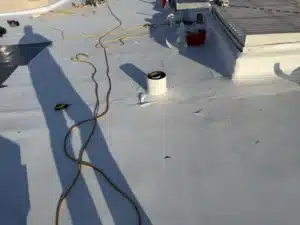
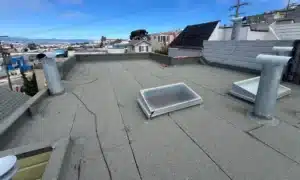
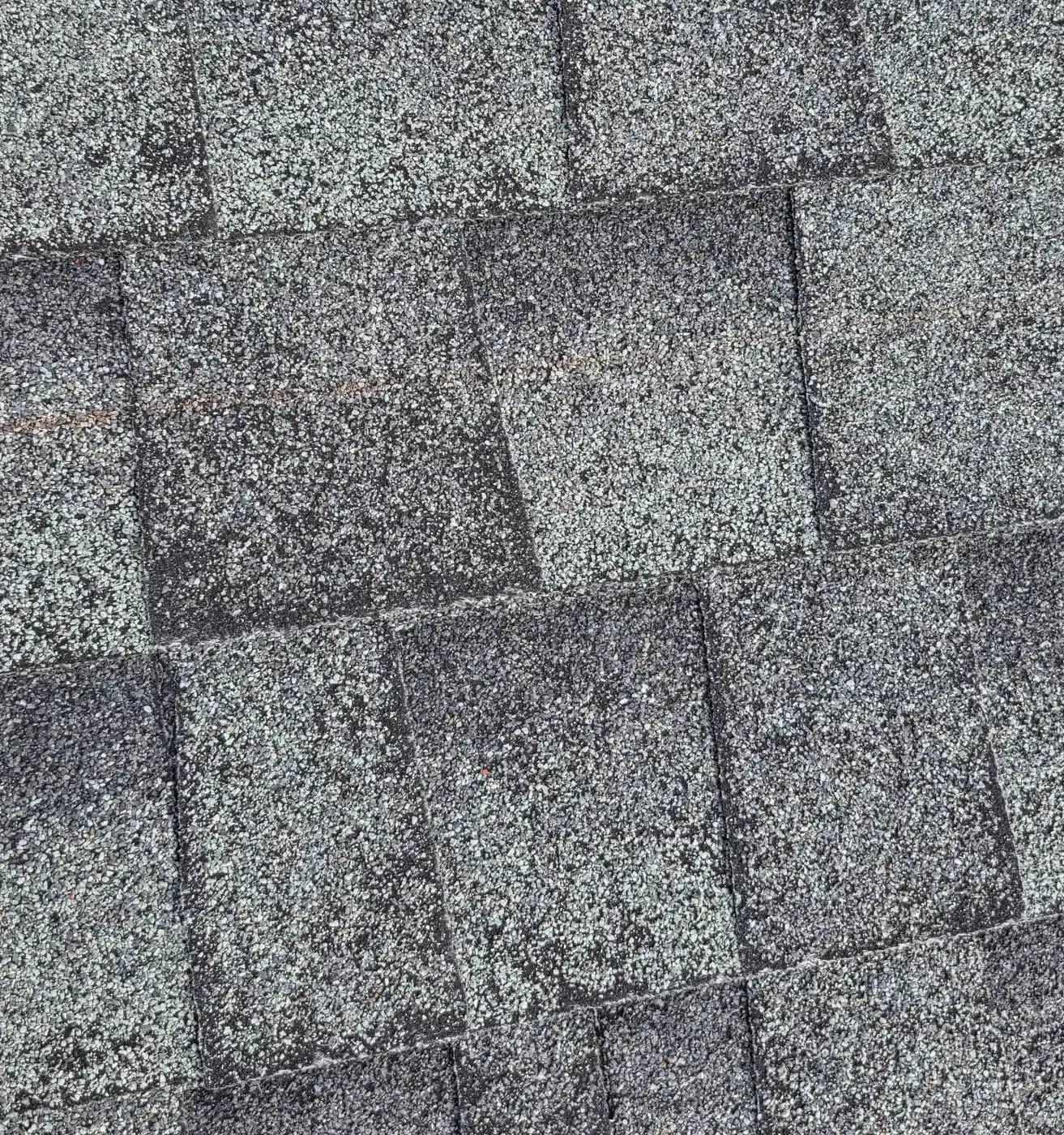
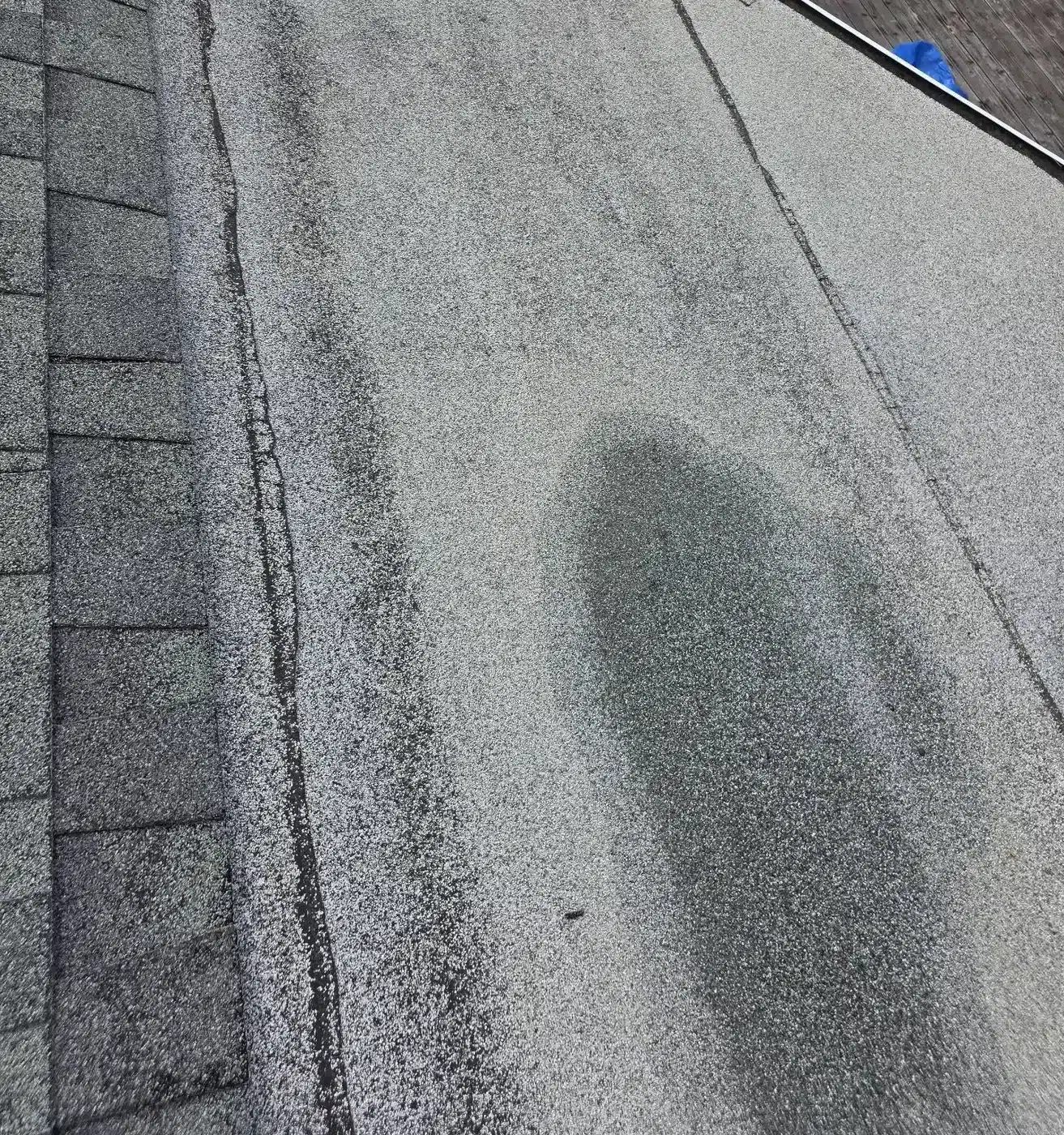
The house sits high on a San Rafael hillside with open valley views in three directions — a lovely spot, and a punishing one for a roof. Sun exposure runs long on an unshaded ridge lot, and the wind that makes the view also works at every edge and ridge cap. When we inspected in April, the shingle field had been repaired more than once by more than one person: replacement shingles in a visibly different shade butted straight into the original courses, granule loss and moss darkening whole slopes, and algae streaking down the hip intersections. The low-slope section over the deck told the clearest story — broad dark stains where water had been sitting rather than draining. An existing solar array sat across one of the slopes, installed years after the roof it was mounted on.
A Cool-Rated Shingle Over a Brand-New Deck
We specified Owens Corning TruDefinition Duration COOL Plus in Midnight — a solar-reflective shingle from the Duration COOL line, carrying a limited lifetime warranty and a 130 mph wind-resistance limited warranty. Cool-rated shingles are not required everywhere in California — the Title 24 prescriptive requirements turn on climate zone and roof slope — but on an unshaded ridge lot that bakes all afternoon, reflecting heat instead of absorbing it is worth having whether the code asks for it or not. Underneath, the whole roof was re-sheathed in new OSB and dried in with ProArmor synthetic underlayment rather than felt. If you are weighing the same decision, our shingle roofing and roof replacement pages set out what a full system includes.
Tear-Off, New Deck, Dry-In, and the Solar Reset
The solar array came off first — panels and racking detached and set aside so the roof underneath could be done properly rather than worked around. Then the old covering came off down to bare framing, and the roof was re-sheathed in new OSB across every plane. Working from a ridge-top lot means staging materials carefully: bundles and underlayment rolls were loaded onto the deck in sections as the dry-in progressed.
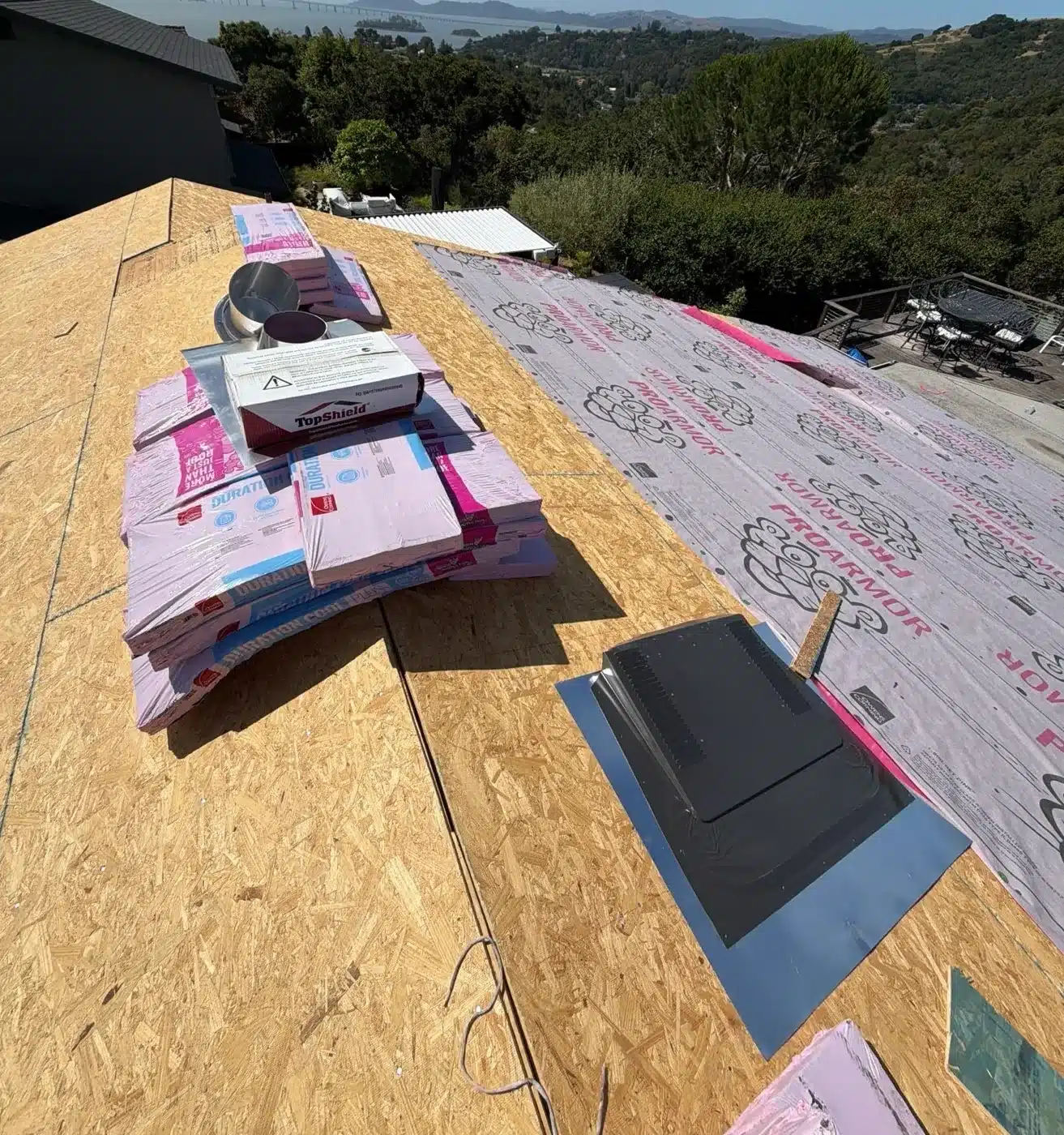
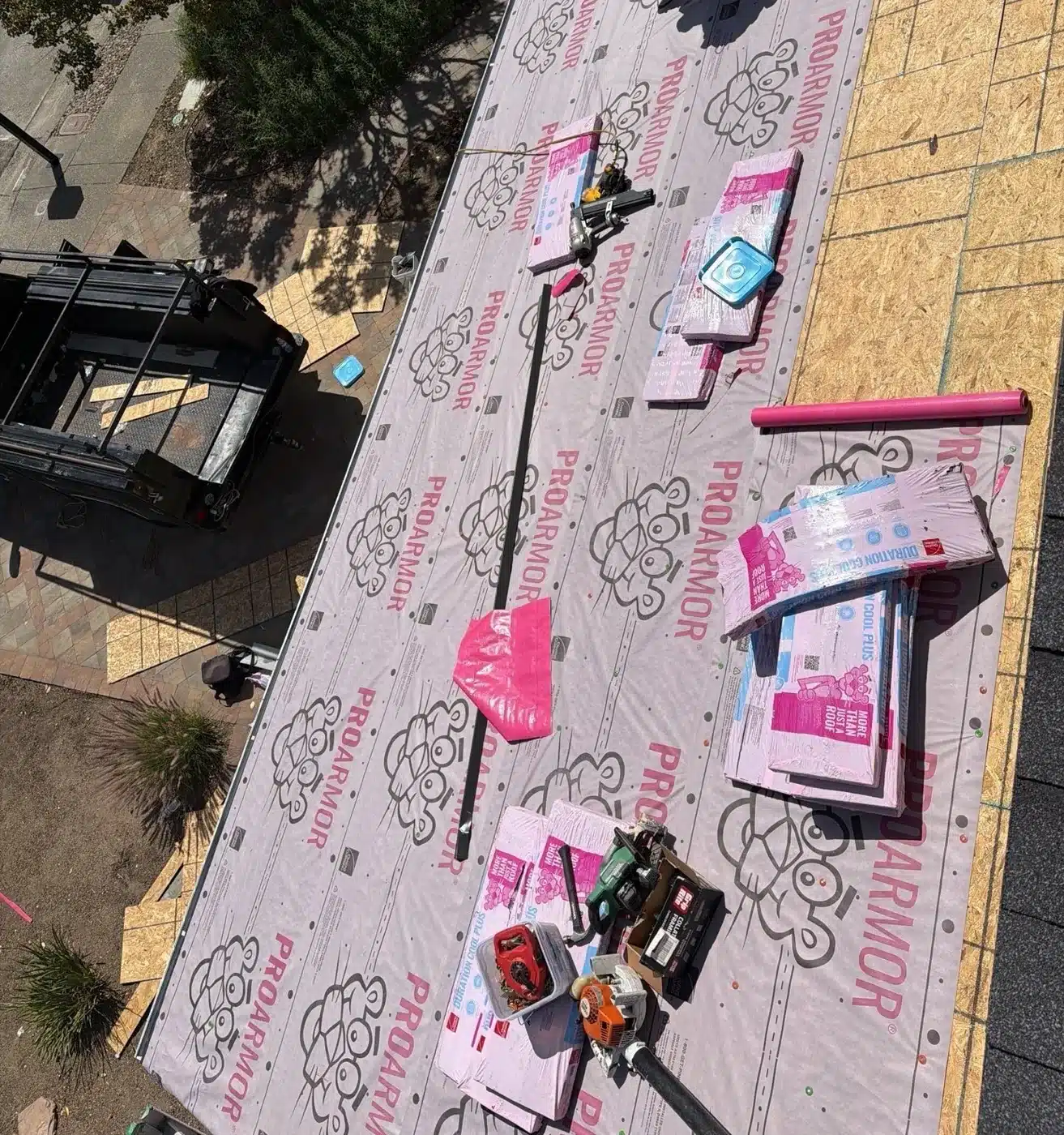
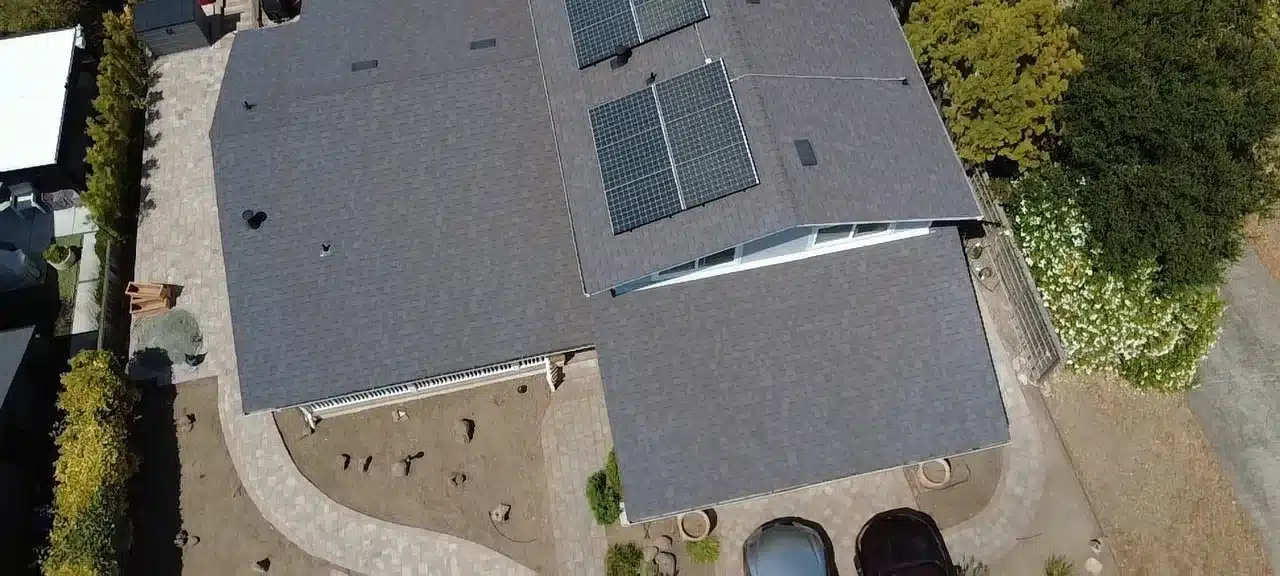
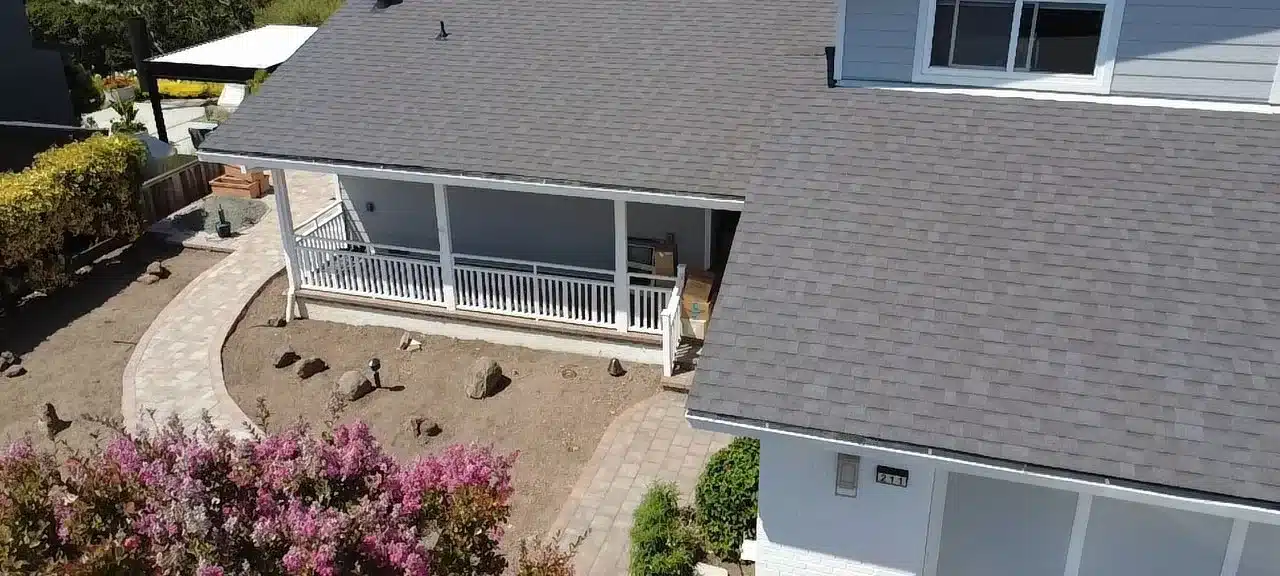
With the deck dried in, the Duration COOL Plus field went on slope by slope, the brick chimney was re-flashed, and new attic vents were set into the new field. The solar array went back on last, onto a roof built to outlast it. We inspected the roof in April; the tear-off and new system went in through June, and the finished roof — solar reset, site cleaned — was photographed on the first of July.
Before vs. After
| Feature | Before | After |
|---|---|---|
| Roof covering | Aged asphalt shingle with mismatched patch repairs | Owens Corning TruDefinition Duration COOL Plus, Midnight |
| Roof deck | Original sheathing, left in place through earlier repairs | Re-sheathed in new OSB across every plane |
| Dry-in | Whatever remained under the old covering | ProArmor synthetic underlayment over the full deck |
| Solar array | Mounted on a roof at the end of its service life | Detached and reset onto the new roof |
| Chimney and vents | Original flashing and aged attic vents | Chimney re-flashed, new vents set into the new field |
| Appearance | Patchwork of mismatched shingle shades | One uniform Midnight field across every slope |
What This Means for San Rafael and Marin Homeowners
Marin’s hillside lots are hard on roofs in a specific way: long unshaded afternoons, wind that funnels along the ridges, and a lot of homes that had solar added long after the original roof went down. That last one is why so many patch repairs happen here — a full replacement feels like it means coordinating a roofer and a solar company, so the roof gets patched again instead. We do both, which takes that reason off the table. If you are not sure which side of the line your roof is on, a free roof inspection will tell you, and our repair-versus-replacement guide walks through the same test we used here. More on how we work across the county is on our Marin County roofing page, and if solar is part of the picture, see solar-ready roofing.
“Ray and team did an excellent job removing my 20+ year old roof and installing the new roof. They were efficient and kept my property clean during the process. Highly recommend!”— Jenna L., via Google
Repair or Replace — FAQs
How many times can you patch a shingle roof before you should replace it?
There is no fixed number — what matters is whether the failures are isolated or spreading. One flashing or one slipped course is a repair. Once you can see patches in several separate places and the surrounding field has lost its granules, each new patch is buying months rather than years, and the money is better spent on the replacement you will need anyway.
Do solar panels have to come off for a roof replacement?
Yes. The array is detached and set aside, the roof is replaced down to the deck, and the panels are reinstalled on the new surface. Having one contractor handle the roof and the solar means there is no gap between two schedules and no argument about who is responsible for what.
What is a cool-roof shingle, and does California require one?
A cool-roof shingle uses more reflective granules so it absorbs less solar heat than a standard shingle of the same colour. California’s Title 24 energy code sets reflectance requirements for some re-roofing work, but whether they apply depends on your climate zone and roof slope, so it is not a blanket rule statewide. On a sun-exposed hillside lot the benefit is worth having regardless of whether the code requires it.
Patched One Too Many Times?
We will tell you honestly whether your roof has one more repair in it or needs replacing — and if solar is on it, we handle that too. See more finished work on our roofing projects page.
Gina K. writes about Bay Area roofing for Lifetime Roofing & Renovation, drawing on the team's 16+ years of experience and 1,000+ completed roofs across Silicon Valley.