Roof Ventilation · Bay Area
It matters, and it is worth raising now rather than in five years. Ventilation is not an upgrade a roofer adds if you ask nicely — on a new roof in California it is part of the job, and leaving it out shortens the life of the shingles you just paid for.
Yes. Without intake at the eaves and exhaust near the ridge, the attic traps heat and moisture: shingles cook from underneath and age faster, the decking and framing stay damp through winter, and most manufacturers reduce or void the shingle warranty on an under-ventilated roof. Ask your roofer in writing what intake and exhaust were installed and what the net free area works out to.
The r/HomeImprovement thread that asked this drew 124 upvotes and well over a hundred replies, which tells you how often it happens — and how strongly roofers feel about it.
What ventilation is actually doing up there
A roof needs air moving through the space beneath it, entering low and leaving high. Intake vents at the eaves — soffit vents, or edge vents where there is no soffit — let cool air in. Exhaust near the ridge lets hot, moist air out. The two work as a pair, and this is the part most often got wrong: exhaust with no intake does very little, because there is nothing to replace the air being drawn out.
In summer, that airflow carries away heat that would otherwise build under the deck and bake the shingles from below. Asphalt ages by losing volatiles, and heat accelerates it — an unventilated attic can run far hotter than the outside air, and the shingles above it wear out years early.
In winter, the job is moisture. Ordinary living pushes water vapour upward — showers, cooking, laundry, breathing — and if it cannot escape it condenses on the cold underside of the decking. That shows up as damp sheathing, rusty nails, compressed insulation and eventually rot, and it is regularly mistaken for a roof leak because it drips like one.
How to tell whether your roof was actually vented
You can check most of this yourself in ten minutes.
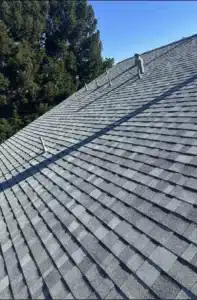
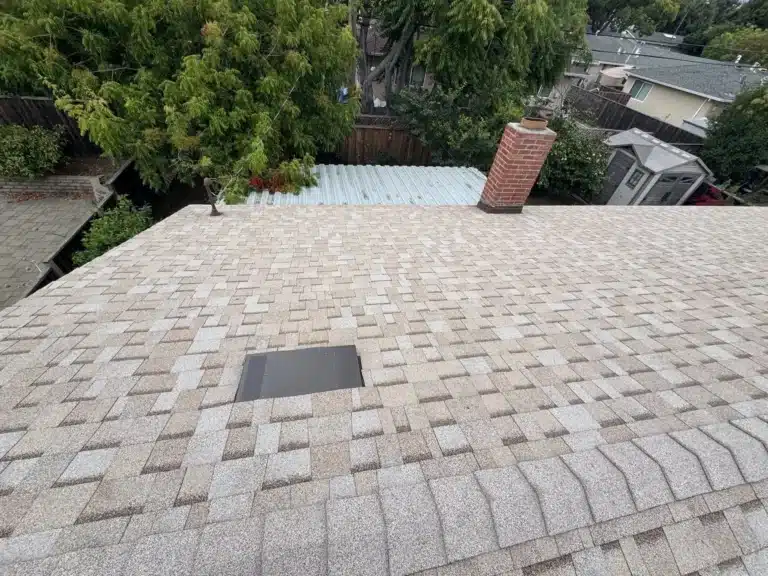
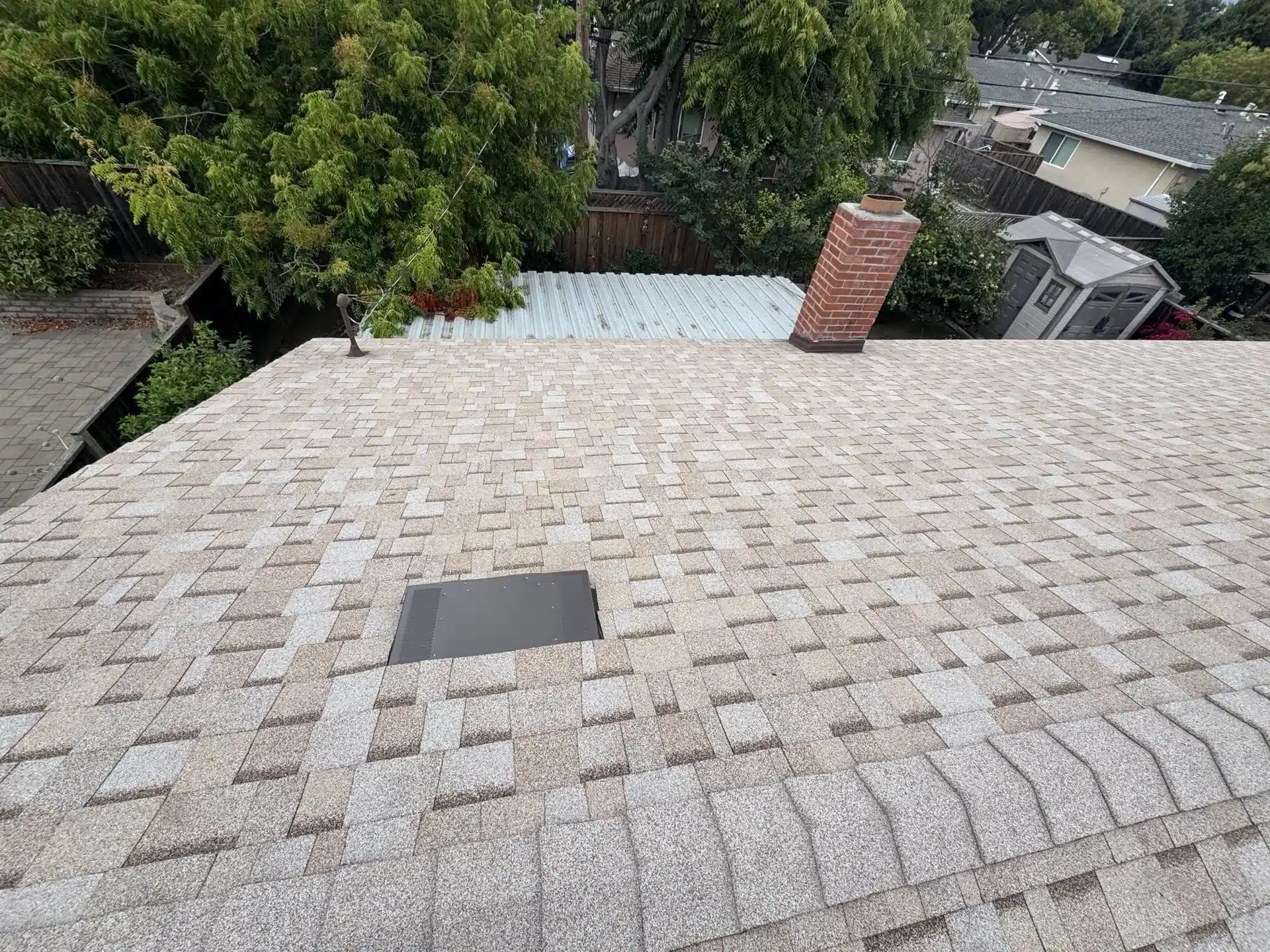
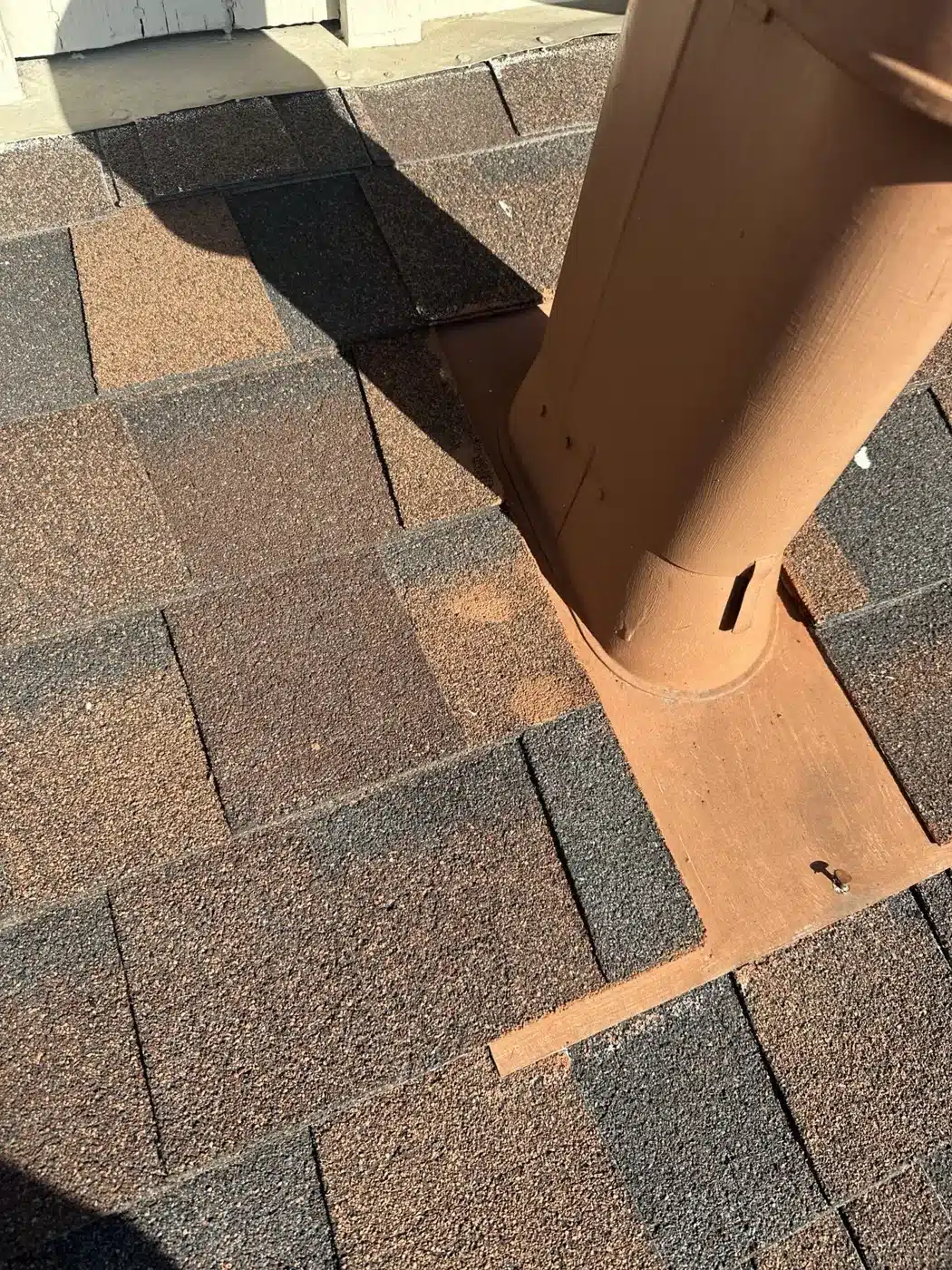
- Look at the roof from the street. Ridge vent runs along the peak as a slightly raised, shingled cap. Box vents look like low square hoods near the ridge. Turbine vents spin. If the roof is a clean unbroken plane with nothing on it, there is probably no exhaust.
- Look up under the eaves. Continuous perforated soffit panels or individual round vents mean intake exists. Solid boards with no openings mean it does not — and a roof with exhaust but no intake is only half-ventilated.
- Go into the attic on a warm afternoon. It should be hot but not stifling, and it should not smell damp. Look for daylight at the eaves, and check whether insulation is blocking the airway where the roof meets the wall — baffles should hold it clear.
- Read your contract. The scope should name what was installed. If it does not mention ventilation at all, that is the question to put to the roofer in writing.
What to say to the roofer, and what it costs to fix
Put it in writing, and keep it factual rather than accusatory: ask what intake and exhaust ventilation was installed, what the total net free area is, and how that compares with the code requirement for your attic area. The California Residential Code sets the baseline — broadly one square foot of net free ventilating area for every 150 square feet of attic, or 1 in 300 where a vapour retarder is present and the venting is balanced between high and low. A roofer who did the job properly will answer that question easily.
If ventilation was genuinely omitted from a new roof, the fix is usually straightforward and much cheaper than the roof itself: cutting in ridge vent or adding box vents, and opening intake at the eaves. On a roof that is only months old, this is a warranty conversation before it is a paid one — and it is worth having promptly, because the shingle manufacturer’s warranty may depend on it.
What we install and why is set out on our roof ventilation page, and if the roof also needs Title 24 cool-roof compliance, cool roofing explains how the two work together — a reflective roof and a properly vented attic are complementary, not alternatives.
Roof ventilation questions
How much roof ventilation does a house actually need?+
Can vents be added after the roof is finished?+
Does poor attic ventilation void a shingle warranty?+
Not sure whether your attic is breathing?
We will check the intake, the exhaust and the attic itself, tell you what the net free area actually is, and put it in writing. Free, and quick.
Book a Free Inspection Call (408) 685-2177See recent projects · Lifetime Roofing & Renovation, Inc. · Sunnyvale, CA · CSLB #1090028 · 4.8★ on Google
Gina K. writes about Bay Area roofing for Lifetime Roofing & Renovation, drawing on the team's 16+ years of experience roofing homes across Silicon Valley.