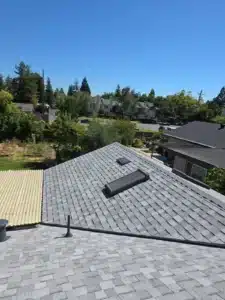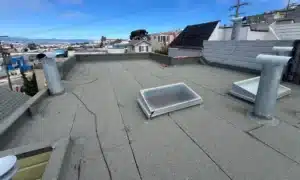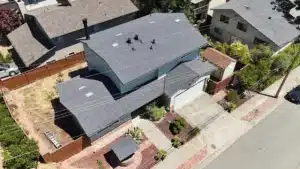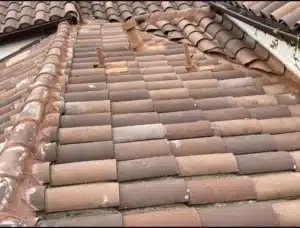
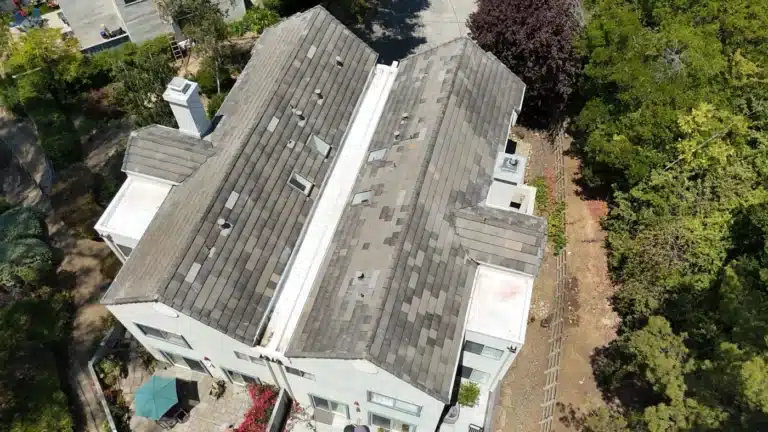
A 26-unit townhome community on the Vallejo waterfront, every building under the same failing concrete tile roof: the tile itself was fine, but the underlayment beneath it had aged out, the fascia and rafter tails were rotting at the eaves, and the flat sections were leaking into units. We lifted and stacked every tile, stripped the roofs to the deck, rebuilt what was rotten, installed high-temperature self-adhered underlayment and new battens, and re-laid the original tile — with new gutters across the community. Roughly $600,000–$700,000 across all 26 buildings, about $25,000 per unit — the largest job in our company’s history.
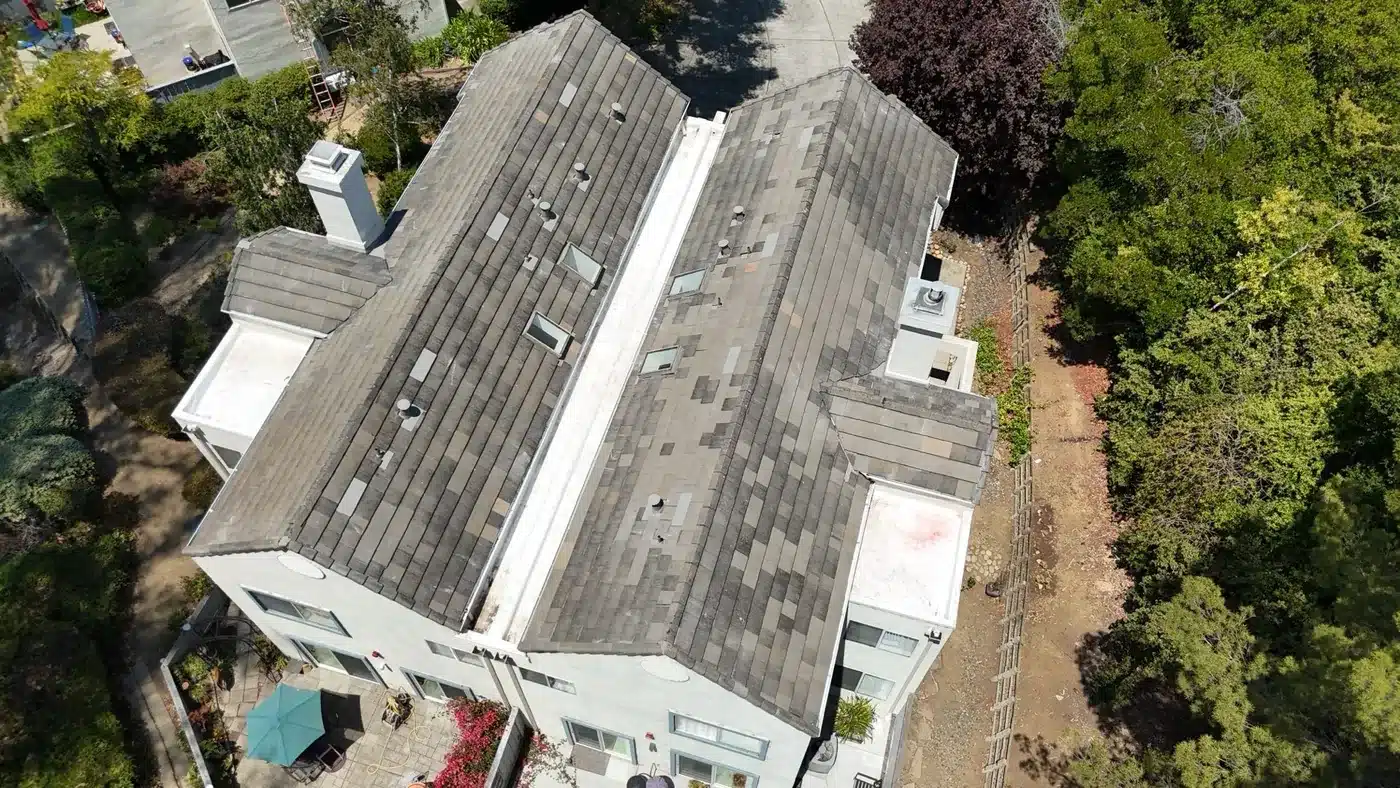
This 26-unit Vallejo HOA tile roof project came to about $25,000 per unit, roughly $600,000–$700,000 community-wide including a separate gutter-replacement contract. The scope was a full tile lift-and-re-lay rather than a tear-off: the existing concrete tile was lifted, stacked on the roof, and reused, while everything underneath it was replaced — old underlayment stripped, damaged decking, fascia and rafter tails rebuilt, Westlake Royal TileSeal HT high-temperature self-adhered underlayment installed, new battens and flashings set, skylights reflashed, the low-slope sections rebuilt and coated, and the tile re-laid. A re-lay costs less than a new tile roof because the tile — the most expensive material on the roof — is reused, and it costs more than a shingle reroof because every tile is handled twice by hand. For an HOA, the per-unit number is what matters, and $25,000 per unit for a 30-year underlayment system under tile that will last another 50 is the benchmark this project sets.
Good Tile, Dead Underlayment, and 26 Units of Deferred Repairs
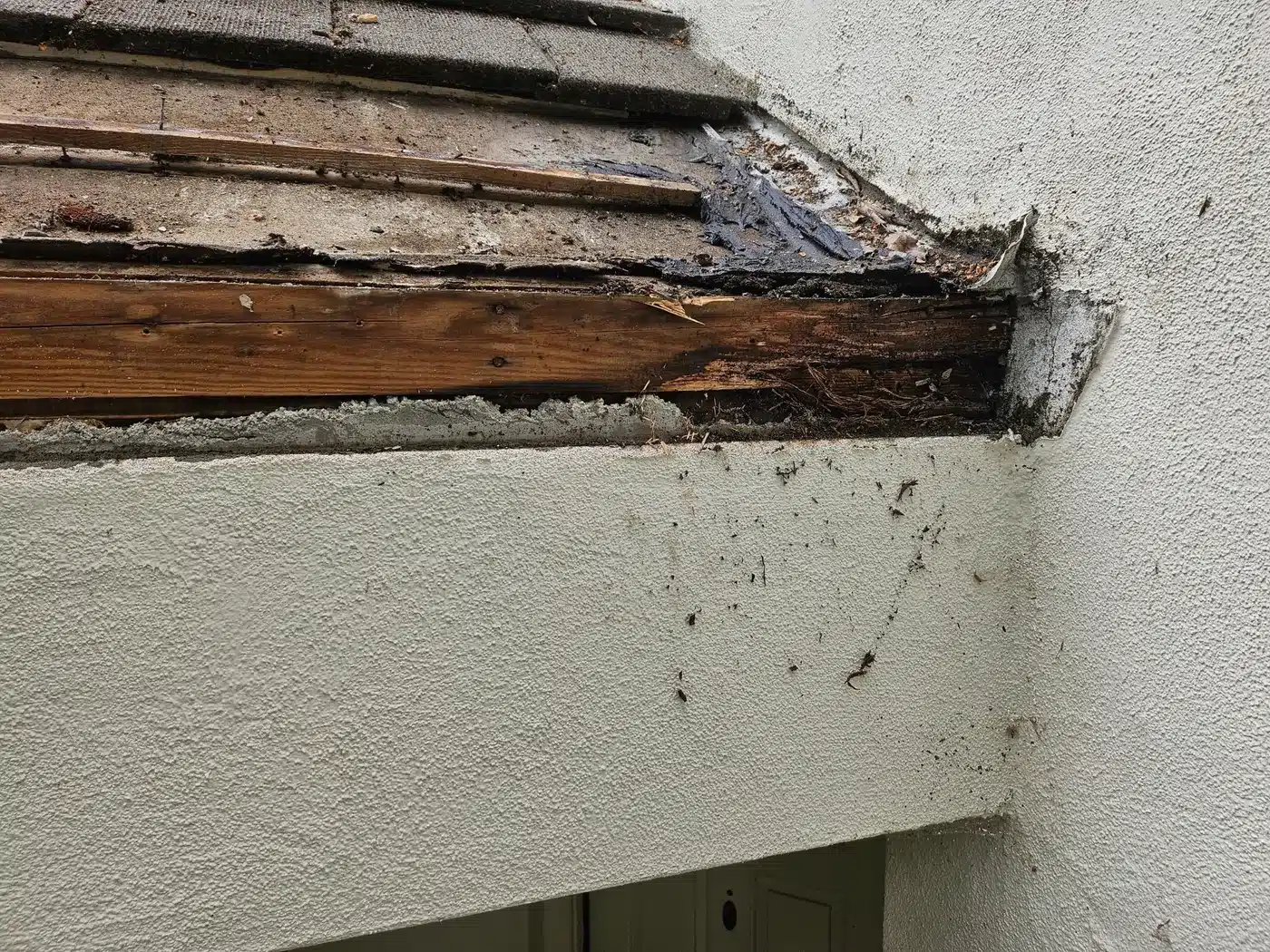
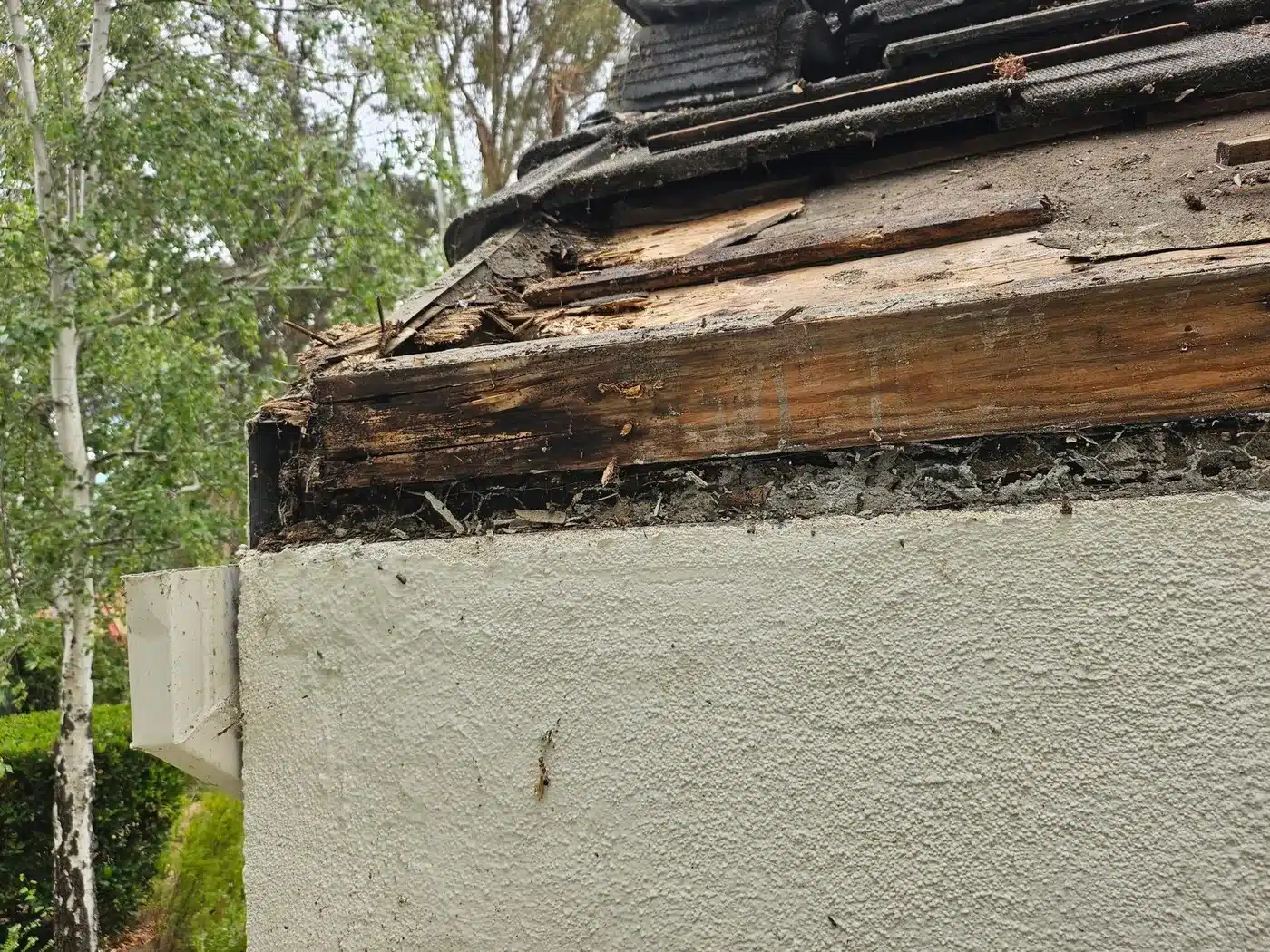
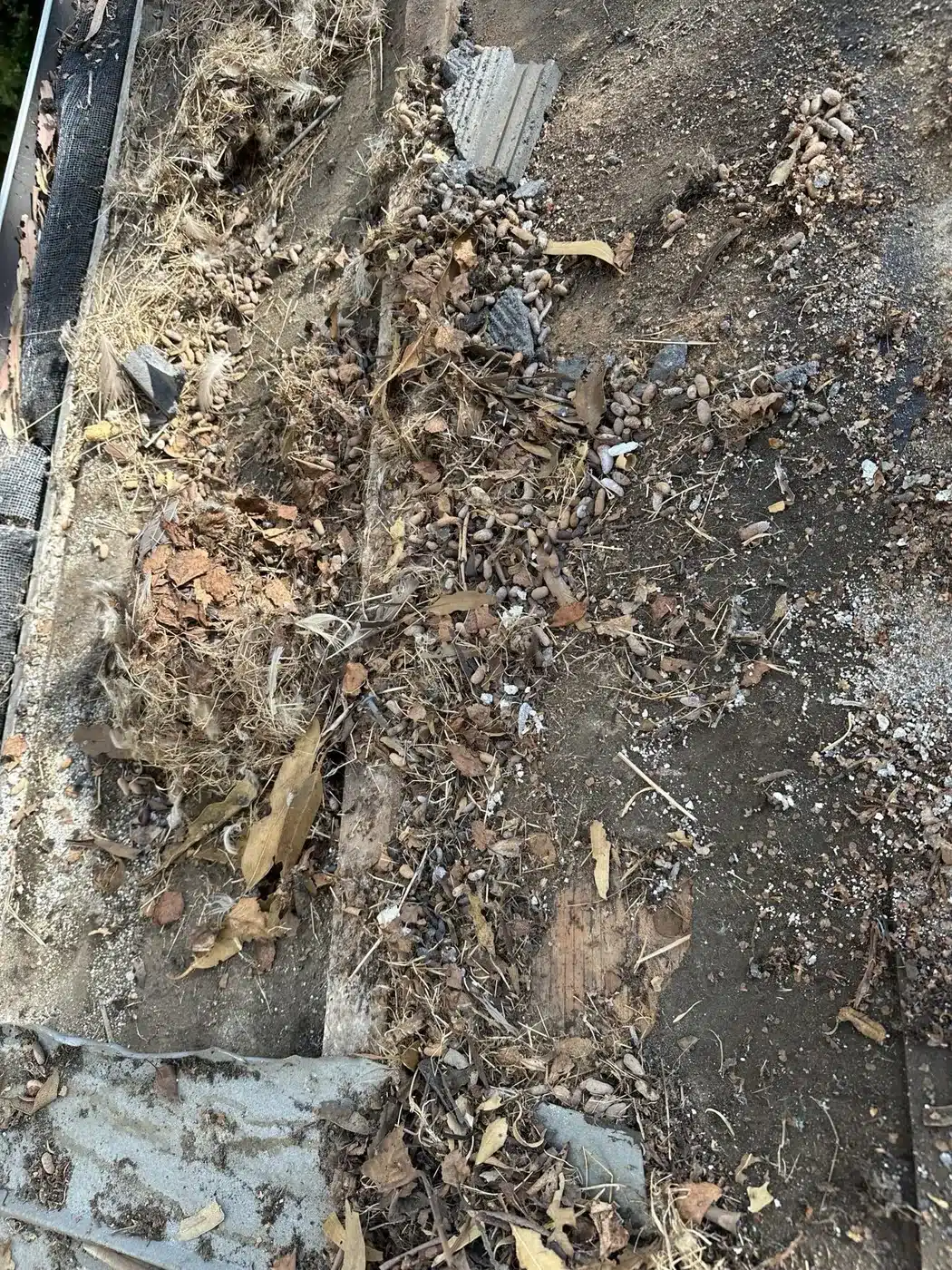
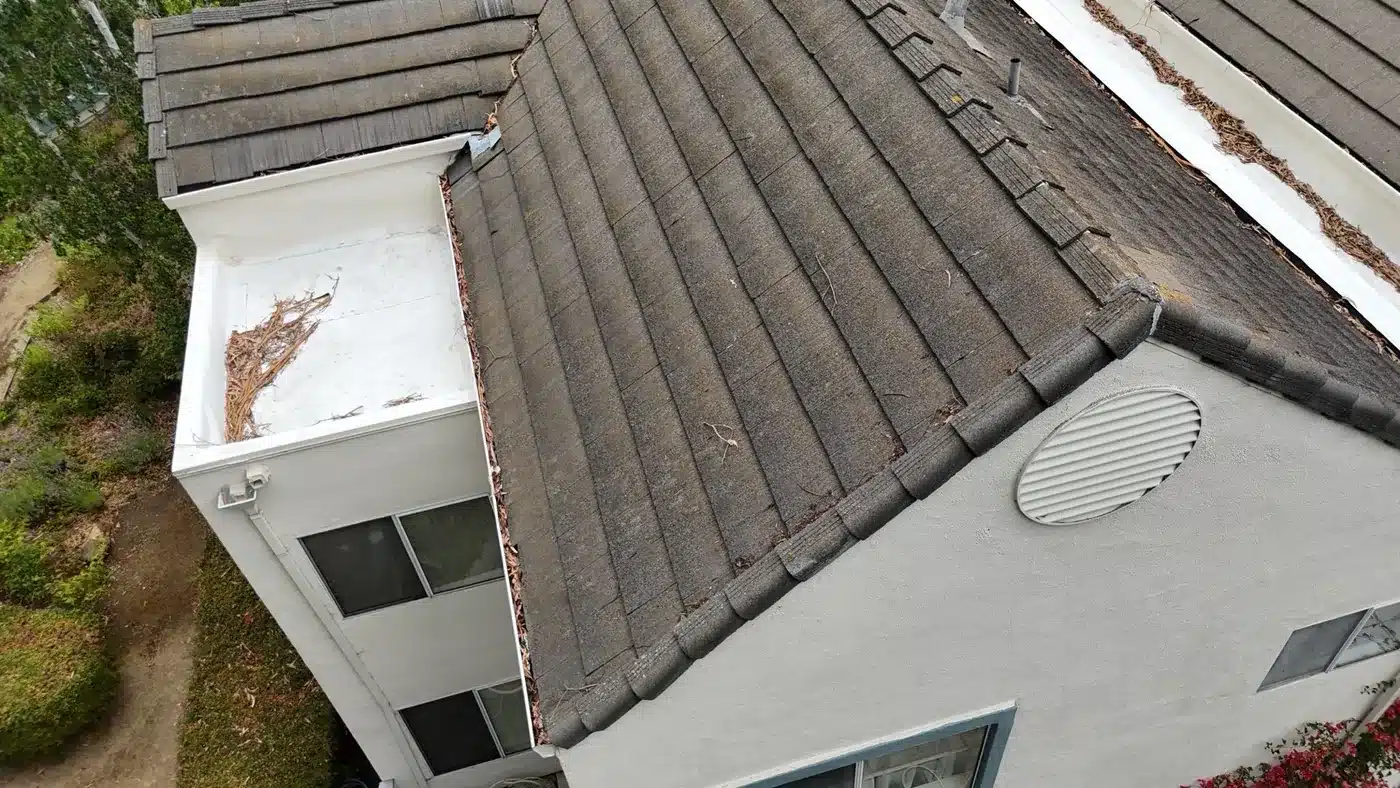
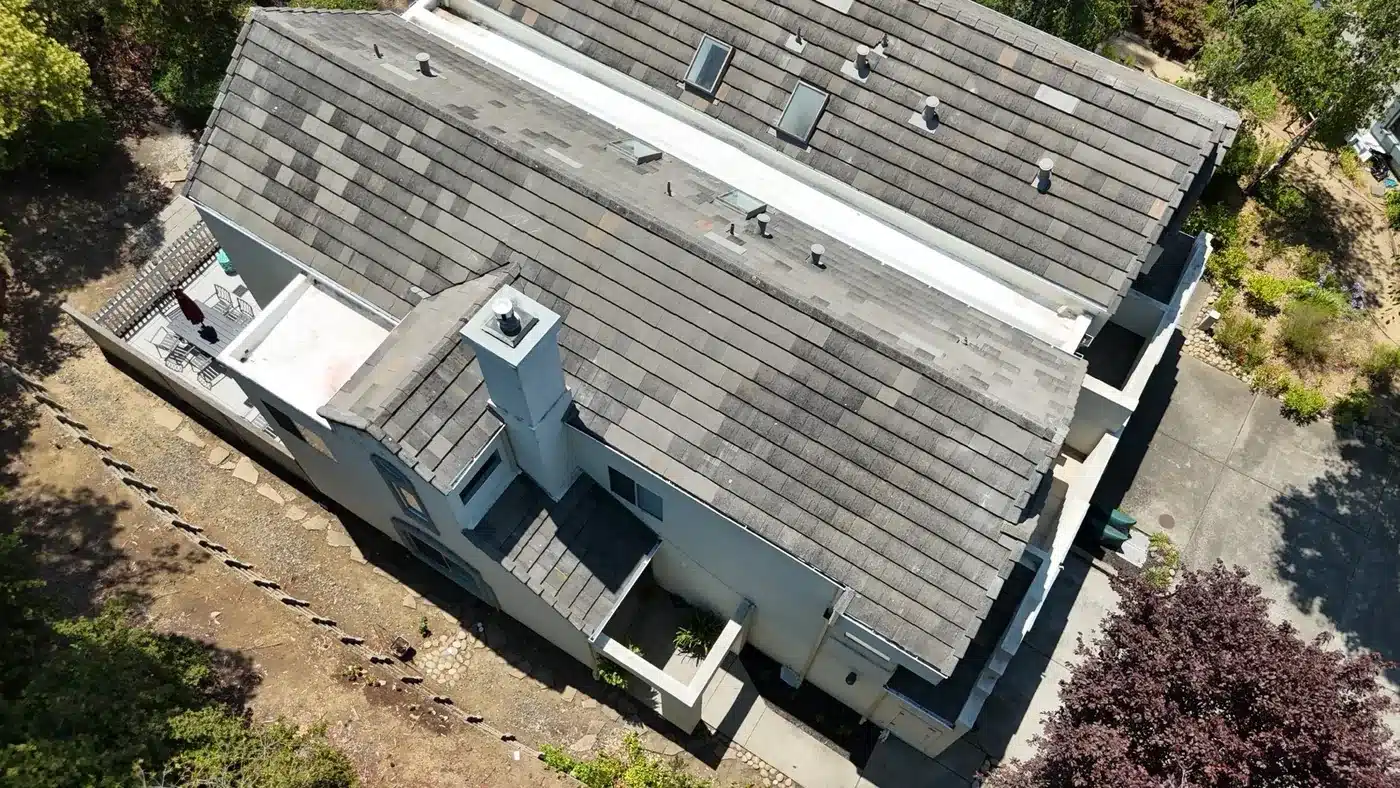
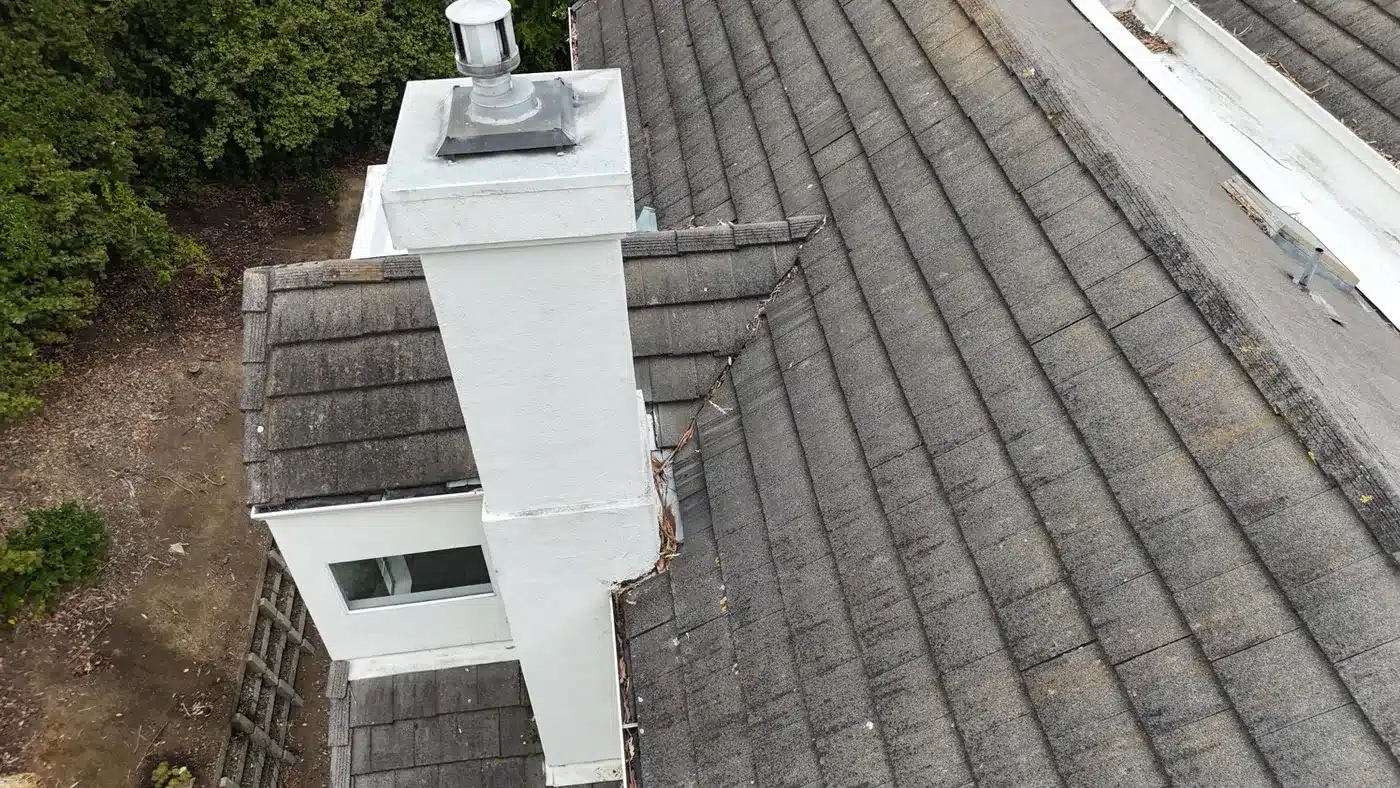
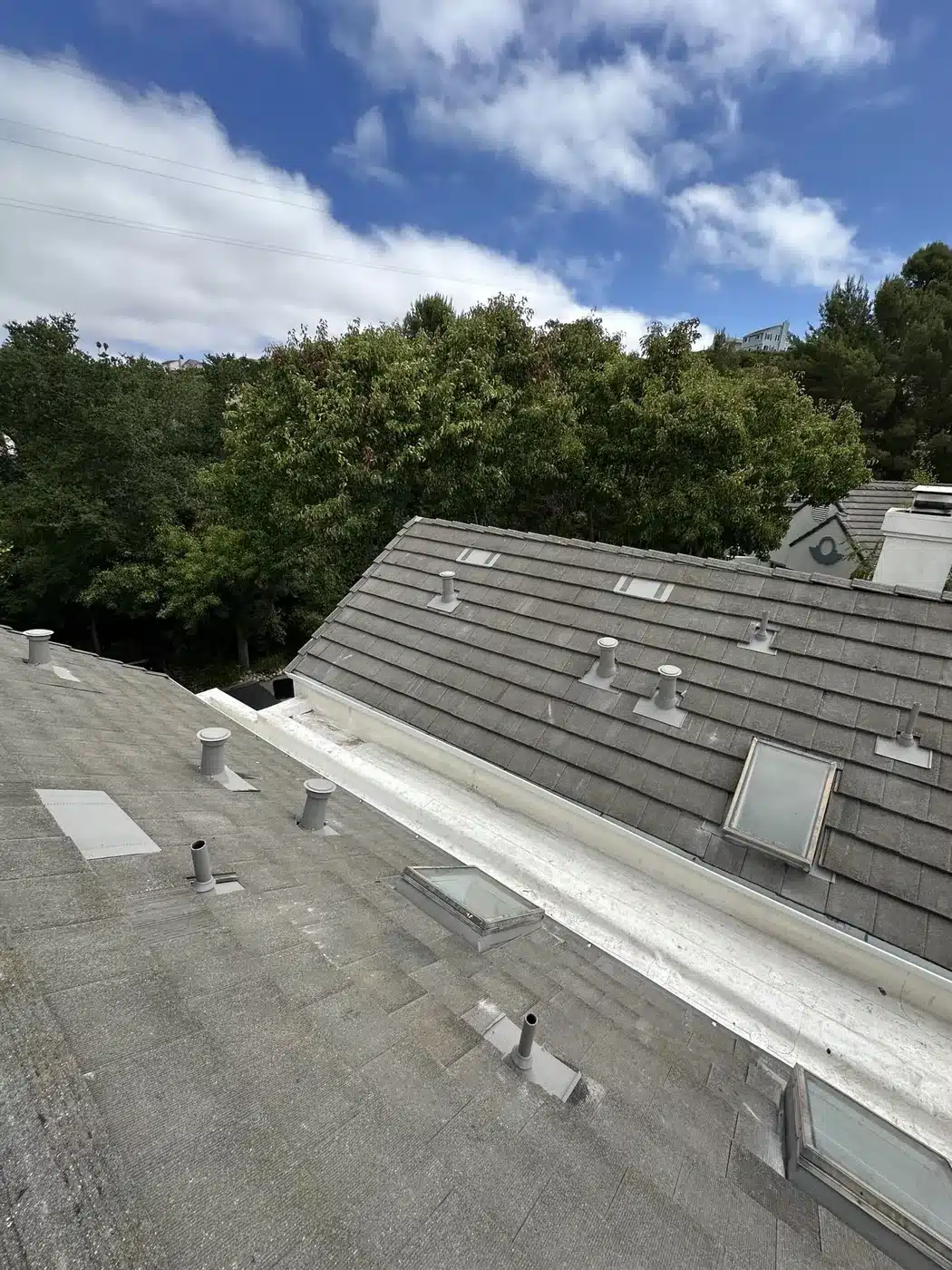
The community sits on the bluffs above the Carquinez Strait on Vallejo’s south shore — a cluster of two- and three-story stucco townhome buildings with concrete tile roofs, flat-roofed sections at the decks and entries, chimneys, and skylights on nearly every unit. Concrete tile is the most durable common roofing material there is, and these tiles had decades of life left. The problem was everything under them. Tile is not the waterproof layer of a tile roof; the underlayment is, and after twenty-plus years of the strait’s wind, salt air and summer heat baking through the tile, the original underlayment had gone brittle and split. Water was reaching the deck and running to the eaves, where it had rotted fascia boards and rafter tails behind the gutters — the damage the board could see from the ground — and pooling on the low-slope sections, which is where the unit leaks were coming from. The HOA had been paying for one-off repairs building by building for years. The assessment we delivered was blunt: the tile was an asset worth saving, and the roof under it needed to be rebuilt everywhere, at once. The full range of what a tile repair can involve — leak tracing, flashing rebuilds, sectional lift and re-lay — is set out on our tile roof repair page.
Lift, Strip, Rebuild, Re-Lay — Building by Building
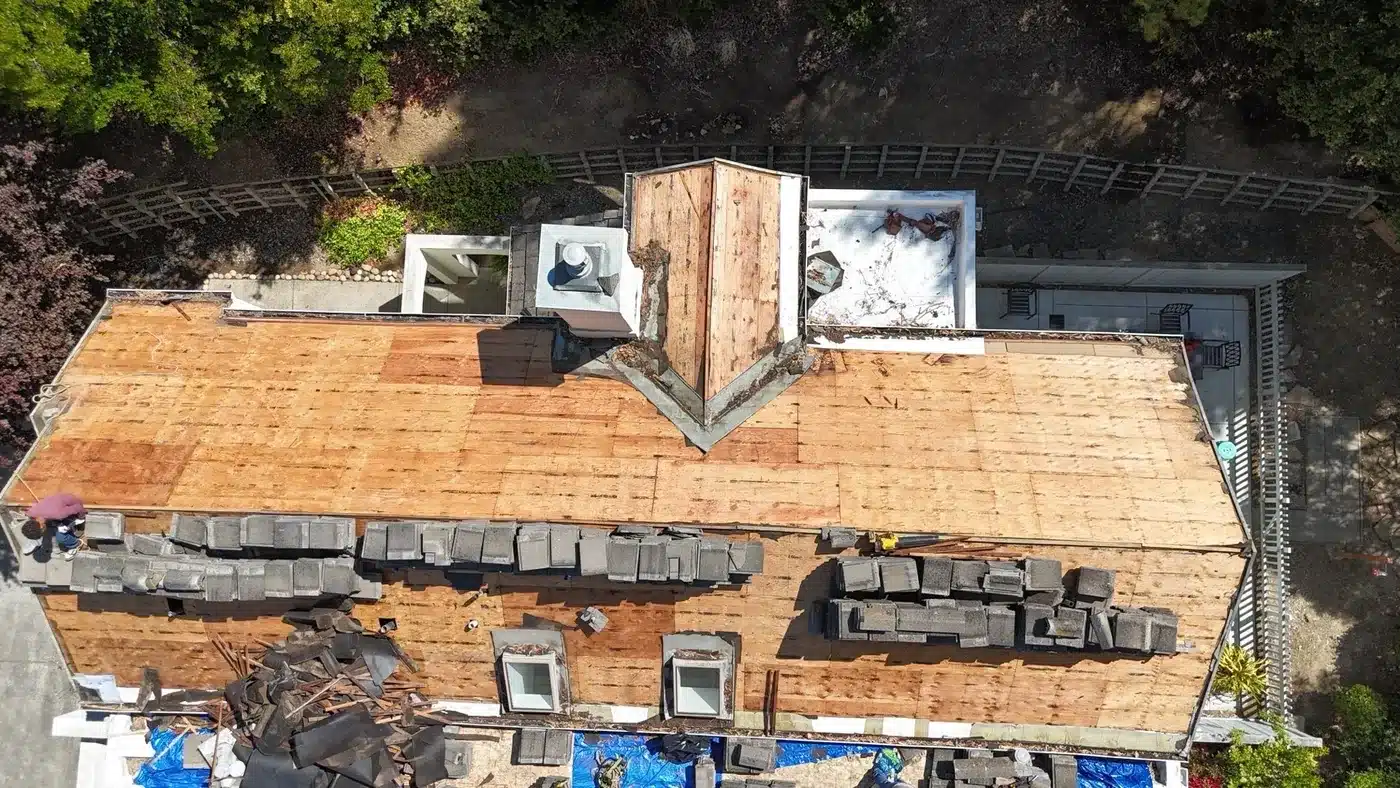
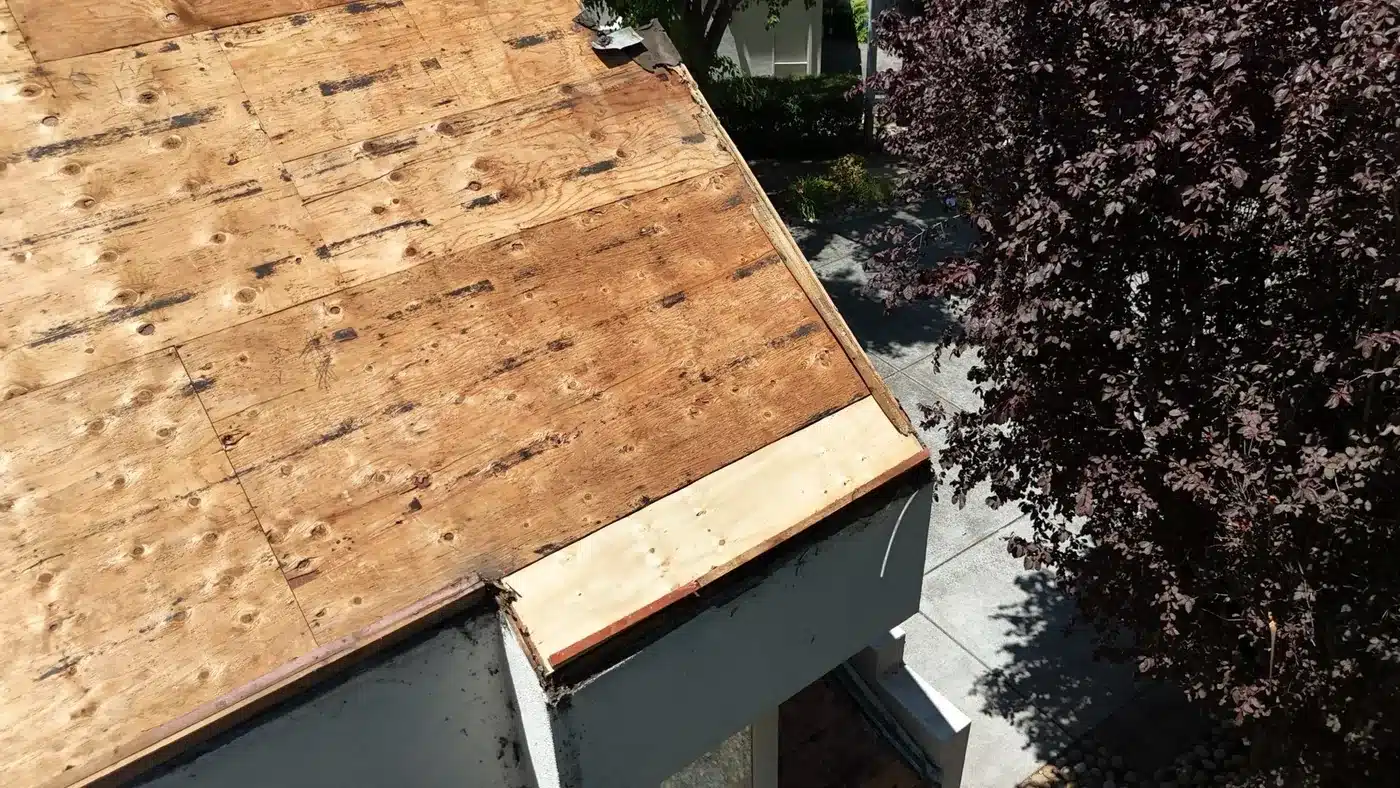
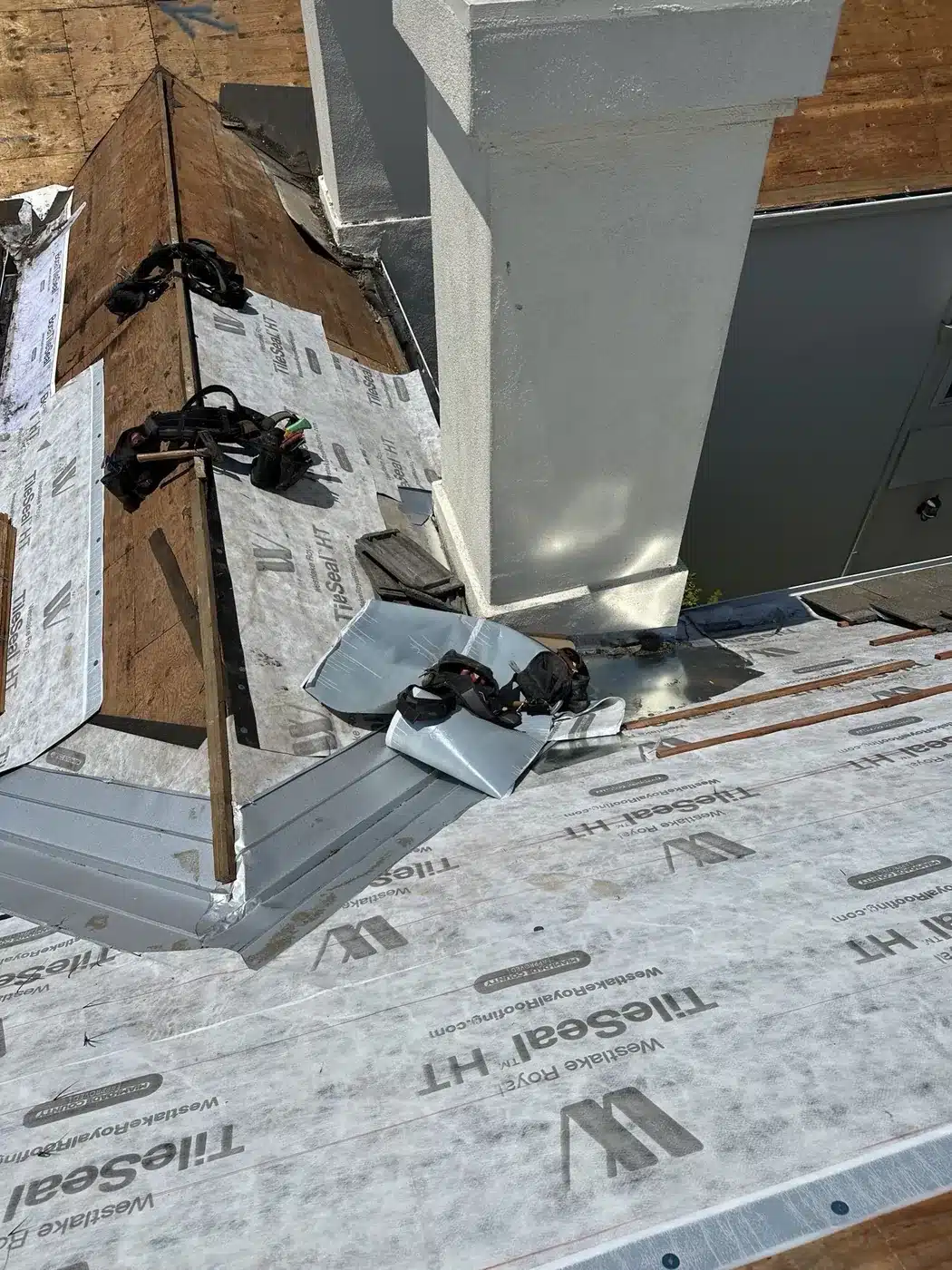
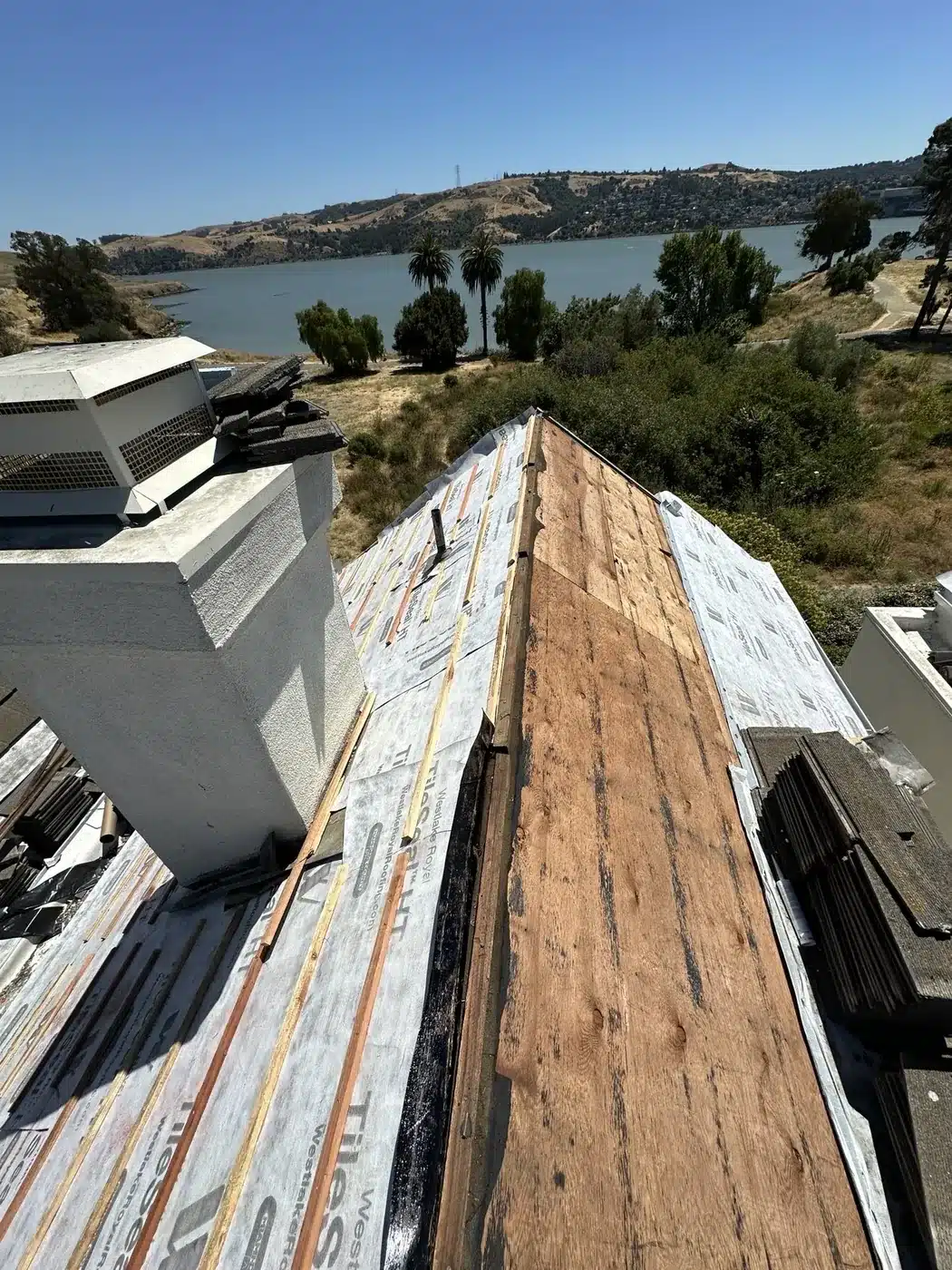
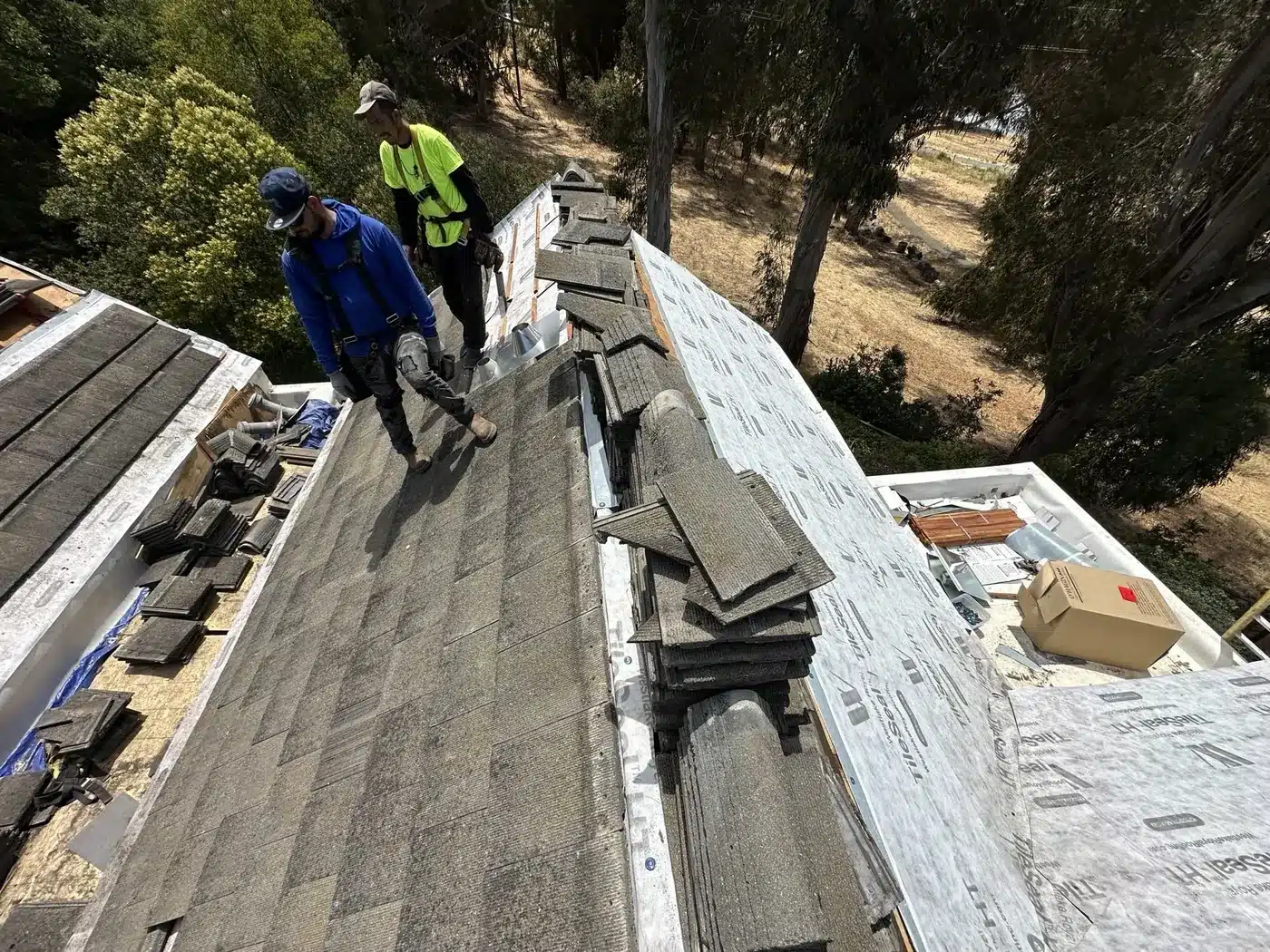
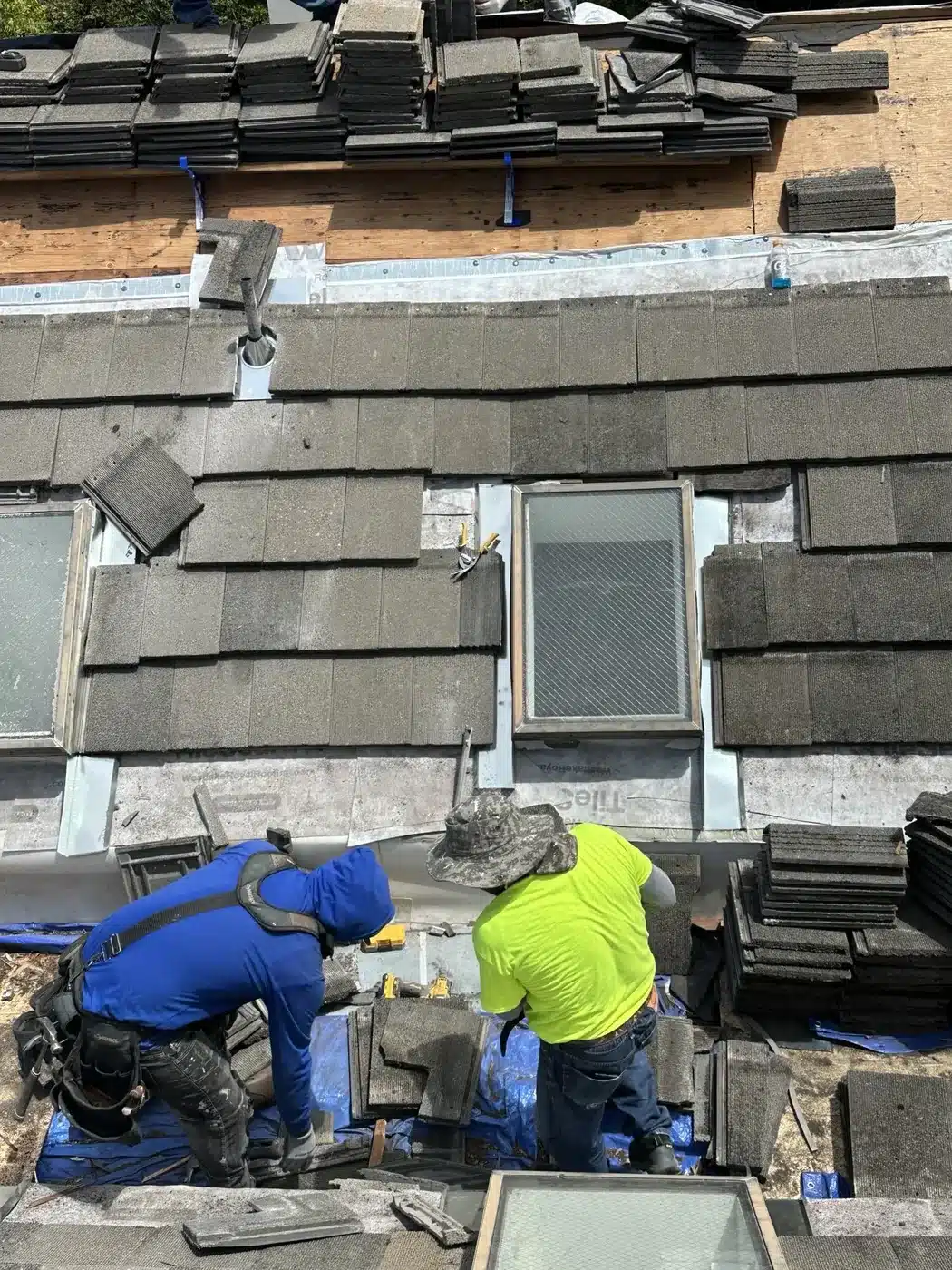
A tile re-lay is a choreography problem as much as a roofing one. On each building the crew lifted the tile course by course and stacked it on the roof in the order it came off, then stripped the old underlayment and battens down to the deck. Every sheet of damaged decking was replaced, and the rotted fascia and rafter tails were cut back and rebuilt before new metal went on. Over the clean deck went Westlake Royal TileSeal HT, a high-temperature self-adhered underlayment built specifically for use under tile, where heat trapped beneath the tile destroys ordinary felt — it bonds to the deck, seals around fasteners, and is the layer that actually keeps these buildings dry for the next thirty years. New battens were set over the membrane, new flashings went in at every wall, chimney and skylight, the low-slope sections were rebuilt as their own membrane systems and coated, and the original tile went back on, with broken pieces replaced from matching stock. New gutters and downspouts across the community — a separate contract on top of the roofing work — finished the job at the eaves where the damage had started. Working one building at a time kept residents in their homes and the site orderly for the duration.
Before vs. After
| Feature | Before | After |
|---|---|---|
| Tile | Original concrete tile, sound but sitting on failed underlayment | Same tile, lifted and re-laid; broken pieces replaced with matching stock |
| Underlayment | Original, brittle and split after 20+ years under tile | Westlake Royal TileSeal HT self-adhered high-temp membrane, all 26 units |
| Deck, fascia, rafter tails | Rot at eaves across the community | Damaged decking replaced; fascia and rafter tails rebuilt |
| Battens & flashings | Original | New battens, new wall, chimney and skylight flashings |
| Low-slope sections | Leaking into units | Rebuilt as membrane systems and coated |
| Gutters | Aged, undersized, behind rotted fascia | New gutters and downspouts community-wide |
| Cost | Years of one-off repairs | ~$25,000 per unit · roughly $600,000–$700,000 community-wide |
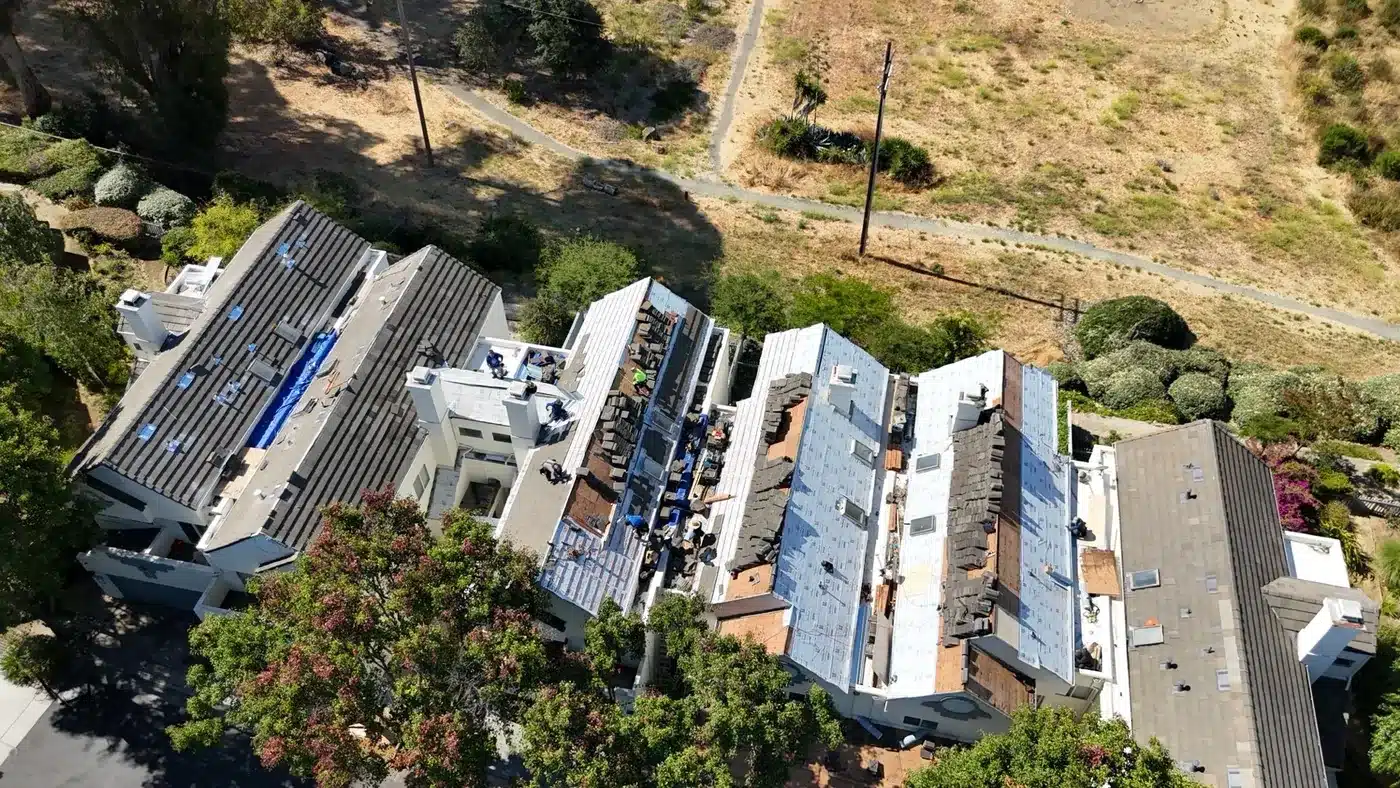
Twenty-six units, every building rebuilt from the deck up under its original tile, and a community that went from a repair line item in every budget to a roof system with decades in front of it. The tile that was on these buildings when the project started is the tile that is on them now — and for the first time in years, nothing under it is leaking.
What This Means for HOA Boards and Property Managers
Most Bay Area townhome and condominium communities built in the 1980s and 1990s were roofed in concrete tile, and most of them are now in exactly the position this Vallejo board was in: tile that looks fine from the street, underlayment that has quietly failed under it, and a repair budget that grows every year without fixing anything. Three things a board should take from this project. First, ask the right question — not “does the roof need replacing” but “does the underlayment need replacing,” because on a tile roof those are different jobs with very different prices, and a lift-and-re-lay saves the single most expensive material on the building. Second, insist on a high-temperature self-adhered underlayment rated for use under tile; standard felt or synthetic is what failed the first time. Third, do the whole community in one mobilization. Per-unit cost drops, warranty coverage is uniform, and the board stops managing leaks one unit at a time. We handle commercial and multi-family roofing across the Bay Area, and our commercial roof replacement page covers how we scope and phase projects like this one.
HOA Tile Roof Replacement — FAQs
What is a tile lift and re-lay, and how is it different from a tile roof replacement?
A lift and re-lay removes the existing tile, stacks it on the roof, replaces the underlayment, battens, flashings and any damaged decking underneath, and then reinstalls the same tile. A full replacement discards the tile and installs new. Because concrete tile typically outlasts the underlayment beneath it by decades, a re-lay delivers a new roof system for materially less than new tile — on this Vallejo project it was the right call for all 26 units.
How much does an HOA roof replacement cost per unit?
This 26-unit Vallejo tile re-lay came to about $25,000 per unit, roughly $600,000–$700,000 community-wide including gutters. Per-unit cost depends on roof size and complexity, how much decking and fascia has rotted, the number of skylights, chimneys and flat sections, and whether the tile can be reused. Doing the whole community in one mobilization brings the per-unit number down compared with roofing buildings one at a time.
Why does the underlayment under a tile roof fail before the tile?
Tile is the armor of the roof, not the waterproof layer; the underlayment beneath it does the actual work of keeping water out. Heat builds up in the air space under tile and cooks ordinary felt and synthetic underlayment until it becomes brittle and splits, usually after 20 to 30 years, while the concrete tile above it remains sound for 50 or more. That is why this project used a high-temperature self-adhered membrane rated specifically for use under tile.
Can residents stay in their homes during an HOA re-roof?
Yes. The Vallejo project was phased building by building so that each roof was lifted, rebuilt and re-laid in sequence, with tile stacked on the roof rather than in the parking areas, and each building dried in before the crew moved on. Residents stayed in place for the duration.
Does Lifetime Roofing handle commercial and HOA roofing projects?
Yes. This 26-unit project is the largest we have completed, and we handle multi-family, HOA and commercial roofing across the Bay Area alongside our residential work — tile re-lays, flat and low-slope membrane systems, gutters, and phased community-wide replacements. Boards and property managers can request an assessment through the same booking link as our residential estimates.
Managing a Community With Aging Tile Roofs?
We’ll assess the underlayment, decking and eaves across every building and give the board one number and one plan. See more of our work in the project gallery, or request an assessment today.
Gina K. writes about Bay Area roofing for Lifetime Roofing & Renovation, drawing on the team's 16+ years of experience roofing homes across Silicon Valley.