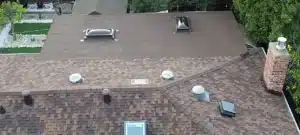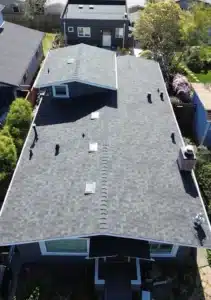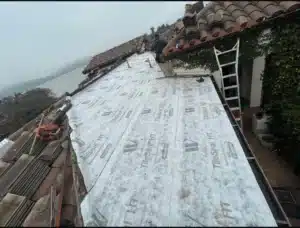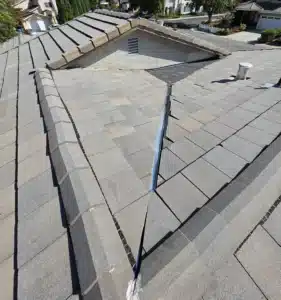
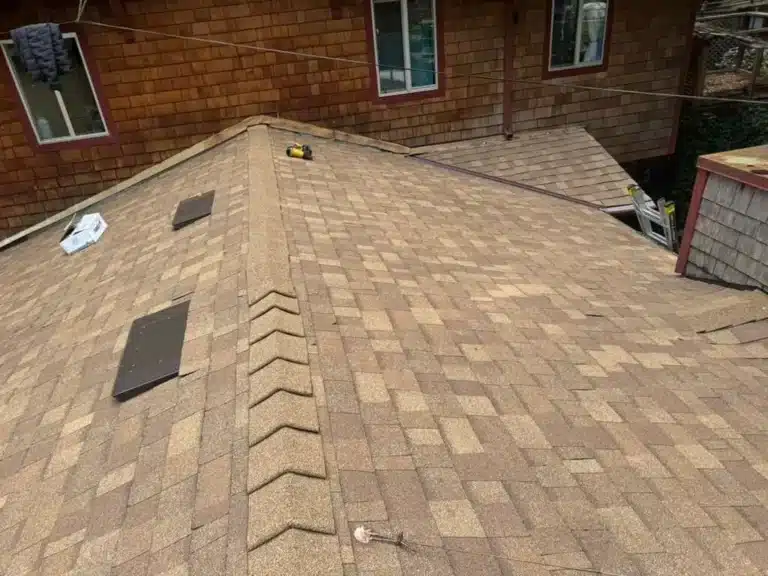
Moss on an old shingle roof is a reason to look under it, not just to clean it. On this Scotts Valley home, moss covering the 20-year-old lower roof was sitting on failing underlayment, so we replaced the lower section with new underlayment and Class A shingles, kept the newer upper roof, and finished within a week of the inspection.
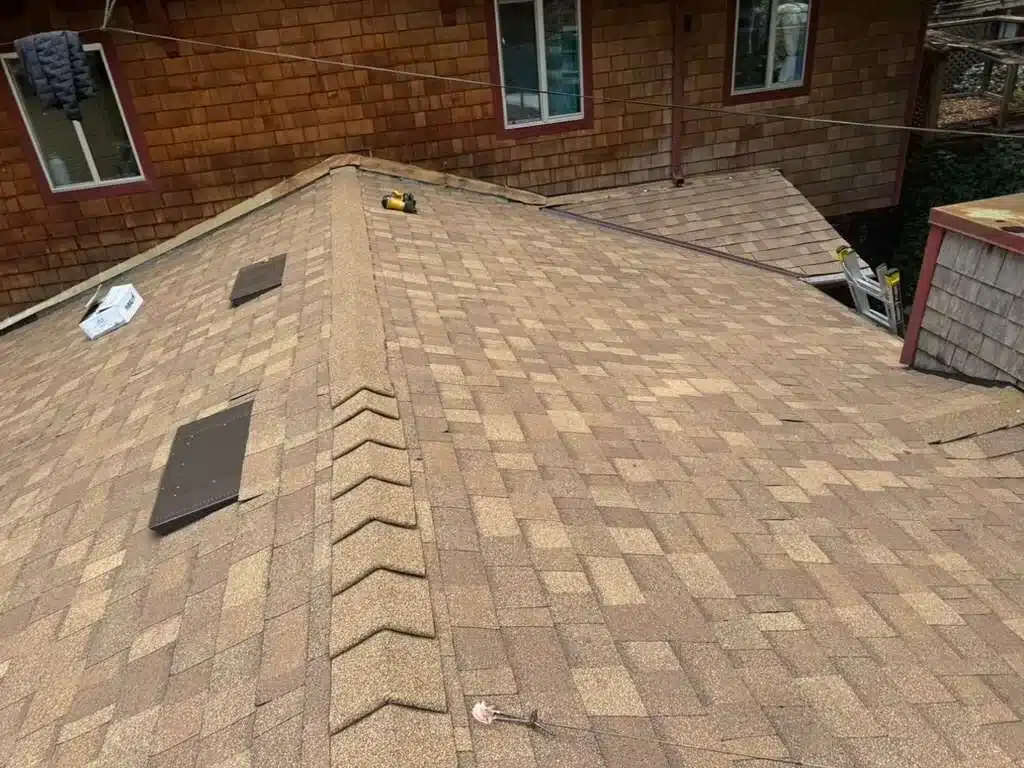
Remove it, but first find out how old the roof under it is. On a young roof, moss is a cleaning job: a gentle moss treatment, no pressure washer. On a roof near the end of its life it is a warning sign, and on this Scotts Valley home it was: the lower roof was about 20 years old, moss had rooted between the shingles, and the inspection found underlayment problems underneath, so we replaced that lower section and left the newer upper roof in place. A homeowner on Quora asked exactly this, and the answers there agree on the same split: remove moss, but check the roof’s age before you decide how.
A Shaded Lower Roof Where Moss Had Moved In
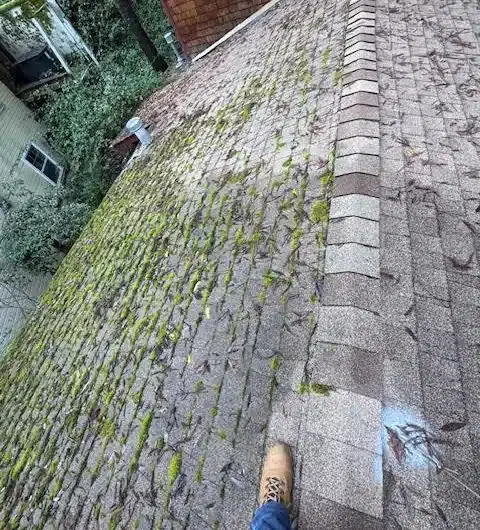
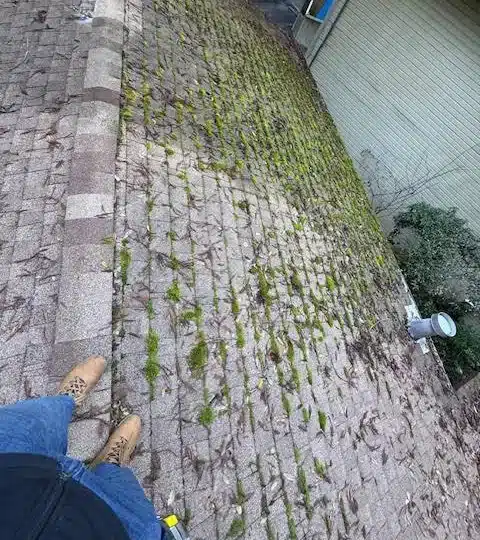
This two-storey Scotts Valley home sits under tall trees, and its roof is really two roofs: a lower level about 20 years old and an upper level about 10. The lower roof gets the least sun and the most leaf fall, and by the time the homeowner called, moss had rooted in the joints between nearly every course of shingles on the shaded side, with leaf litter holding moisture against them. Our inspection on January 15 found the lower roof’s underlayment was failing too, which is what turns moss from a cleaning job into a roof job.
Replace the Failing Section, Keep the Roof That Still Works
Cleaning would have removed the moss and left the failing underlayment underneath, so it was the wrong fix for this roof. Replacing the whole house would have thrown away an upper roof with years left in it. The honest scope was in between: tear off the lower section only, put down new synthetic underlayment, and reshingle it with Class A fire-rated architectural asphalt shingles in a warm tan. It is the same repair-or-replace judgment we explain on our repair vs. replacement guide, applied one roof plane at a time.
Tear-Off, New Underlayment, New Shingles
The homeowner signed on January 16, the day after the inspection, and we pulled the reroof permit. The crew stripped the lower roof down to the deck and cleared the moss, old shingles and debris off the site.
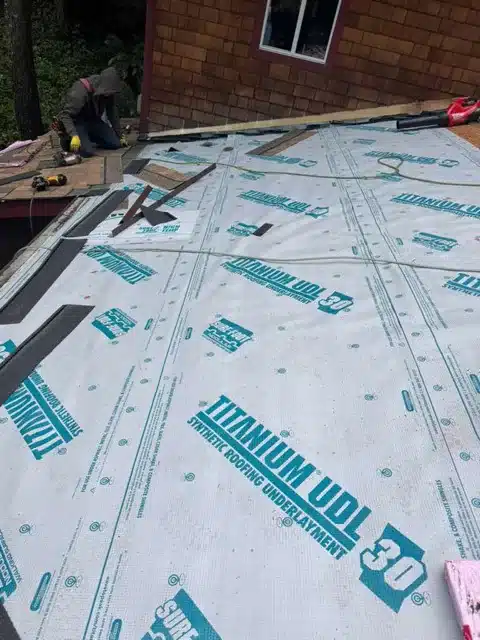
With the deck exposed, we laid Titanium UDL 30 synthetic underlayment across the whole section, then the new shingles course by course, with new hip and ridge caps and the roof vents set back in. The homeowner signed the completion certificate on January 22, a week after the first visit.
Before vs. After
| Feature | Before | After |
|---|---|---|
| Lower roof surface | Moss rooted between the shingles, leaf litter on every course | New architectural asphalt shingles, clean and tight |
| Underlayment | Problems found at inspection on a roof about 20 years old | New Titanium UDL 30 synthetic underlayment |
| Fire rating | Older shingles past their service life | Class A fire-rated shingles |
| Hip and ridge | Worn ridge caps with moss along the edges | New hip and ridge cap shingles |
| Scope | Whole-roof replacement on the table | Lower section only; the 10-year-old upper roof stays |
| Paperwork | — | Permitted reroof, completion certificate signed by the homeowner |

Why Moss Matters More in Scotts Valley
Many Scotts Valley roofs sit under tall trees, with fog and heavy winter rain, which is the recipe for moss on any shaded slope. Moss itself holds water against the shingles, but the bigger risk is what it hides: on a roof past about 20 years, the underlayment beneath is often what is failing. Before you hire anyone to clean a mossy roof, have its age and underlayment checked; sometimes cleaning is enough, and sometimes, like here, one section needs replacing. For homes higher up in the mountains, our Felton reroof case study covers full replacements under redwood canopy, and our Santa Cruz County roofing page lists the rest of the area we serve.
“Lifetime roofing did a great job on my home in the Santa Cruz Mountains. They were on time, fast, neat and friendly. I am very happy with their work”— Patrick L., via Google
Moss and Section Reroof Questions
Should you pressure-wash moss off an asphalt shingle roof?
No. A pressure washer strips the granules that protect asphalt shingles from the sun and can lift shingle edges, which shortens the roof’s life. On a sound roof, use a moss treatment and let rain rinse the dead moss away over the following weeks; on an older roof, have it inspected before anyone cleans it.
Can you replace just one section of a roof instead of the whole thing?
Yes, when the sections are separate planes and the rest of the roof still has life in it. Here the lower roof was about 20 years old and the upper roof about 10, so replacing only the lower section was the honest call. Our Berkeley partial reroof walks through the same decision on a different home.
Will the new shingles match the older part of the roof?
They will not be identical on day one, because ten years of sun fades any shingle. Choosing a color close to the weathered roof, not the original bundle label, gets you nearest; on this home the new lower section is a warm tan below the older upper roof, and the difference narrows as the new shingles weather.
Moss on Your Roof? Find Out What Is Under It.
Book a free inspection and we will tell you whether your roof needs a cleaning, a section replaced, or a new roof, with photos of what we find. More finished jobs are in our project gallery.
Gina K. writes about Bay Area roofing for Lifetime Roofing & Renovation, drawing on the team's 16+ years of experience roofing homes across Silicon Valley.